
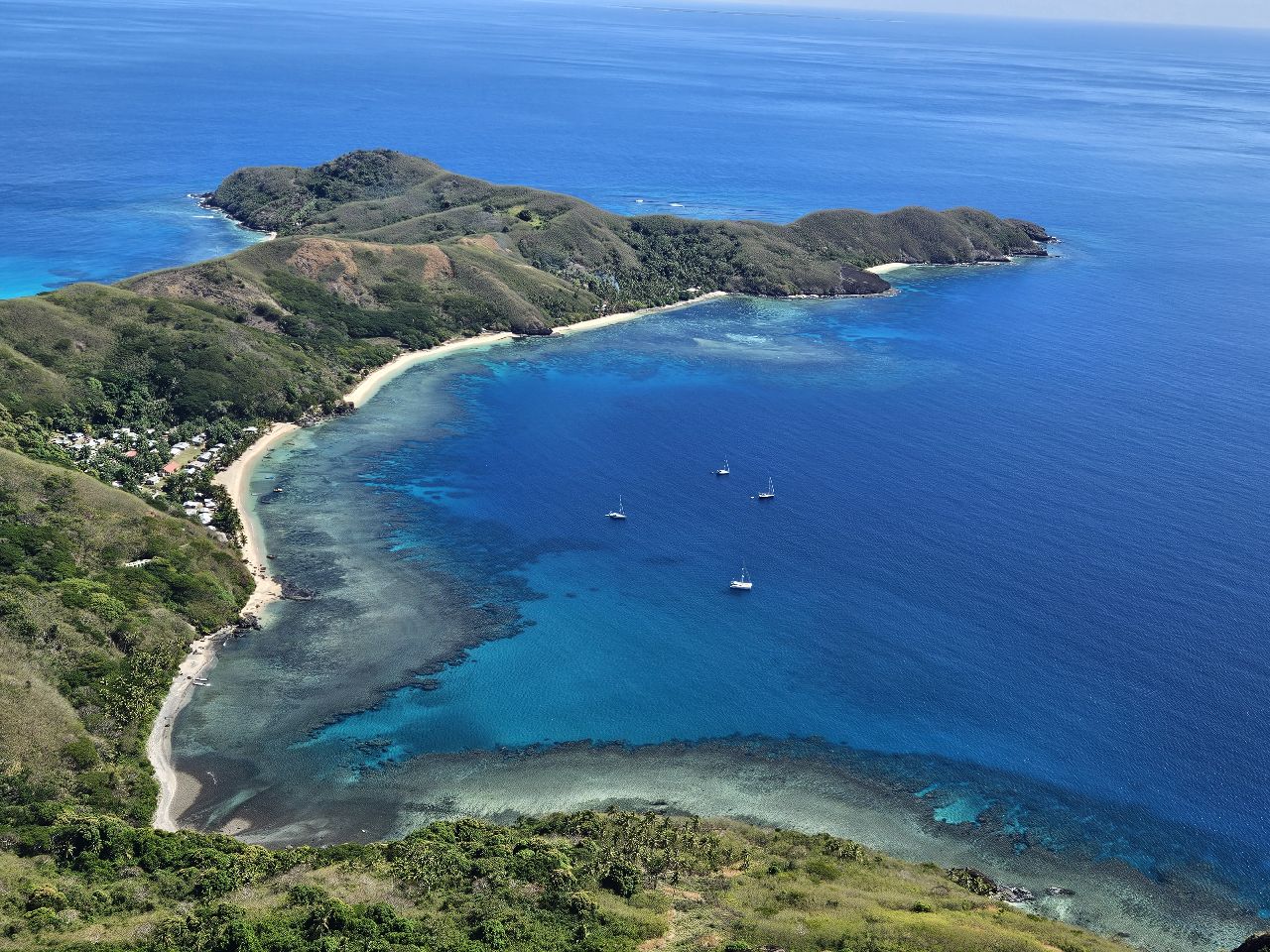
When cruising in Fiji, presenting a Sevusevu is an essential tradition, and meaningful sign of respect.
Don’t be shy of Sevusevu. It is a wonderful ceremony that will turn your stay in Fiji into something special. It’s a ceremony of introduction where you and your crew introduce yourselves to the village. It establishes formal permission to enter and use the land and sea, shows deep respect for the chief and village, and makes a stranger into an accepted guest in the village. It acknowledges the village chief (Turanga) and elders as guardians of the land (Vanua).
To not do Sevusevu is considered trespassing. It bonds the visitor and host in a shared social contract of peace, hospitality and mutual protection and safety.
-
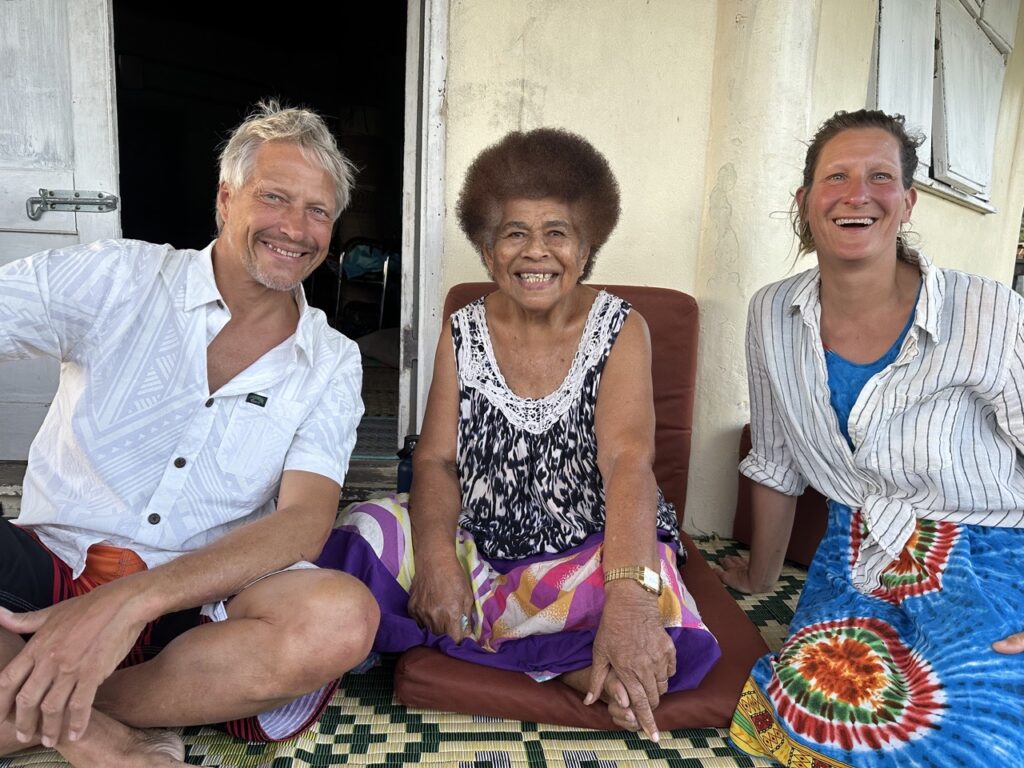
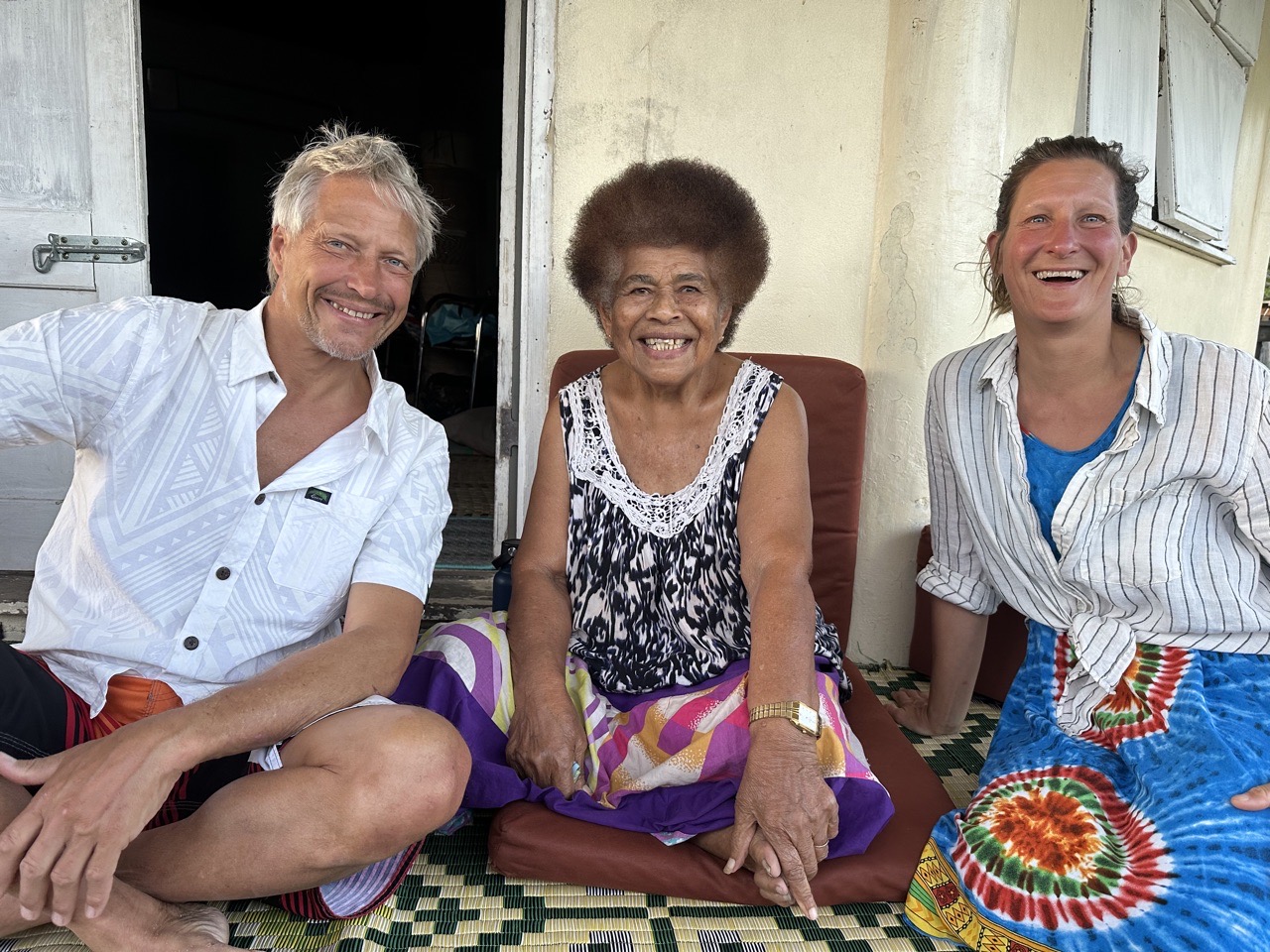
- Chief Lai of Naiseuseu Village
-

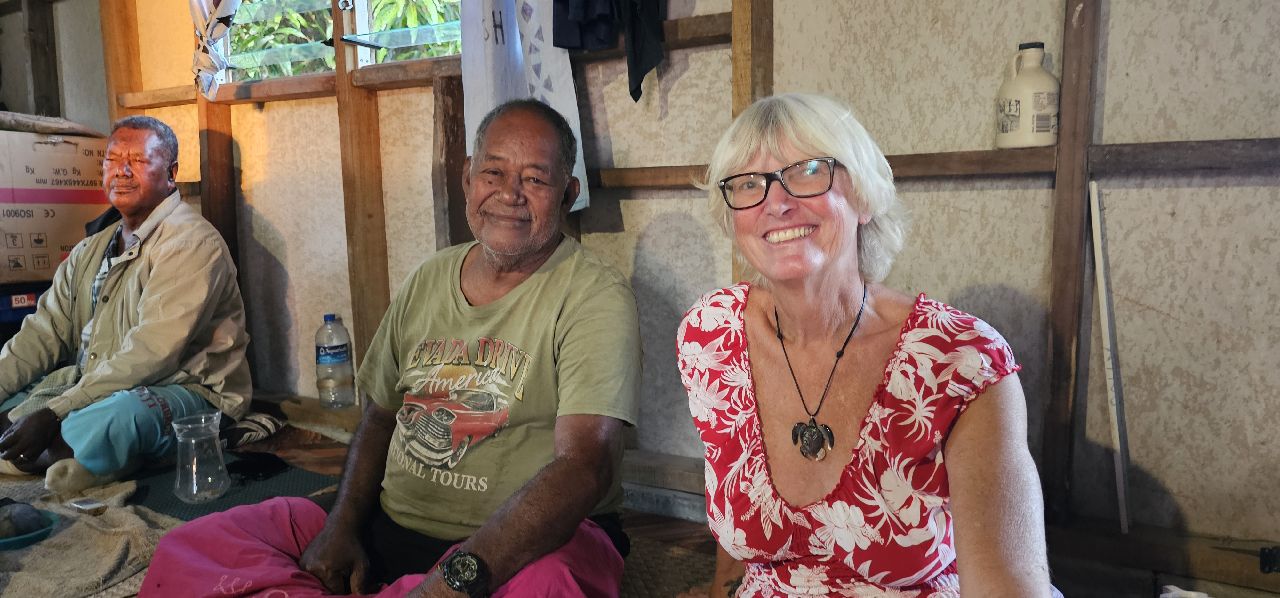
- Jerry, spokesperson for the Nabora Island Chief
Sevusevu: The Process and Core Elements of the Relationship
You will be met at your landing by one of the villagers, usually the Turaga ni koro (Head man – Usually elected). He will ask you about yourself; where you are from, where you have been before this village, your intentions, how long you wish to stay with the village etc. so that he can introduce you to the chief.
When meeting the chief, ensure you dress respectfully:
- Cover your shoulders and knees
- Take off hats and sunglasses
- Take off your shoes before you go inside a house
Sit quietly on the woven floor mats in the proper posture; cross-legged for men and with legs tucked to the side for women. It is not proper etiquette to take photos during the ceremony.
You, the giver (Visitor – vulagi), demonstrates humility, respect, and proper protocol by offering a small bundle of Yaqona root (waka – Typically a third to half a kilo). For Sevusevu and gifts, the dried waka should be tied tightly in a bundle before presentation. This is often called a pyramid.
The Turaga ni koro, or your spokesperson, places the waka crossways in front of the Tanoa, which is in front of the chief at the far end of the pandanus mat, performs traditional cupped hand claps (cobo) and explains your visit.
The Receiver (Chief / Elder) acts as the custodian of the community, accepting the gift on behalf of the people to grant formal permission, safety, and belonging.
The Yaqona root serves as the sacred bond and bridge that transitions an outsider (vulagi) into an accepted member of the community.
The above may or may not be followed by a Yaqona Ceremony. Yangona (Pronounced yangona) is the name of the plant and drink prepared from powdered waka, while waka is the yaqona root. Grog is also a common name for yaqona.
During your discussions after the formal part of the ceremony, the chief will likely ask if there is anything you want or need. This is a time for you to ask if there are taboo areas you should know about, or if there is something you could do for the village, such as repair solar systems or outboard motors.
-
- SY Jangada visiting the Yasawa-i-rara Chief’s House
Yaqona Ceremony details
The ceremony may be more simple than the version described below.
During a Yaqona Ceremony, the drink is consumed seated on a rectangular pandanus mat. At one end of the mat is a Tanoa; a wooden or clay mixing bowl. The front area has Mangimagi; a coconut fibre rope with cowrie shells attached. The rope is laid out towards the chief, while next to him will be his spokesman and other senior men. Behind the Tanoa will generally be three people: One mixing, two to serve and supply water as needed.
One person mixing has all he needs in front of him. He will sit cross legged and upright, touch the Tanoa and say “Qai wakarau lose Saka na Yaqona Vakaturaga.” (I will respectfully mix the Yaqona for the chieftain).
After mixing he takes the bilo (coconut bowl) and fills it with Yaqona. He lifts it high then lets it pour back into the Tanoa so that the chief’s herald can see the Yaqona. If the Herald sees that it is sosoko (strong) he will exclaim “wai!” On hearing this, the mixer will add water and repeat the same action until the Herald says “Wai donu.” The mixer then knows the Yaqona is a good mix and ready to serve.
Next, the mixer puts his hands together and circles the Tanoa with his hands saying “Qai darama saka tu na Yaqona Vakaturaga” (With respect the chiefs Yaqona is ready to drink)
The server cups his hands and claps three times (cobo) and begins to serve the Yaqona in a bilo which will be carefully taken to the chief in his personal bilo. All others will drink from the same bilo. The chief will receive the bilo of Yaqona by first cupping his hands and clapping a deep dignified sound, before taking the bilo and drink. While he is drinking everyone will cobo in slow time, and when he is finished the Herald will exclaim “Maca” and all will cobo three times.
The server will cobo once, drink the bilo and cobo once again. All will cobo twice when he is finished. For a time this process is repeated, then once he feels it appropriate, the Herald will signal to the mixer to open the drinking of the yaqona to everyone.
The server then touches either side of the Tanoa and says “Taki vakavo Na Yaqona waka Turaga” (Now all may drink of the chiefs Yaqona), and will cobo twice. All will then be allowed to drink following the order of seniority.
When the bilo is offered to you, the Vulagi, (You may be asked if you would like “High tide or low tide.”) will cobo once, say Bula, then accept the bilo with two hands. Drink all at once, no sipping. When finished, return the empty shell, say “vinaka”, and cobo three times.
How to cobo
To do the cobo clap, cup your hands slightly so they are hollow and clap, making a deep and respectful sound. It should never sound sharp or loud like applause, instead multiple claps should have some gravitas.
Etiquette of visiting for meals
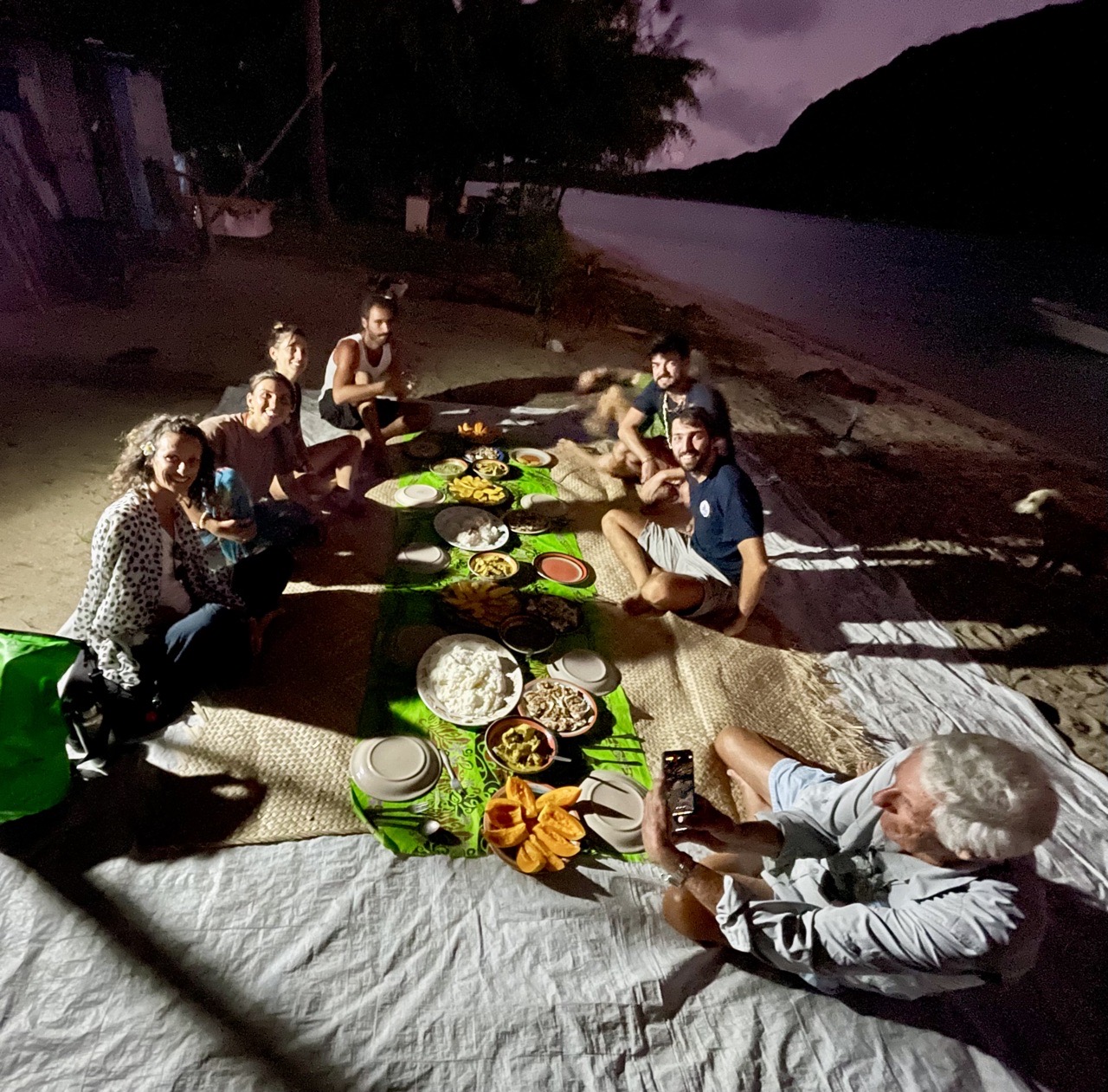
When visiting ashore for a meal with Fiji friends, the evening often begins with a grog (yangona) session around the Tanoa – just like having a few drinks with friends in your boat or at home. In this instance it is etiquette to place a small pyramid of waka crossways in front of the tanoa on arrival. ¼ kilo or a packet of already pounded yaqona is enough.
-
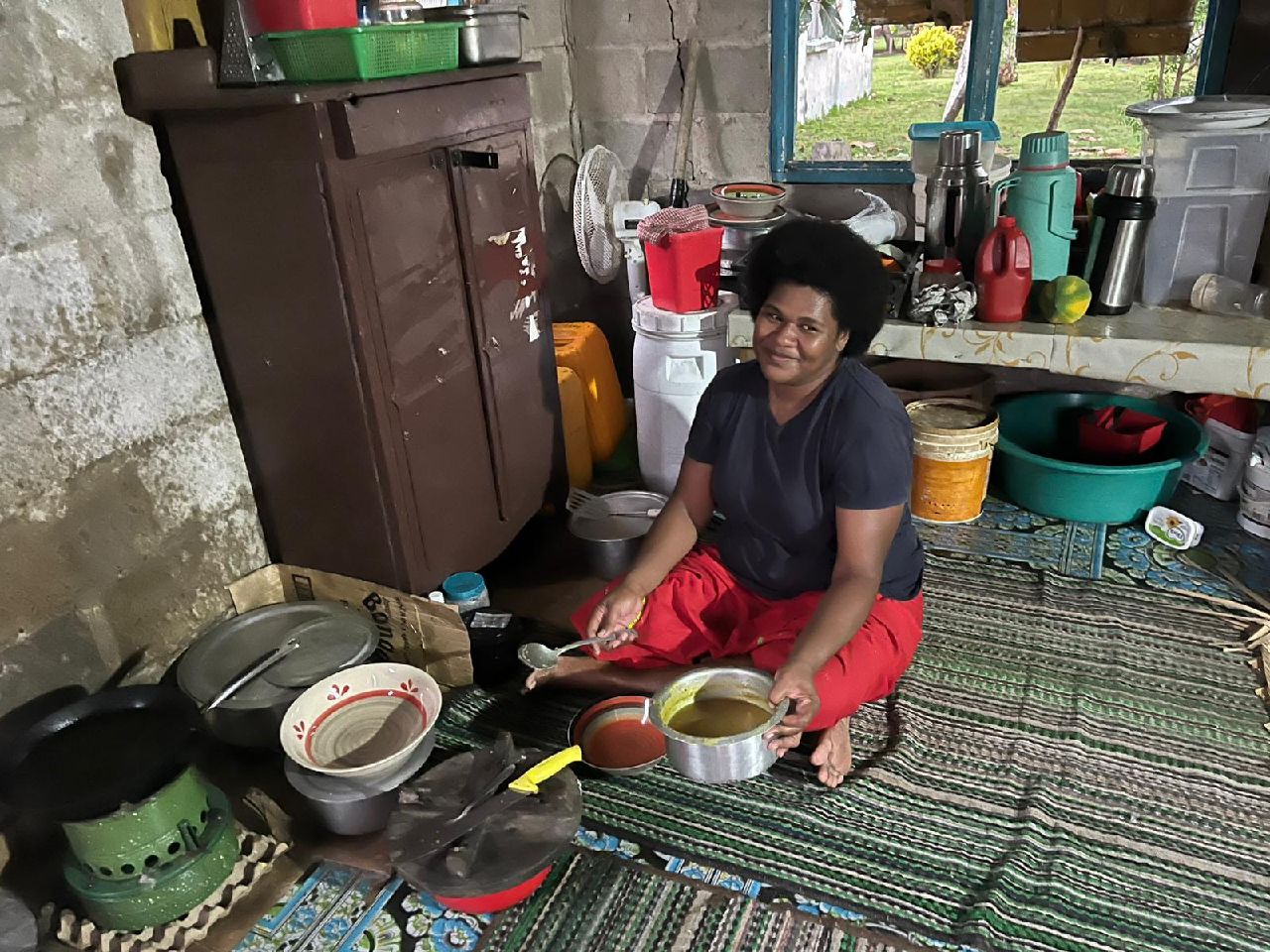
- Leonora Cooking for Cruisers
-
- Nabukeru Village
Closure when departing a village
The traditional protocol when departing a Fijian village or leaving the anchorage is called the iTatau. It serves as a respectful farewell to officially thank the hosts, seek a final blessing or permission to leave, and relieve the village of the responsibility of your safety and care.






A great article, thank you
Great insight for a tradition I also heard from others, but none ever mention where and when to buy the Yaqona root. How much to buy based on the wandering timeframe in Fiji. 😃
Roberto, you can find the Yakima (kava) root at all the local markets. The market stalls will have a variety of sizes/prices of wrapped packages. We generally pay $30fj to $40fj for a wrapped package. We buy about 6 wrapped bunches as we like to visit the island villages. The kava root lasts a long time and doesn’t seem to go out of date.
Powdered kava can also be gifted.
Ive always called it Kava, and the village held a departing ceremony called Mothei (so?) at which time more Kava was consumed . This was I. The southeastern lay group so maybe different island have different names/traditions?
Valid comment Roberto. Buy “pyramids” (⅓ to ½ kilo bundlesl) of waka (yaqona root) at the markets at Suva, Savusavu, Lautoka, Nadi, Labassa. Those are the most reliable places. Purchase enough bundles to cover your travels. Generally buying it from the villages is unreliable. They often don’t have any for sale.
Kava is the Tongan name for the plant called yaqona in Fiji.
Fijians also use the kava word when talking to vulagi (Visitors) as they know that’s what most of the world’s people call it.
Most Lau people are of Tongan decent. There’s a long story about that relating to wars and big canoes so maybe they do use the word kava. I have not been to the Lau.
Yaqona is the plant. The roots are called waka. Moce (pronounced “mothei”) means goodbye, cherio. Wherever we were iTatau was used for the departure ceremony
Great article Hilton. Thank you for the info!
Is the drink alcoholic? I don’t drink alcohol so how do I participate if it’s alcohol?
Thanks!
The drink is definitely not alcoholic. There is no brewing involved. It is just the root powder soaked in clean water.