
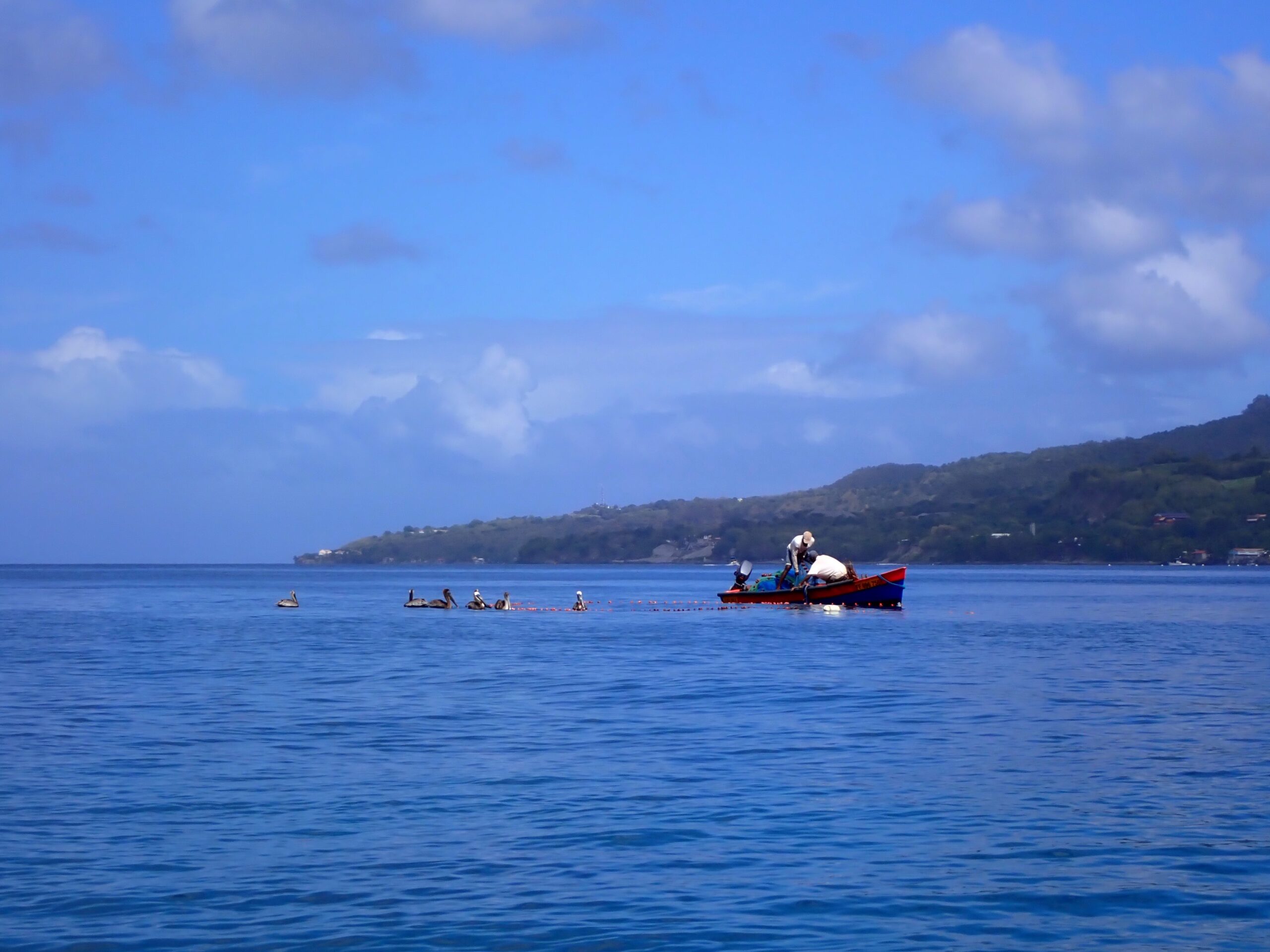
Genovese Christopher Columbus wrongly named the Caribbean Islands the West Indies, when he discovered them and the name stuck.
Today the West Indies comprise three distinct group of islands and one of those, the eastern part, forms an arch called Lesser Antilles.
The Lesser Antilles, is also subdivided into three. In the north we find the Leeward Islands, to the south the Windward Islands, and to the west the Leeward Antilles. In that arch of Lesser Antilles islands, two EU countries, France and The Netherlands, have held onto their colonial territories. Today, eight of the Lesser Antilles Islands are either Dutch or French, and in addition they actually share an island, Saint Martin (Saint-Martin and Sint Maarten).
We visited all nine of them and found something unique to each one.
Dutch Lesser Antilles
The Dutch Lesser Antilles Islands are spread between Leeward Antilles Islands (to the west) and the Leeward Islands (the north part of the chain). Both groups are called ‘Leeward’ because they were considered easier to sail to in the easterly trade winds than the Windward Island, the southern part of the island chain that lies between them.
All the Dutch Lesser Antilles are part of the Kingdom of the Netherlands, but only Bonaire, Saba and Statia form part of the country of The Netherlands. This is a difference that generally goes unnoticed as none of the Dutch island are part of the European Union.
Europeans cruise them as foreigners, with SailClear paid in US dollars, and visits to English speaking officers who stamp EU passports. There is very little European feel to them except for the century old houses and supermarkets with some Dutch specialties. Things like spearguns will be confiscated, and can be retrieved upon your departure. Drones are not confiscated but may currently not be flown on Bonaire, Saba and Statia – this may change with pending legislation. On Aruba and Curacao drones are allowed, but check the local rules before you fly.
Leeward Antilles
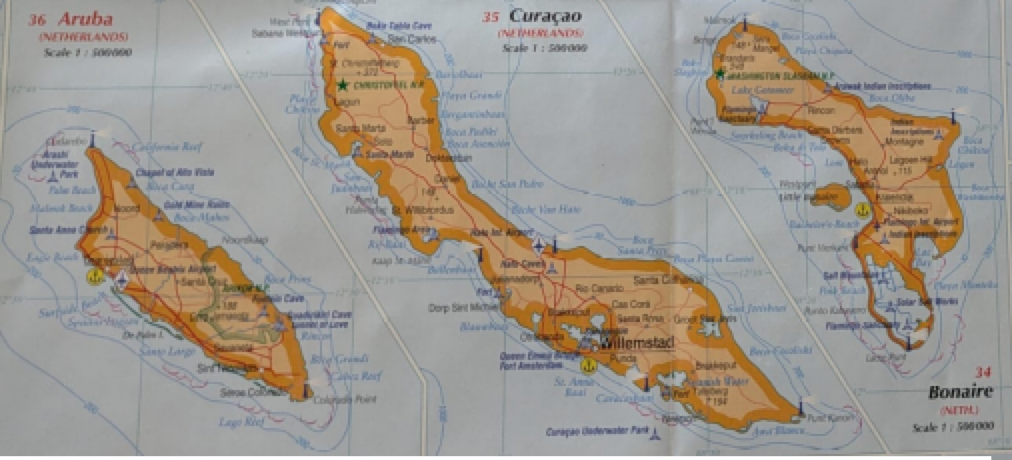
In the Leeward Antilles we find the ABC; Aruba, Bonaire and Curacao. They lie just above Venezuela on 12 degrees latitude, outside the hurricane belt on most insurers’ maps. There has never been a direct hit… at least so I thought, until I learned that this isn’t true. ABC suffered a direct hit in 1877. As nobody remembers this, it’s a popular place to spend off-season, either living onboard at anchor in Curacao or leaving the boat behind on the hard in Aruba. Both islands also boast about having best Caribbean beaches, and plenty of wind for kiting.
The ABC’s dry climate is good for the boat and makes a nice change from the humid Windward and Leeward islands. Marina prices are generally lower, and flight connections both to Europe and the US seem better than further east. If you pass the following season in the Leeward or Windward islands you will have a rather upwind sail to get back east.
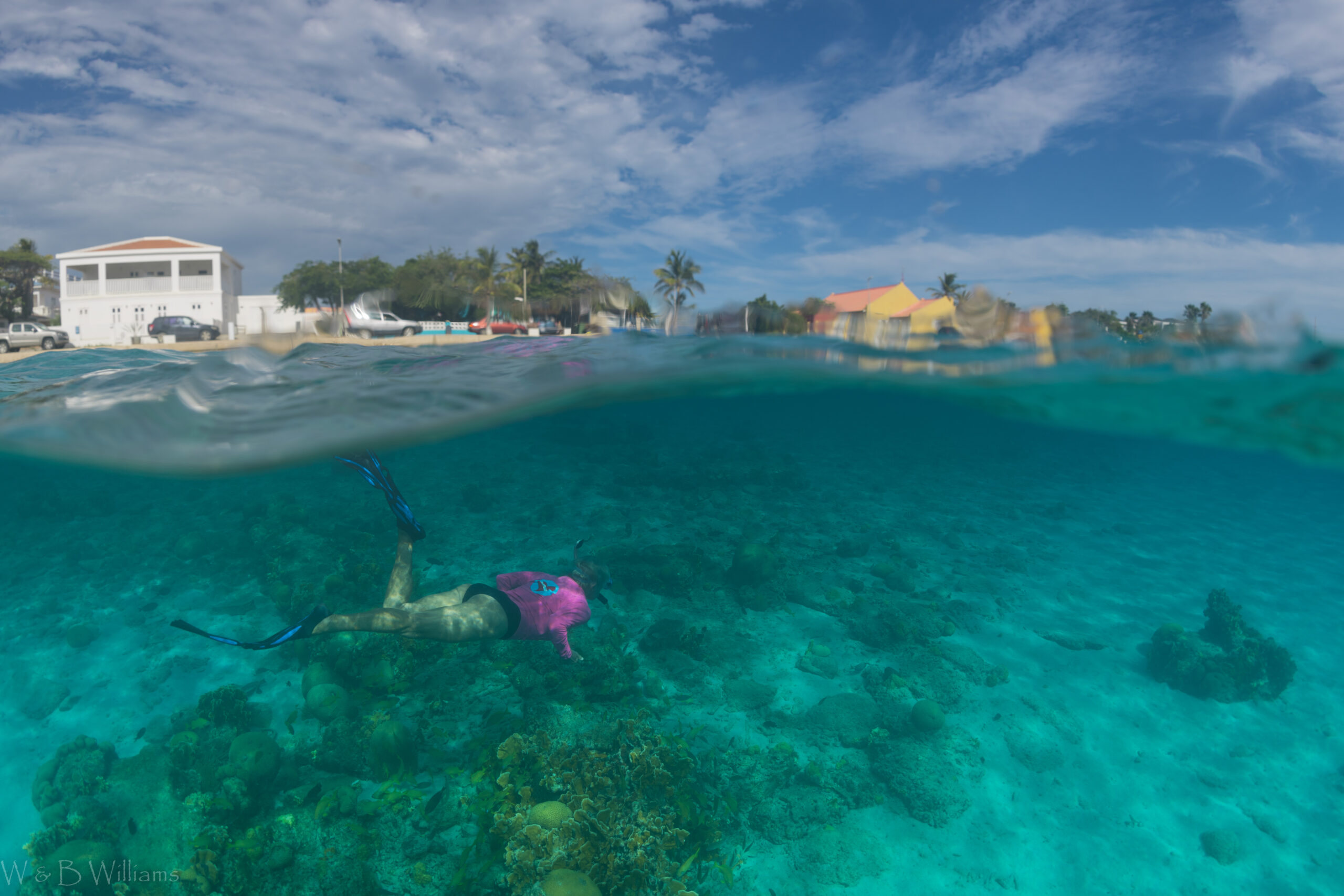
For cruising, the ABCs offer little besides Bonaire. Bonaire is a coral reef island with crystal clear water and flamingos to match. It’s a nice place to pass a few days while going to and from Aruba or Curacao. Anchoring is prohibited though, so you must pick up and pay for a mooring in front of its ‘capital’ Kralendijk.
-
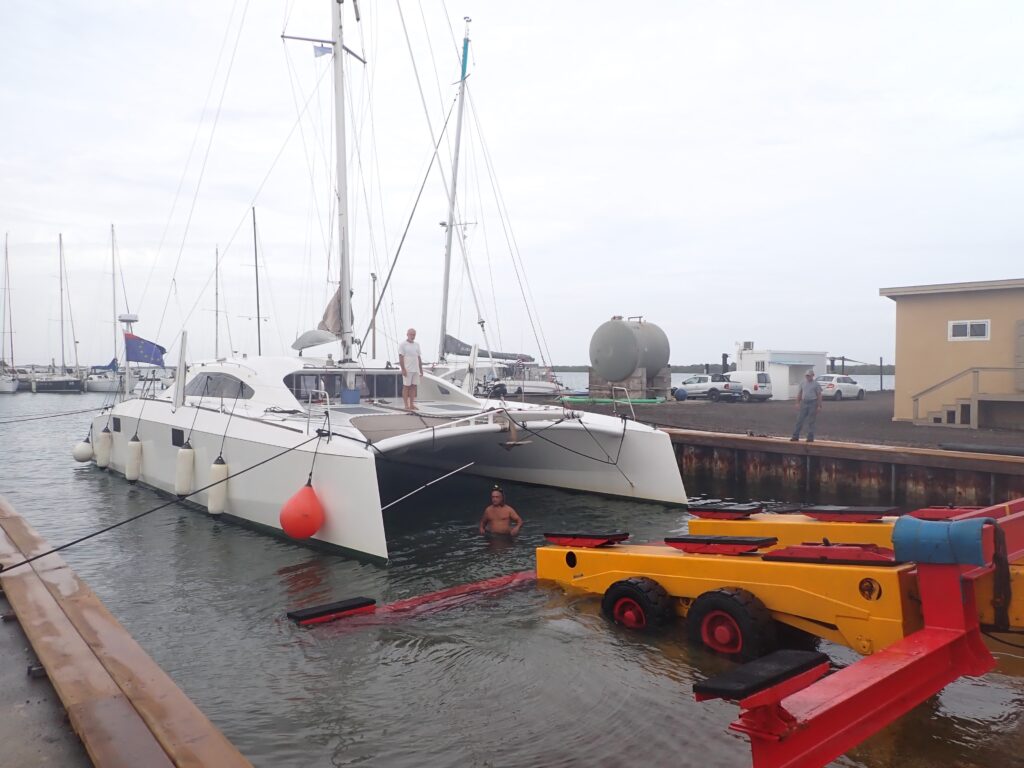
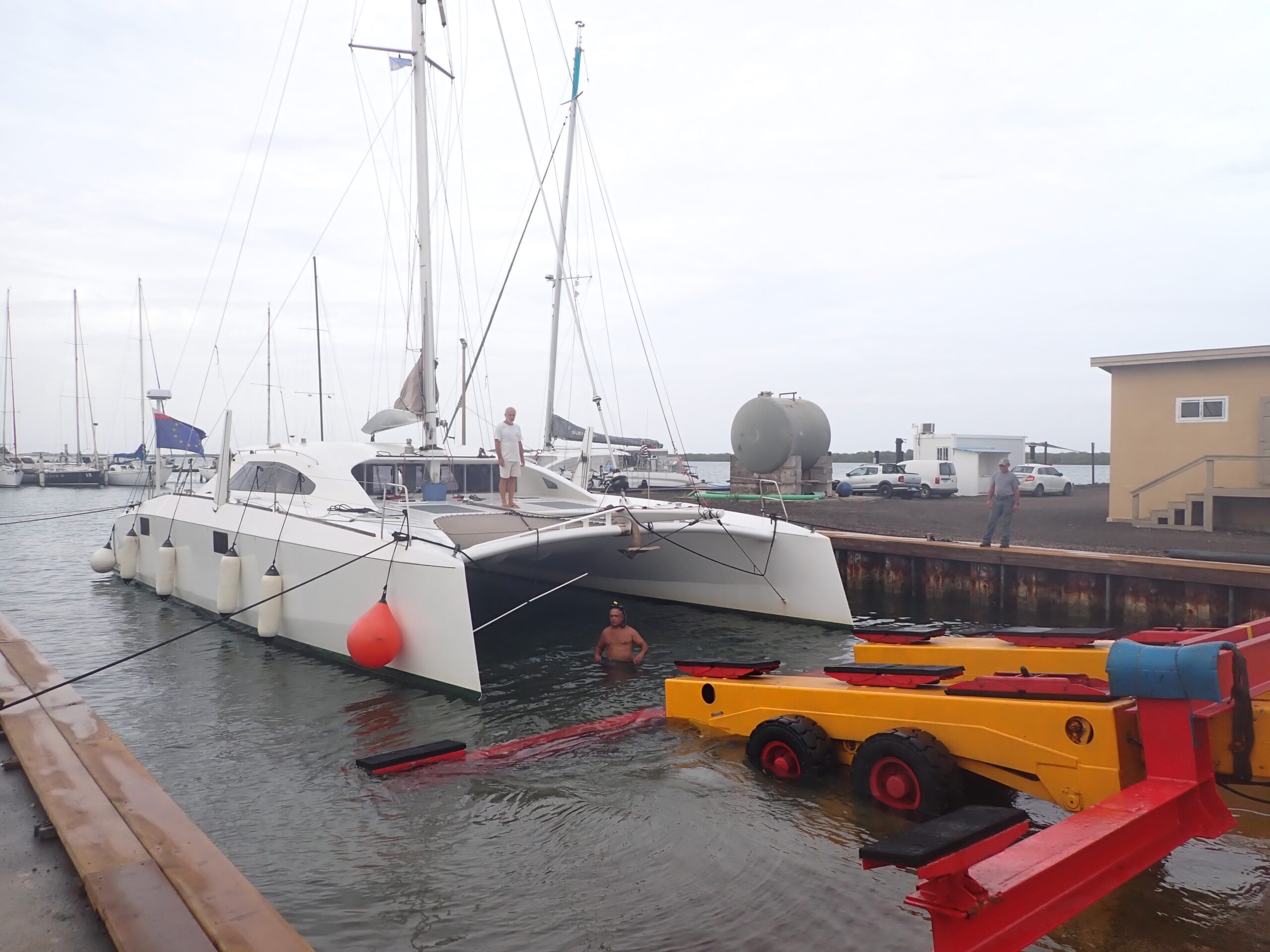
- Varadero, Aruba
Leeward Islands
In the Leeward Islands, between St. Kitts and SXM, we find two other Dutch islands; Saba and Statia (official name Sint Eustatius). Saba and Statia are so unlike the other Lesser Antilles, it’s like they are caught in the past. Both are small volcanic islands with a cruiser-unfriendly geography. They very scarcely populated with just a couple of thousand inhabitants each. If you are in the area and the weather is settled (there are no protected anchorages) it’s definitely worth checking them out.
Saba
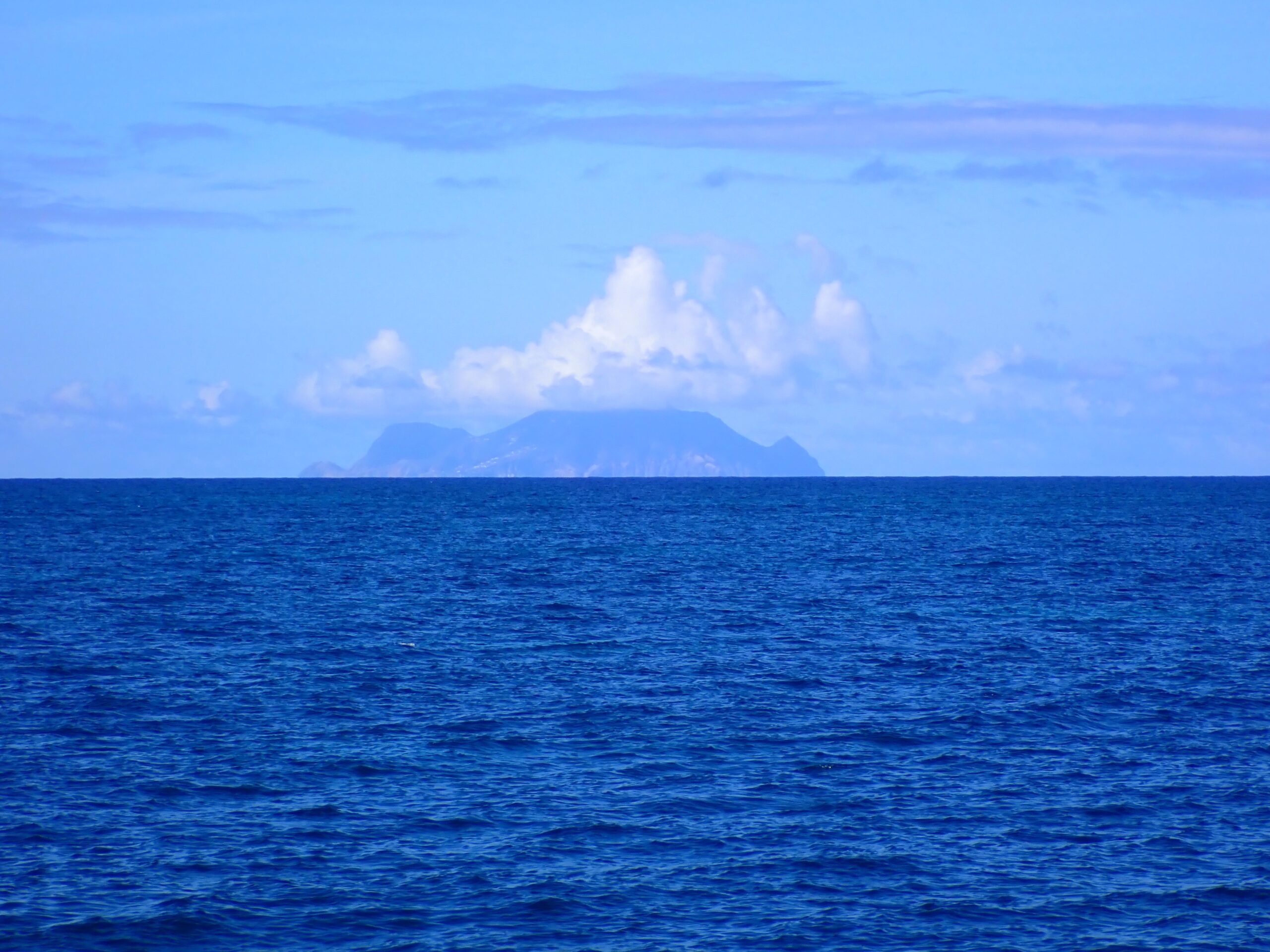
Saba combines roughness, unspoiled nature and a colourful history, with an absence of tourists. You feel very much lost in the middle of nothing. It’s easy to immediately forget that you only sailed 2o miles from very populated islands to get here. The island is nicknamed ‘the unspoiled queen’ and boasts the highest point of The Netherlands; you can climb all 870m to get to the top of Mount Scenery.
Saba also has the shortest commercial runway in the world, built on Flat Point, the only (small!) piece of flat land that the island has to offer.
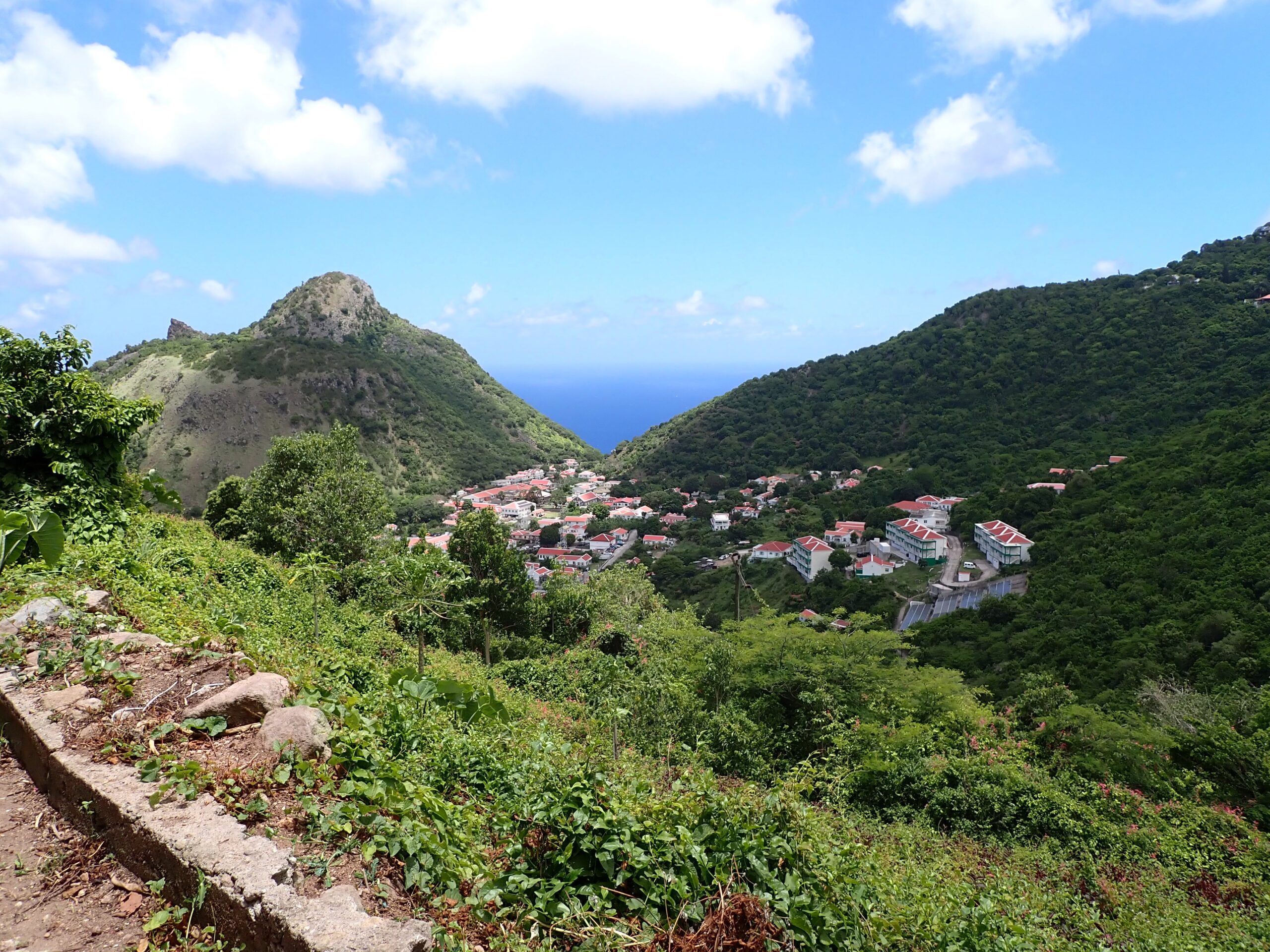
Everything on Saba is up. You will be walking 220m uphill, just to reach the island’s capital, ironically called The Bottom. The locals understand this, and offer you a ride even before you can even stick out your thumb. From The Bottom it’s a nice hike to the village of Windwardside (yes, it lies to the east) or further up to admire the scenery from Mount Scenery (yes, the names are unreal).
Saba is an extinct volcano so it’s too deep to anchor anywhere. Instead, you need to pick up a mooring ball on the west coast; there are mooring balls on the south coast too, but there you will roll even more. From the west mooring field it’s a long and wet dinghy ride to the harbour on the south coast, but once you get there and get a lift up to The Bottom, you encounter a world seemingly unreal for a Caribbean Island.
-
- Saba seen from SXM
-
- The Bottom seen from the trail to Windwardside
-
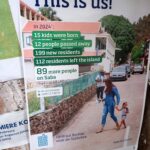
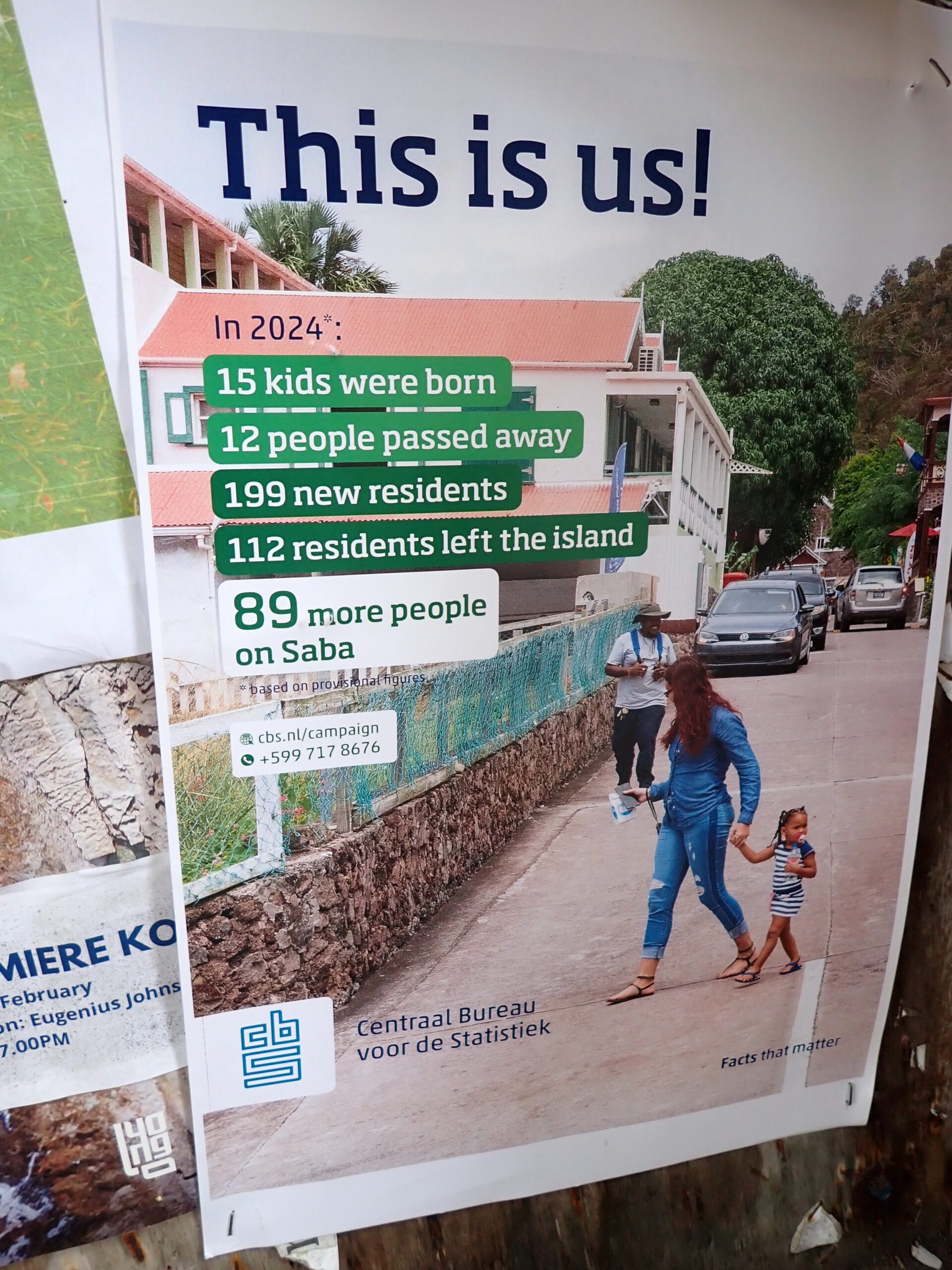
- Island statistics
Statia
Until fifty years ago Saba didn’t have any kind of harbour, since it was Statia that played the role of trade hub.
Statia has two volcanoes. Some flattish land exists between them, and on the western shore there is a decent anchorage in front of the capital, Oranjestad. For centuries this anchorage was a free port, giving Statia a central role in the Caribbean trade routes. It was heavily populated by merchants and became known as the ‘Golden Rock’ due to its immense wealth. It also became the arms hub for the American rebels.
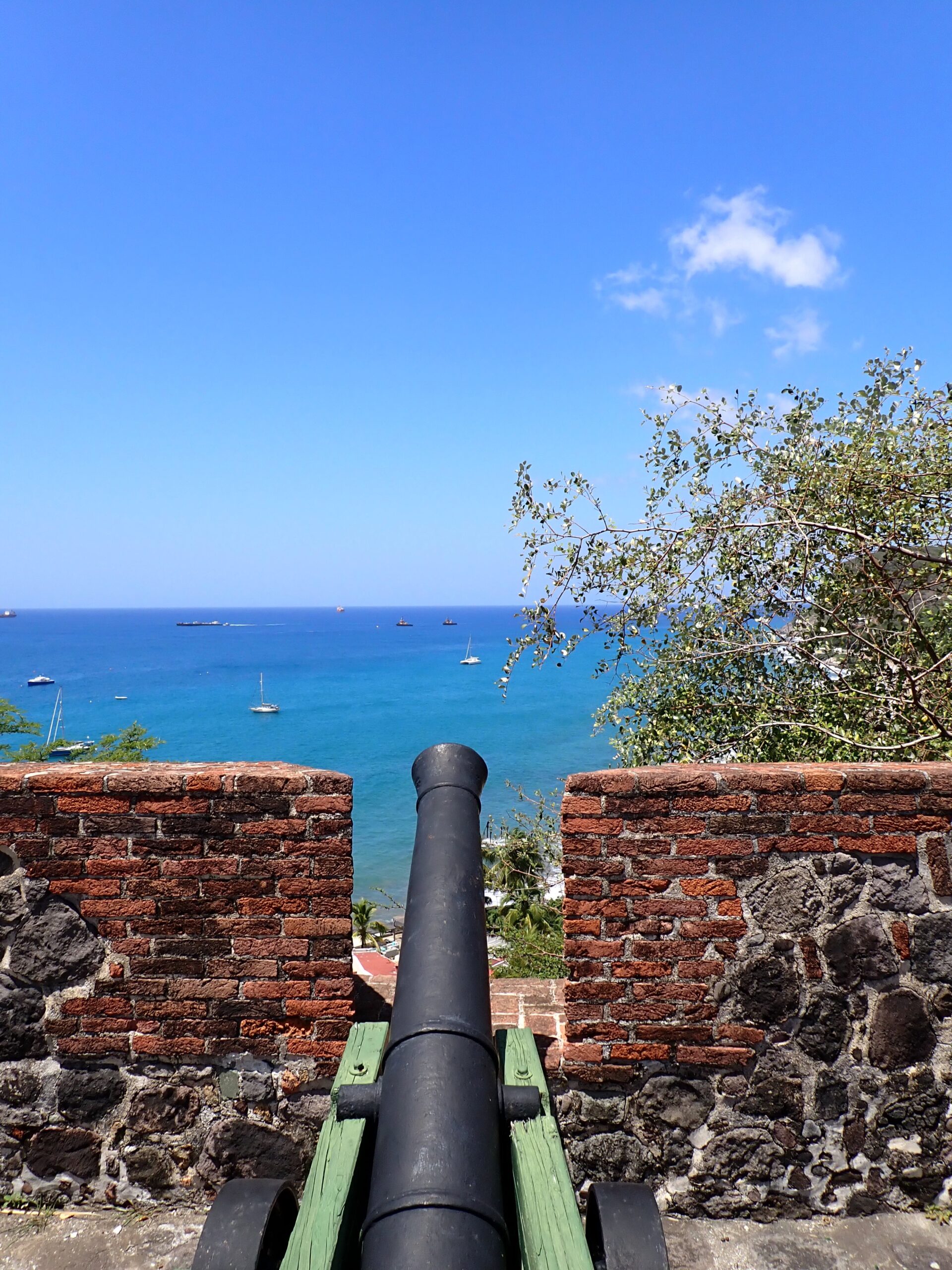
Two hundred fifty years ago, on November 16 1776, the governor of Statia ordered a return salute to the US brig Andrea Doria. This became known as the ‘First Salute’ recognizing US independence. Unfortunately for the Statians, this caused Britain to declare war on The Netherlands, which in turn led to the sharp decline of the island.
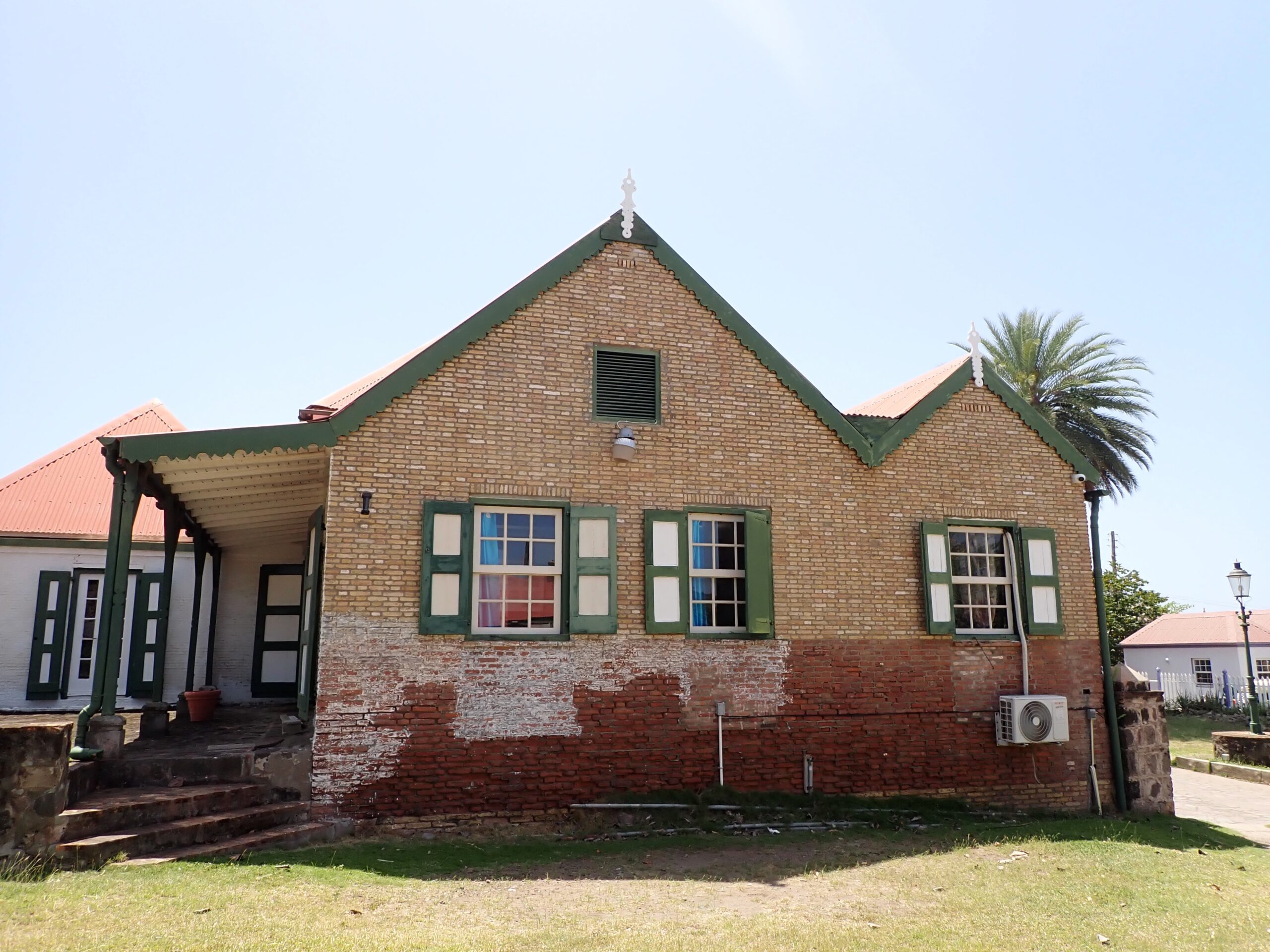
It feels like time stood still from that first salute, making the island a ‘historic gem’ (as written on the Statian number plates). You pass ministerial agencies housed in century old typical Dutch lodging, and take the slave path from the anchorage up to Oranjestad. Today the governor’s house is a museum detailing the island’s role in history including the tragic slave trade that brought so much wealth to the island.
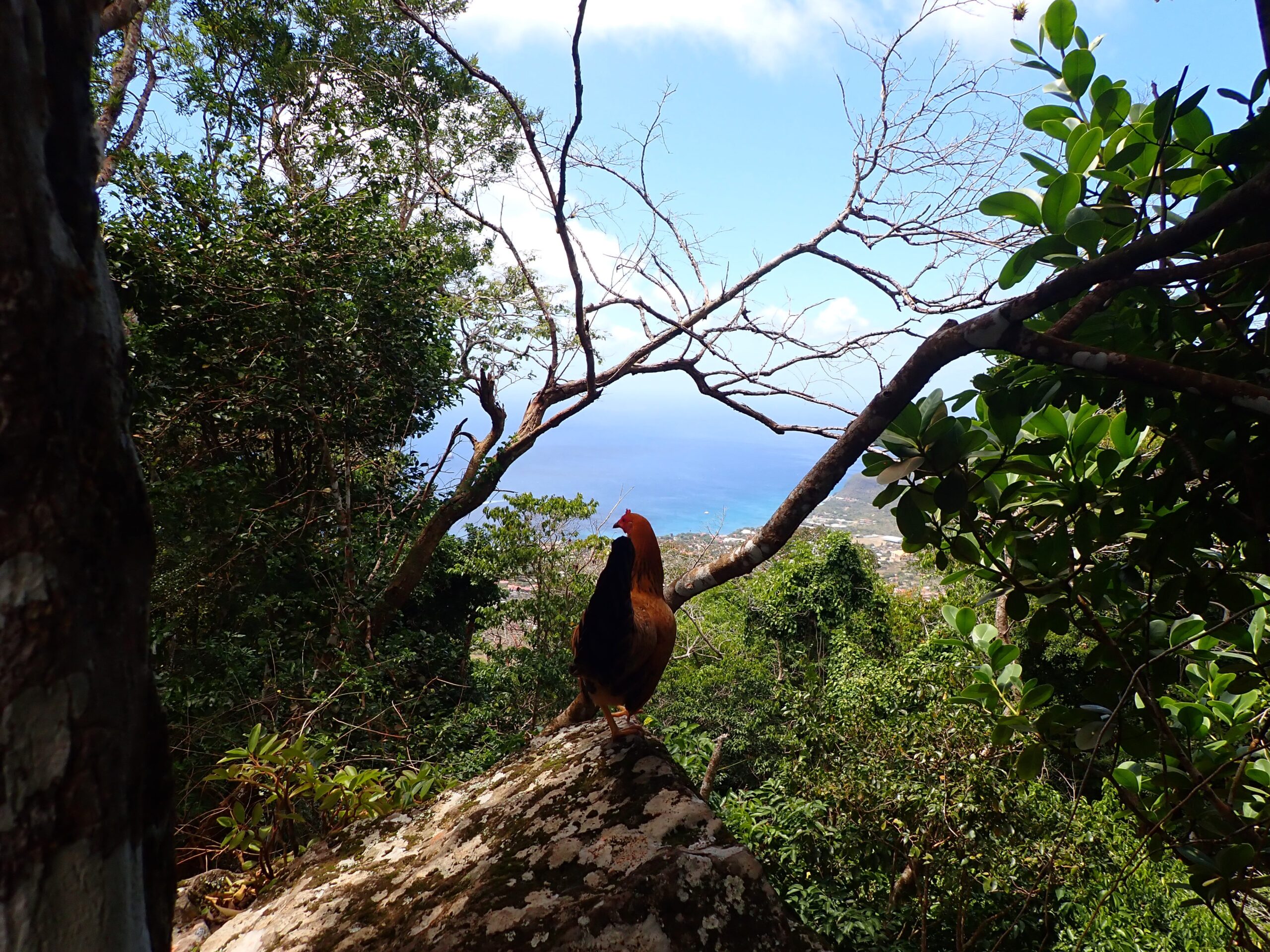
Statia also offers great hiking, in particular the trails around The Quill volcano. Be prepared for a long hot walk to reach the park area and its lush, natural sun cover. Make sure you start early, meaning at sunrise. That was far too early for us, so we only managed to reach the rim of the volcano. We didn’t enter the crater nor walked all the way around it, as some fitter cruisers rightly suggested to us once we saw their pictures.
-
- The Quill
-
- Governor’s house
-
- First Salute
French Lesser Antilles
Three of the Lesser Antilles Islands belong solely to France; Martinique, a Windward island, and the Leeward islands of Guadeloupe and St. Barts. These three French islands are part of the European Union so cruising them is straight forward, even for non-EU boats and citizens.
Arrival and departure notifications are done digitally and generally do not incur any costs. The exception is if you need a Zarpe for your next destination, in which case you pay a small fee (usually around €5) to get your clearance stamped. There are no cruising fees and the marinas are European priced, as are the mooring balls if they’fe not free. There are public dinghy docks and access to EU services, for example, the French national health service. Essentially it’s France, just in a better climate.
Many EU citizens work here during the sailing season, escaping the European winter, and European friends and family can easily fly in from Paris to join your cruise (according to my husband it’s too easy as he then has to plan when to be where, which isn’t easy for an Italian). There is no price difference between flying to one island and leaving from another, allowing crew to join in Martinique and depart from Guadeloupe, 80 nautical miles further north. These islands are French both on paper and in practice: you will also find shopping malls with chains like Decathlon, Leroy Merlin and Darty. The biggest difference with mainland France is the unreliability of the stock, as everything has been shipped from France Metropole.
I suppose the only potential disadvantage for the cruiser (aside from EU standards and voltages in case you aren’t European) is the language; it’s totally French. As is their cuisine, with some creoles additions such as accras, Ti’Punch, the spice bois d’inde and christophine, a vegetable named after Christopher Columbus. Unlike the potato, Columbus didn’t bring the christophine back to Europe, and probably for good reason: whichever way I prepare christophine, it tastes of earth.
Fishing and spear gunning is allowed on the French islands, outside protected areas and of endangered species. Flying a drone is also allowed, although that may have little practical usage given the very extensive no fly zones.
Martinique
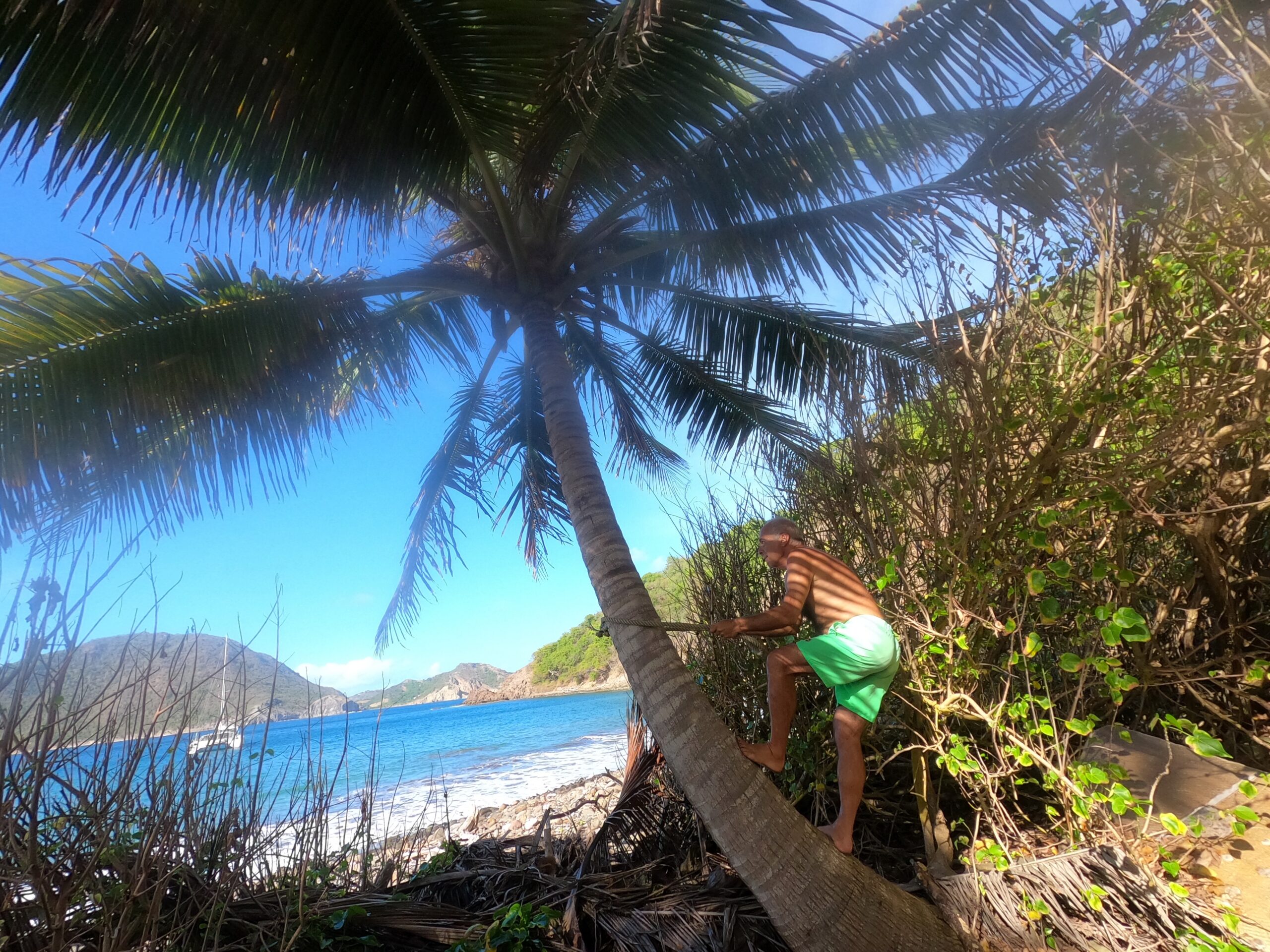
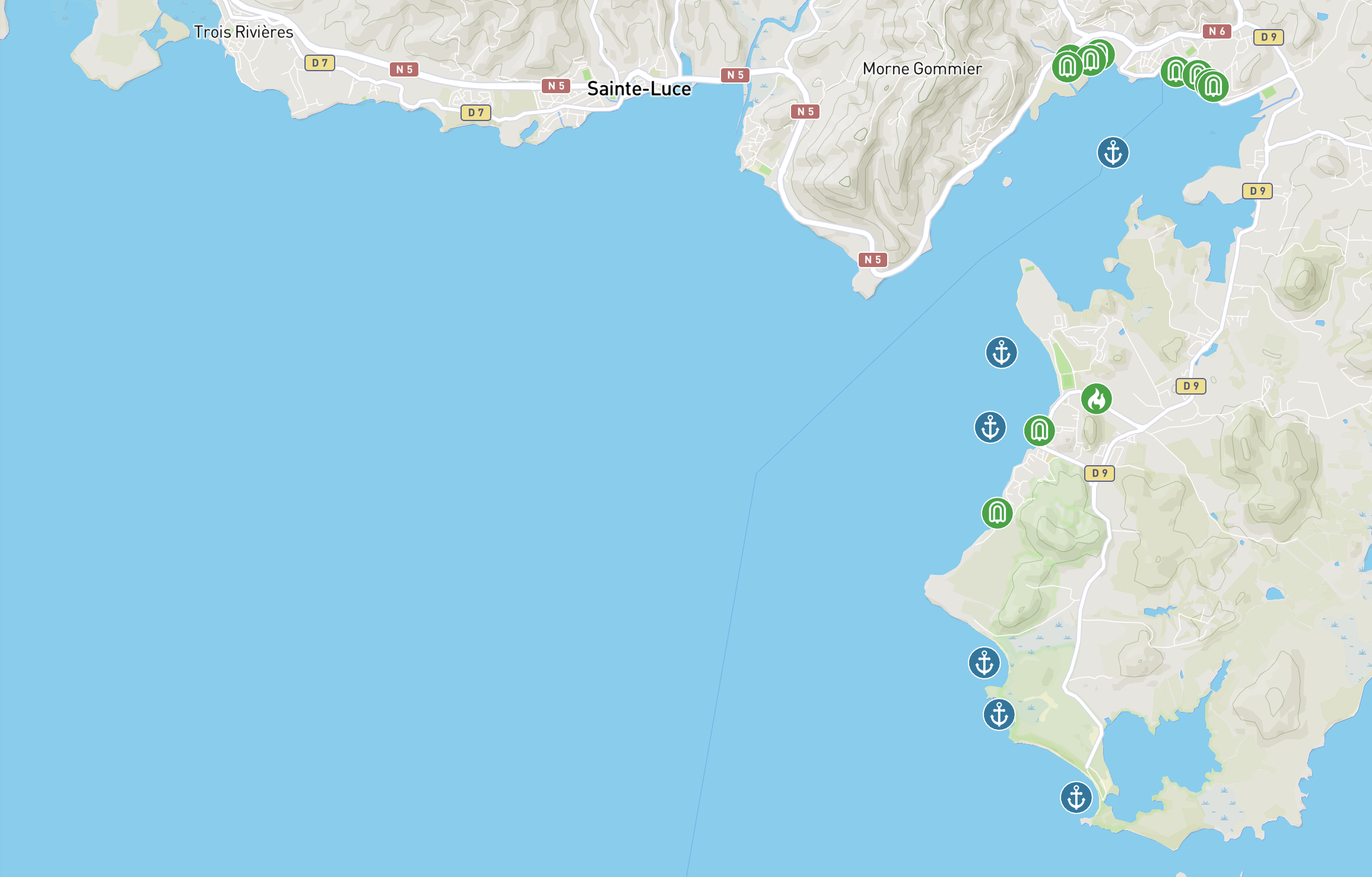
The south coast of Martinique makes a popular landfall for the Atlantic crossing in Le Marin/Baie St. Anne. You can get any boat work done, the supermarkets are probably the best and cheapest in the Caribbean, and I cannot think of a better welcome than a fresh baguette.
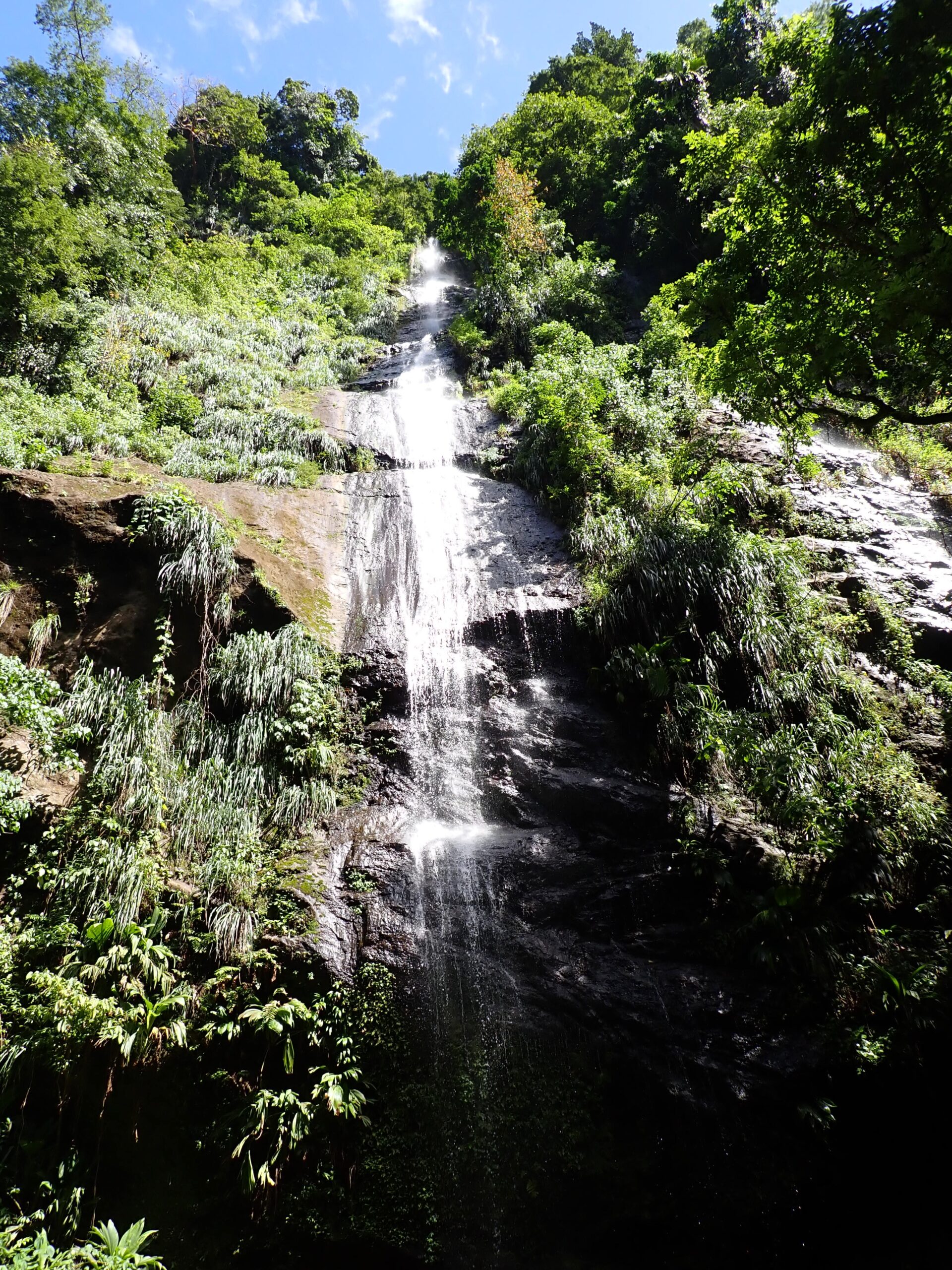
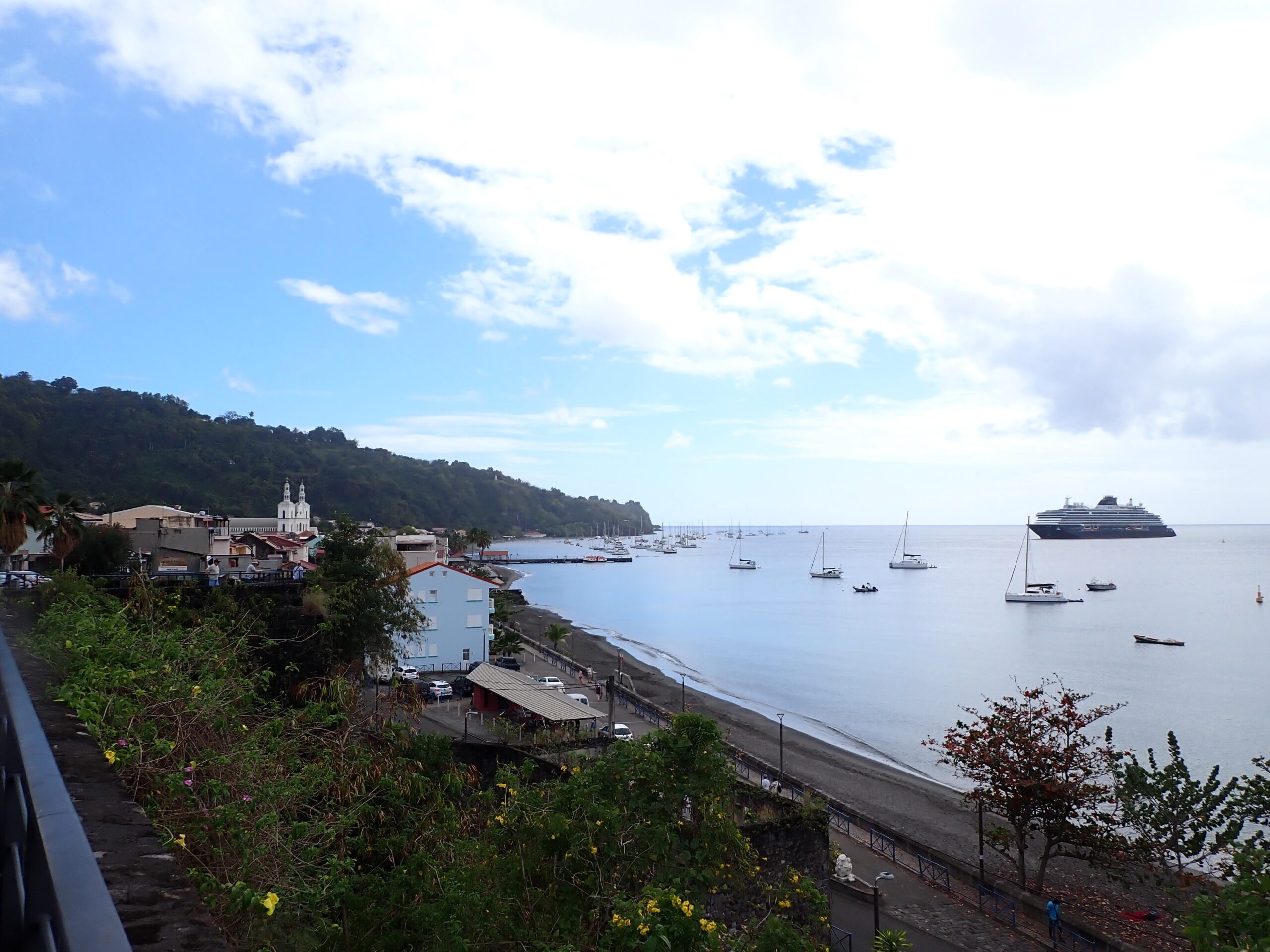
Martinique has nice anchorages, the historic Saint Pierre with a walk to the Depaz estate or Anse Couleuvre from where you can hike to a beautiful waterfall. The inland is large and deserves to be explored, there is public transport around the capital Fort-de-France and the airport, but to really explore the island you will need a car. Renting a car is easy although the traffic is intense, seems to me that there are too few roads to fit all the cars. Also make sure you have someone else driving when visiting the rum distilleries, of which Habitation Clement is my favourite with its beautiful park and plenty of tasting included in the entrance fee.
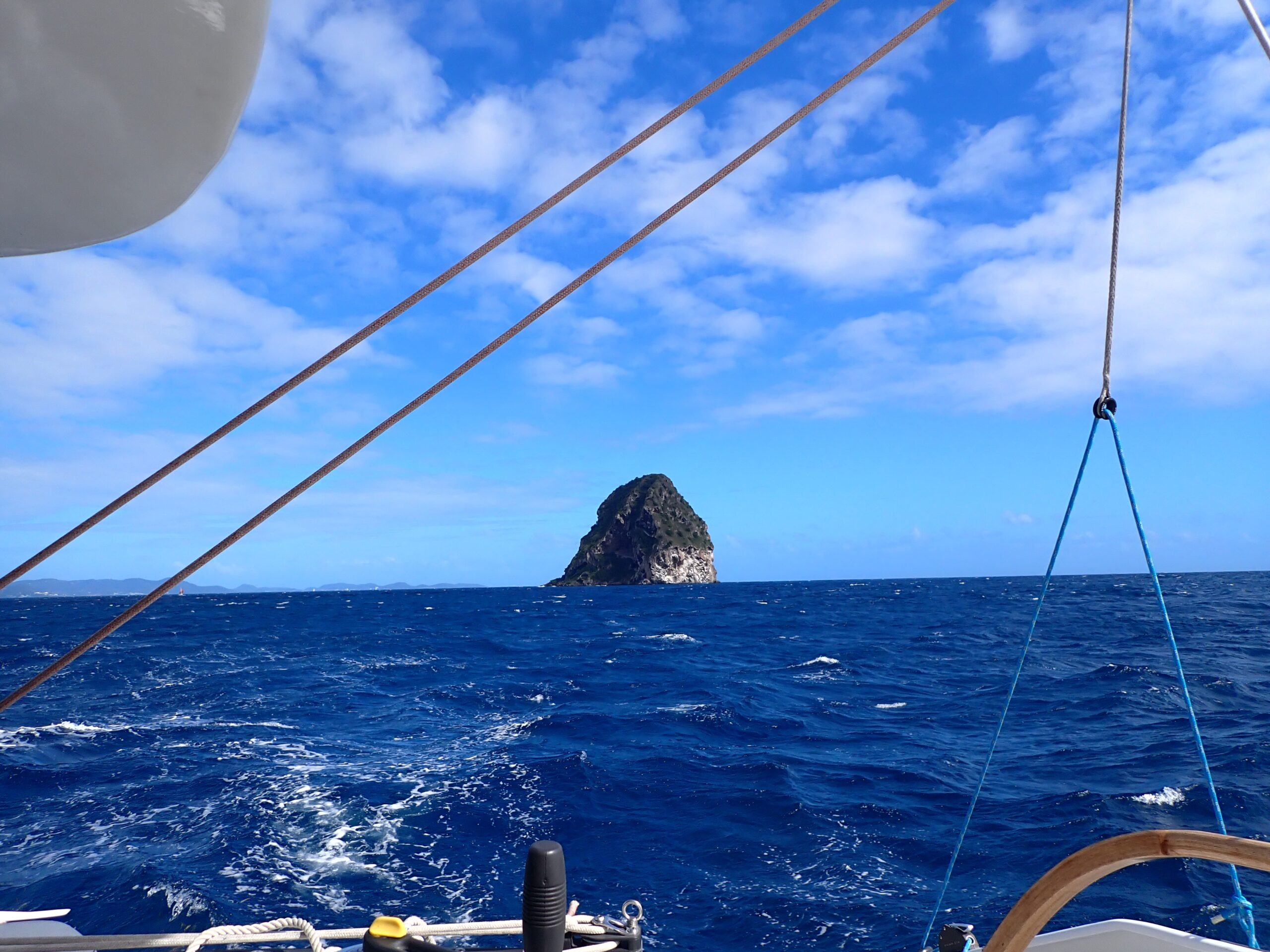
Martinique played a role in the Anglo-French wars as Josephine, the wife of Napoleon, originated from Trois Ilets in front of Fort-de-France. When the English embargoed the island by hauling cannons onto the 175m high HMS Diamond Rock, this interrupted Josephine’s letters home and so Napoleon ordered the rock to be reconquered. When sailing past this majestic rock, it’s hard to imagine how the English managed to haul up the cannons with just pulleys and ships. Between the Diamond Rock and the Bay of St. Anne, the south coast of Martinique offers beautiful beaches just be aware of the (small green apples) Mancineel tree marked with a red X, it’s poisonous.
-
- Waterfall Couleuvre
-
- HMS Diamond Rock
-
- Saint Pierre, Martinique
Guadeloupe
Guadeloupe is the butterfly shaped island. It actually consists of two separate islands, Basse-Terre and Grande-Terre separated by a navigational channel (Riviere Salee). The westerly island ‘Basse-Terre’ is named ‘Low-Land’ not because it is low, it’s actually the hillier island of the two, but because it lies to leeward. As with the other islands in the chain, cruising is primarily done on the western side given the easterly tradewinds and the sargassum that invades eastern shores. Guadeloupe is the largest Lesser Antilles islands and includes some off-lying islets. On the archipelago Les Saintes you can enjoy the holiday feeling together with day tourists and walk up to Napoleon’s fort, and you can explore the round Marie Galante island by scooter.
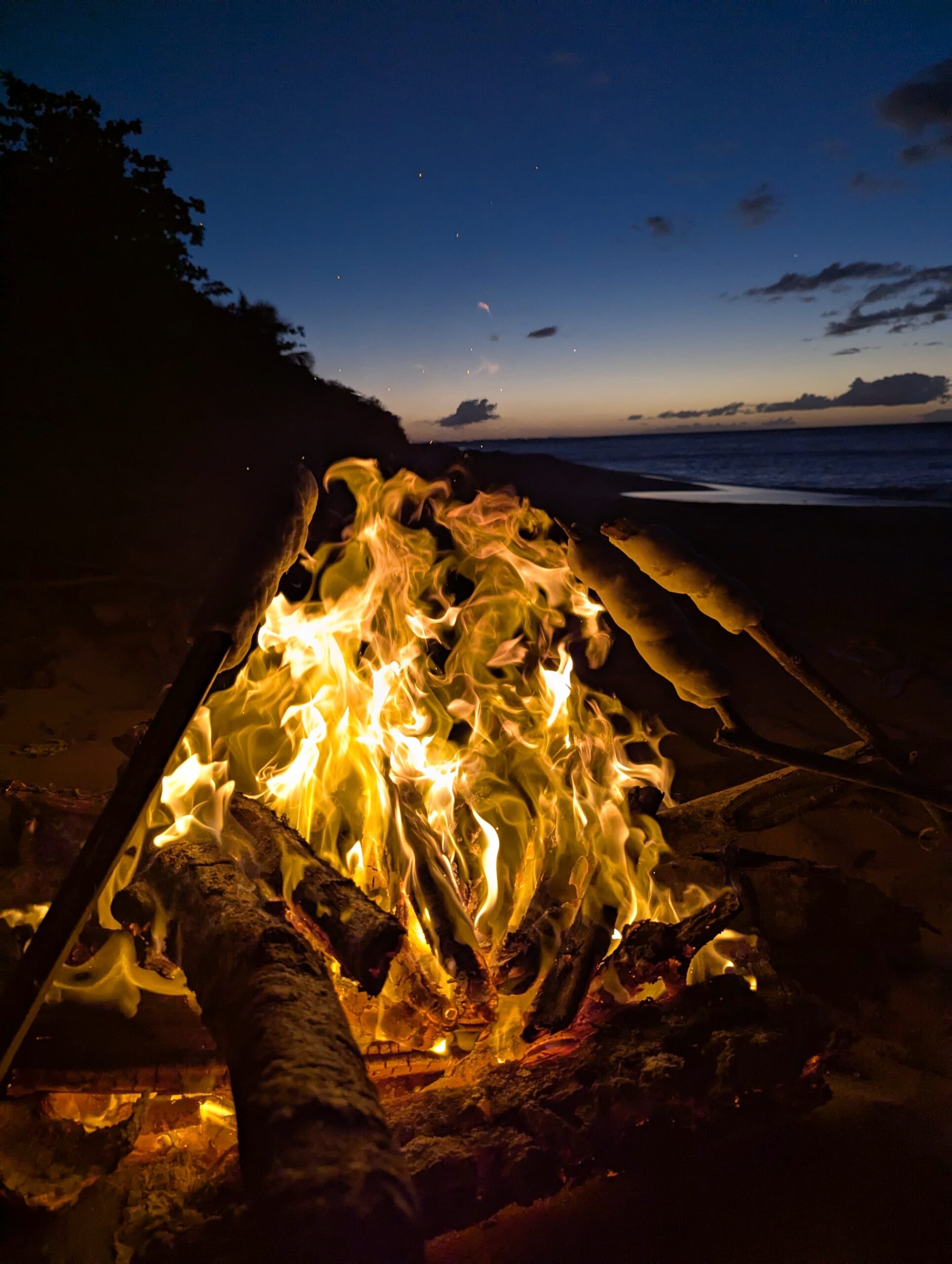
On Guadeloupe itself, visit the fictitious Honore Police Station in Deshaies, snorkel Jacques Cousteau’s Park, relax in the sea-spa at Bouillante, make a fire on the postcard Caribbean beach Grand Anse, visit a chocolate producer or a tropical zoo. I could go on, better you check the NFL markers yourself and good luck choosing! The island has close to half a million inhabitants so merits to be explored by car and make sure to bring hiking and swimming gear for all its trails and waterfalls.
-
- Deshaies
-
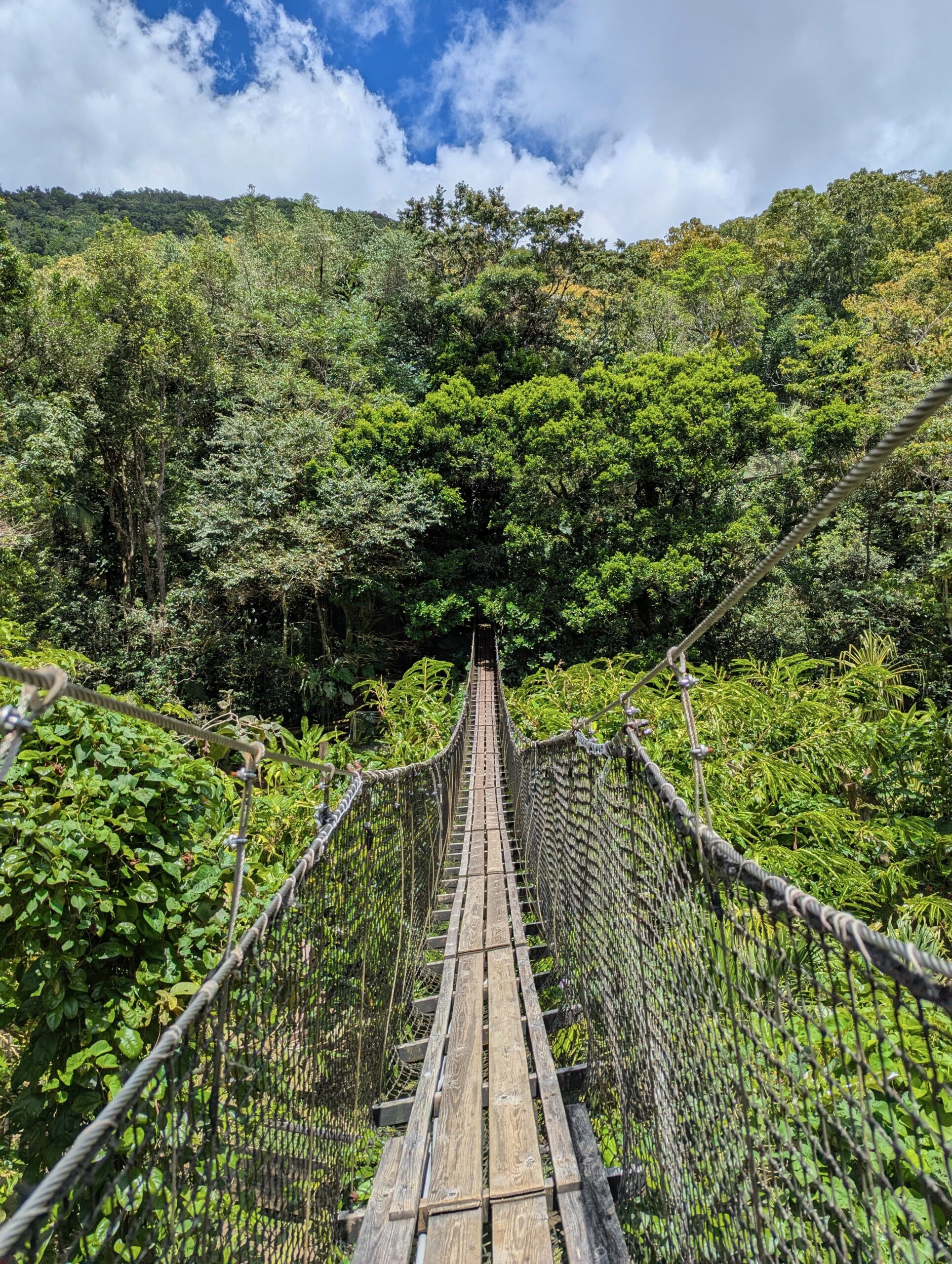
- Zoo’s suspension bridge
St. Barts
A third French island lies a hundred miles north of Guadeloupe; St. Barts (officially Saint Barthelemy). Being small and hilly, it has no economic value, so in the eighteenth century the French King exchanged it with the Swedish King for trading privileges in Gothenburg. A century later Sweden sold it back to France as they considered the island’s poverty a national humiliation. A century later still, it’s the place for the super rich; Sweden sold the island for the equivalent of 2 million today which buys you one apartment in its capital Gustavia. During the season superyachts pile up in front of Gustavia, so if that’s your thing definitely take a dinghy ride and inspect them up close.
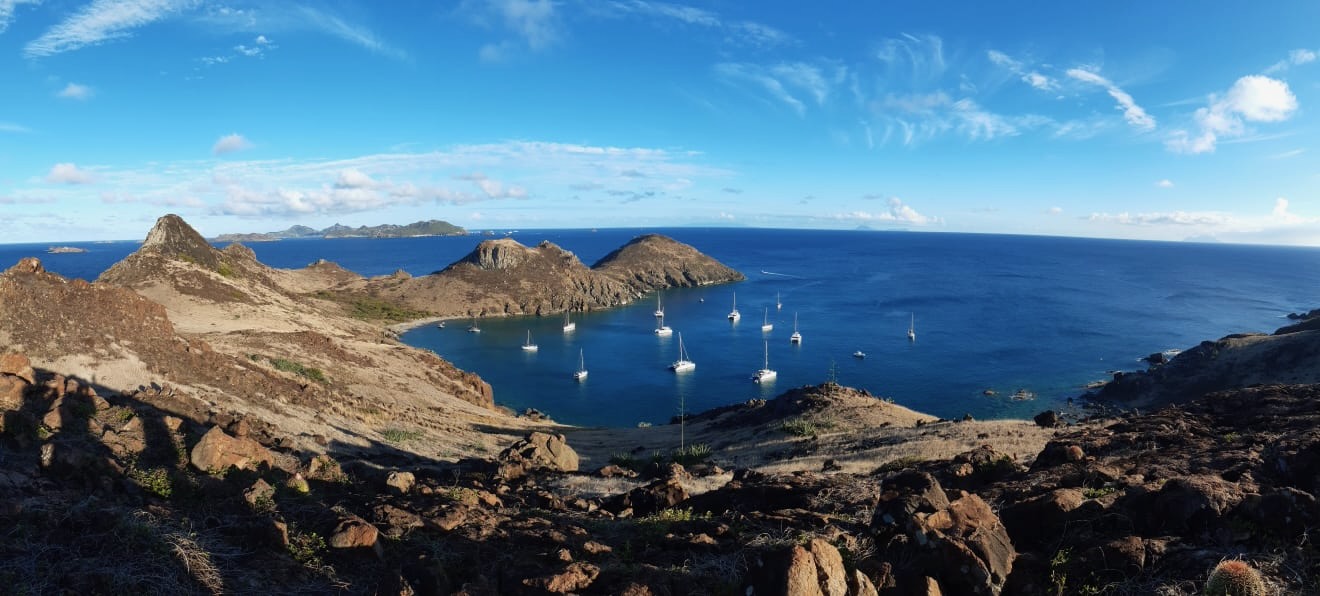
St. Barts makes for an interesting stop: I had never seen a supermarket with valet parking before. The northern anchorage is nice (just make sure you check where to anchor) and from there you can take the dinghy to Gustavia if you want to escape the paid and overcrowded anchorage in front of the capital. On your way to or from St. Barts, the desolate Ile Fourchue makes for a nice stop.
-
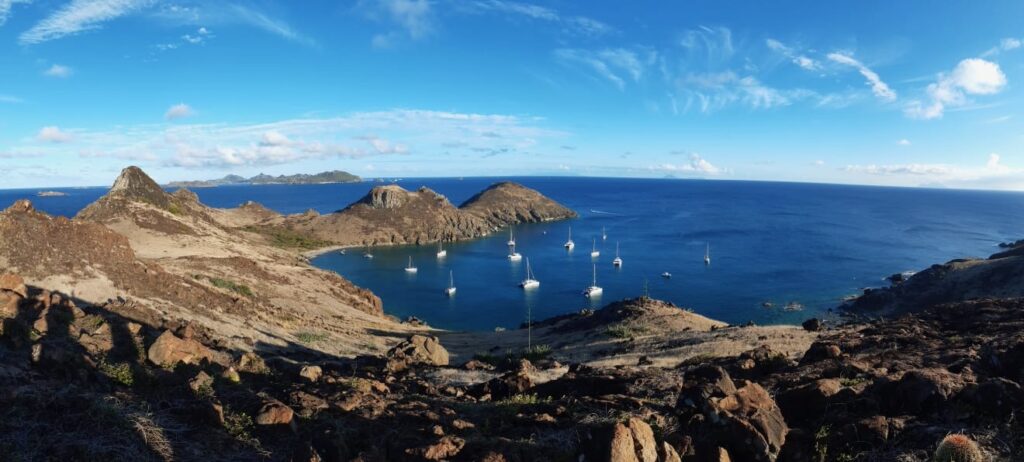
- Ile Forchue
Saint Martin & Sint Maarten (SXM)
The most northern Lesser Antilles island is half French (northern half) and half Dutch (southern half). It has two names: Saint Martin (French side) and Sint Maarten (Dutch side) as has been separated since 1648.
Today it’s known by its international airport code SXM and there is a separate blog on this dual island. For cruising there is little on offer except for a few desolate nights at Ile Tintamarre (watch out for the unmarked Mancineel trees) followed by bars and restaurants in Grand-Case. Yet during the season you will find hundreds of cruisers on SXM. It’s the place to get boat works done if you don’t speak French, the place to provision if headed to the Virgin Islands or The Bahamas and is a hop off point for the Atlantic crossing at the end of the season. ARC Europe departs from SXM in the beginning of May.
As Air France and (Dutch) KLM are the same company there are excellent flight connections to Europe. But it’s only the airline that the French and the Dutch share on this island, everything else is different. Also the rules on spearfishing and drones differ so make sure you check what applies where before you use either.
French Saint Martin
French Saint Martin is like the other French islands, I have noticed only a couple of differences. Saint Martin is much smaller than Guadeloupe and Martinique, so it doesn’t have the same standard of services or shops. The supermarket prices are also higher but the advantage is that quite some people speak, or at least understand, English.
The border
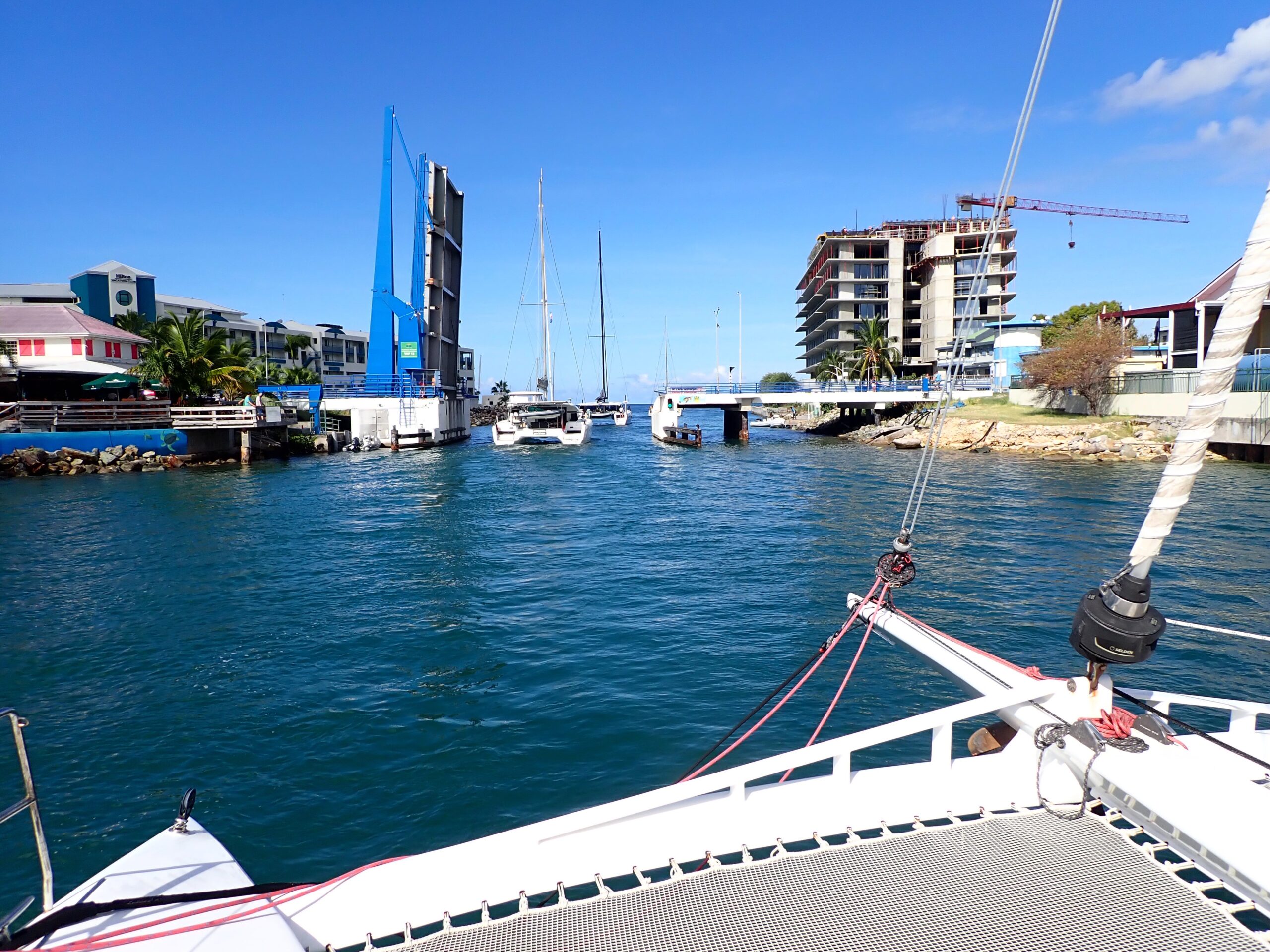
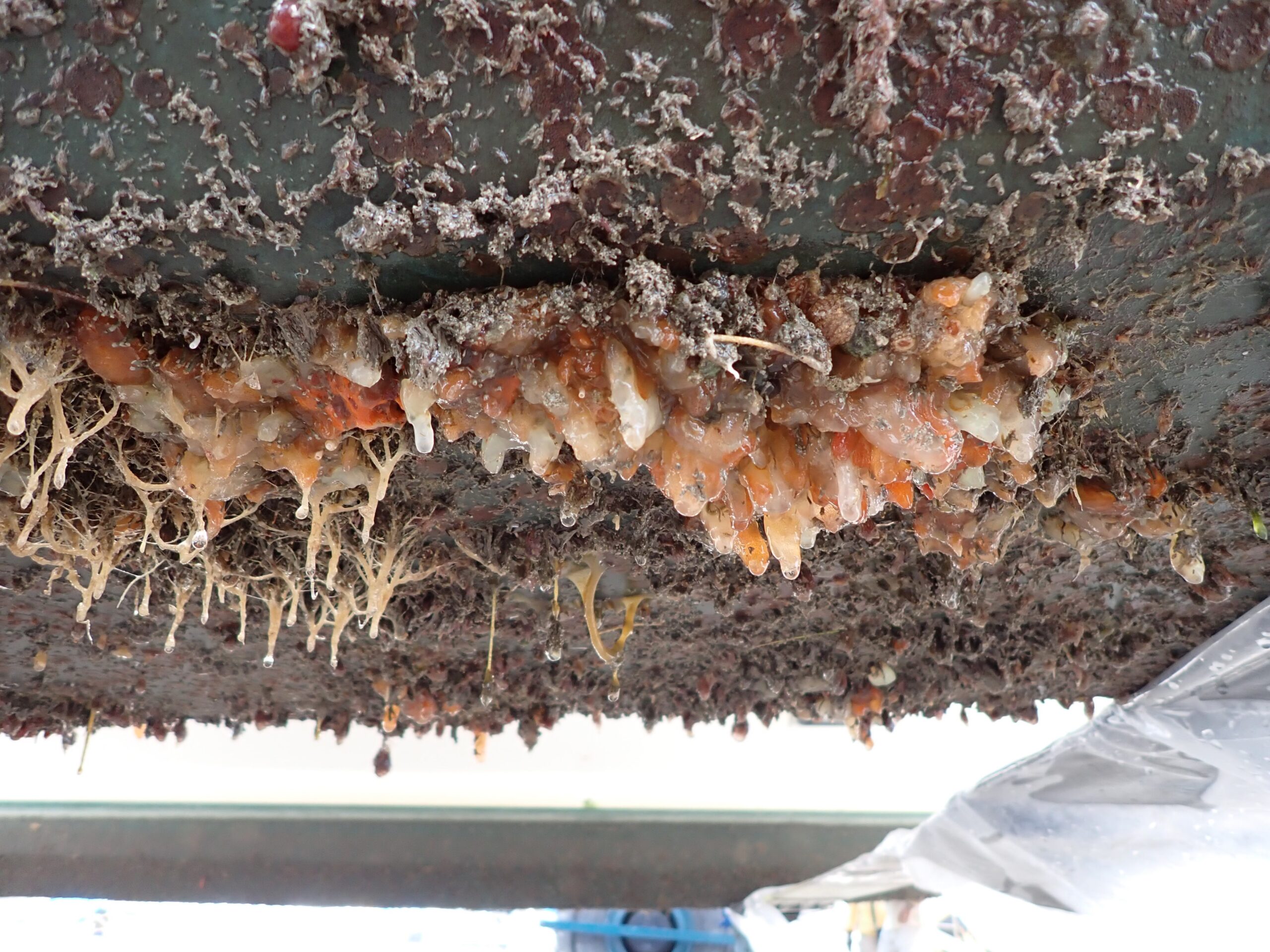
The sea border between Saint Martin and Sint Maarten runs through the Grand Etang de Simsonbaai. A lagoon with perfect flat water, access from both sides and in the center of the boat world. It’s also a nice place to see superyachts. But be warned your underwater hull will suffer from even the shortest of stays in the brackish water.
Outside shops and restaurants nobody seems to realise exactly where the land border runs, except the telephone operators: as soon as you take one step inside Sint Maarten roaming costs applies for EU plans.
Dutch Sint Maarten
Dutch Sint Maarten is very Americanised, and that goes from the 110V/60Hz standard (on the French side it’s 230V/50Hz) to supermarket products and tipping being added to the US dollar bill. Dutch supermarket prices are in the unused local currency NAF and in US dollars, but it’s ‘dollar per kilo’ making it confusing for everyone except perhaps the locals. And while the Dutch side only accepts dollars, the French side operates with both currencies at a fixed exchange rate (currently 1,15$/1€).
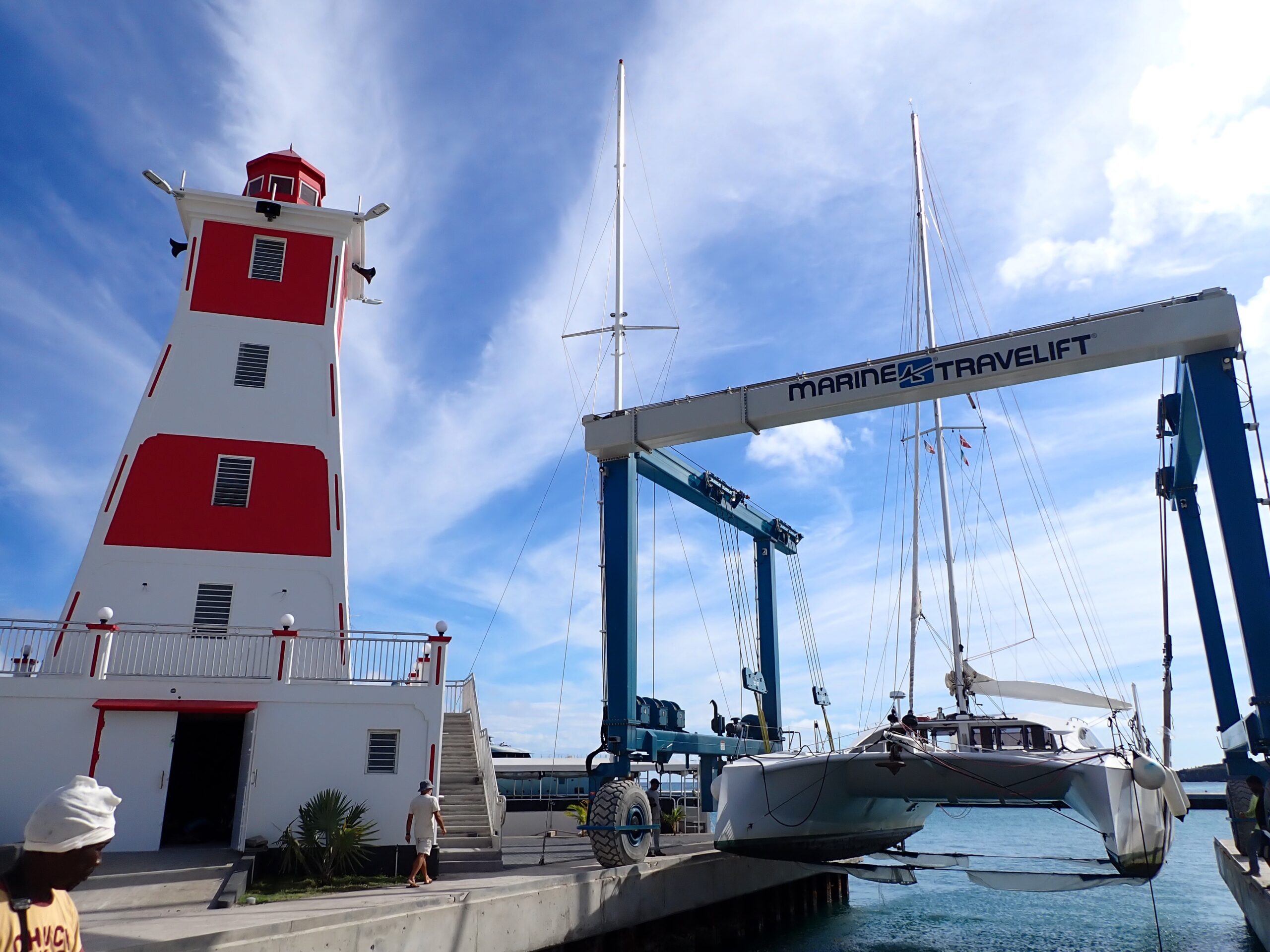
There is a weekly anchoring fee in Dutch waters, theoretically, but we have been both at a mooring and hauled out on the Dutch side without ever clearing in or paying any fee. Both sides are geared for cruisers and in particular for repairs and upgrades before the Atlantic crossing. With the Dutch side oriented towards the US, there are fright forwarding services enabling you to shop online with delivery to Miami. Being duty and VAT free, Sint Maarten is a good place to received boat stuff without the hassle of ‘boat in transit’. On the Dutch side there are big chandlers, sailmakers, riggers, marine electrical and mechanical experts, and, something that we needed: a carbon- and fiberglass specialist. Boat life being the never ending story of repairs, many of us end up discovering all the secrets of this dualistic island without actually having intended to.
-
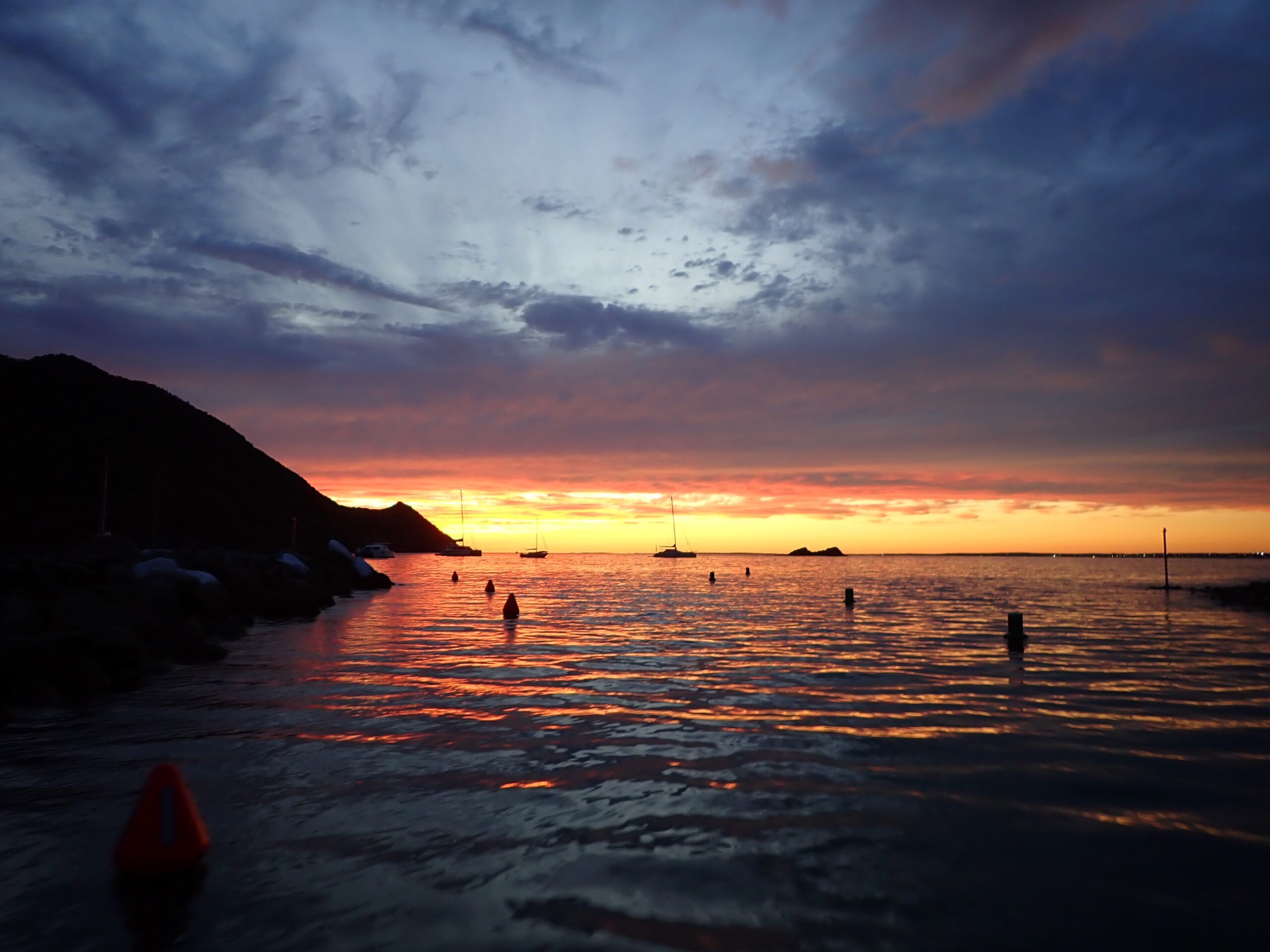
- Anse Marcel
-
- Simpson Bay Bridge
-
- Growth after 3 weeks in the lagoon
-
- Bobby’s Marina
Final thoughts
Cruising the European Lesser Antilles leaves you with two feelings; the Dutch islands aren’t Europe, and France lies in the tropics. Together with the dual island SXM, they create a perfect menu of choices; SXM for setting off on the Atlantic crossing back to Europe, Martinique to repair everything that broke in the Atlantic crossing from Europe, Guadeloupe to spend the season and ABC to escape the hurricanes.
Did I miss something? Definitely! So please add a comment on your favourite anchorages in the Dutch and French Lesser Antilles.

By Katja Giannini
Katja and Fabio Giannini, a Danish/Italian couple, crossed the Atlantic in 2002-2004 on Faidate, their homebuilt Van de Stadt 47, with their three small children on board. In 2022 they set out again on Faidapiu, a Schionning Arrow 1500 catamaran. In 2023 they cruised the Mediterranean, in 2024 Brazil and they have been in the Caribbean since 2025. Katja put her thoughts about cruising life on paper and it can be downloaded on their website.





Lovely article, thank you.