After more than 30 years working on and sailing boats, I have learned one essential lesson about navigating the Pacific coast of Guanacaste: Never expect the ocean to give you exactly the same day twice.
This coastline in northwestern Costa Rica offers beautiful sailing, secluded beaches, rocky headlands, clear waters, and an extraordinary variety of marine life. But, it is also a place where the wind can change quickly, depths vary as you approach the coast, and a peaceful-looking anchorage can become very different when the weather changes.
For sailors discovering Guanacaste for the first time, my advice is simple: Do not force your itinerary. Watch the wind, watch the sea and choose your destination according to the conditions of the day.
Playa Flamingo: Heading north or south?
Playa Flamingo is an excellent starting point for exploring the Guanacaste coast.
When I leave Flamingo, I do not automatically follow the same route every day. One of my first decisions is whether conditions favor heading north or south. The comfort of the people aboard is important. If the wind is strong, choosing the right direction and finding a protected section of coastline can make the difference between fighting the conditions and enjoying a beautiful day on the Pacific.
Heading south from Flamingo opens the way toward Playa Conchal and the waters around Isla Plata.
Heading north gives access to Playa Penca, Playa Prieta, Playa Azúcar, Playa Danta, Playa Dantita, Las Catalinas and Playa Celeste.
These places are relatively close to one another, but they do not offer the same experience, and that is exactly what makes this coastline so interesting.
-
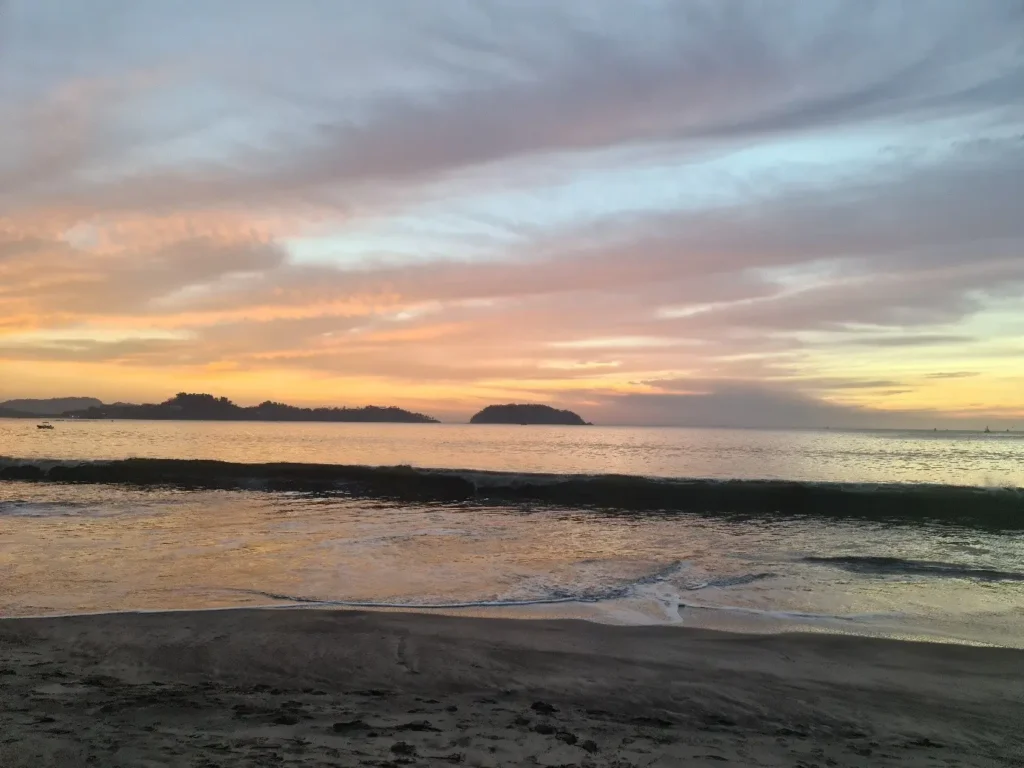
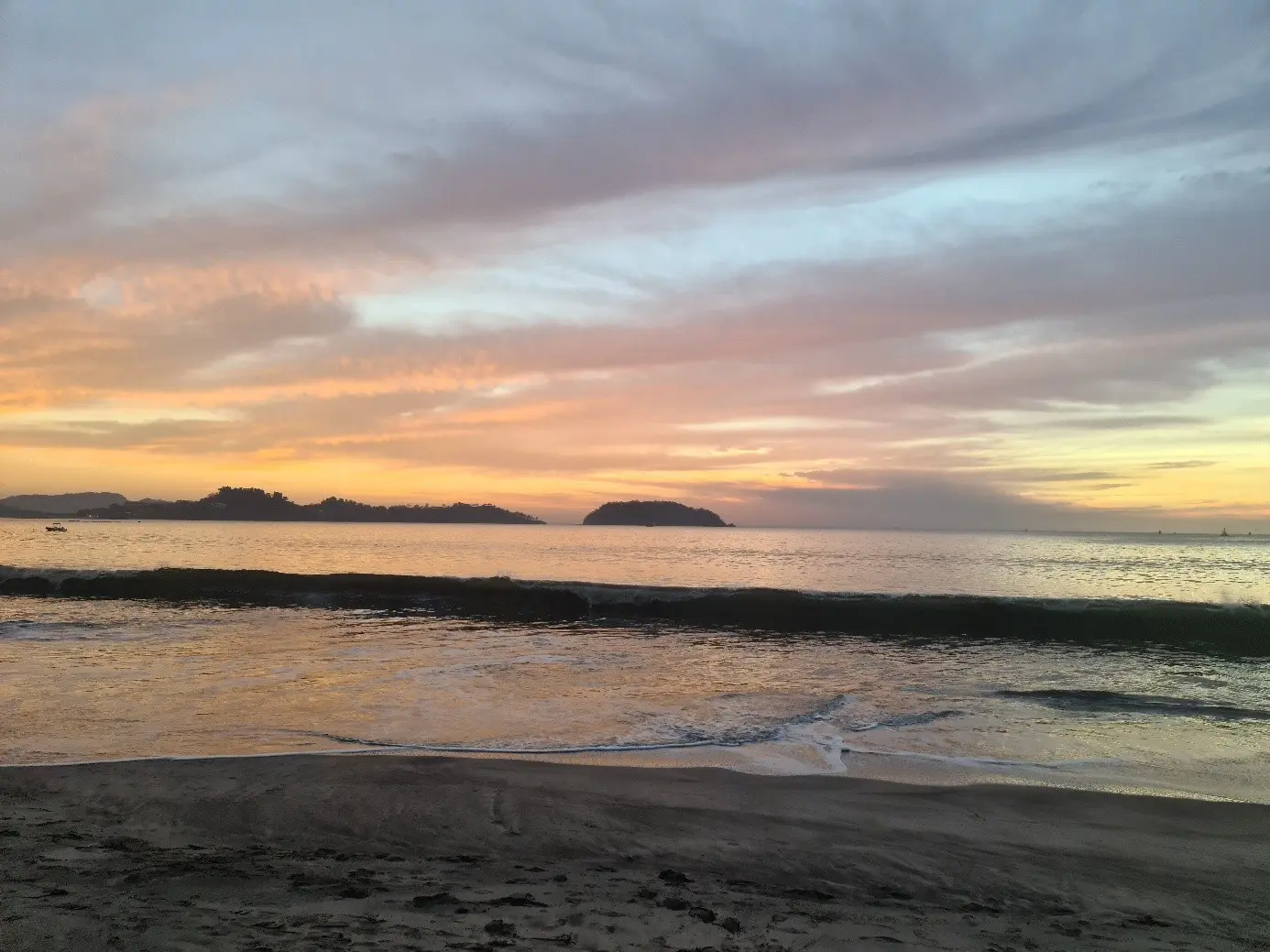
- Sunset over Playa Penca, one of the peaceful beaches north of Playa Flamingo.
Every stop has its own personality
I am often asked which place along the coast is my favorite; I honestly cannot choose one.
I like them all for different reasons, and the best destination depends on the conditions and what you want to do once you arrive.
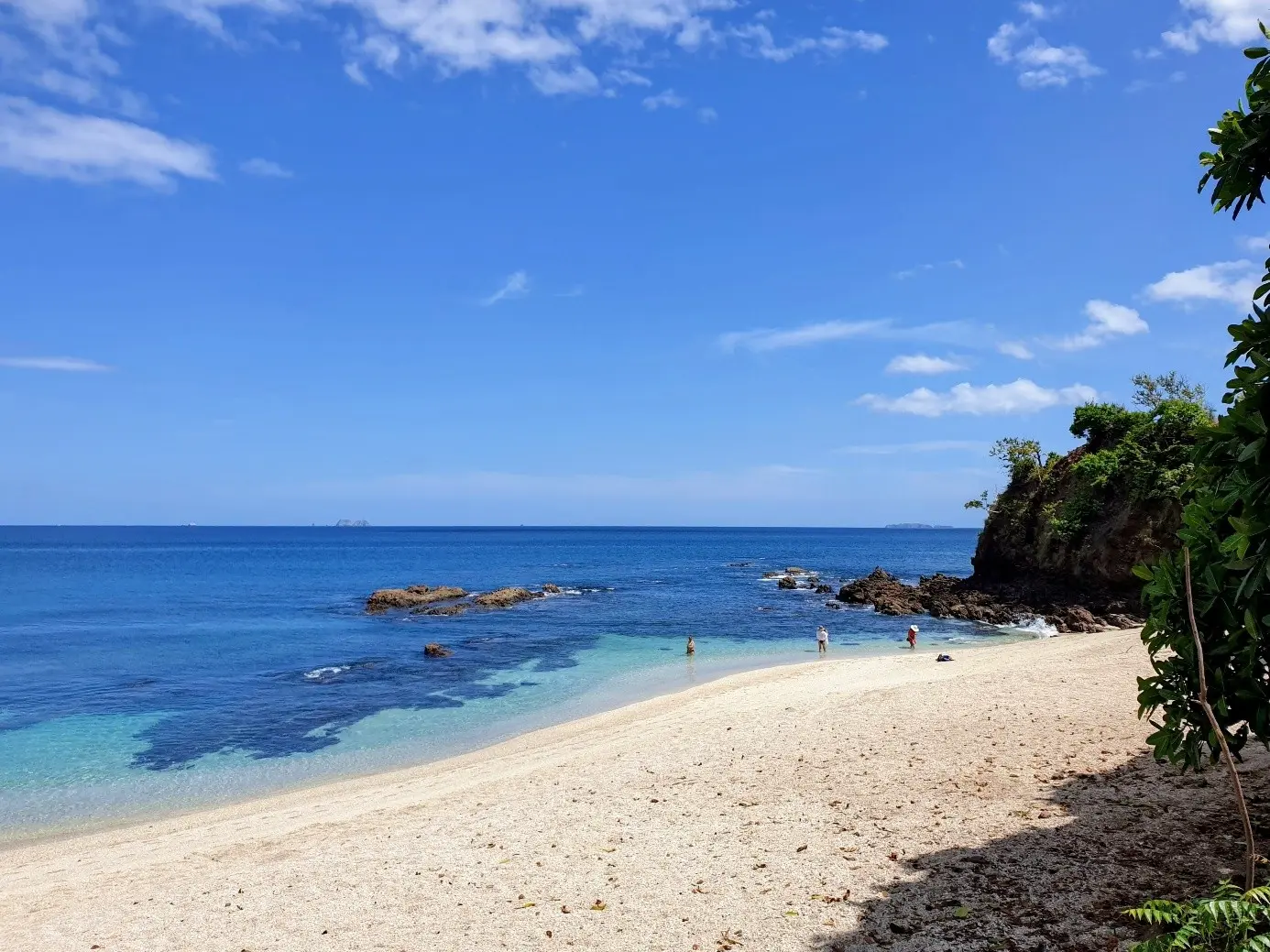
- Playa Celeste is special for its crystal-clear water, tranquility and undeveloped beach. On the right day, it is a beautiful place to simply stop and enjoy the surroundings.
- Playa Conchal is another location I appreciate for the clarity of its water and its distinctive coastline.
- Playa Danta and Playa Dantita are particularly interesting for their underwater environment and marine biodiversity.
- Around Las Catalinas, the attraction is also above the water. The view from the sea is unusual for Costa Rica, with the architecture and layout of the coastal village creating a landscape that feels almost Mediterranean.
- Isla Plata is a destination I particularly associate with snorkeling. When visibility and sea conditions cooperate, exploring below the surface becomes the reason for going there.
- Playa Azúcar offers calmer water that can make it particularly enjoyable for paddle boarding.
- Playa Penca and Playa Prieta offer something different again: lush vegetation, peaceful surroundings and a feeling of tranquility.
The important point is not to create a ranking.
There is no single “best” stop.
The right place is the one that matches the conditions and what you want to experience that day.
The Papagayos: Respect the wind
Anyone planning to sail in Guanacaste should understand the influence of the Papagayo winds.
During the dry season, particularly from around December through March or April, strong northeasterly winds can cross Central America and accelerate toward the Pacific through the lower terrain around Lake Nicaragua and the Gulf of Papagayo. For sailors, this is not just a weather phenomenon to read about. You feel it.
The wind can arrive in strong gusts, and conditions near the coast can change surprisingly quickly. It can also create short, uncomfortable seas in exposed areas.
This is one reason I pay so much attention to wind direction before choosing where to go. A location that works beautifully under one set of conditions may not be the place I would choose when the wind changes. And close to a rocky coastline, an inattentive or inexperienced sailor can quickly find themselves in difficulty if a sudden change begins pushing the boat toward shore.
The Pacific deserves respect, even on a beautiful sunny day.
-
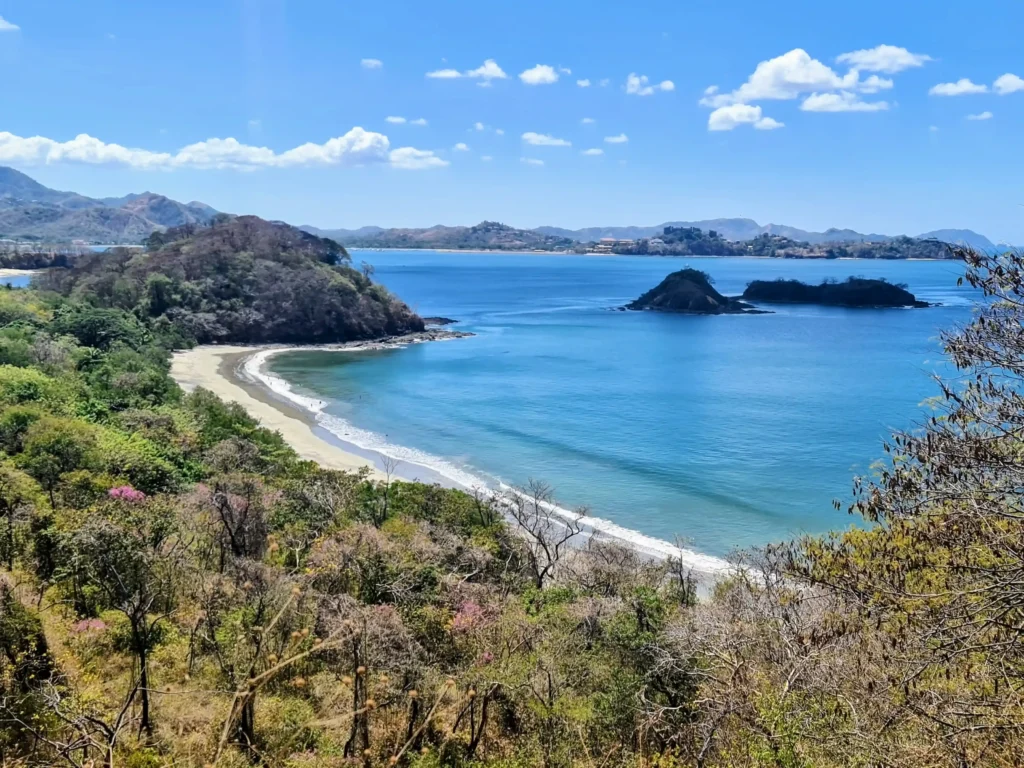
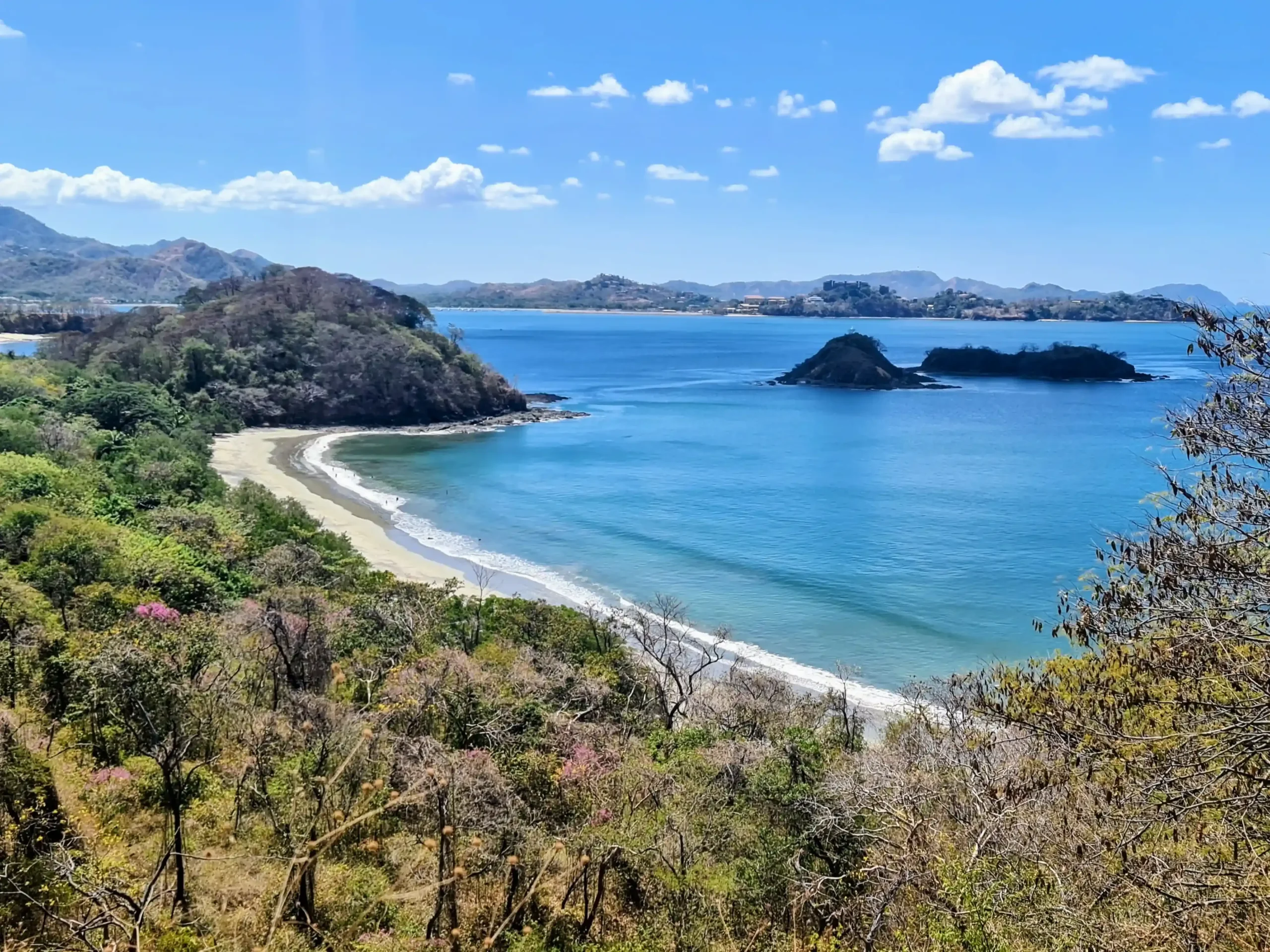
- Playa Azucar
The Green Season is a different Guanacaste
From roughly May through November, conditions change. The strong dry-season wind pattern generally becomes less dominant, while local thermal breezes play a greater role. The landscape also transforms.
Guanacaste becomes intensely green. For me, the green season is not simply a “rainy season” to avoid. It is another version of the coast.
There can be beautiful periods for sailing, and the lush vegetation gives familiar places a completely different appearance from the dry-season landscape.
Large-scale climate patterns such as El Niño and La Niña can also make one year behave differently from another, influencing rainfall and Pacific conditions. This is another reason why experience on this coast teaches you not to rely too heavily on a calendar.
The season tells you what you might expect. The ocean tells you what is actually happening.
Approaching beaches requires attention
One of the things I would tell any sailor arriving in Guanacaste for the first time is to pay close attention when approaching beaches and small bays. There are rocky areas along the coast, and depths can change significantly as you approach shore. Beautiful water and a peaceful beach can create a false sense of simplicity.
Take your time. Watch your depth carefully, understand the bottom and approach conservatively, particularly when entering an area you do not know.
Wind is equally important. Conditions can change quickly enough that a boat that was comfortably positioned can begin moving toward rocks if the crew is not paying attention.
Local knowledge helps, but vigilance matters even more.
Anchoring without unnecessarily damaging the seabed
Anchoring is also an environmental responsibility. Repeatedly dropping an anchor in the same areas can damage the seabed, particularly in sensitive locations.
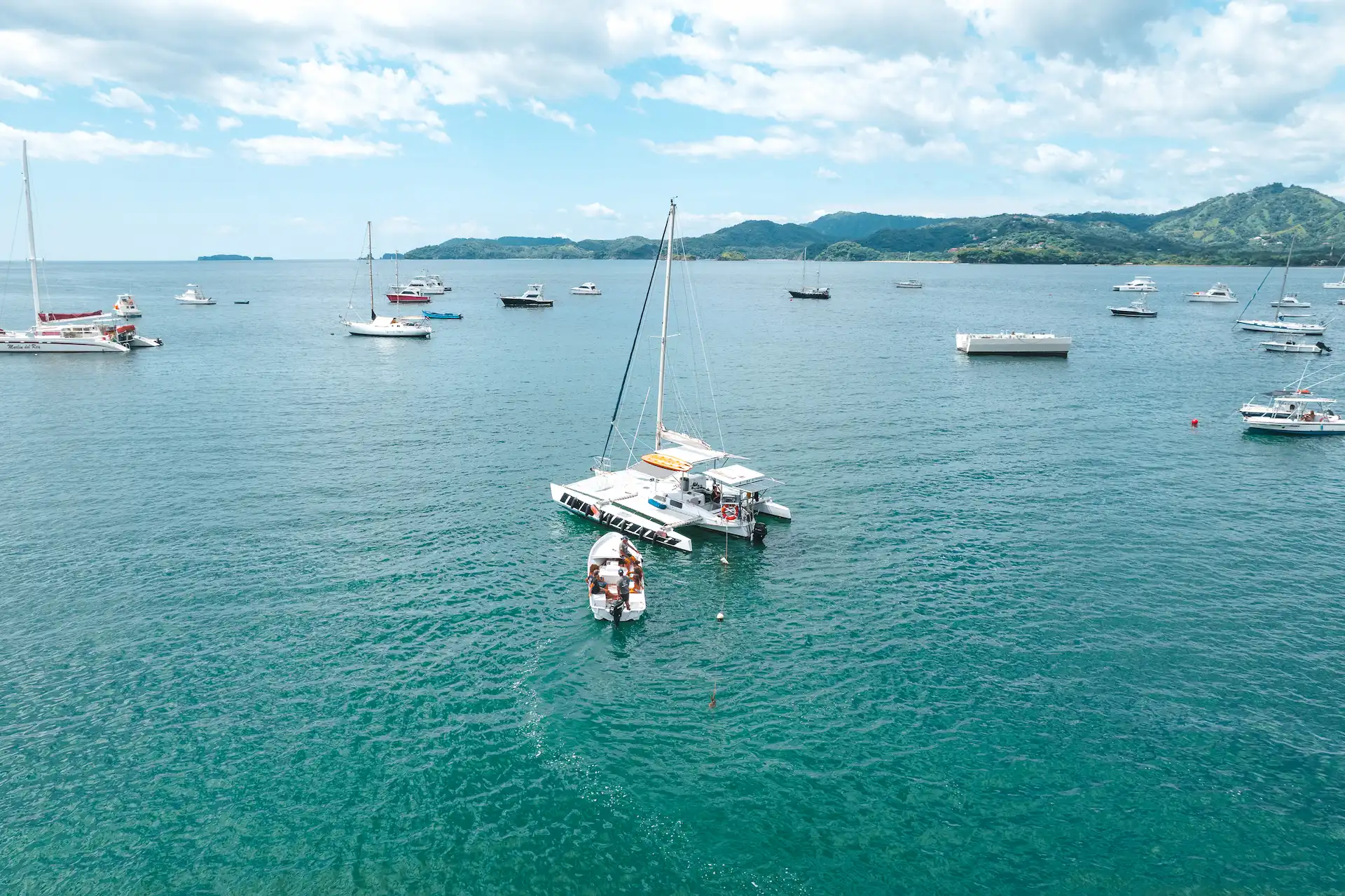
For both practical and environmental reasons, we have established fixed moorings at several of the places we regularly use, including Playa Celeste, Playa Danta and Playa Dantita. These consist of permanent ground tackle, chain and a buoy, allowing our boat to secure without repeatedly dropping an anchor onto the bottom.
These are private moorings rather than public mooring buoys for visiting yachts, but the principle is one I believe sailors should think about wherever they cruise: if there is a safe and appropriate way to reduce your impact on the seabed, use it.
Protecting the places we enjoy is part of being able to return to them year after year.
Never take a mooring for granted
One mistake I have seen is boats that are not sufficiently secured when strong weather or storms arrive. That can become serious very quickly. A changing wind can load the boat differently, and if the ground tackle, lines or attachment points are inadequate, the consequences can be severe — particularly with rocks or another vessel nearby.
Before bad weather arrives, check everything. Do not assume that because the boat has been secure for several calm hours, it will remain secure when the conditions change.
Good seamanship often consists of preparing before the problem exists.
Wildlife arrives on its own schedule
The Guanacaste coast is rich in marine life. Dolphins can appear unexpectedly while you are sailing. Sea turtles surface and disappear again. Rays and tropical fish can be found around suitable snorkeling areas, and humpback whales migrate through Costa Rica’s Pacific waters seasonally.
But after decades on the water, I would never guarantee a wildlife encounter. That is part of what makes seeing these animals so special.
They are wild.
We are entering their environment, not the other way around.
Some of my most memorable encounters have happened without warning — when everyone aboard was looking somewhere else and suddenly somebody spotted movement in the water. When that happens, slow down, give the animals space and enjoy the moment.
Don’t sail Guanacaste with a checklist
There is a temptation when discovering a new cruising ground to make a list of destinations and try to visit all of them. Guanacaste is better when you resist that temptation.
Sometimes the right day is about sailing. Sometimes it is about finding clear water and snorkeling around Isla Plata. Sometimes calm water at Playa Azúcar makes paddleboarding the obvious choice. Another day, the tranquility of Celeste, Penca or Prieta may be exactly what you were looking for.
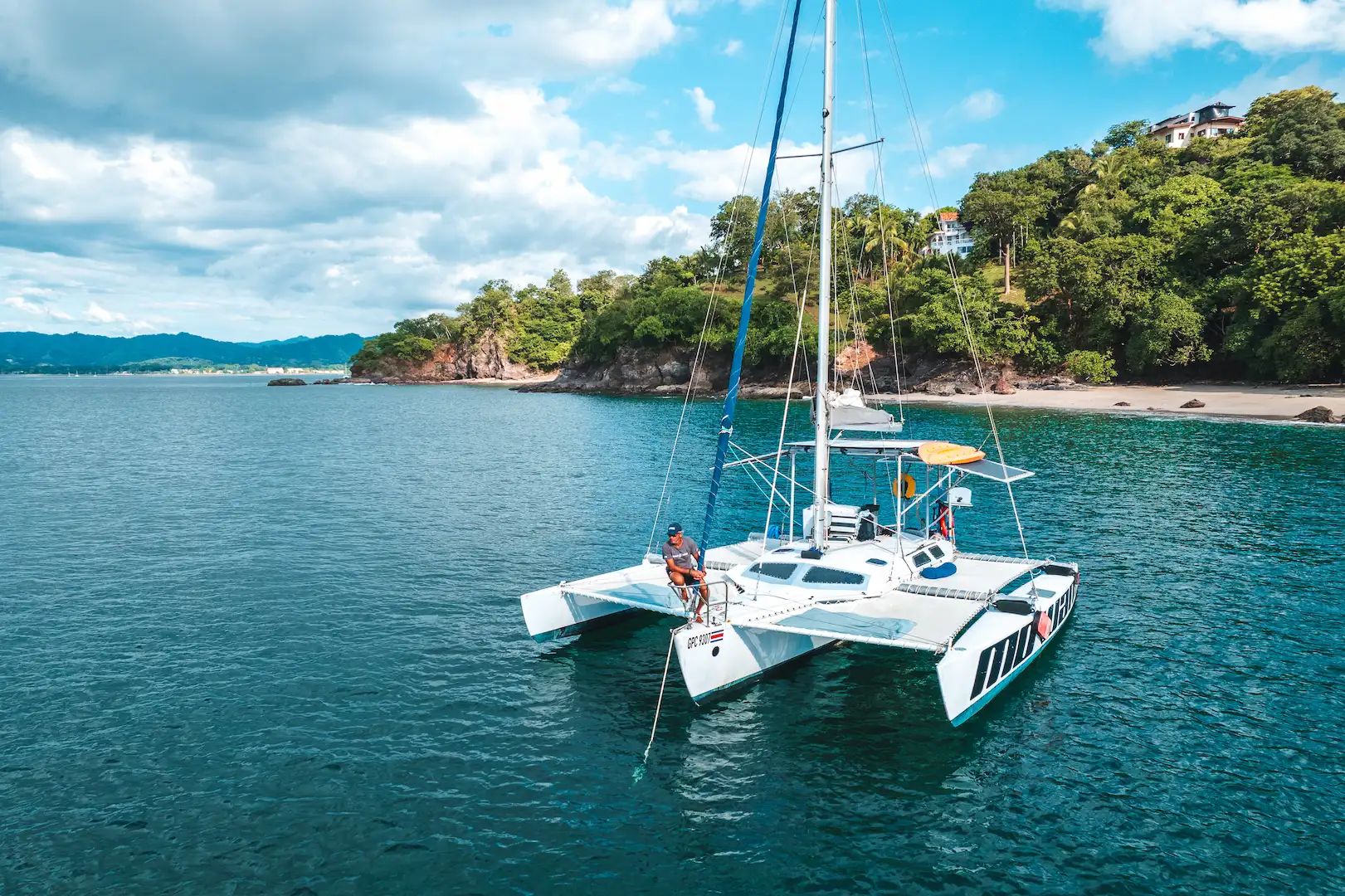
The destination should serve the day, the day should not be forced to serve the itinerary.
What 30 years here have taught me
After more than three decades working on boats, I still do not consider this coastline predictable, and that is precisely why I love it.
Wind changes. Seasons change. Water clarity changes. Wildlife comes and goes. Places I have visited many times can still feel completely different under another set of conditions.
If you arrive in Guanacaste with your own boat, take your time.
Pay attention to the Papagayos. Watch your depth when approaching the coast. Be cautious around rocky areas. Secure your boat properly, especially when bad weather threatens. Respect the seabed and marine life.
And most importantly, remain flexible.
A sailor who listens to the conditions will often discover something better than the destination originally marked on the chart. That, for me, is the real pleasure of sailing Guanacaste.

By Jean-Luc
Jean-Luc has spent more than 30 years working on and sailing boats, and is now based in Playa Flamingo, Guanacaste, Costa Rica. Together with his cousin Laurent, he is the captain and co-founder of Mowana Sailing, a family-run private sailing operation aboard a restored Buccaneer 33 trimaran. He regularly sails the Guanacaste coast between the waters around Playa Conchal and the secluded beaches north of Playa Flamingo, sharing his knowledge of sailing, marine conditions and the Pacific coastline with visitors from around the world.