
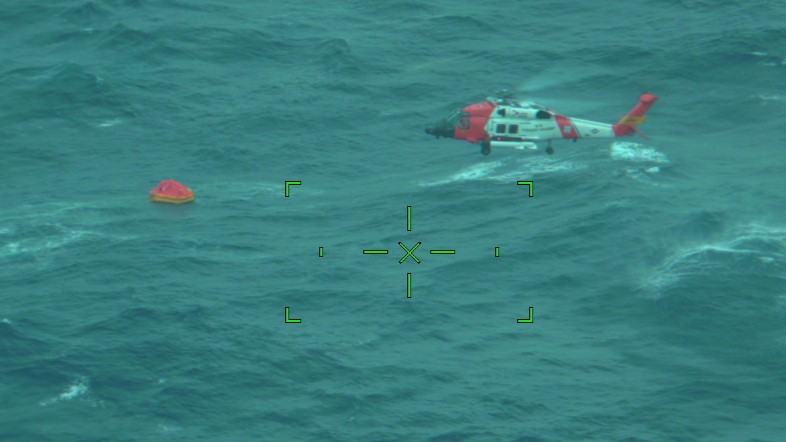
When an emergency unfolds far offshore, an Emergency Position Indicating Radio Beacon (EPIRB) is your lifeline to help.
Out at sea, this small device represents your direct link to global search-and-rescue networks. It’s a crucial piece of safety equipment, yet many cruisers only have a basic understanding of what actually happens once the beacon activates.
What happens when an EPIRB activates?
Once activated, the beacon immediately begins transmitting a distress signal on the dedicated 406 MHz frequency. The signal carries the beacon’s unique 15-digit Hexadecimal ID, which identifies your specific vessel to international authorities, as well as your exact coordinates, which are pinpointed by the internal GPS and GNSS receivers. Essentially it’s a digital MAYDAY that tells authorities who you are and where you are.
Satellites transmit the data
That 406 MHz signal travels directly upward to the international Cospas-Sarsat satellite constellation. These satellites constantly orbit the globe and monitor emergency frequencies without atmospheric interference, so your distress message is detected almost instantly.
The satellites then bounce your distress data down to ground receiver stations known as Local User Terminals (LUTs). From there, the data is routed to a Mission Control Center (MCC) in the region where the beacon was registered, or where the signal was detected.
The regional Joint Rescue Coordination Center acts
Once a genuine emergency is verified, the distress alert goes to the Joint Rescue Coordination Center (JRCC) responsible for overseeing that ocean region.
Search coordinators cross-reference your registration details to pull up your boat’s name, description, emergency contacts, and float plan. The RCC then develops an active search-and-rescue plan, dispatching resources and alerting nearby commercial ships.
Final stage of the rescue
As rescue vessels or aircraft approach the search area, the EPIRB switches roles from being a broad satellite broadcaster to a localized beacon.
A secondary 121.5 MHz homing signal transmitted by the EPIRB allows rescuers to hone in on your exact position using directional radio receivers. On newer beacons, integrated AIS also broadcasts your coordinates directly to the chartplotters of any nearby cruising vessels.
Leave the EPIRB transmitting until the rescuers confirm it should be switched off.
-
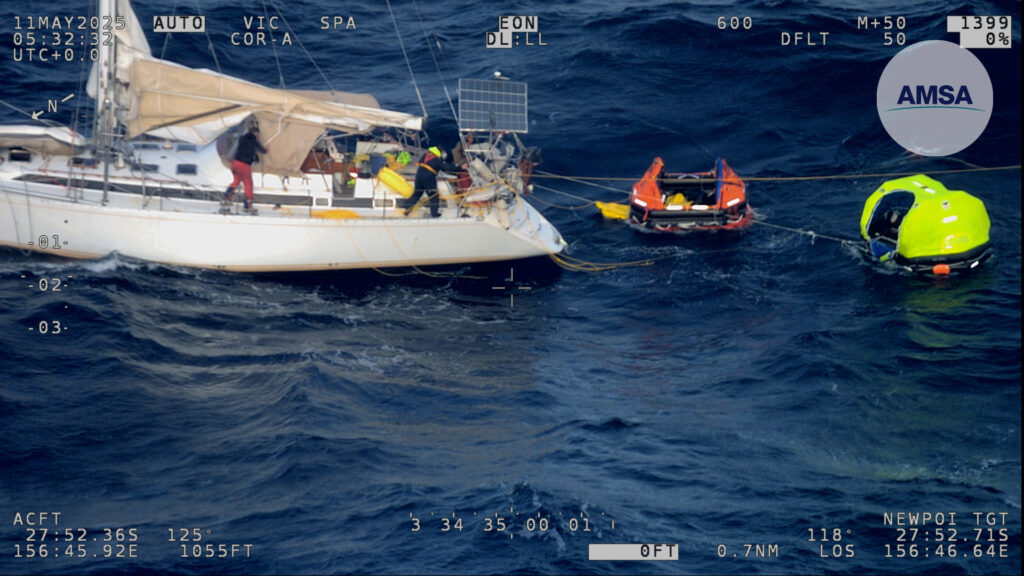
- Source: Australian Maritime Safety Authority
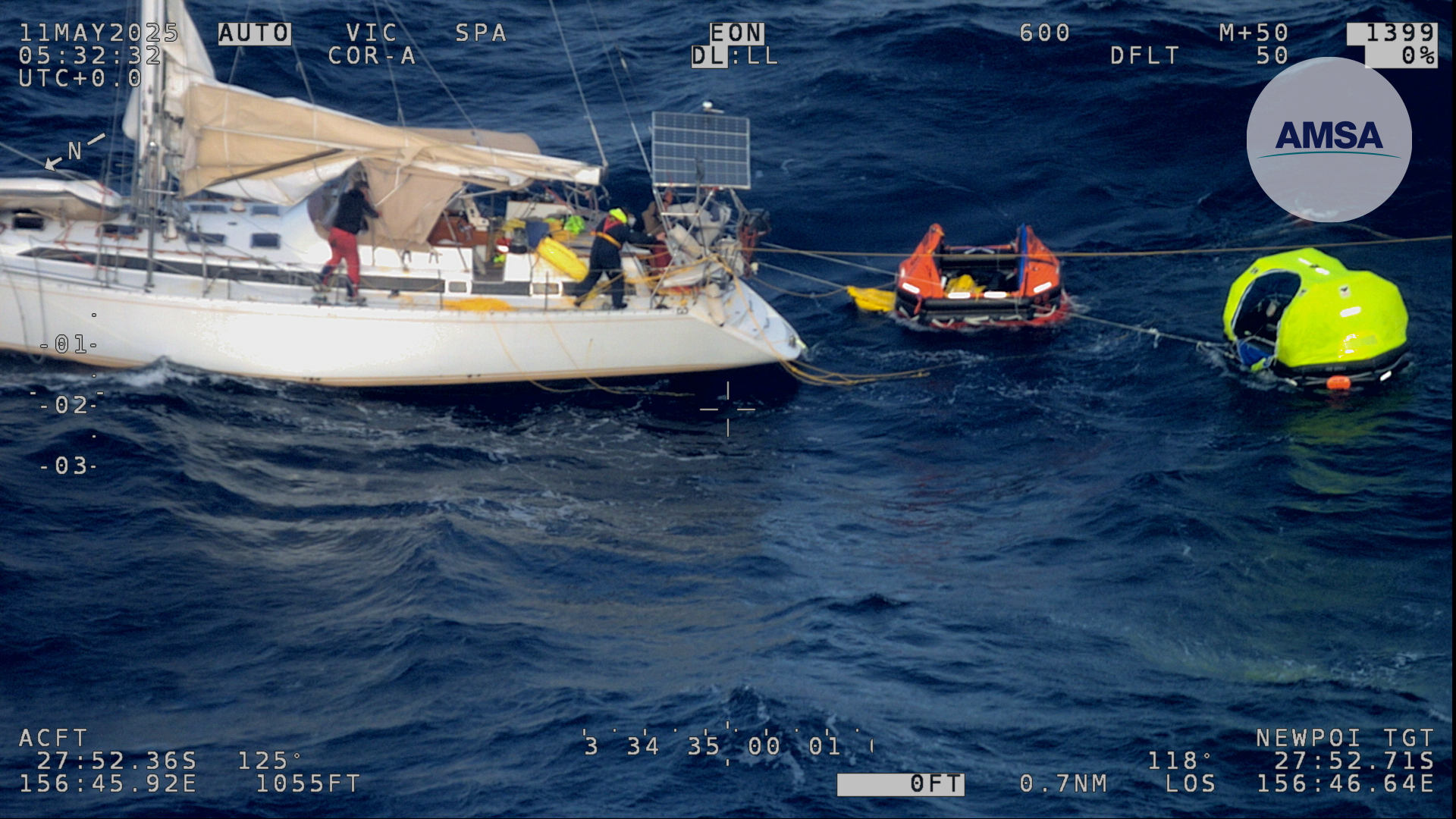
Category I vs. Category II EPIRBs
EPIRBs are classified into two main categories based on how they deploy during an emergency.
Category I: Automatic hydrostatic releaseboa
Category I beacons are housed in an external, spring-loaded enclosure mounted on the outside of the boat. If the vessel sinks, a hydrostatic release unit automatically triggers between 1.5 and 4 meters of water depth, releasing the beacon so it can float to the surface and self-activate. This type of EPIRB is mandated for commercial vessels.
Category II: Manual deployment
Category II beacons are stored in a quick-release bracket, and must be manually removed and activated by flipping a switch or placing them in the water. Many cruisers prefer Category II beacons because they’re easy to take into a life-raft.
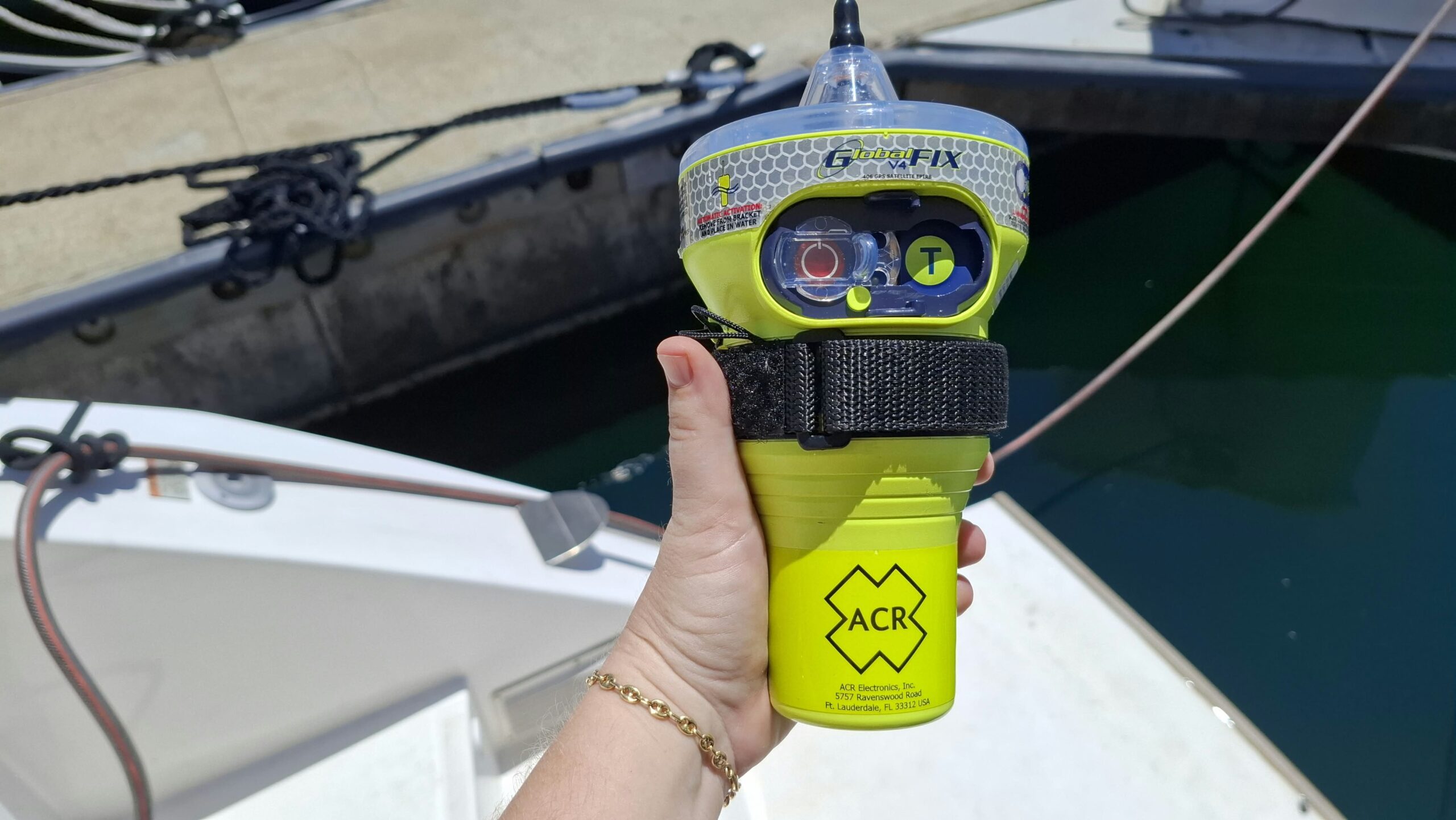
Registration and Hex IDs
Every EPIRB beacon has a unique 15-digit Hexadecimal ID programmed into its transmitter. When a Rescue Coordination Center receives a distress alert, the Hex ID is immediately cross-referenced with national beacon databases managed by maritime authorities.
If your registration is current, search-and-rescue teams instantly know your vessel name, boat type and color, and can see additional added data like onboard safety gear and emergency shore contacts. They can then phone your contacts to collect and verify any last known details.
The attached information can also be used to help verify if the alert is authentic, rather than an accidental activation. If a false rescue is initiated, it results in unnecessary and costly rescue dispatches. In some situations you could be left with a bill. It’s worth checking if your yacht insurance reimburses search and assistance costs, if you accidentally trigger one of your rescue systems.
Testing, battery life, and routine maintenance
EPIRBS do need routine checking to ensure they’re fully functional.
- Every beacon features a built-in test button that executes an internal diagnostic check without broadcasting a distress alert, which should be done at regular intervals.
- Lithium EPIRB batteries generally have a service life of 5 to 10 years so check the expiration date stamped on the beacon casing before departure.
- If using a Category I housing, the hydrostatic release unit generally needs to be replaced every two years.
It’s also important to ensure all crew members know where the EPIRB is located and how to manually activate it in an emergency, including pre-teens and teenagers aboard.
When was the last time you checked your EPIRB functionality, battery expiration date and updated your emergency contacts?
Header Photo by: PA1 Fontenette







Another great article Michaela!
A very informative article. Thank you