
After his recent article on How to Successfully Hail on the VHF, some of our readers requested Douglas follow up with an article on the topic of DSC calling.
Did you know that you have a phone number on your VHF radio, and your VHF radio can behave like a telephone? It is called, “Digital Selective Calling” (DSC).
Digital Selective Calling
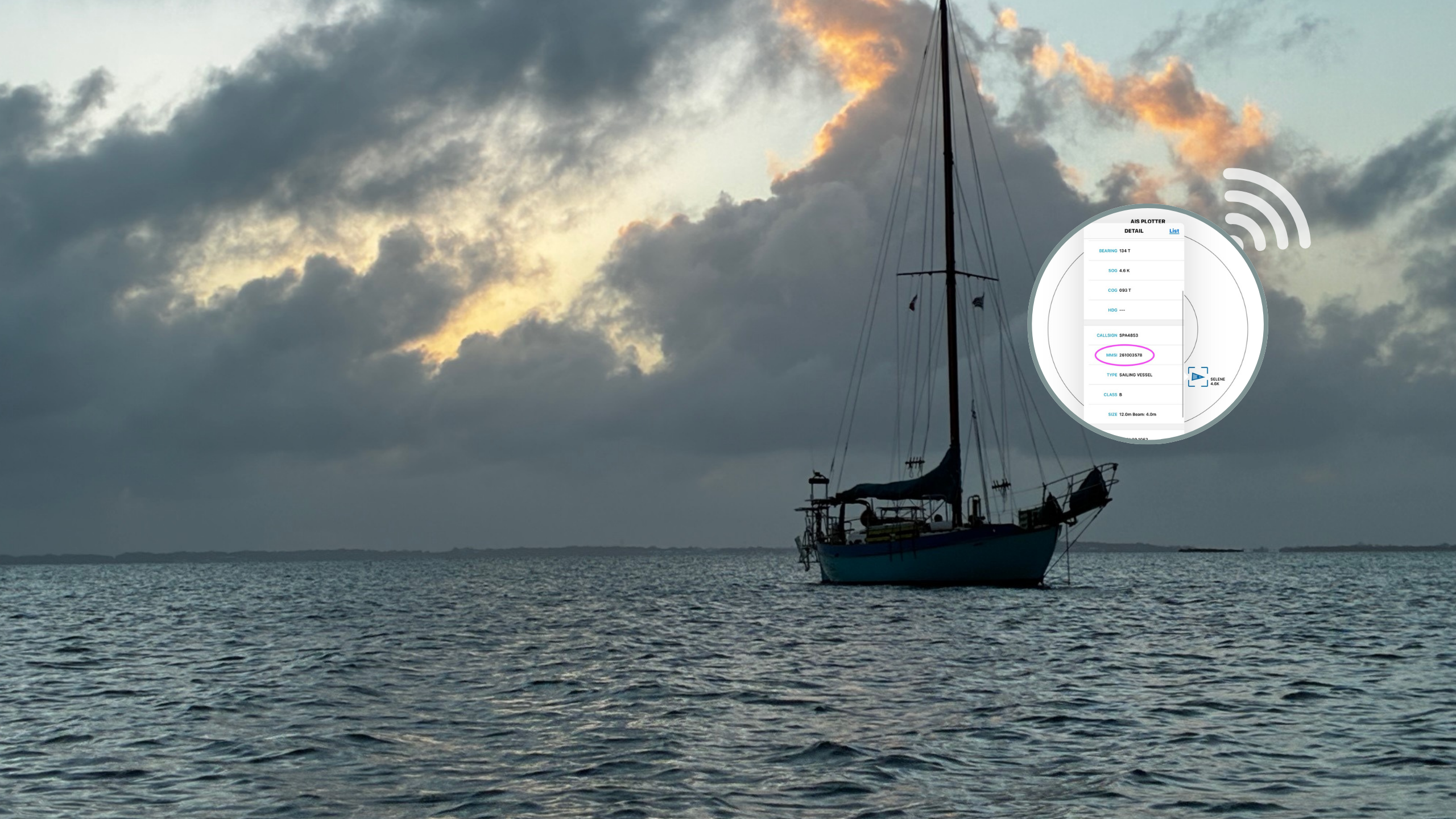
With DSC you can call another station directly without hailing them first. Your phone number is your MMSI; the number you programmed into your radio when you installed it, and then forgot about. These days, with AIS, it is very easy to see the names of the boats who are around you, and to see their phone number, their MMSI.
-
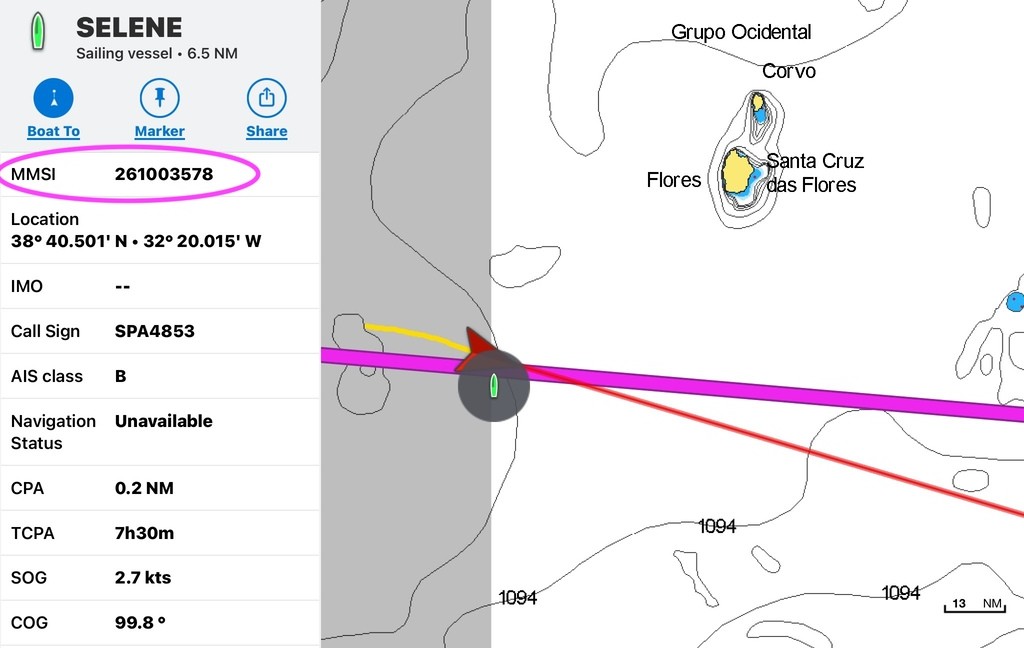
- Checking the MMSI number
Trying the DSC CALL function
On your VHF, find and then try the DSC CALL function:
- Select “individual call”
- Input the MMSI of the boat you want to reach
- Select the channel you want to use and press send
The other party, the boat you are calling, will hear their radio ring like a phone. If they know or figure out what that noise is all about, they can answer you, and voilà, you are talking directly on the station you selected. No hailing. No channel switching.
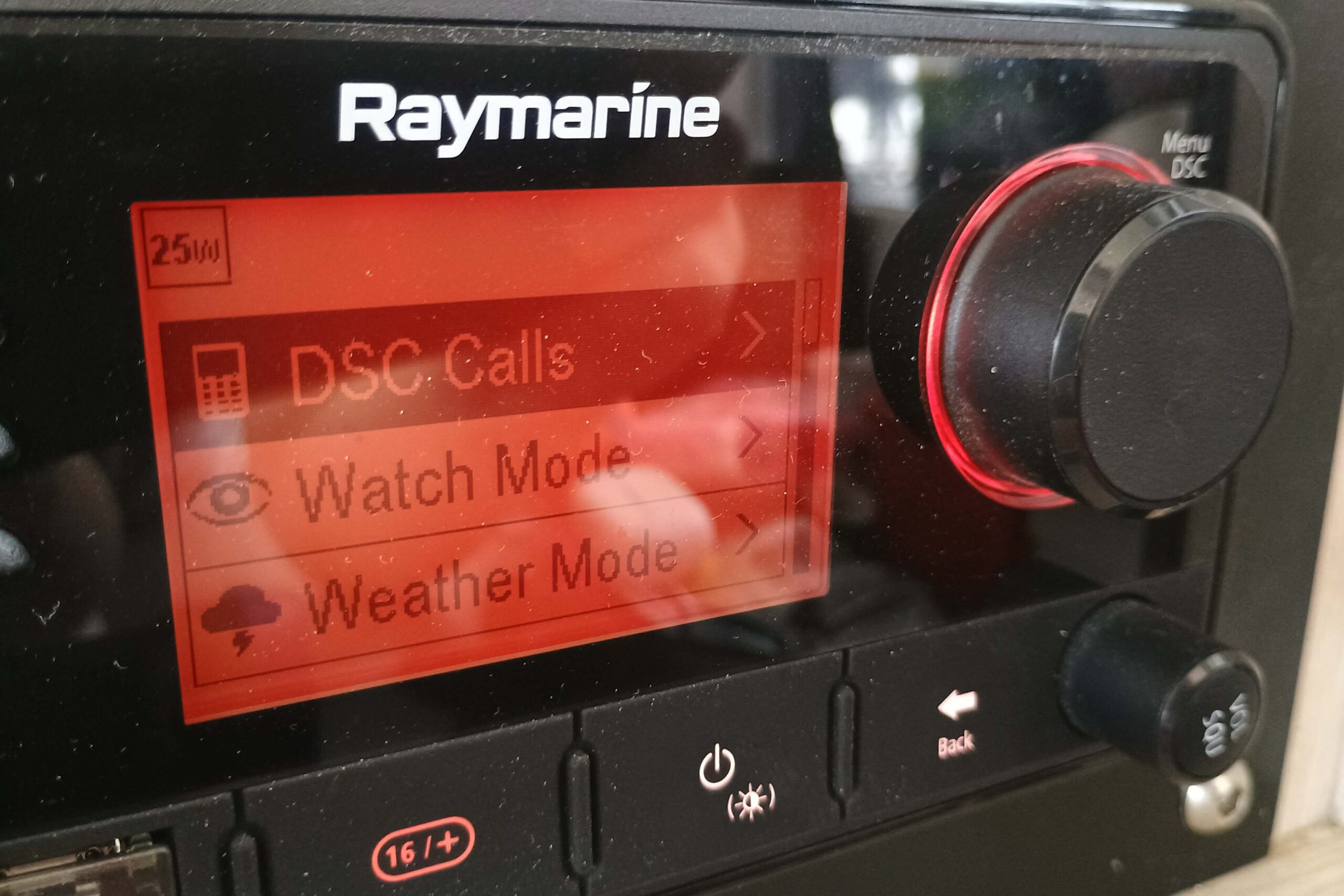
Most of the times I try this, the other boat doesn’t answer. They must think; Oh this has to be a mistake. I don’t know what this is, this can’t be for me. They ignore or dismiss it. Hopefully from this article, more cruisers will learn the advantages of DSC and begin to use it.
Tips for dialing the number
Dialing the number can be a bit of a pain, but after some practice, you can get it in there pretty quickly (Hint: Use the tuning knob). If you call another boat frequently enough, you can also add them to a directory. Then you don’t have to dial their number every time you want to call them.
MMSI Numbers
As an interesting aside, the first three digits of an MMSI number identify the country where the MMSI was issued according to the ITU Table of Maritime Identification Digits.
Here are some examples:
- 261 is Poland
- 263 is Portugal
- 276 is Estonia
- 310 is Bermuda
- 316 is Canada
- 338, and 366 to 369, are USA
370 to 374 are Panama
226 to 228 are France
Give DSC a try
So there is something you can do with a friend or buddy boat some time – try out Digital Selective Calling (DSC). Practice how to call. Practice how to answer. DSC is very handy for having a casual communication with another boat without very publicly hailing them.
Have you tried DSC calling before? Let us know down in the comments if you’ve found it useful, or are planning to give it a try!

By Douglas Lovell
After a professional life in computer science and aeronautics, and some time spent living in Uruguay, Doug bought the sailboat, Brisa in December 2020, in La Paz, Mexico. Since then he's sailed over 7000 nautical miles, taking the long way back to his adopted home.





very underused facility.. but it’s digital selective calling… reflecting rhe purpose.
I was going to say the same thing. Digital SELECTIVE Calling! But yes, agreed Douglas: I often try it with the same results. Typically the other end doesn’t know what to do, or ignores it as a mistake. Or doesn’t have their radio on…
It is surprising how many full time liveaboard cruisers and even professional crew seem to have no idea about this. Even commercial vessels don’t seem to answer to DSC calls, and I have to revert to hailing them by voice. But like you, I appreciate the function and continue trying nonetheless. Channel 16 is overused, and there is an easy way to remove most traffic from the station, freeing it up for emergencies, and to not grab everyone’s attention for an avoidable direct call.
Thanks for spreading the word!
DSC means Digital Selective Calling, not Digital Signal Calling.
🤦my bad! I see the editors covered for me.
Thank you for posting!
M/V SIGMACHI
A useful reminder, thanks!
Good article, thanks!
Even though DSC has been around for quite some time now, most sailors, including ourselves, use it very rarely. It is, however, a useful tool.
Near Spain and the Balearic Islands, DSC is frequently used by various weather stations to send their announcement of the weather forecasts several times a day via a “Sécurité” DSC message. This results in a flood of alerts, which makes you want to turn off the VHF, which surely can’t be the intention.
Thanks for posting about the detail that most people don’t use.
What I don’t understand is why I have a networked Raymarine plotter and vhf; the plotter shows me the mmsi on one Raymarine screen and I then go to another (tiny) Raymarine screen next to it, and re-type that number really slowly using a knob-twist-thing. Surely Raymarine can just make these two things talk so I can call directly from my plotter without rekeying? Or copy paste or something? With the current process it is no wonder no one uses DSC. I just ignore it as hailing on 16 is way easier.
I was advised by a commercial seaman that DSC is useful when calling commercial ships as DSC calls are recorded by the radio and if unanswered might leave the crew on watch answerable to the captain. If you’re not getting a response to a regular VHF hail from a big boat, try DSC.
👍 great to know
It is good technology, very underused.
We have used DSC successfully only once in 20 years or so. Bermuda Radio did not answer on ch16, but did immediately to a DSC call
Half a dozen other times, no response, perhaps because other party did not know when the squawk from his radio meant.
While on the bridge of a very large cruise ship (we know the captain, who is also a very experienced cruiser) I was surprised to see that the only way to enter an MMSI number to call was as clumsy as on our old iCom VHF. The officer advised that virtually no professionals used DSC, although he felt it is good technology.
I suspect that the clumsy way of entering an MMSI, and even worse putting it in our own VHF directory, is a major factor in people ignoring DSC.
We need and app for iPhones/Androids that can do it.
New user of DSC – how does one choose which channel to use? Different countries have preferred channels for chat? 16 sounds a bit unlikely for safety reasons.