
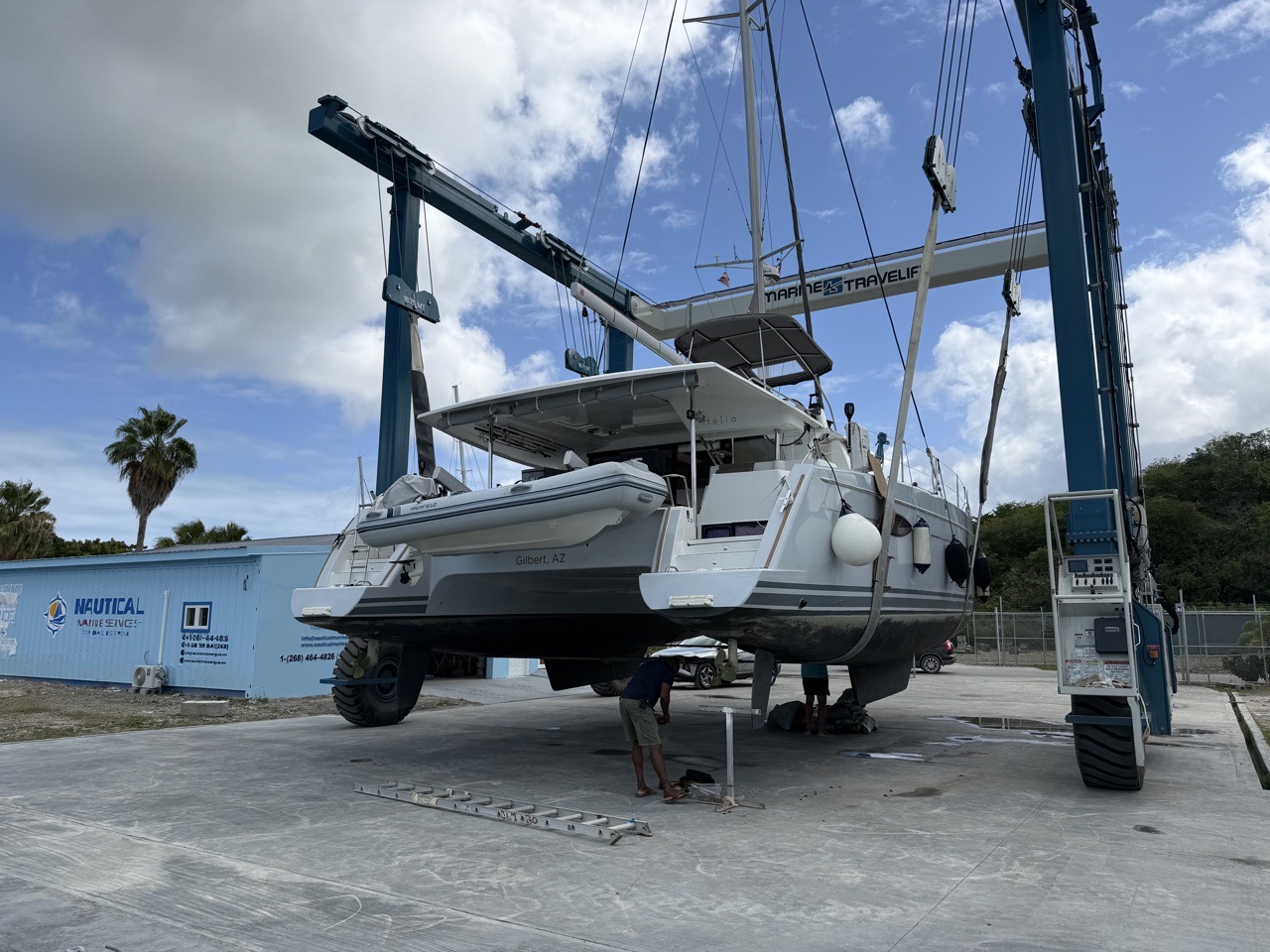
Whether you are buying a new boat, upgrading your insurance policy, or simply want a second opinion on a boat you’ve had for years, a marine survey is a thorough, independent health check for your boat.
It’s easy to view a survey as just another bureaucratic hurdle, but in reality it’s a useful way to protect yourself, your boat, and your finances. By letting a professional surveyor come aboard, you can find problems like hidden structural faults, moisture in the core, or failing hardware, before they lead to an emergency at sea. It is all about catching the small issues early.
Why get a marine survey?
Many boat owners assume they only need a survey when a bank or insurance company forces their hand, but in reality, a marine survey serves several critical purposes throughout a vessel’s life.
Buying a used boat
When buying a used boat, a pre-purchase survey is your primary shield against buying someone else’s expensive nightmares. The surveyor is armed with the knowledge of what to look for, and can assess the overall condition, check the rigging, and inspect the hull below the waterline. Their report can give you the peace of mind that you’ve chosen a solid boat, the leverage to negotiate the purchase price down, or in some cases, the power to walk away from a bad deal entirely.
Insurance and seaworthiness
Insurance companies usually require an updated survey at set intervals for vessels over a certain age, often every 5 years. This periodic check protects both you and your insurer by proving the boat is seaworthy and free of dangerous maintenance deficits. It is important to remember that marine insurance is designed to cover sudden, accidental events, not the slow results of wear, tear, or neglect. A survey ensures that your boat is in good working order, which helps keep your coverage intact.
New boat warranty claims
If you are buying a new boat, you might think a survey is unnecessary. However, documenting manufacturing defects early can be vital for dealing with major warranty claims later. A surveyor can spot lay-up errors, structural delamination, or misaligned shafts before your builder’s warranty expires, and having a certified, independent report makes it much easier to hold the builder accountable.
-
- You can find reviews of surveyors like Ryan Scriven (Australia) on the noforeignland map
A good surveyor’s approach
A true professional surveyor acts as an unbiased third party. Their job is not to pass or fail your boat, but to give you an objective, factual assessment of its current condition. This neutrality is exactly what makes the report so valuable to everyone involved.
What surveyors look for
To get the most out of a marine survey, it helps to understand what the surveyor is actually looking for when they step aboard. The inspection should be systematic, starting with broad impressions and digging down into details.
First impressions count
A clean, well-cared-for boat signals a responsible owner to the surveyor, which frames their expectations for the rest of the inspection. If the bilge is dirty, the wiring is a tangled mess, and the engine room is covered in oil, the surveyor will expect to find neglect elsewhere. A tidy presentation suggests that maintenance has been handled with care.
The structural safety checklist
Once aboard, surveyors will generally focus on the core structural safety of the vessel. They are checking the hull-to-deck joint, bulkheads, keel bolts, and chainplates for signs of stress or movement. They may also inspect:
- Structural Integrity – Hull, bulkheads, keel joints, and rudder post
- Rigging & Hardware – Winches, lines, blocks, mast steps, and shroud fittings
- Systems & Safety – Electrical wiring, battery containment, seacocks, and bilge pumps
- Moisture & Core – Delamination or wet cores in the fiberglass
Looking for moisture and osmosis
Osmosis and fiberglass delamination are two of the most expensive hidden boat killers. Surveyors can use percussion testing (tapping the hull with a small hammer) to listen for hollow sounds that indicate delamination. They can also use moisture meters on hulls and decks to detect water trapped inside core materials like balsa or foam. Catching these problems early can save you tens of thousands of dollars in repair costs, before things escalate over time.
Aside from that, surveyors are also looking for signs of leaks. Water coming in through deck fittings and hatches can cause major damage over time, especially if it pools somewhere unwanted, slowly fills a cavity, or gets into the electrical system.
-

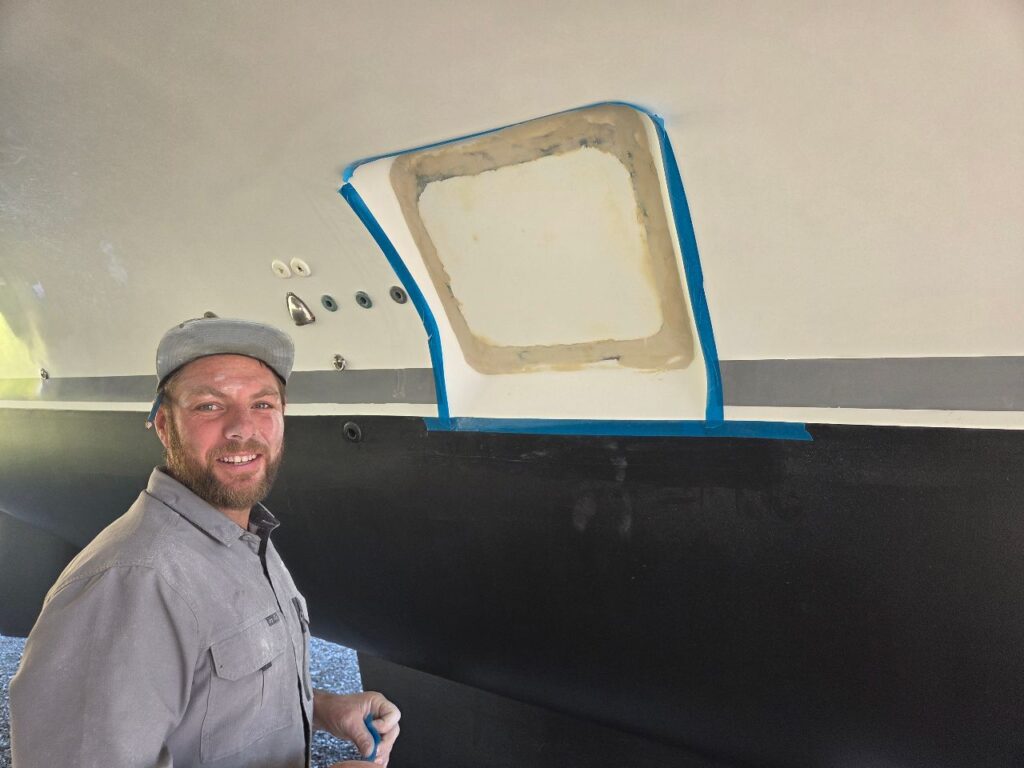
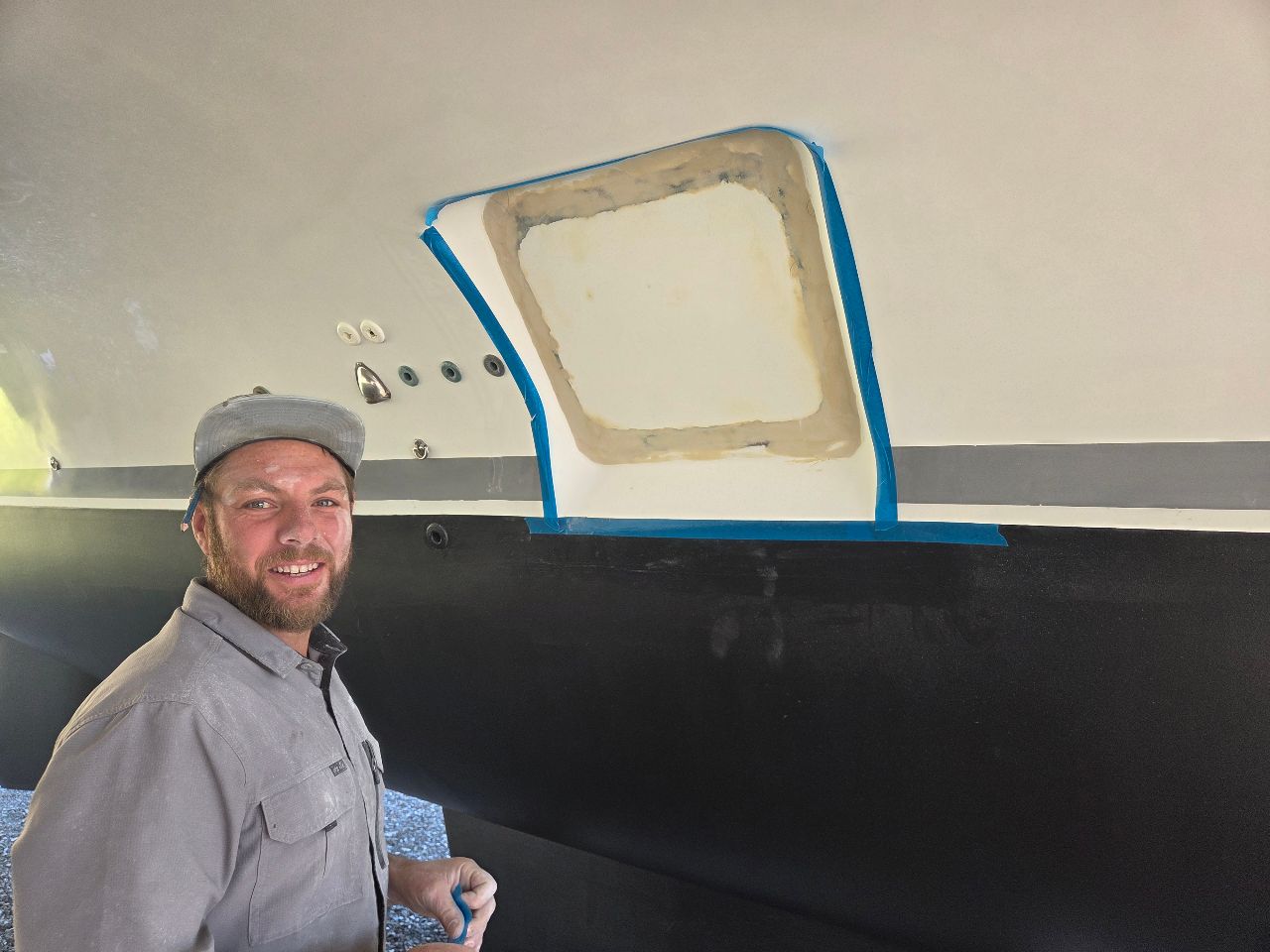
- Anomalies detected by ultrasonic scans, completed at the recommendation of a surveyor. Further investigation revealed patches of dry fiberglass in the hull.
How cruisers can prepare (And save money!)
A survey is a collaborative process. By taking a few steps to prepare your boat, you can help the surveyor do a job, avoid extra fees, and keep your list of recommendations short.
1. Keep meticulous records
Keep a detailed log of your service history, including engine hours, oil changes, and any standing rigging replacements, as well as any documentation from major system installations, such as a lithium battery conversion. Insurers, buyers, and surveyors love to see a clear paper trail showing that a boat has been loved. It proves that you are proactive about maintenance, which speeds up the survey process.
If you are having a specific problem that the surveyor is there to check, it can also be useful to have media evidence on hand to show them.
2. Provide clean access
Organize the lockers, wash down the boat, clear the bilges, remove clutter from the engine room, and make sure the steering quadrant is fully accessible. If a surveyor cannot see a component, they cannot inspect it. They might have to write a conditional report or return later at your expense, so make it easy for them to access key areas like the hull sides, chainplates, engine bay and through-hulls.
3. Run a pre-survey self-inspection
Walk your boat with a critical eye a few days before the surveyor arrives. Check for things like loose hose clamps, cracked deck seals, expired safety gear, and check that all the bilge pumps run. Fixing these small details beforehand saves the surveyor time, and prevents a longer list of minor recommendations on your final report.
4. Arrange the haul-out and launch
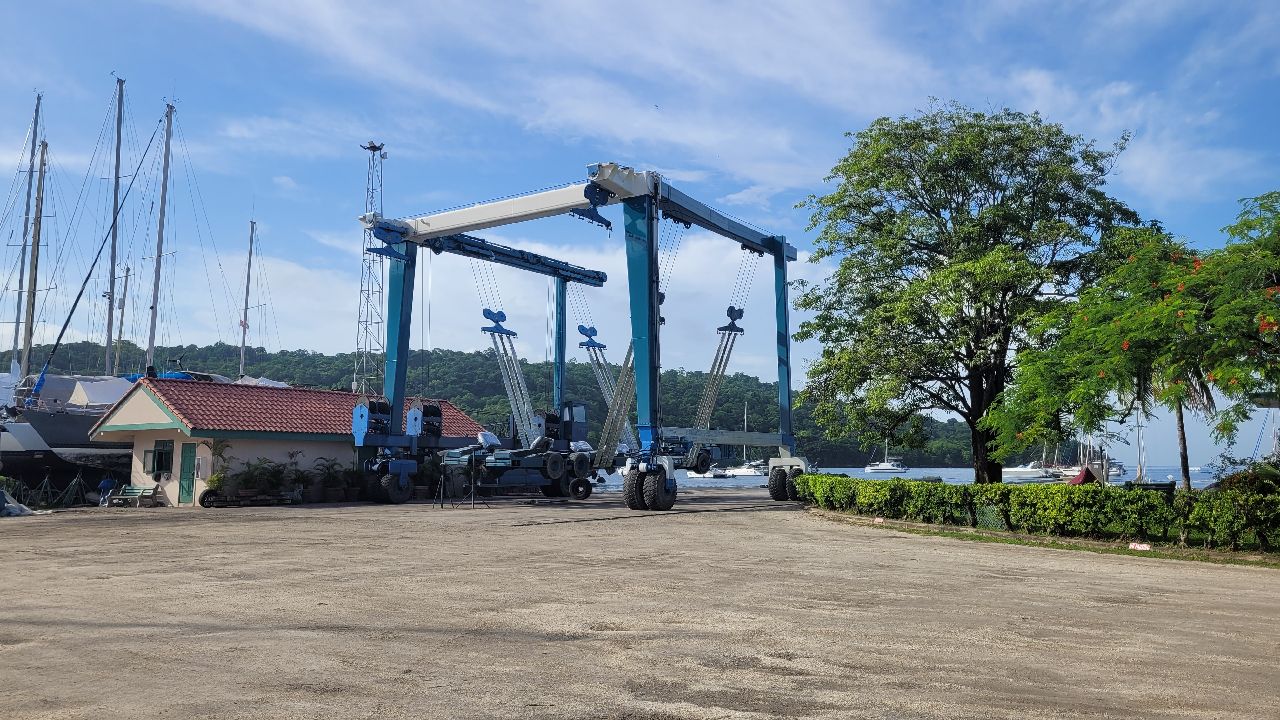
A proper hull survey requires the boat to be out of the water. Coordinate with the boatyard beforehand to arrange the haul-out, pressure wash, and relaunch. You should also ensure that the hull bottom is clean of marine growth so the surveyor can clearly inspect the fiberglass, keel bolts, and rudder.
5. Be present but give them space
While it is tempting to shadow the surveyor’s every move and pepper them with information, it’s usually best to give them space to focus, while being close enough to offer clarification if needed. The end of the day is the ideal time to ask questions and discuss findings; they can walk you through any major issues they uncovered, and explain what repairs are most urgent.
The value of getting your boat surveyed
Ultimately, a marine survey is not just about compliance; it is about peace of mind. Investing in a survey means knowing your floating home is structurally sound, giving you the confidence to cast off and explore remote cruising grounds safely.
Have you recently completed a marine survey or found a hidden defect that saved you from disaster? Help the community and share your survey experiences and tips in the comments below!






A great article, thanks Michaela!
I couldn’t agree more – “If the bilge is dirty, the wiring is a tangled mess, and the engine room is covered in oil, the surveyor will expect to find neglect elsewhere.
We had Hawkeye surveyed in New Zealand, using a surveyor recommended by Pantaenius, and couldn’t have been happier with the outcome.
His percussion testing of the entire boat took hours, and the noise was, well, annoying, but as a result he found a tiny puncture hole in our gelcoat made by another yacht’s BBQ in the Panama Canal – which was easily fixed.
Cheers
Richard
100% would recommend a survey to anyone buying a brand new boat, especially after the first shake-down or sailing season, to ensure everything that needs to be lodged as warranty is before the warranty period times out.