Change is in the air.
Among the tribe of world cruisers, families in their prime hay-making years are taking to the seas with kids, pets, and all. Young couples with little to no sailing experience are spending their savings and youthful energy on the purchase and loving restoration of old sailboats. Then, bright-eyed and bushy-tailed, sail off into the ocean filled with curiosity and hope.
Satellite-based internet services, with Starlink as the current monopoly, have made the dream of cruising more accessible and easier in many ways. But, in the midst of these amazing opportunities, there is collateral damage worthy of our best contemplation. And surprisingly, a correction may be on its way, initiated by the most unlikely source.
As technology changes, so does cruising life
Technological progress continues to make many aspects of sailing less and less technical. GPS has made navigation exponentially easier since the 90s, when the prospect of relying on celestial navigation kept all but the most dedicated sailors away. SSB, SailMail, Satellite phones, and EPIRBs were all stepping stones in managing weather forecasts and communication at sea. Still, their foreign-sounding names and the obscure “how-tos” kept many at arm’s length. Dedication and an earnest call to adventure were still a must to get through the learning curve; none could just buy their way into the lifestyle. It made this tribe family.
In the last two to three years, Starlink and Web Apps have undeniably turned the game upside down. Even the most uninitiated can now download pre-digested and perfectly understandable weather forecasts with friendly visualizations. Apps like Navionics have watered down the fine art of navigation to a process that can be learned in an hour. A follow-the-dots route to most remote places on the planet, including ETA, takes minutes to produce.
Omnipresent internet service has replaced hard earned seamanship as the backbone of a new generation of sailors. Meanwhile, wise to the hidden nuances lurking behind the easy button, the old salts are uneasy.
Looking toward the next generation
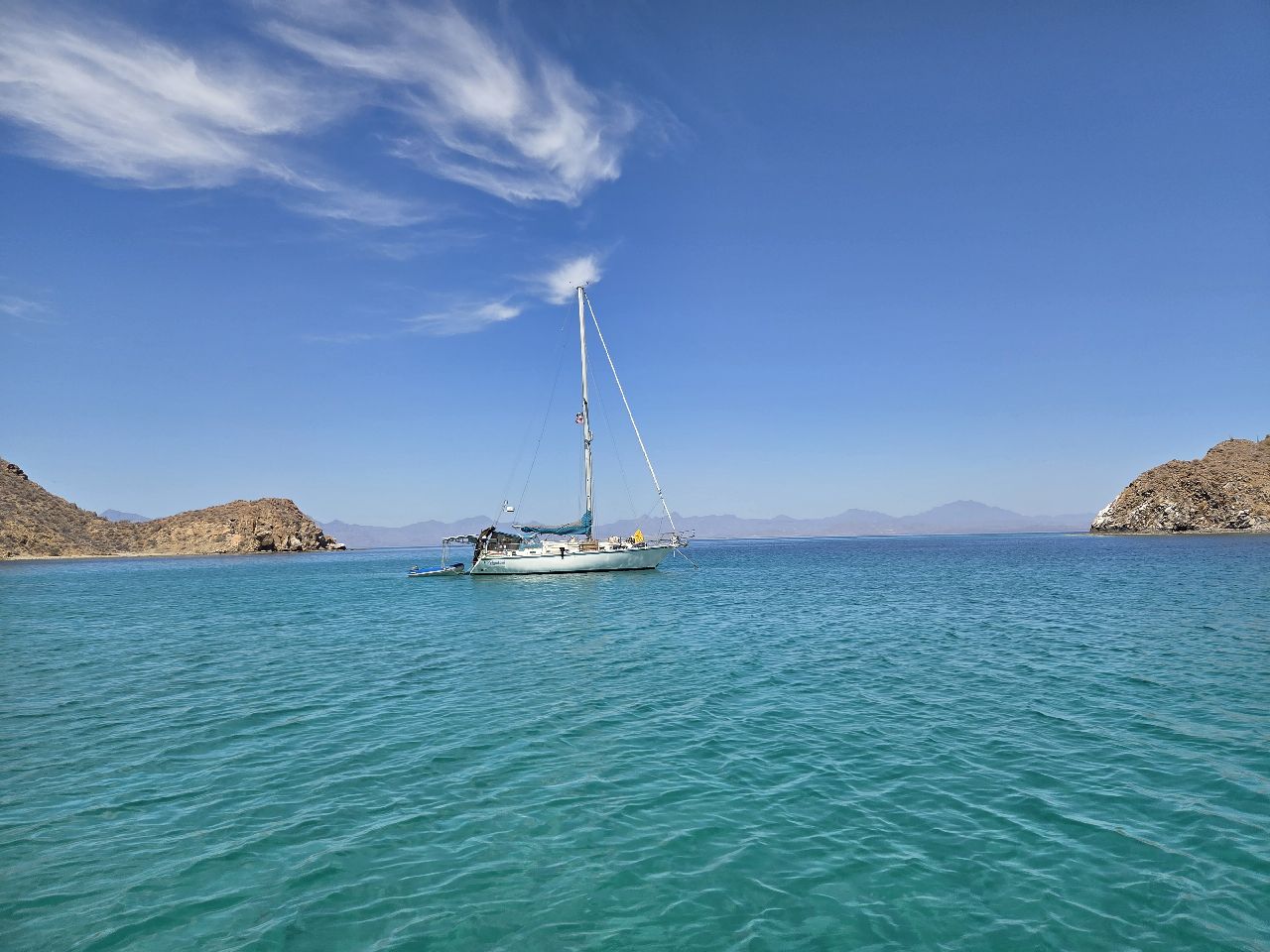
During the last many thousands of miles cruising the Pacific Ocean from Canada, to Baja California, to the South Pacific, Tami and I have met many of these young couples in person. We admittedly sit in nervous awe of their grit and unquenchable thirst for nautical knowledge. Many look and sound over their heads. We judge in feeling they are over-reliant on technology while acknowledging that, thanks to the hordes of amazing mentors just a few clicks away, they learn faster and with fewer bruises than we ever could.
Changes in the culture of the sailing community
Spending our time almost exclusively at anchor in remote places, we have witnessed the Starlink trend take off like wildfire. From a few boats with satellite dishes in 2023, to many, to most, to literally everyone within a relatively short time.
While the benefits of ready online help are undeniable, there is a darker side that remains understudied and poorly understood. The lack of practical knowledge is just part of it. While it is subtle, there is an unmistakable change in attitude visible in anchorages, among the communities on isolated island shores, and, not least, on board.
The knocks are lessening
A few days ago, during a sundowner in the stunning Marquesian Hakatea Bay, the conversation aboard Akaroa II turned to this very topic. John and Maureen are long time cruising couple who have been at it for over thirty years. While pondering the effects of this wave of technology, John told a story from when their little ones were still along with them. He recalled: “The kids would meet everyone at any anchorage way before Maureen and I did. As soon as we dropped anchor, they would hop on the dinghy and go knock everyone’s hull asking if there were any kids on board.” I thought it was a great story, but also thought-provoking. The knocks, we agreed, are becoming less frequent.
I shared my own experience from a few weeks earlier, in Anaho Bay, on the North side of Nuku Hiva, where we spent nearly three weeks at anchor in front of a small village only reachable by boat or via a trail from the neighboring bay. Everything there arrives by small boat or on horseback. It’s not uncommon for the twenty permanent residents to be outnumbered by the people at anchor. Juliette, who runs a tiny bed and breakfast there, shared with me how happy she used to be getting to know some of the people who visited. Lately, she said, people seldom get off their boat, and when they do, they don’t take the time to get to know the locals. It makes her uncomfortable and, in a way, feel less safe. I felt it was not a stretch to infer a new trend: cruisers virtually connected to the world at large, but less inclined to make connections in real life.
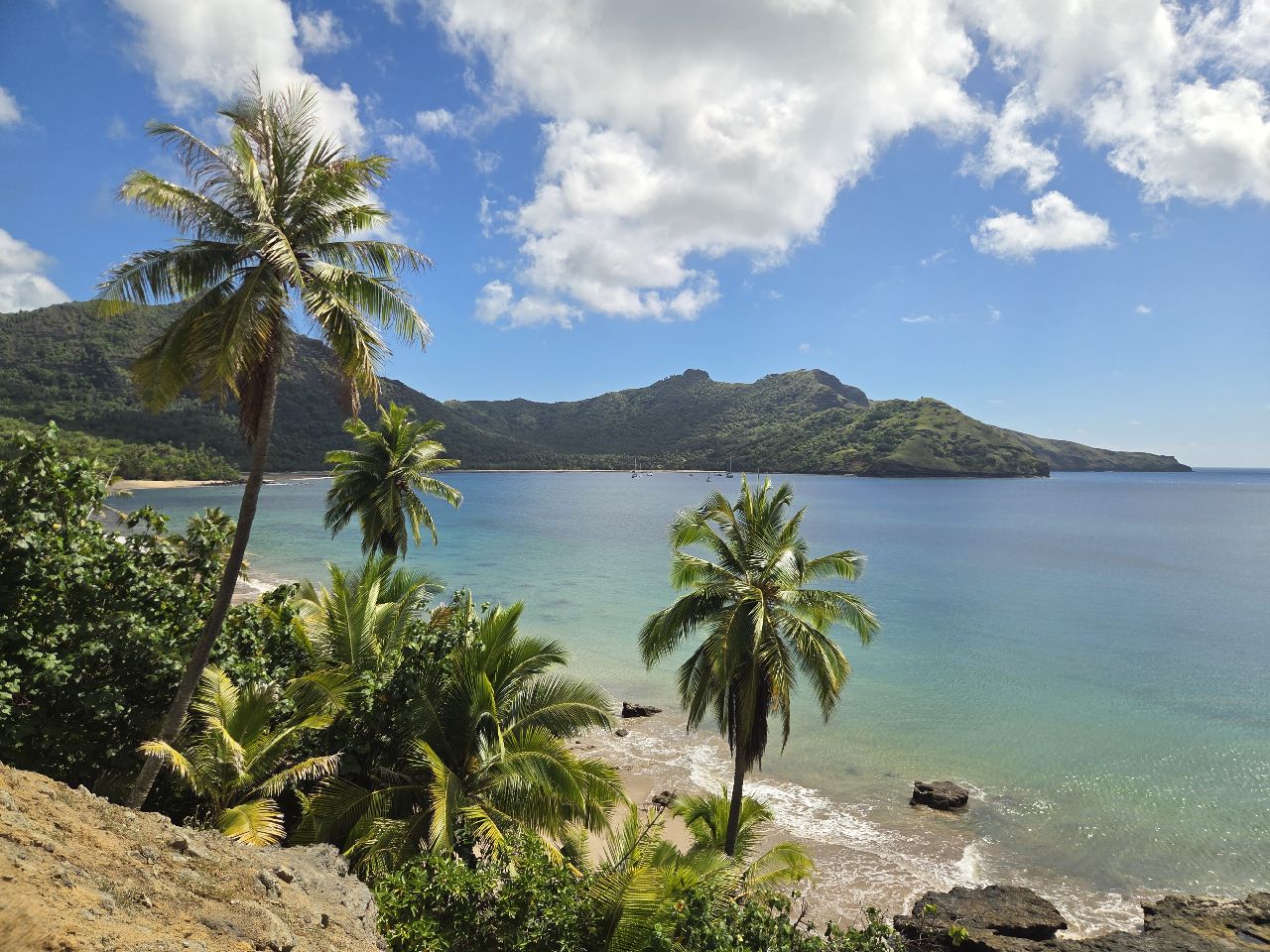
The conveniences and safety improvements of unlimited internet service are undeniable and easy to appreciate. But, back to practical experience, we wonder whether the colorful visualization may be too abstract on a tiny screen predominantly associated with mindless entertainment. Will the cheerful output obfuscate the fury that the skies and oceans are still capable of dishing out? If answers to complex problems, be they navigational, meteorological, or what have you, show up too easily, how does this really play out in minds more and more accustomed to a blurred line between reality and virtuality? And socially: will the knocks on the hulls continue to diminish until they altogether disappear?
French Polynesia has reminded us of a time before
As of this writing, Starlink is not allowed to operate in French Polynesia. While the dish on our boat works, it cannot be purchased locally, and there are no coverage plans available. The local cellular network companies are putting up a big fidget. While much of the steam behind the fight is financial, there is also a tangible concern about the potentially devastating cultural impact on islands that have thrived in their relative isolation.
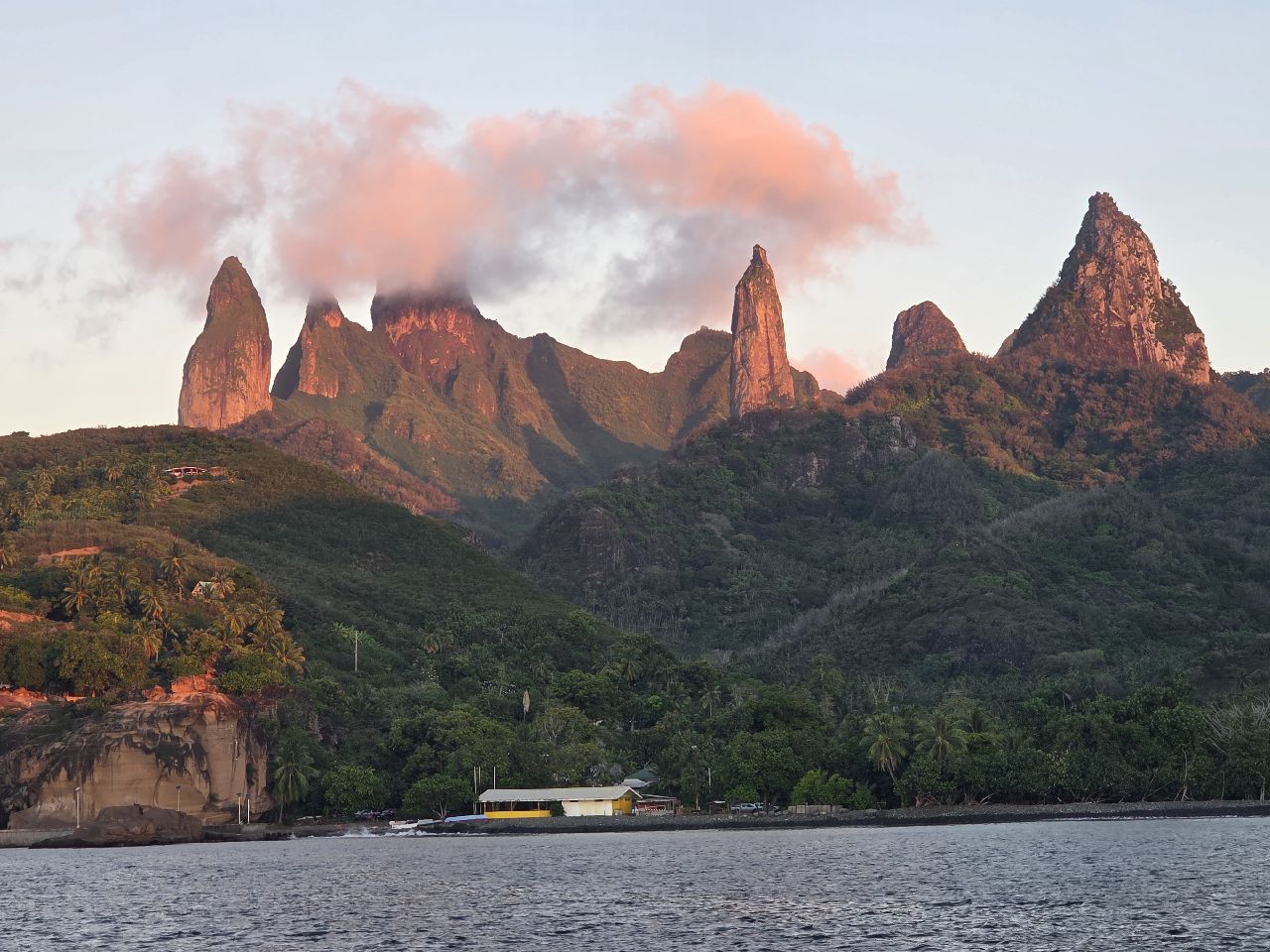
Marquesas are rugged, remote, untamed, and absolutely stunning. There are some conveniences; people do have cell phones, but in the four months we have been here, we have witnessed a way of life that reminds us of what we had before the screens.
Here, kids of all ages play together on the beach, teens and young adults listening to a boombox on the dock, talking, laughing, and dancing all night. Every night at five PM, the waterfront fills with men and women playing bocce ball, Petanque as they call it here. This is a small village on a very small island. But everyone’s out. Those not playing are watching, cheering at the exploits and laughing at the players’ reactions to missed shots. The entertainment comes from people, not screens. The contrast between this present participation and the drab stares of people watching the latest political puppet show, or Netflix’s latest must-see series, or doom-scrolling Instagram, or any of the thousands of on-screen options is stark. The feeling is that something good is in jeopardy here. Something worth preserving.
Change provokes thought
But there is an interesting twist. In August, Starlink announced that they will be doing away with the monthly plan that allows cruisers affordable global internet access. What cost between $80-100 per month for 100GB – and about a hundred dollars more for unlimited – was going to be retired. Up to this point, dish geolocation was pretty loosely managed. While service was technically to be used in the country of registration, the rule was seldom enforced. Consequently, some ended up purchasing and registering their dish where it was cheap (i.e., Mexico), and then taking the dish back home to the U.S.
With the closing of this loophole, it would have become impossible for cruisers to use Starlink the way they did up to that point. Traveling from country to country with the same dish would have been impossible unless subscribing to the most expensive plan Starlink offers: an enterprise plan geared for businesses, priced accordingly at $600 per month for minimum use to well over $1,000 for digital nomads and those homeschooling kids (fine print available online).
Cruiser and RVer groups on social media voiced their outrage, citing serious and legitimate concerns. Denied access to the only weather forecasts many current cruising sailors have ever known, web-based navigation platforms are rendered useless by the lack of connectivity. Those doing remote work or schooling kids through online programs are even more impacted. Whatever the reasons, the outrage was genuine and universal. As did hundreds of others, we submitted our poised, respectful, yet pointed thoughts to Starlink Support immediately, and pointed out the possibly overlooked unintended consequences of the new rules.
But here comes the interesting part: a couple of weeks after the announcement, the online tone started to change. From the doomsday scenarios of the first few days, many successfully navigated the stages of grief and came to the realization that people had been cruising for decades without onboard high-speed internet and have been doing just fine. With that realization, many other absurdities have come into focus. There are boats out there with nothing but a smartphone as a navigation aid. Smartphones are a great backup plan to chartplotter failures, but even without paper charts, at least two backup electronic sources are a must. Not just so that you know where you are, but equally importantly, the exact positions of the things you are not supposed to hit. I believe there may be a reassessment in the works. A reckoning of sorts aimed at making sure we are not throwing the baby overboard with the bath water.
Our rage at corporate overreach is easily triggered in those at the receiving end of these familiar “adjustments”. We all feel squeezed from all directions by corporate MBAs displaying their mastery at extracting blood without killing the patient.
Somehow, this little sub-market of cruisers, joined by the equally impacted international RVers, got loud and rowdy enough to convince Starlink to change course and deploy a similar, if somewhat costlier, plan one that allows people to travel internationally with their boat or RV,, with the usual caveats and small print.
My hope was for something better; a middle-ground solution that preserved enough bandwidth at a reasonable price to keep navigation safe while laying the groundwork for an honest recalibration of the cruising lifestyle. The silver lining might be more competent sailors who are more connected and engaged with their ever-changing surroundings, especially those they have worked so hard to reach.

By Chris Fratini
Hailing from Kingston, Washington, Chris and his wife Tami are on a multi-year voyage aboard SV Kehaulani. After sailing the west coast of North America, they crossed the Pacific Ocean and are currently in French Polynesia.