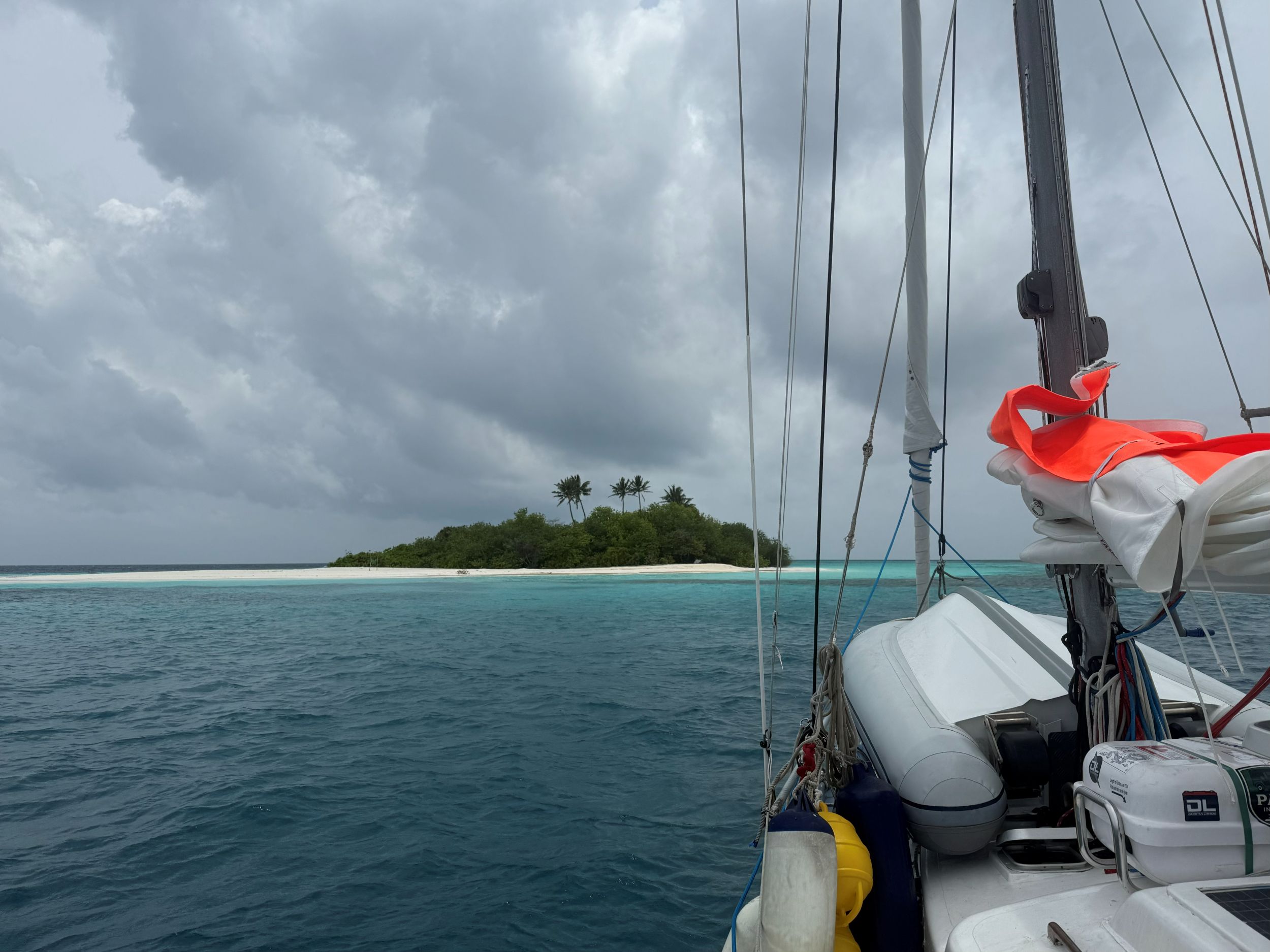
As the old saying goes “Sailing plans are written in the sand at low tide.” All sailors know the cruising life is about being flexible and adaptable, and I was faced with this recently as I raced the change of the seasons across the Indian Ocean.
It was after sailing more than 18,000 miles from Los Angeles to Langkawi, Malaysia, during my mid-circumnavigation refit, that I was given the bad news that my inboard diesel engine had lost all compression and was bound for Davy Jones Locker. I sailed essentially engineless (using a sketchy outboard on the transom only a few times to get into anchorages with no wind) 150 miles up to Phuket, where I hauled out and installed a new diesel engine.
Departing later than expected
I had planned on departing Phuket in early January with the rest of the pack of world cruisers to sail to the Maldives. Two months later I was finally ready to go, putting me smack dab in the middle of the transition season, AKA No Wind To Be Found season.
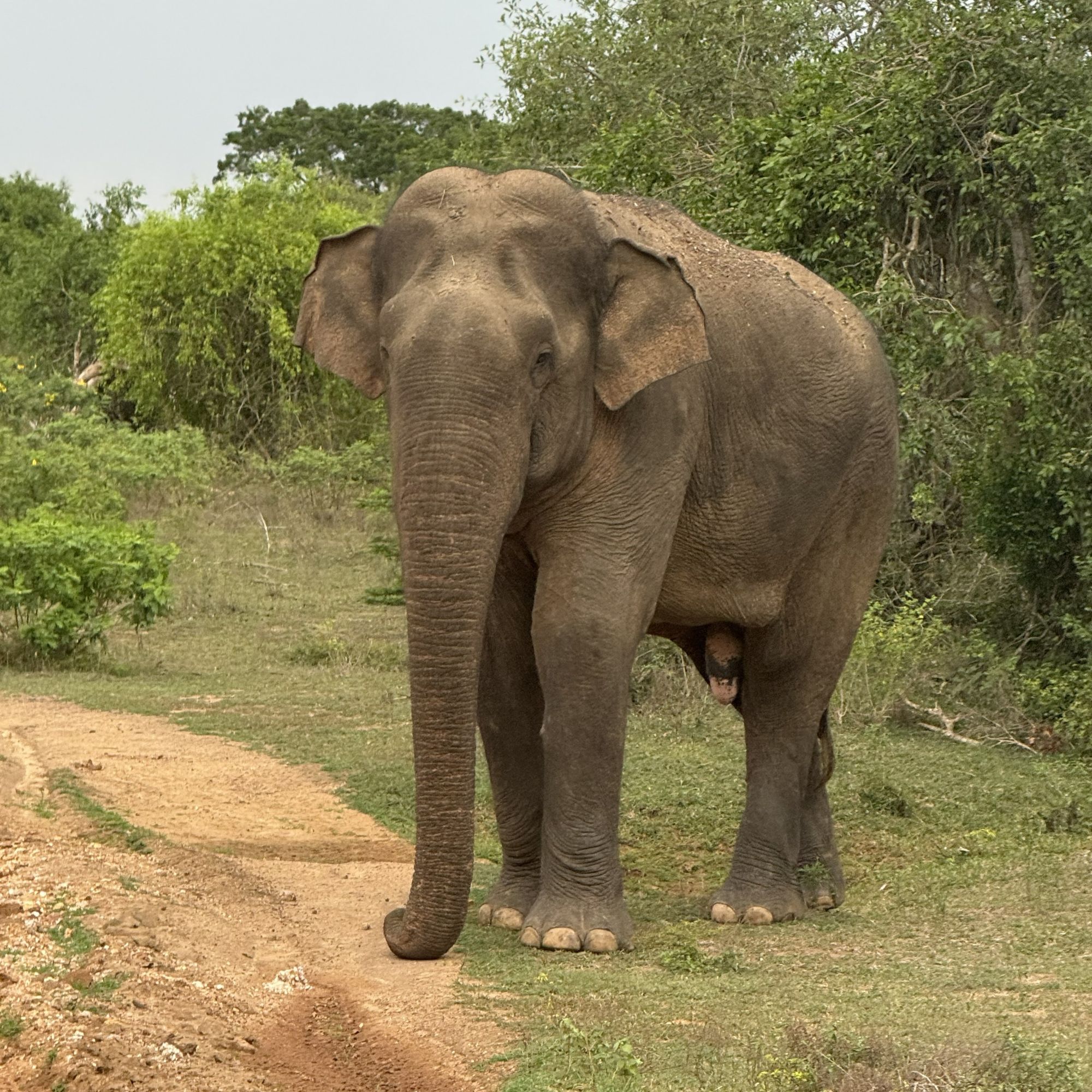
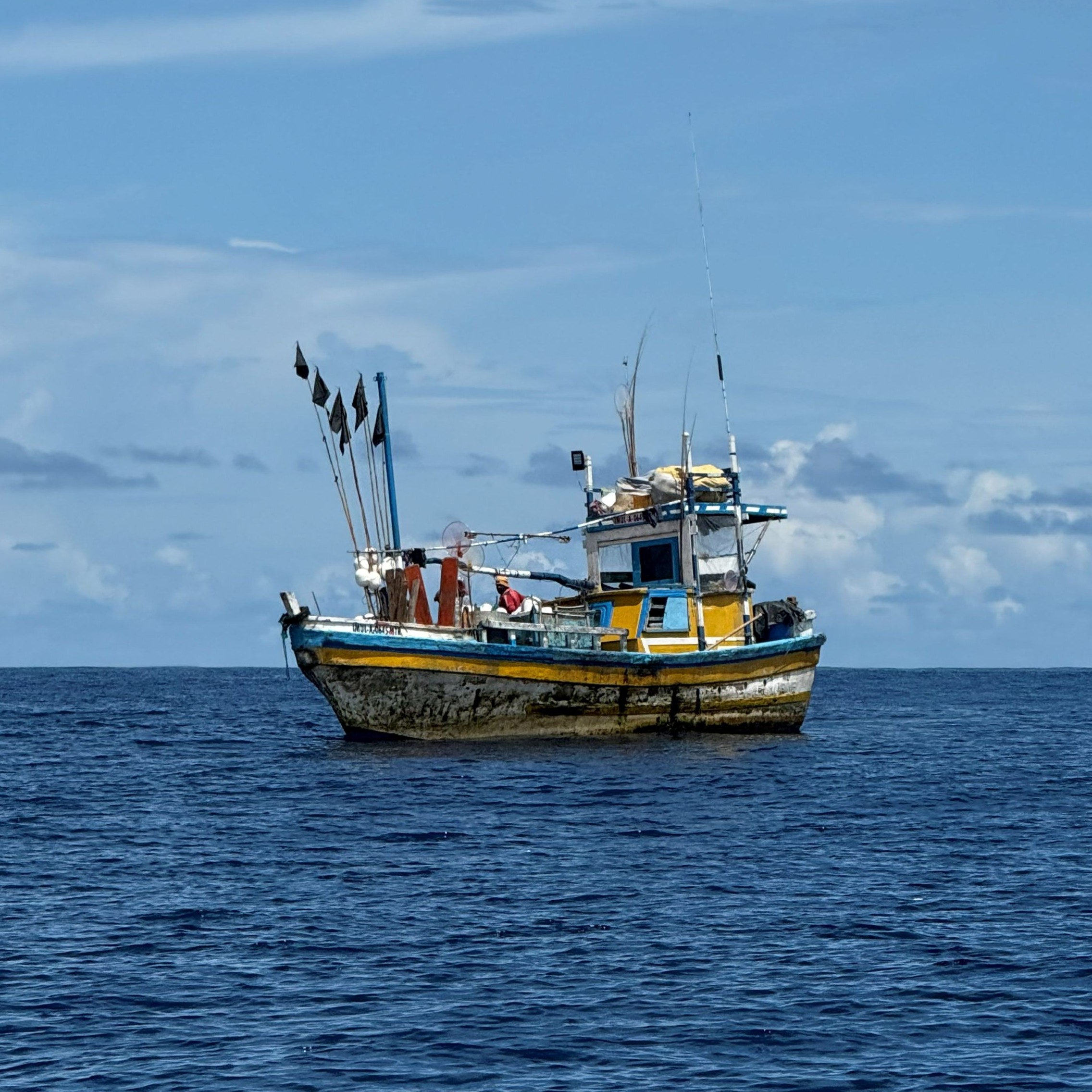
After an agonizingly slow passage to Sri Lanka, a quick and amazing stop over to load up on diesel fuel and see a few wild animals, I was off motoring 400 miles from Galle Harbour to Male, Maldives, hoping that I could outrun any strong westerly winds that were common during this time.
Arriving in the Maldives
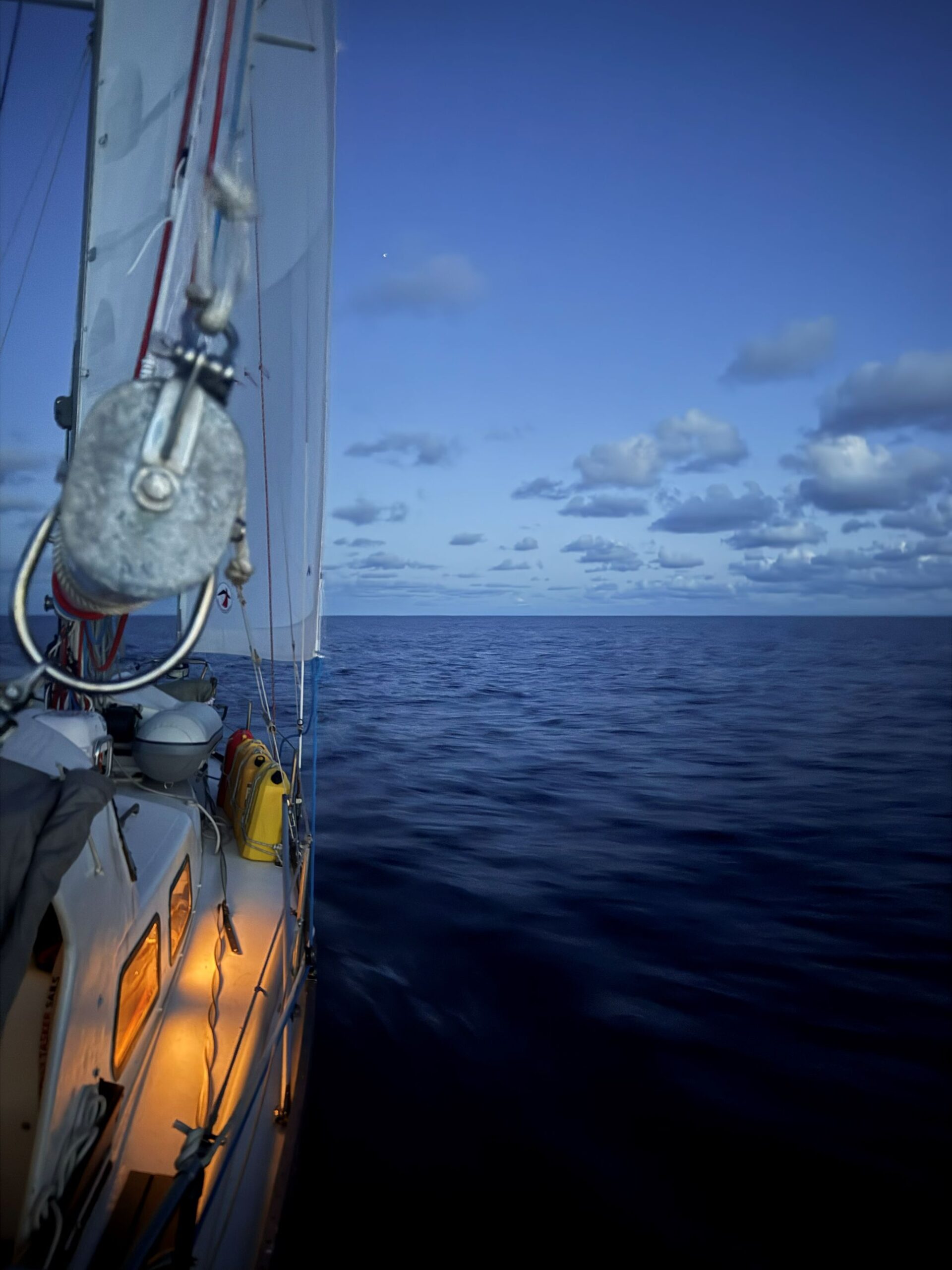
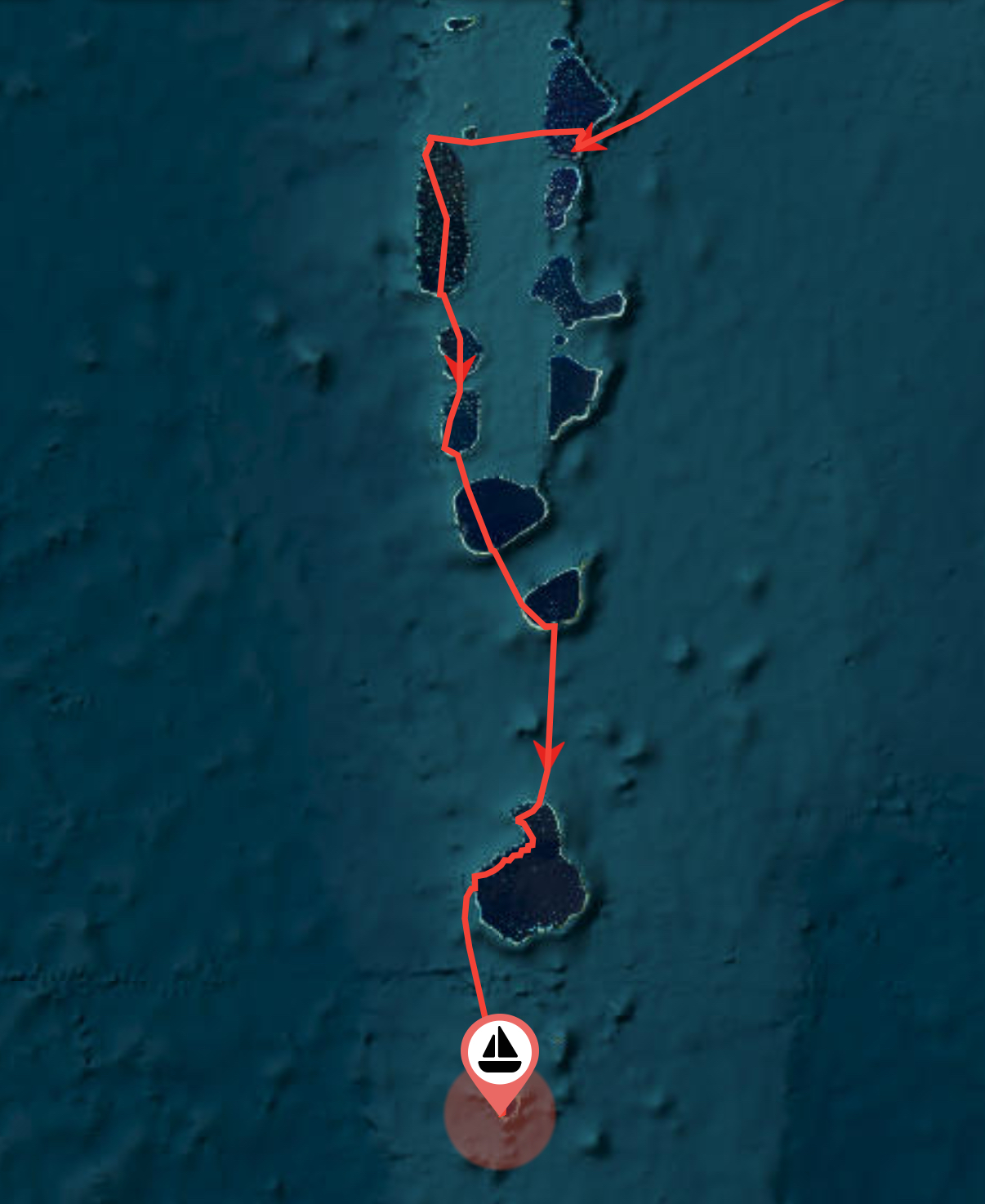
I managed to get to Male right as the monsoon set in, with a regular set of daily squalls. I was now faced with the fact that I needed to transit the Maldives to reach Addu Atoll, some 500 miles to the south, where I could clear out.
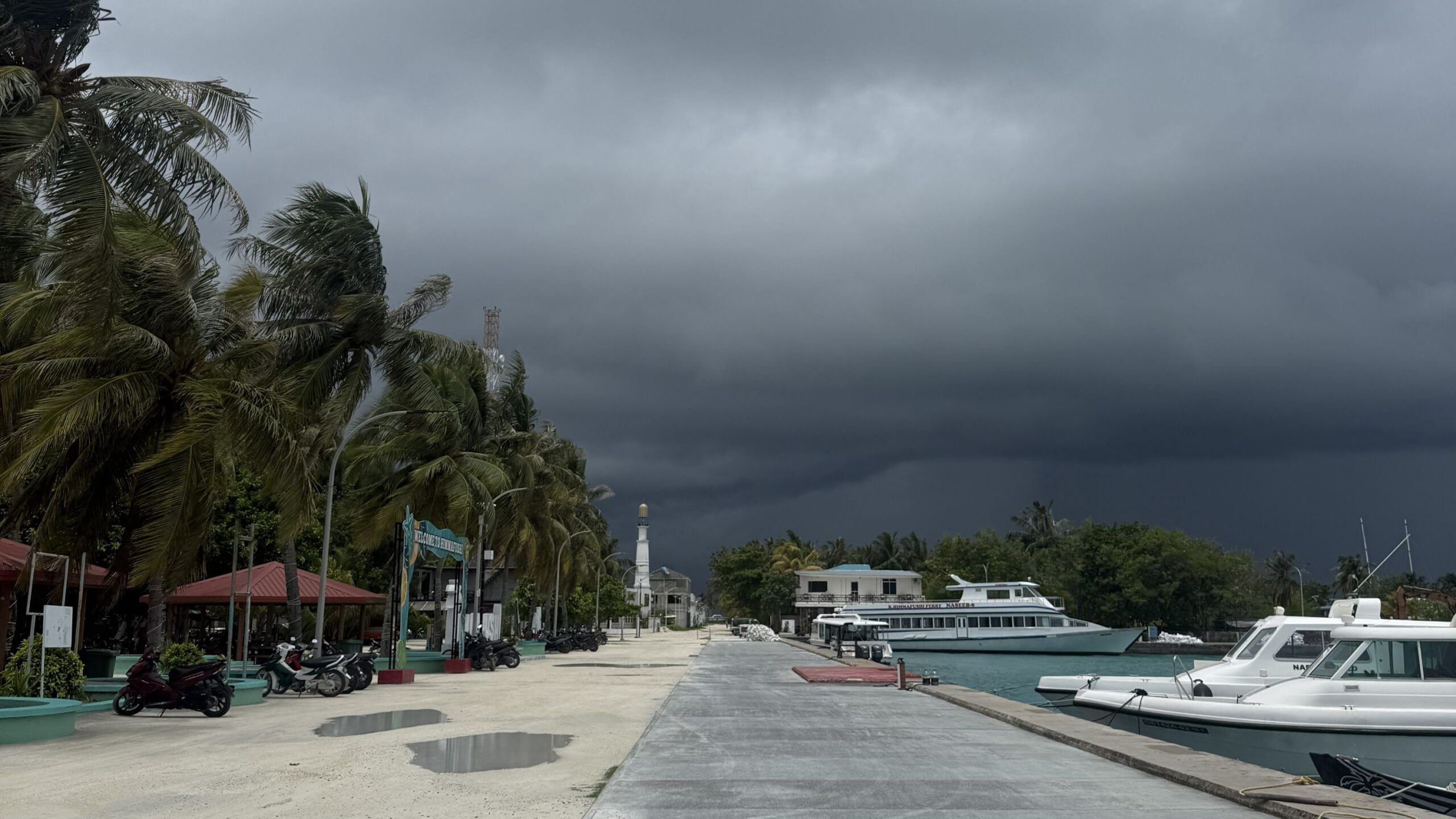
Sailing through monsoon season
I set off with a day of calm winds and made my first anchorage at Manta Ray Point at the top of Ari Atoll. A squall wasted no time charging in as I sat at anchor. With no protection from the wind and only a slight protection from the sea, it was very much like being anchored in the middle of the ocean. The next morning, I saw a manta swimming under my boat, but he was gone by the time I got in the water, and with a strong current running I did not stray far from the boat.
I have swam with these amazing creatures in the past and I always look for a chance to swim with them again when possible. But being a solo sailor, it just felt too risky, even with the dinghy in tow behind me to be in the water in such an exposed area.
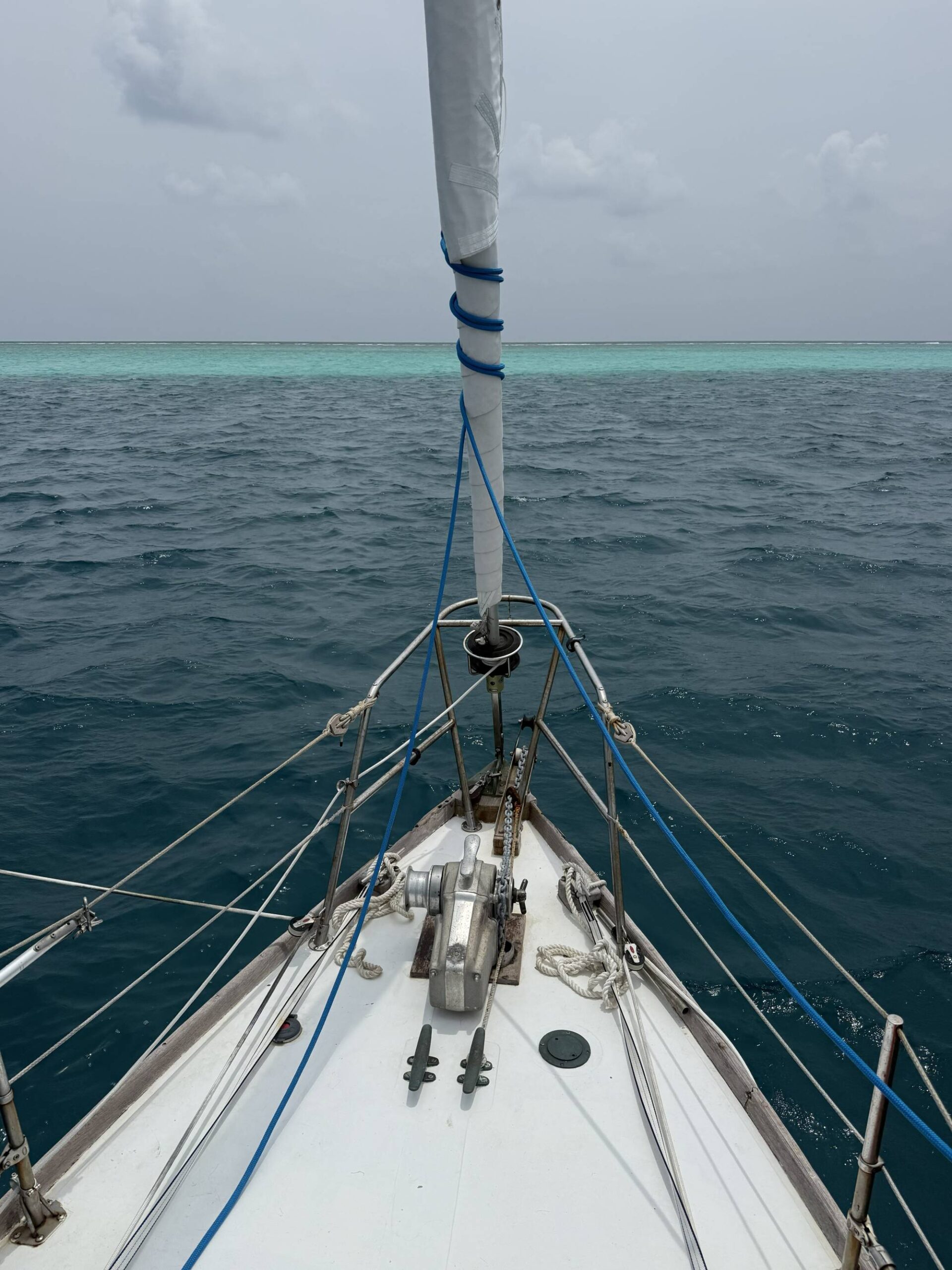
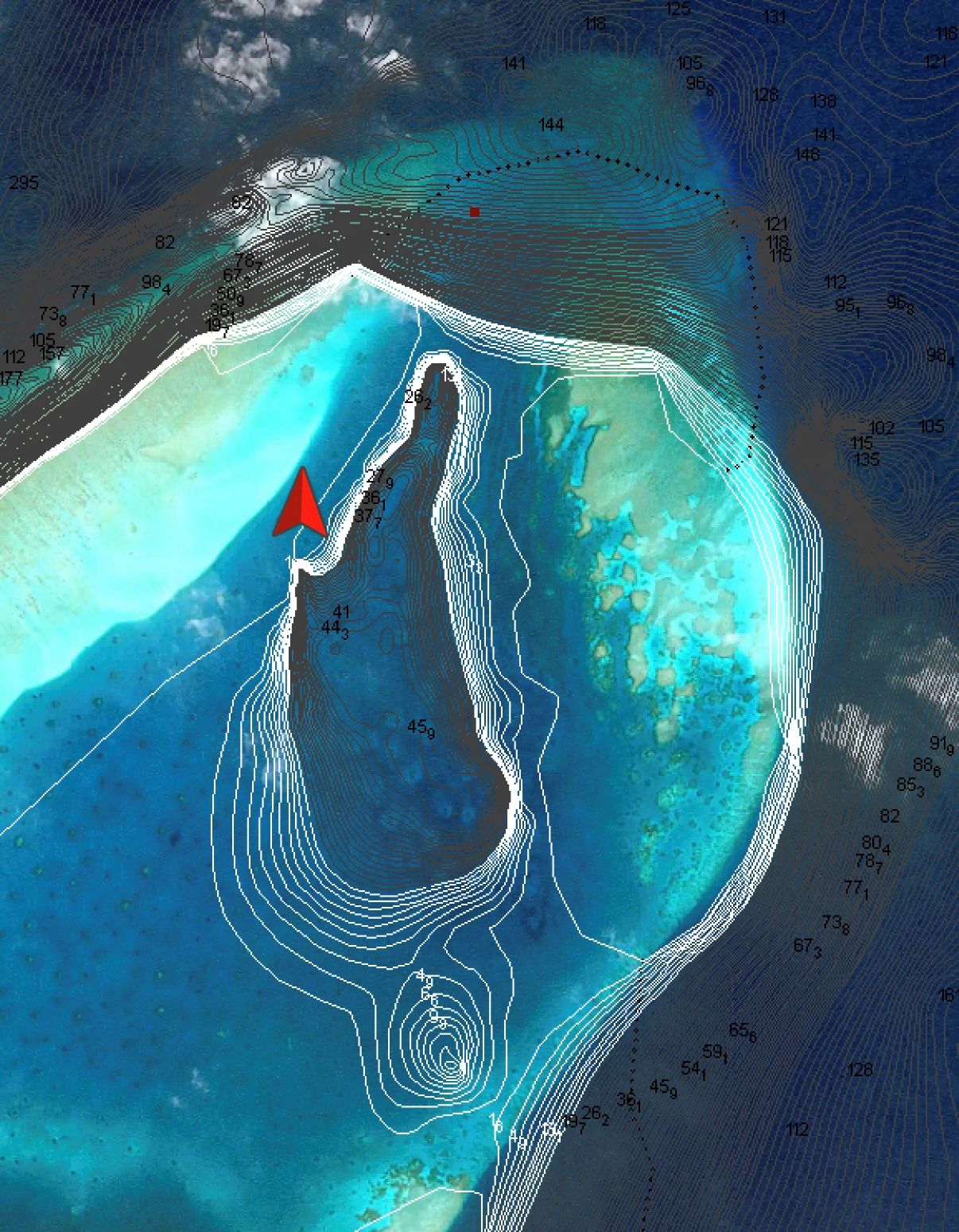
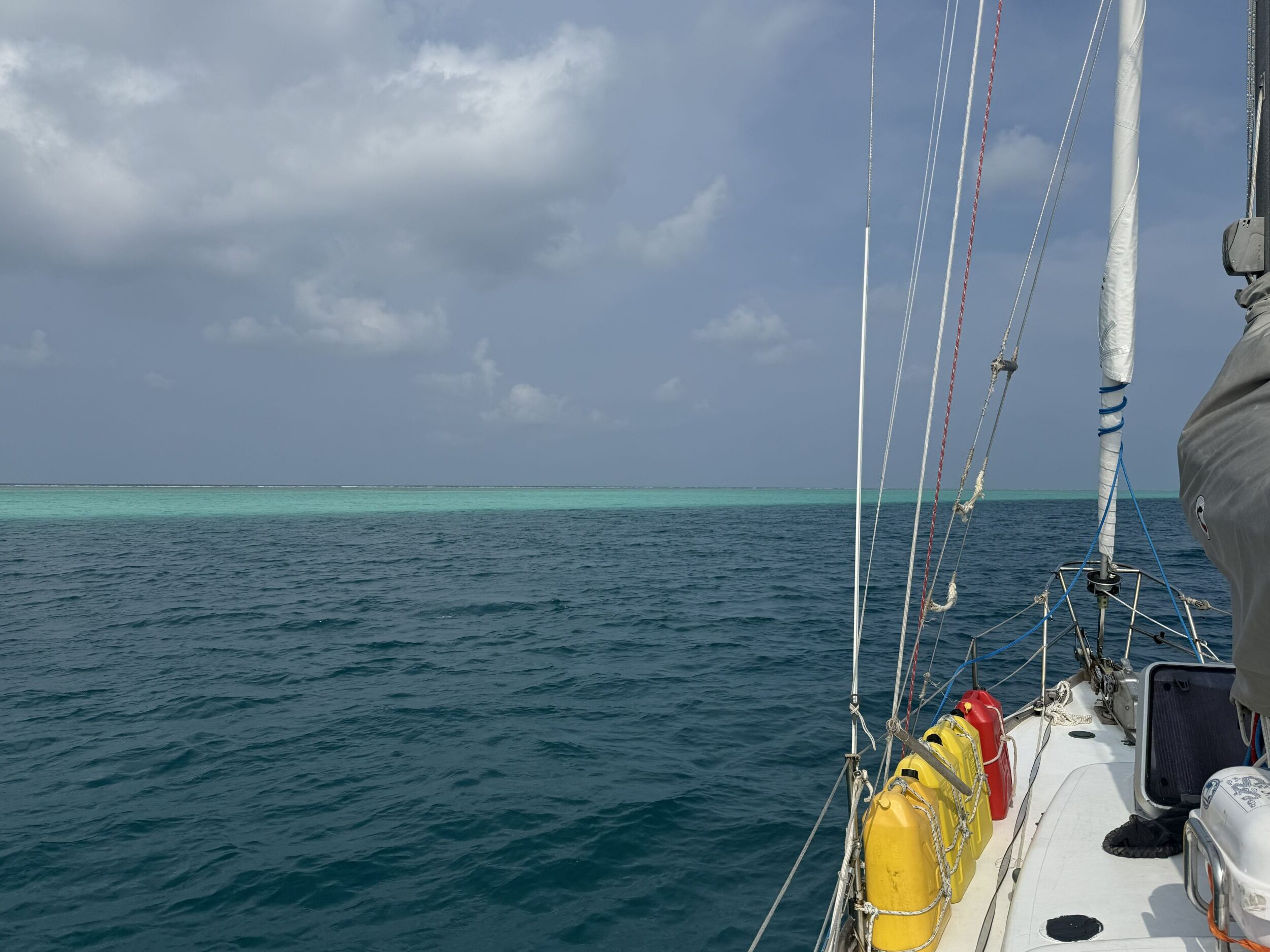
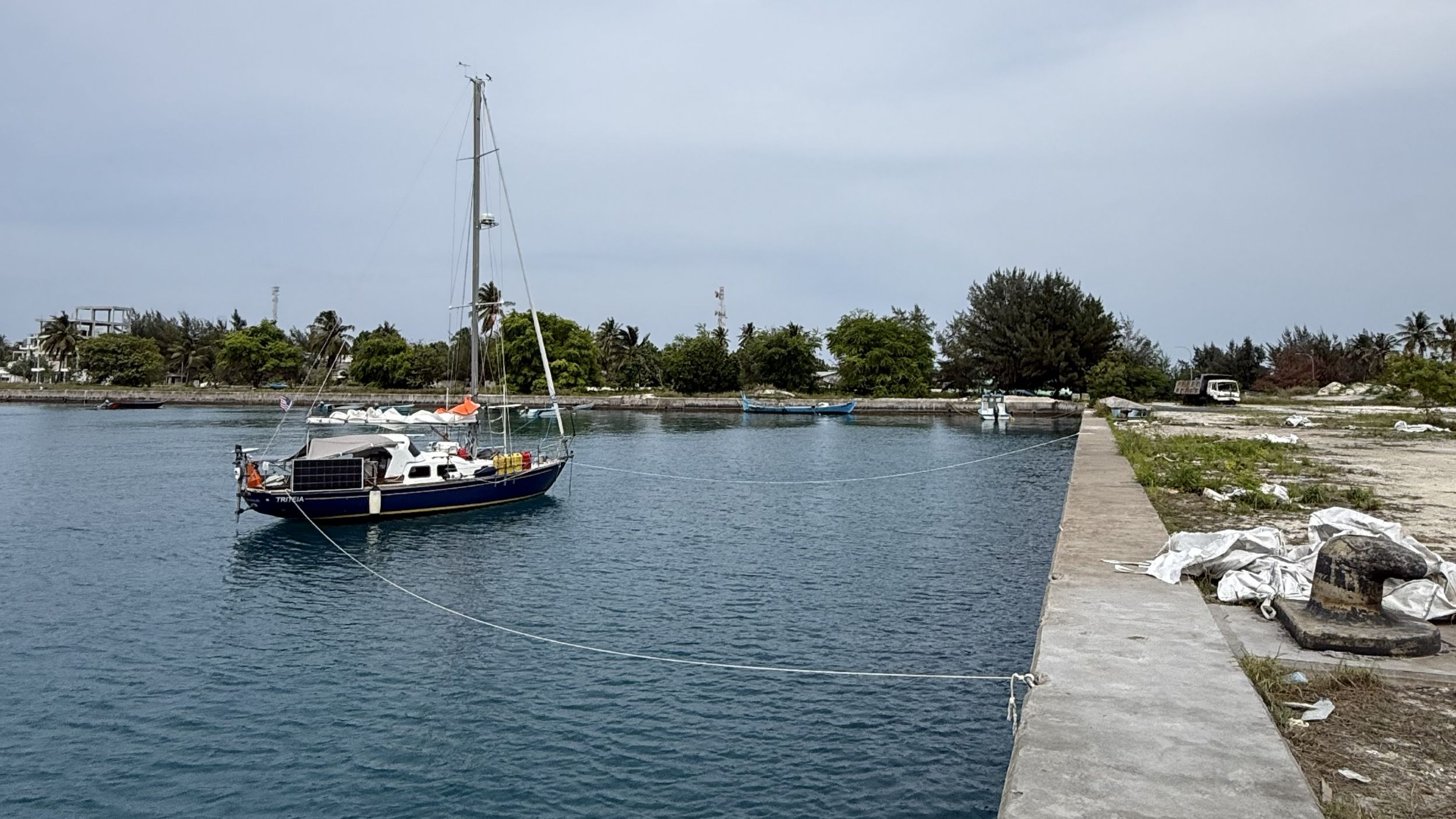
I hauled up and headed on, moving daily until I reached Maamigili where I had a very rough 24 hours at anchor in the exposed lagoon, before gaining clearance to enter the protected harbour to ride out multiple days of a 30+ knot blow. I had to get creative in the small and active harbour, using two of my anchors and two long shore tie lines to the quay wall, but this gave me great protection for a few days until I could continue pushing south.
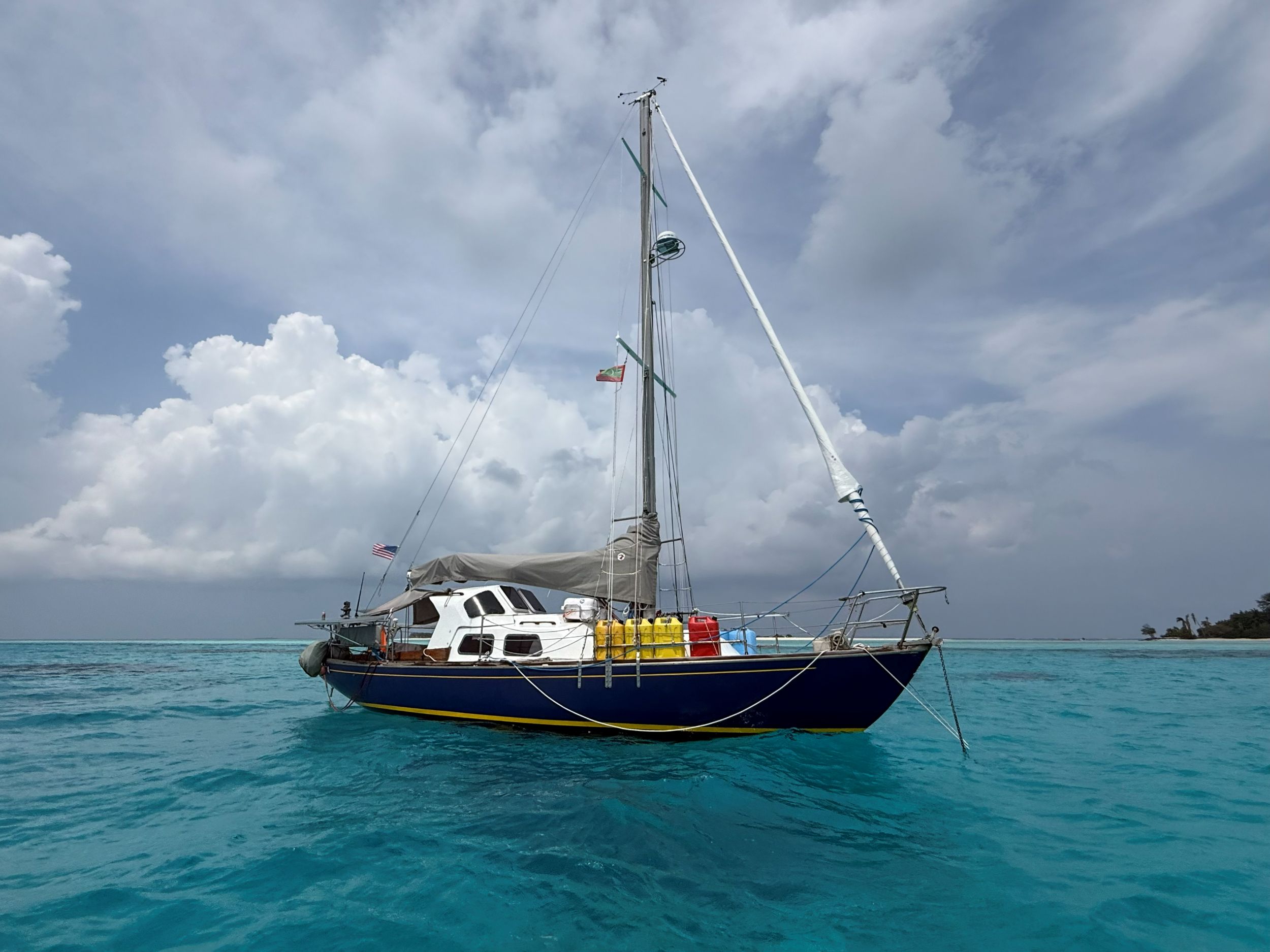
The next stop was one of the only places with a landmass I found to hide behind during my transit of the Maldives, a small uninhabited island named Makunueri. I only spent a single night before continuing south.
The passages between the atolls were lively affairs; big, short period seas charging between the narrow channels with very strong currents. I slowly made my way, down, atoll after atoll, knowing all too well that I was sailing over an absolute paradise but with no possible way to enjoy it in these conditions.
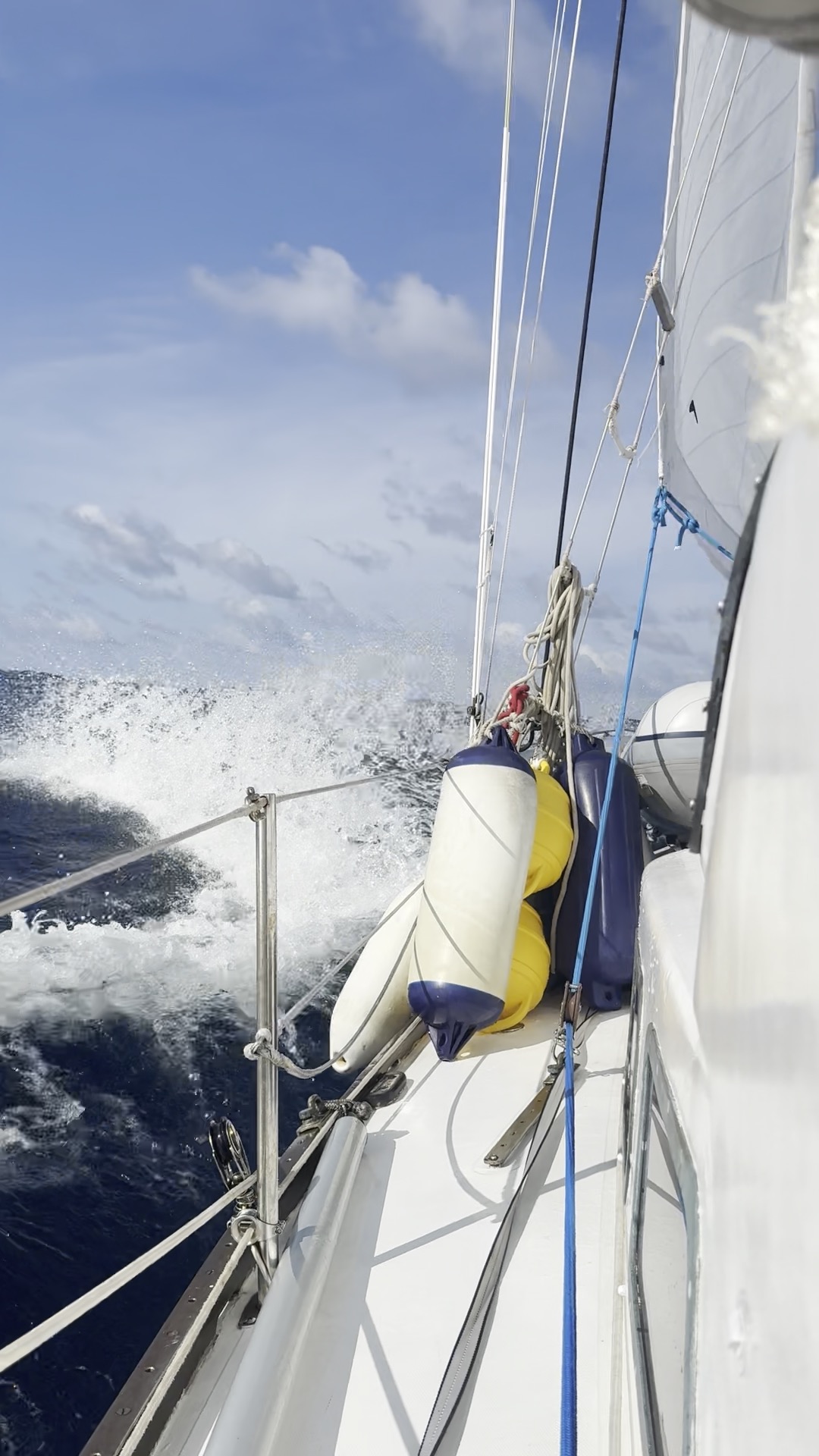
One of the most harrowing experiences was having to sail into a small cut in the coral reef that was only 10m wide with a strong running cross sea following a 25-knot squall. I had no other options before me and just had to commit and hope for the best. I made it through and into the lagoon, which was still fully exposed to the fetch and wind waves.
Almost there…
By the time I reached Laamu Atoll I was confident about my passage times. I had enjoyed a mostly south bound current inside the lagoons that had me making 5+ knots average on all my passages for the last 200 miles. Next up was the last two big passages between the southern most atolls.
The passage should have been 55 miles, and I expected to make it in about 10 hours. The forecast said there would be a strong current running due west but what I found was the 3-knot current running NW forcing us to only make 3.5 knots of speed in 2-3 meter short period seas. The crossing ended up taking more than 17 hours, and I navigated through a coral atoll in the dark and anchored at 1 am.
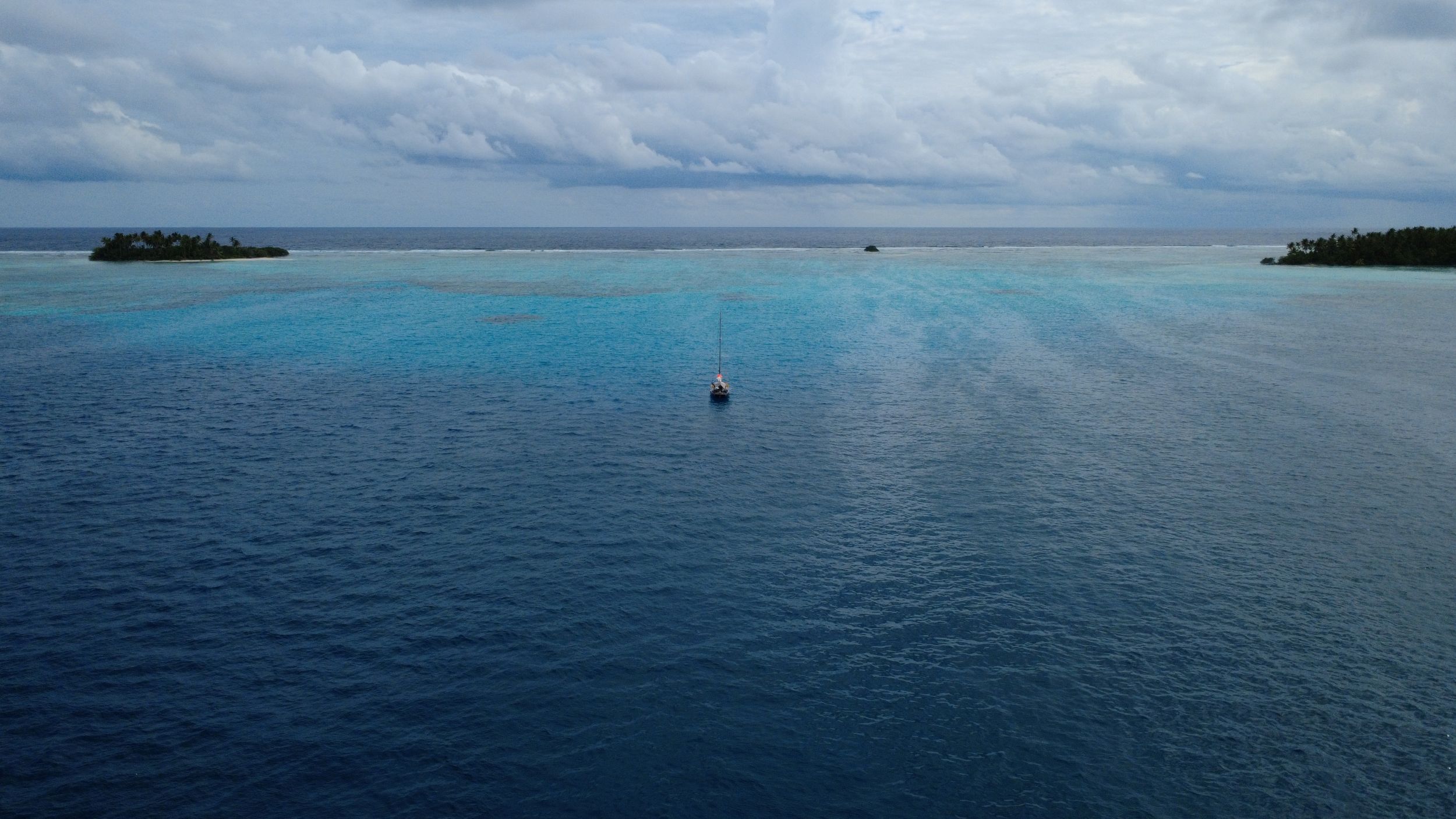
On the final push, I crossed the equator for a third time as I made passage between Huvadhu and Addu atolls, and almost like a magic line the squalls were no more. Finally reached Gan after 514 miles of hard pushing and I prepared to leave the country.
Why I sailed the Maldives at this time
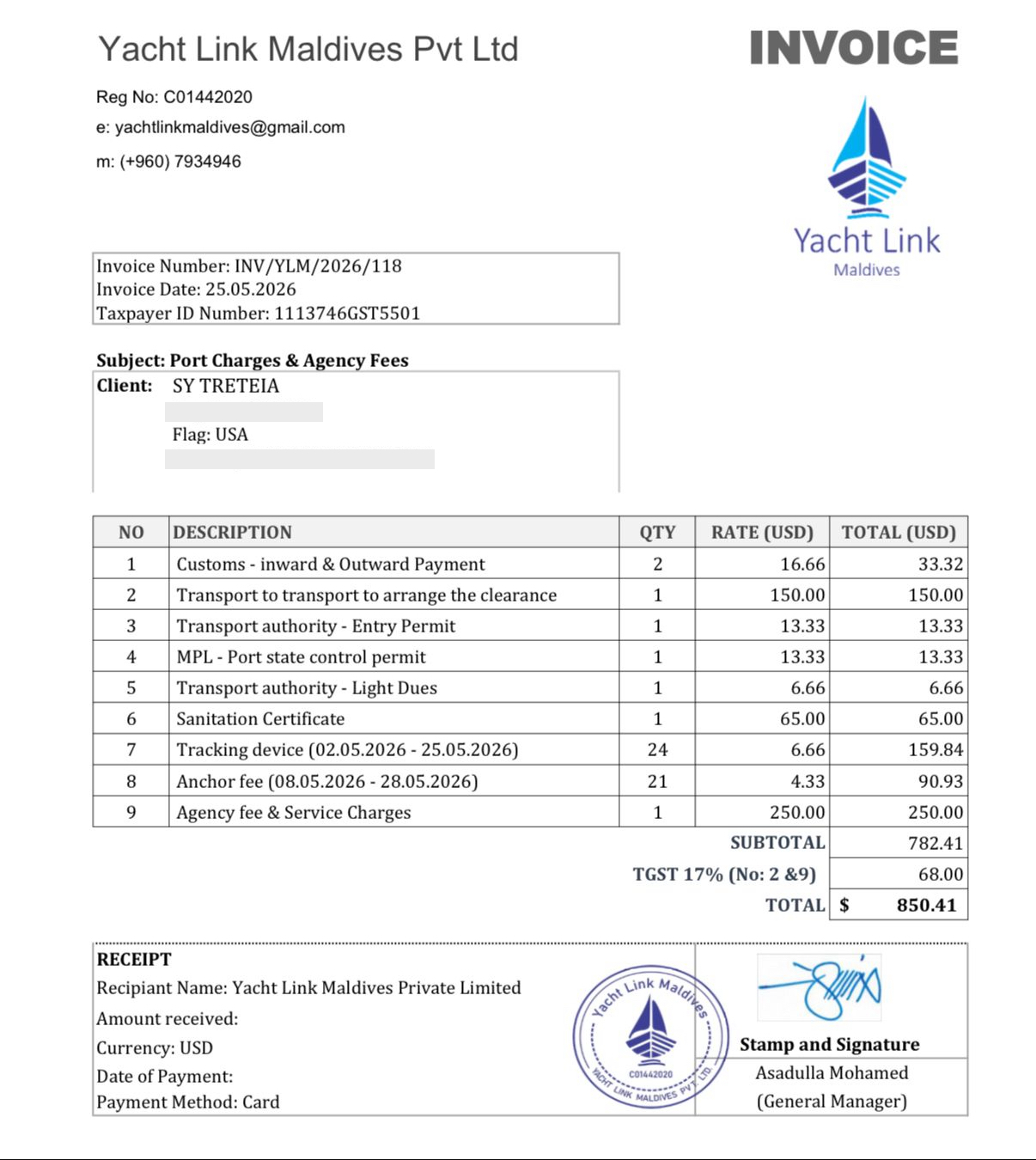
I wanted to visit the Seychelles, so coming to the Maldives was a necessary stop. This is especially true given how difficult it is to visit Chagos these days, and the fact that they are cramming all the yachts into just two anchorages, not to mention the cost. Speaking of which, my 26 days in the Maldives cost me $880 USD in clear in/out/agent fees.
-
- Triteia Maldives invoice
-
- Sailing track
Sailing Maldives in monsoon season
Would I do it again? Not likely, but the only other option would have been to sail directly from Phuket to the Seychelles, which would have been roughly a 3000 NM passage, and I would have felt like I missed out on many of the Indian Ocean destinations.
The window of time to cruise the Maldives is between December – March, so if you are planning to visit someday make sure you can get there during that time. As always, we plan as best as we can and then make the best of whatever actually comes our way. That’s the cruising life!