
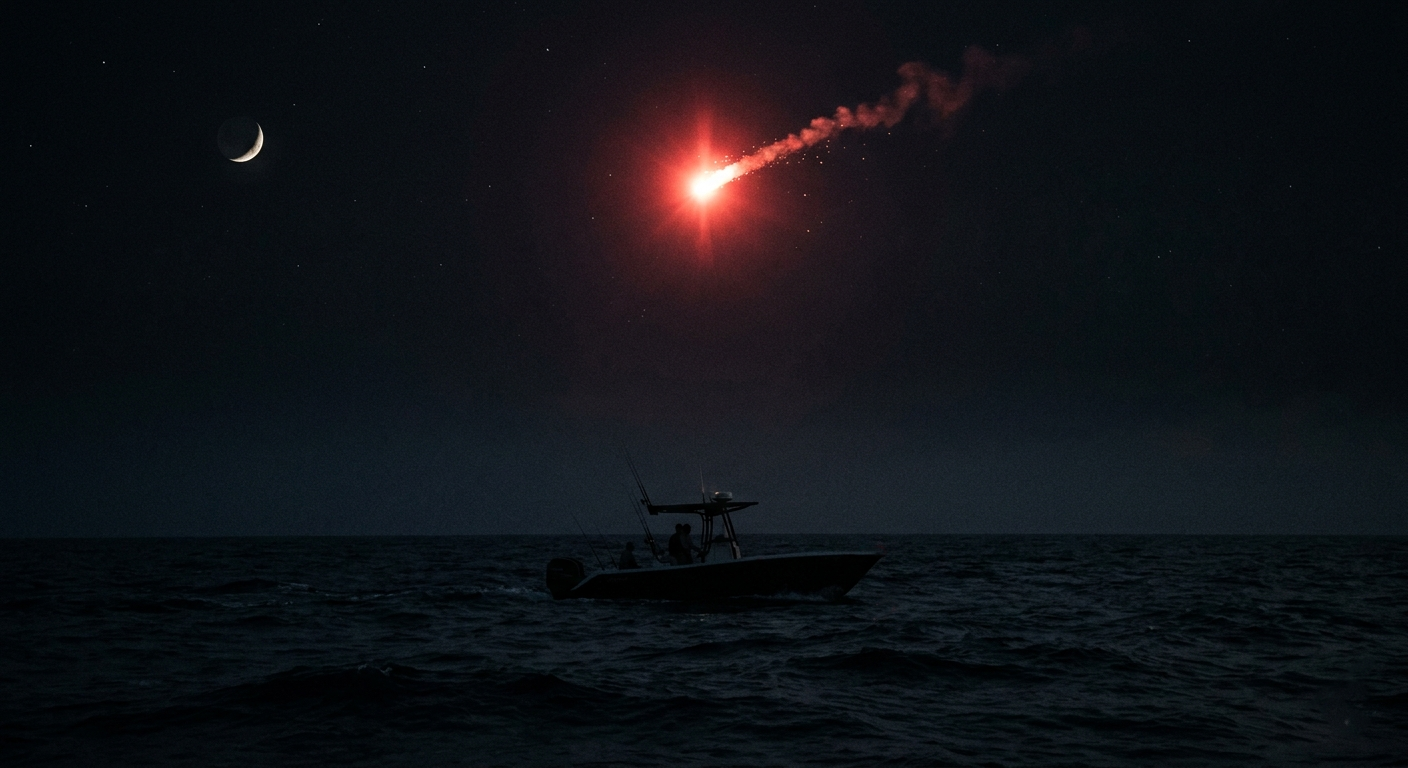
When Ari Storch and his wife Kelly set out from St. Thomas toward St. Kitts and Nevis to celebrate her birthday, they expected a routine 24-hour passage. What ensued was an experience they never expected, and will never forget.
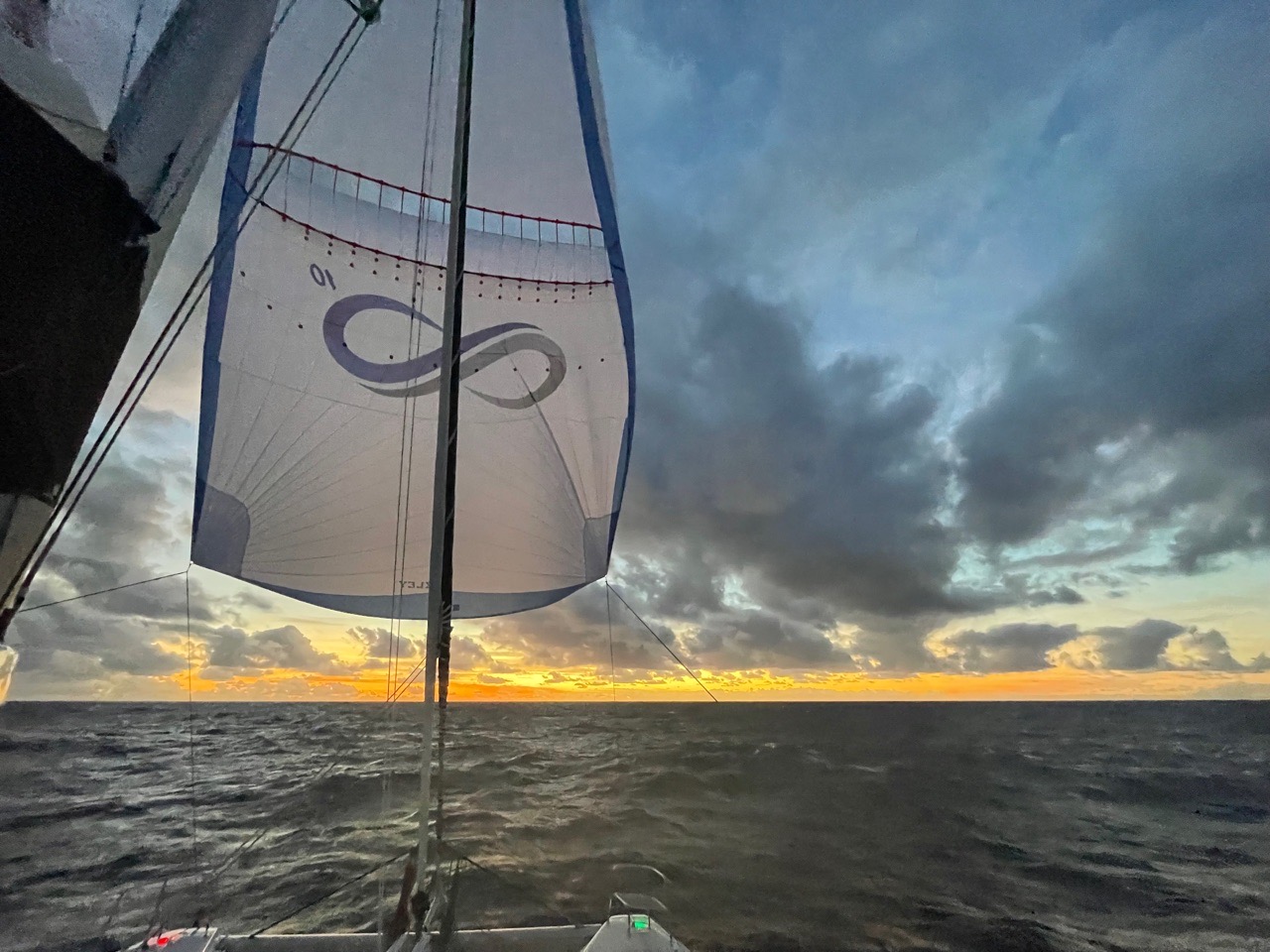
The voyage started with a motor sail to the east, before switching to a more southerly direction using the Code Zero. After making great speeds for several hours, night was approaching, so the lightweight sail was furled in, and the iron sails let out. Things were progressing normally, and with the boat heading into the winds and seas to make easterly progress, they ate dinner, then Ari went down for a quick nap.
PAN PAN
Around 9.00pm Ari was woken by a PAN PAN alert being broadcast over the VHF by the French Coast Guard searching for an overdue fishing boat from Saint Martin; black hull, black engines, lost in open ocean. With only a sliver of moon for light, the odds of finding them that night were low.
Ari and Kelly’s immediate thoughts were in line with the reactions of most cruisers I’ve met:
Typically, when we hear these we “hope and pray” but we never think we are going to have anything to do with the crisis.
In fact, the couple moved to put their radar on, being more concerned they might run over a black boat in the dark of night, rather than “find” them.
What followed was a series of lessons in preparedness, quick thinking, and the power of the cruising community.
Finding the needle in the pitch-black haystack
Spotting a missing vessel in open ocean is hard enough, but finding a black one that has lost all power at night is another level.
Previously, Ari and Kelly had participated in the ARC (Atlantic Rally for Cruisers), and the safety lessons from that experience were fresh in their minds. One of those lessons was simple but vital: always keep a high-powered spotlight at the helm.
I had forgotten to put it up there before it got dark, but something said to me go get it – so I did.
As Ari sat down at the helm at around 11.00pm, he caught a glimpse of something off the starboard side. Nothing was appearing on the radar, but he was sure he saw something.
I grabbed the spotlight, asked Kelly if I was seeing things and shined the light in the direction. We could not make out what it was for a moment (thinking it was one of those drone sailboats we see in the Caribbean for research) and then all of a sudden, a flare went off.
It was them.
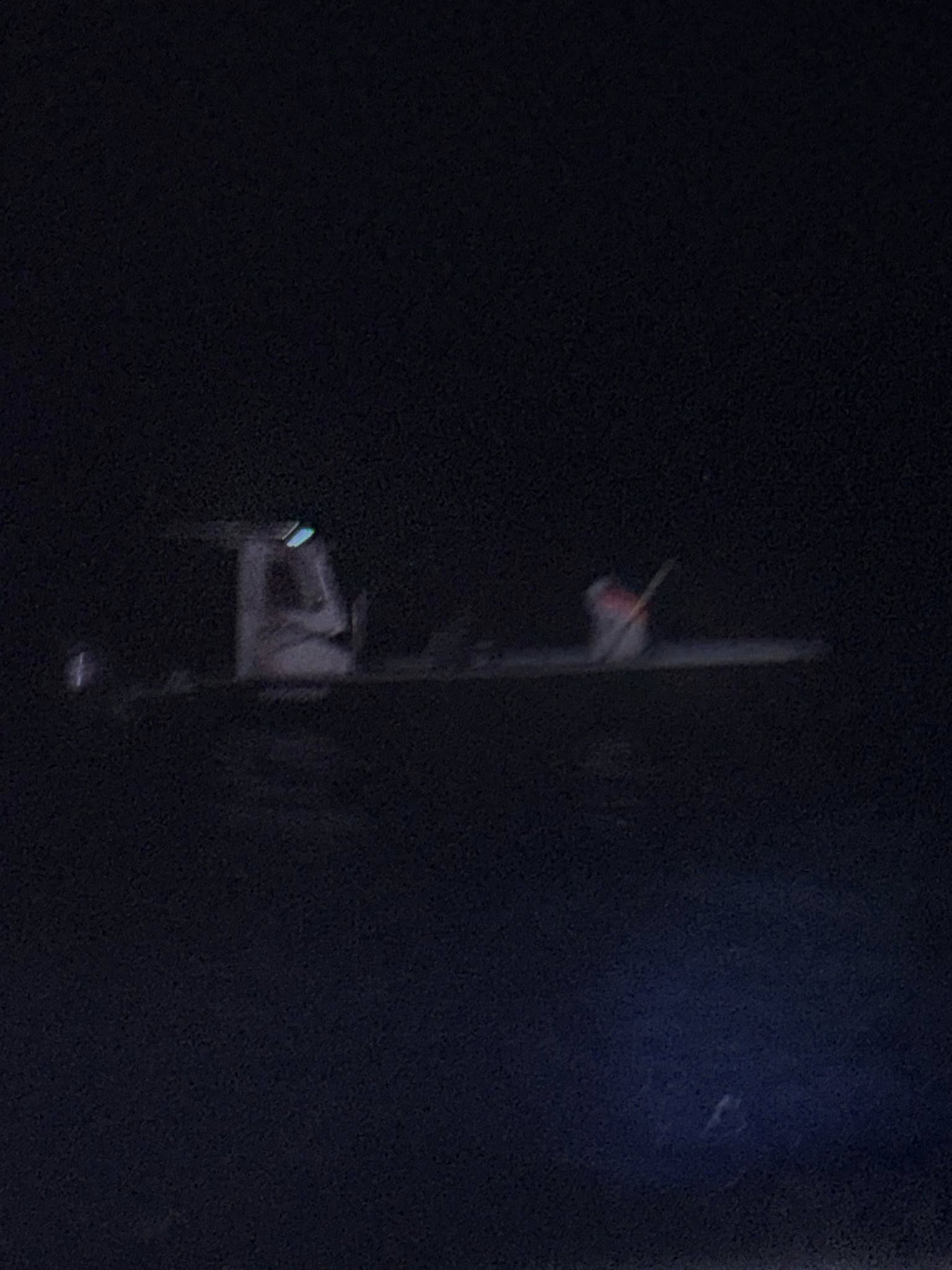
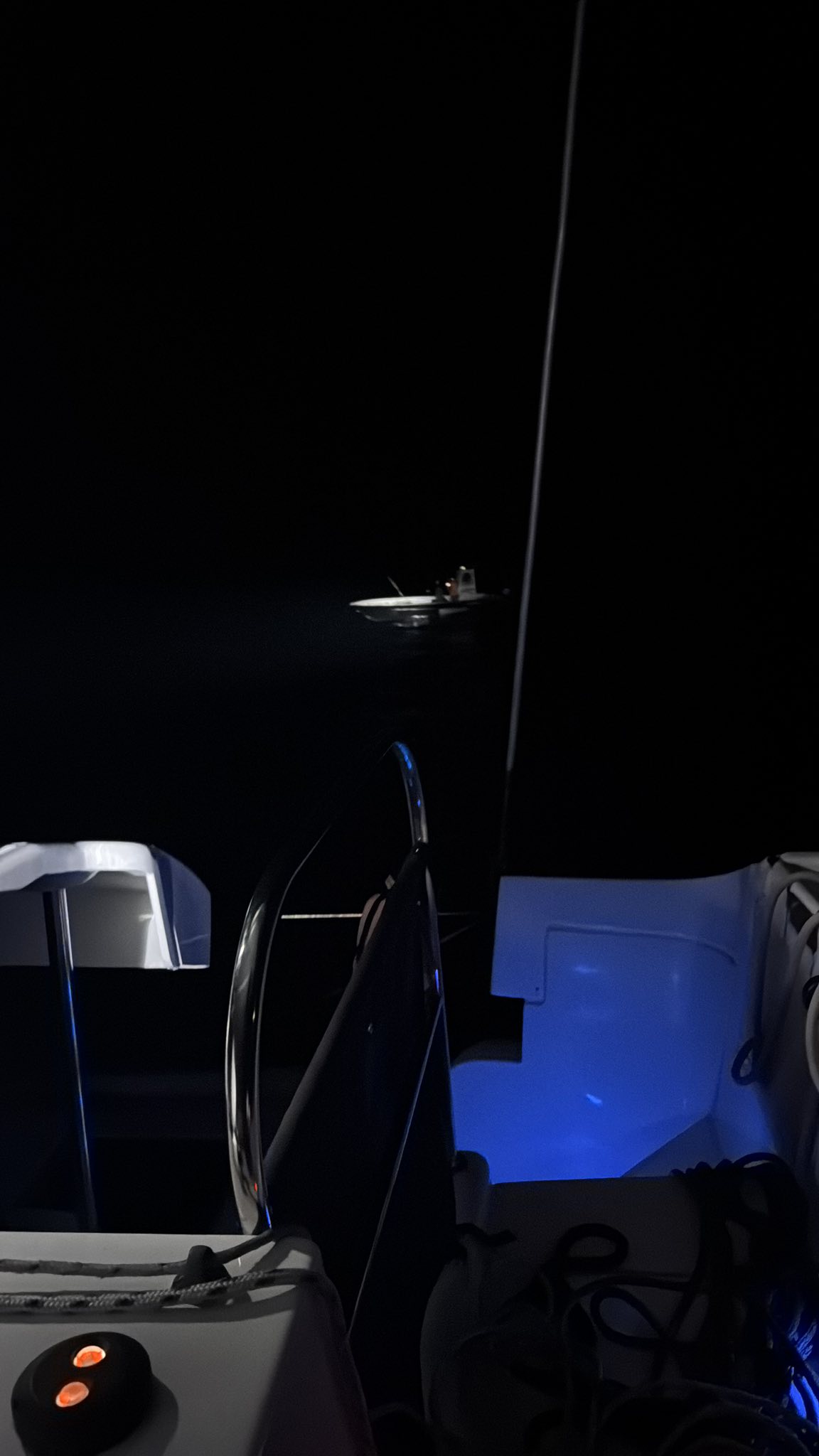
In Ari’s words, Kelly was a rockstar, immediately taking the spotlight and keeping it locked on the very dark shape. They maneuvered closer to the boat, letting the men aboard know they had them, then moved to start the engines, furl the sails, and circle back.
As they did this, they attempted to raise the French Coast Guard, but there was no response.
Puff the Magic Dragon
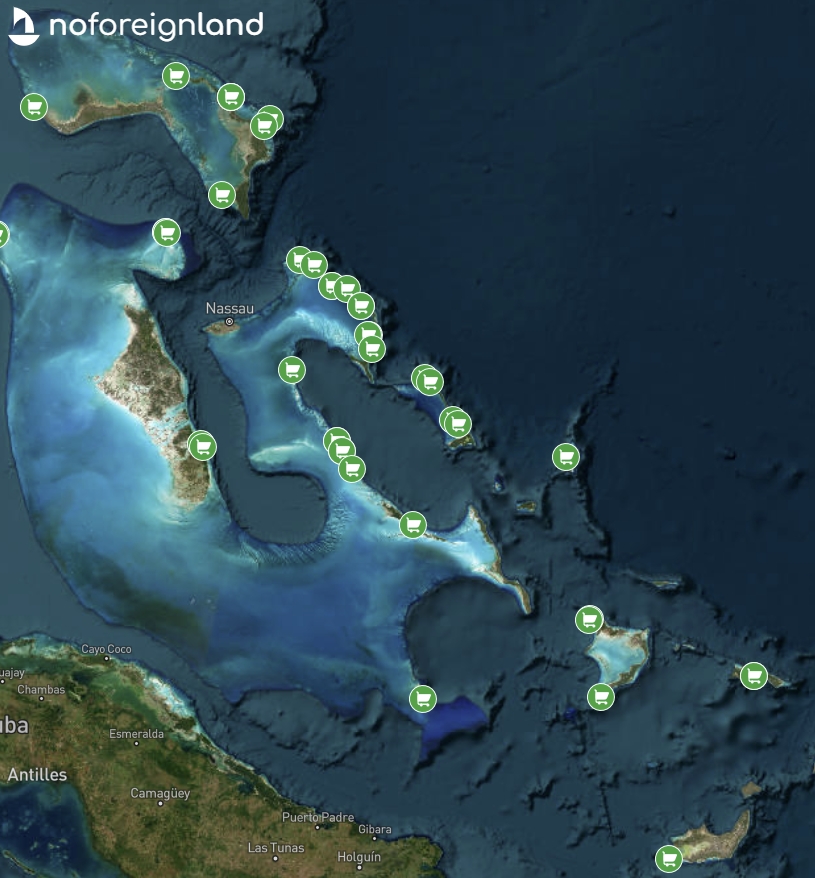
Throughout the passage, Air and Kelly had been seeing another boat named Puff the Magic Dragon on their navigation display and they even checked their noforeignland (NFL) app to see what kind of boat it was – a similar size catamaran on a similar heading and similar speeds.
We sailed almost the exact same course (and for you sailors out there you know when there are two boats it’s a race) so I knew someone else was close.
While trying to focus on the boat and keep control in the conditions, Ari radioed Puff for assistance. Cyndi was aboard and immediately responded. Taking over the radio work, she acted as a critical relay station, raising the French Coast Guard, making first contact, and relaying critical information clearly and concisely.
Modern tech making communication easier
Between the howling wind, noise of the engines, and different accents, communicating using the onboard VHF radio wasn’t easy and the French Coast Guard struggled to understand the coordinates Ari was reading out over the noise.
This is where modern technology changed the game – Starlink.
Realising that the clarity of the VHF in those conditions was problematic, Ari asked the Coast Guard if they could call his cell using Wi-Fi calling over the Starlink – they responded asking about WhatsApp.
Via a WhatApp chat, Ari sent a picture of the boat, and thanks to Kelly’s quick thinking, a picture of the coordinates on their chart-plotter as well. No more accent, wind or noise issues to contend with.
Now Ari and Kelly were able to act as a bridge between the Coast Guard and the missing men. The Coast Guard asked question after question about the boat, the men, the conditions – questions that would have been hard to answer over VHF.
The young men, Claude and Jamie, advised the couple that their batteries had died, which shut off their engines and killed their VHF. They had no means of communication, no EPIRB, little water, and only one fish they’d caught while drifting. They fired off their only flare when they saw the spotlight, but luckily, were alive and healthy.
Coast Guards respond
When Ari and Kelly spotted the boat it was over 30 miles from land, far from the dual nation island of Saint Martin and Sint Maarten. The French Coast Guard they’d initially reached out to ultimately contacted the Dutch Coast Guard on Saba Island to assist (also more than 30 mile away), with both groups communicating very professionally.
Once they were able to verify the identities of the two men, the French Coast Guard confirmed they would be able to notify the families that the crew were safe, providing immense relief to Claude and Jamie. Throughout the experience they chose to stay aboard their drifting vessel, as they did not want to abandon it. Once the Coast Guard confirmed they would come out to tow the vessel, Ari and Kelly continued to shadow the boat updating authorities on their current location as the two vessels drifted with the wind and seas, ready to take the crew aboard if needed.
Hours later, the Dutch Coast Guard arrived. They took the men aboard, secured the boat with a tow line, and spent 4+ hours getting them back to Sint Maarten.
Lessons learned
Reflecting on the experience, there were several takeaways that Ari and Kelly had.
- Radar reflectors can help
The missing boat was a center console fishing boat around 28 foot long, but it did not come up on the radar. Ari’s fear of running them over was real, and if there was a radar reflector aboard this could have helped them be visible to other boats via radar.
- Solar charged lighting is a good backup
The boat had a solar charged tri-light on the roof. Being that it was independent of the downed battery system it still worked, and without it, Ari doubted he ever would have spotted the vessel. Having back-up solar charged lighting is useful in the case of a total loss of power.
- Have a spotlight in the helm
Having a spotlight in the helm allows the person on watch to quickly and easily check things in the surrounding area. Had Ari not shone the spotlight when he thought he saw something, Claude and Jamie may not have lit their flare, ending their ordeal.
- Quality flares are critical
With the powerful spotlight shining on their vessel, Claude and Jamie shot off their flare as they knew they had been spotted. But, the flare was only in the sky for a matter of seconds (not like in movies) and if they had not had their spotlight on and had been looking in that direction, the flare may never have been seen. Ari and Kelly are now carrying an USCG approved electric flare directly as a result of watching how ineffective the flare, which they carried similar ones on board, was.
- Benefits of Starlink offshore
While VHF remains a fundamental part of marine communication, Starlink made the rescue much easier by allowing for the use of WhatsApp. This is not the first time either, with the rescue of the crew of SV Raindancer also being partially coordinated via Starlink after the boat sank mid-Pacific crossing in 2023. Having access to Starlink’s Ocean Mode while offshore can be beneficial in multiple ways.
- Backup communication devices
The drifting crew were well outside of any cell coverage and when their batteries died, all of their communications capabilities were gone. Having a handheld VHF, EPIRB, or even just a PLB with AIS that could be activated, independent of the boat’s electrical system, is critical to alerting others.
- File a float plan or let people know your plans
One of the most important things Claude and Jamie had done was, before departing, telling people where they were headed and to be aware if they were not heard from. With their family alerting the French Coast Guard immediately after they were overdue, the PAN PAN was broadcast and it inspired Ari and Kelly to be more alert, activate their radar and retrieve their spotlight.
- Don’t dismiss alerts as a faraway thing
When you hear a PAN PAN, MAYDAY, or even an Amber or Silver alert on land, never think “oh, how terrible for them” and then move on like you cannot play a positive role. You never know how things may change, and how much of a difference following a feeling can make. If Ari had simply dismissed the glimpse off the starboard as his imagination, things could have turned out very differently.
- The boating community steps up when needed
In Ari’s words:
The boating community is amazing, and I cannot express what a feeling of relief I had when Cyndi responded. My Admiral – Kelly – stayed focused and like a good MOB drill kept that light on them so we would not lose sight while I furled/dropped sails and got the boat under control. Her communication throughout was so clear it allowed me to focus on what I needed to do. I know I say it all the time, but she is a rockstar and I am so glad she is my wife/Admiral!
Being offshore can feel lonely, but with the help of your crew and boats in the area, life saving things can happen.
Aside from spotting boats on your MFD, cruisers with internet offshore can also check the noforeignland app to see boats that are close but outside AIS range, and connect via messaging.
A birthday to remember
Turning back towards St. Kitts, the adrenaline began to fade, replaced by a deep sense of relief.
As Kelly said, the best birthday gift she could have received was helping return Claude and Jamie to their families safe and healthy! We are so happy that we were able to play a role in delivering them home, and their relief when we pulled alongside was so obvious – they told us they had seen us from a distance (our lights) and were praying we would see them in the pitch black. We are glad their prayers were answered. We are so thankful for Cyndi, the French and Dutch Coast Guards, and frankly for each other.
Ultimately, never think you cannot play a role in saving someone’s life – be prepared so when all of the stars align (which is literally what happened) you can!
The takeaway is simple – When you hear a PAN PAN or a distress call, don’t just hope for the best and keep sailing. Be prepared, keep your eyes peeled, and never underestimate the role you might play in the middle of a dark night.

By Telicia Campain
Telicia is the editor of noforeignland Magazine and one of the creators behind Travel Sketch. She sails the world full-time aboard a 45ft catamaran, accompanied by her crew and faithful Aussie Shepherd, Rose. Having explored the Mediterranean and Caribbean, SV Liger is currently charting a course towards the Pacific islands and Southeast Asia.








Ari, Kelly – a great article, thank you 😁
A very good article and well done to all involved!
Well done!
Good article indeed
Any way to have the “translate” option on the articles too ?