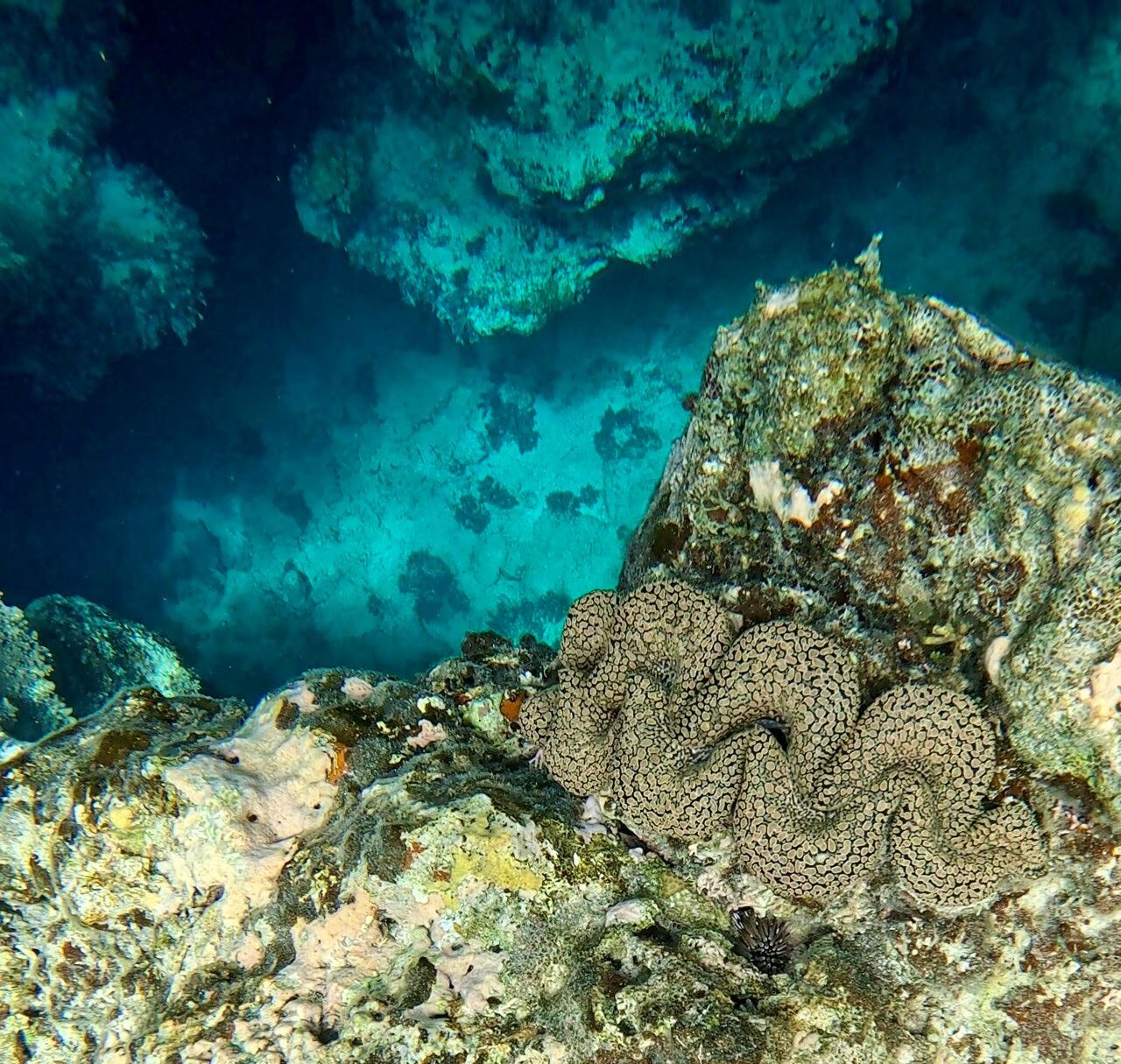
Have you ever snorkelled a coral reef and wanted to know more about what you are looking at?
Due to their dynamic and complex nature, coral reefs can seem intimidating to understand. Fortunately, learning how to interpret these ecosystems does not require a science degree. There are some simple observations anyone can learn to look for, which will improve their understanding and appreciation of coral reefs worldwide.
I will break down some common coral misconceptions and use my background in coral reef ecology to simplify the factors that marine scientists observe while monitoring a reef, as an introduction to coral reef interpretation. This guide will focus on the coral reef structure rather than fish life. Hopefully, reading this will make future snorkels and dives more interesting and enjoyable, and perhaps serve as a gateway to learning more about these incredibly interesting ecosystems.
The factors: what are marine scientists looking at?
Let’s jump straight into it. As a marine biologist who studies corals for a living, I look at these basic factors when diving on coral reefs: coral cover, coral diversity, coral size and coral disturbance (bleaching/disease/predation/storm damage). There is, of course, much more to observe on the reef, but at a high level this is a great starting point. Below is a breakdown of each factor.
Coral health: interpreting living vs dead coral
Colour as a health indicator on the reef
Picture a beautiful, thriving coral reef. You may envision one with vibrant coral colours. However, colour is generally not a good indicator of coral reef health. Corals come in a wide range of colours, but quite often they are neutral (brown, grey or beige) and may appear dead or unhealthy to the untrained eye compared with brighter corals. In reality, they may be perfectly healthy.
-
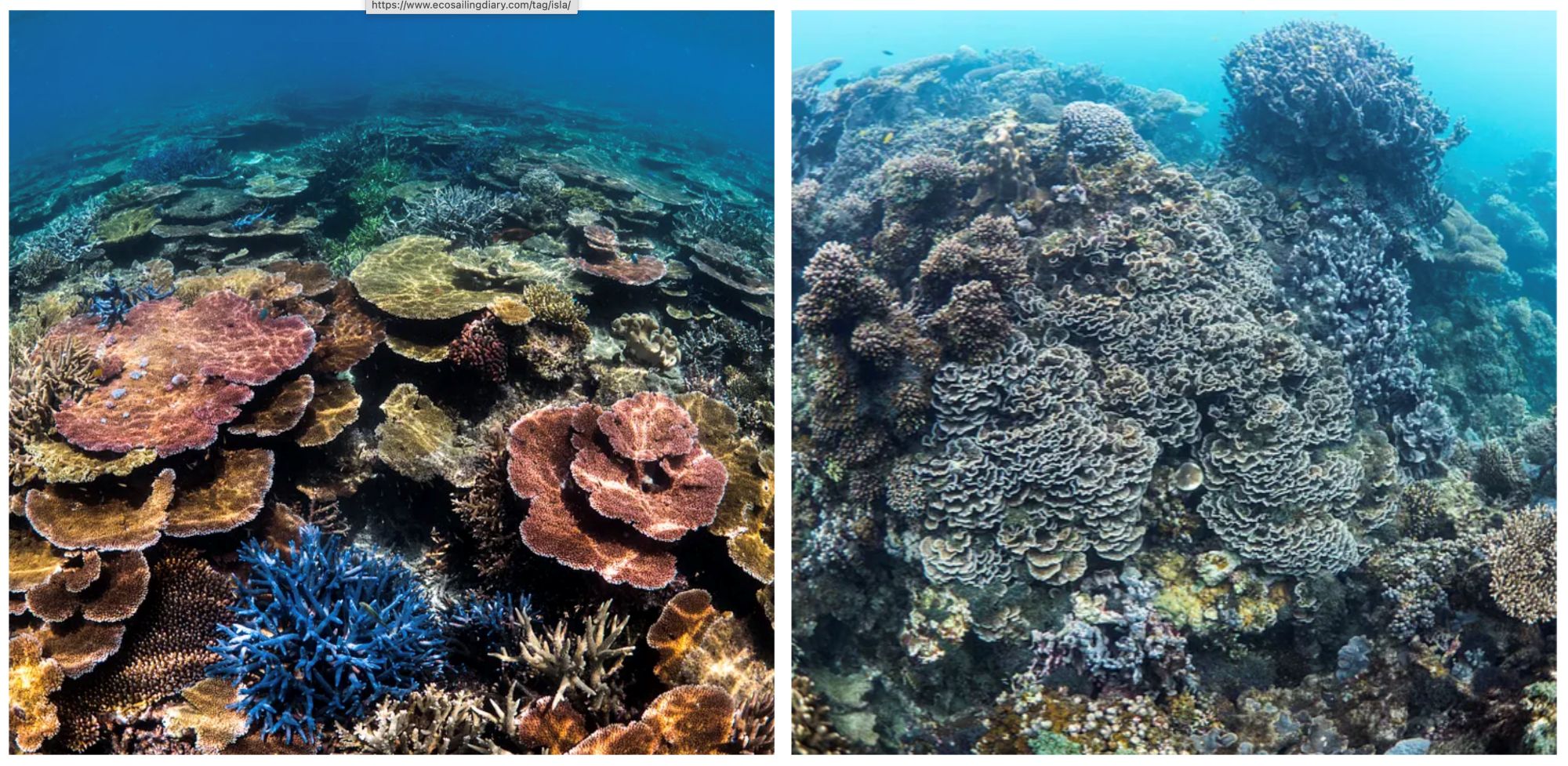
- Here is an example of two healthy reefs, both with high coral cover, but one has vibrant colours and the other does not.
How to spot dead coral
Dead coral can be difficult to identify, but there are some defining characteristics that are easy to spot once learned. Live corals are covered in living coral tissue that will not let anything foreign grow on it; therefore, healthy corals will look ‘clean’. If you see seaweed or microalgae (fuzzy yellow-brown filaments) growing on a coral, that coral is dead or partially dead. Part of a coral colony can die while the rest goes on living!
-
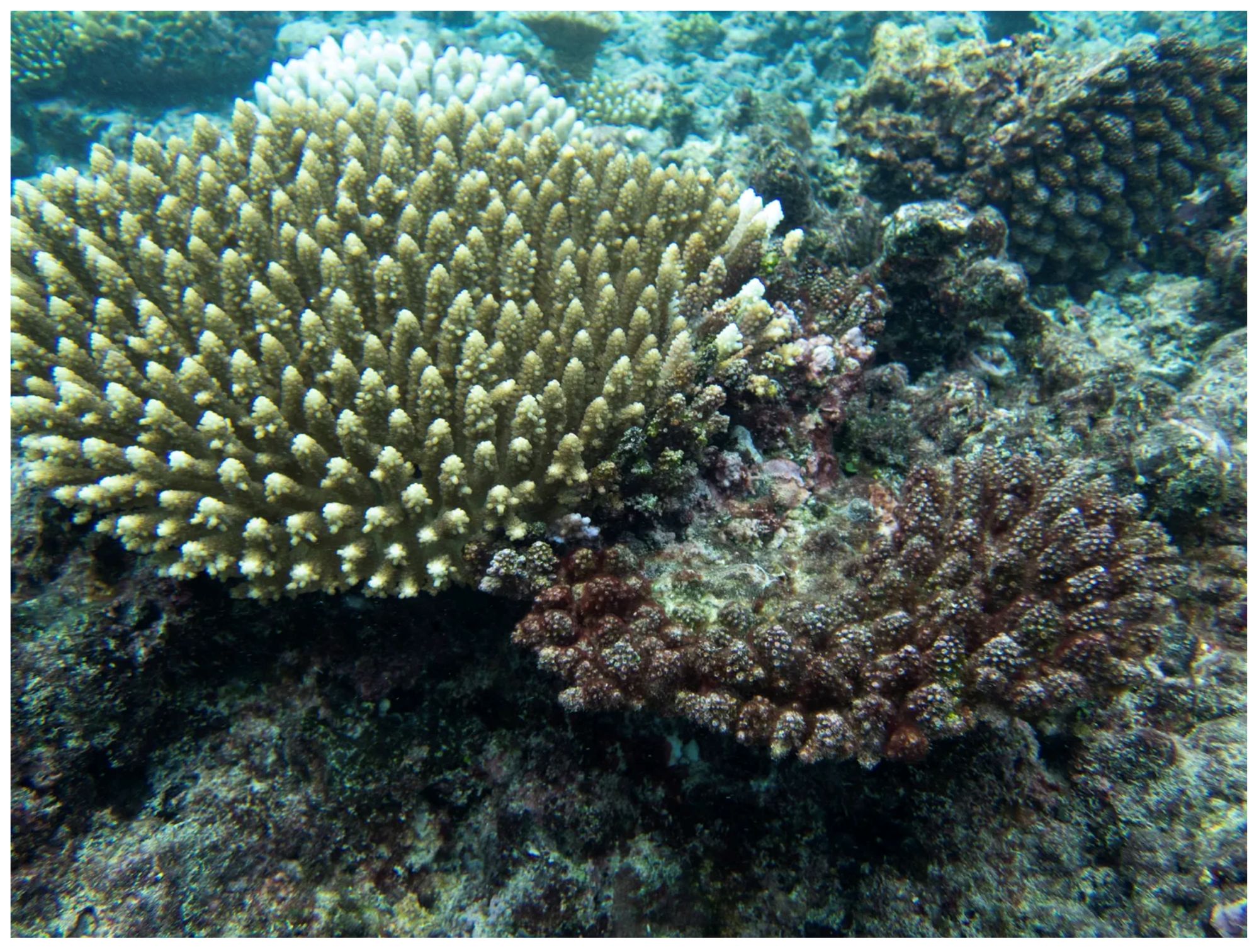
- Here you can see a side-by-side comparison of a living and a dead coral. The coral on the left is alive and healthy, and the coral on the right is a dead coral skeleton covered in fuzzy microalgae
Corals extend their tentacles to filter-feed plankton out of the water column. Sometimes corals with their tentacles extended can also have a fuzzy appearance, but this looks different from microalgae coverage and can be distinguished with a closer look.
-
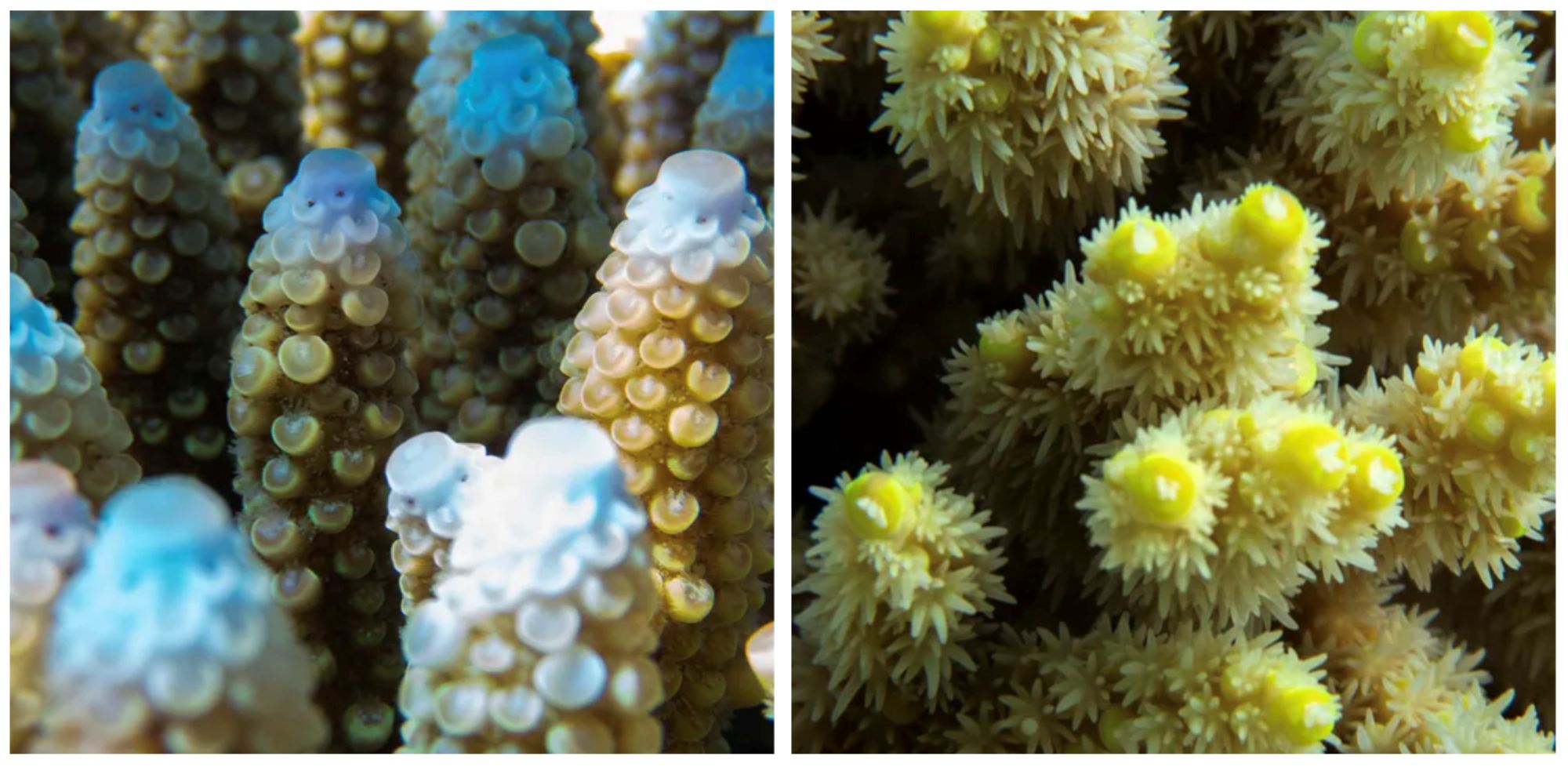
- Left: healthy coral with tentacles pulled in. Right: healthy coral with tentacles extended. These are both branching corals, but keep in mind this is just an example and corals come in many different growth forms.
Dead coral skeletons also change in appearance over time through erosion. They slowly turn from intricate skeletons with lots of detail, to skeletons increasingly covered in algae, and eventually erode into coral rock structure. This allows you to interpret how long they have been dead. To keep things simple, let’s group them into three categories: recently dead, older coral mortality and coral rock. Up close they look something like this:
-
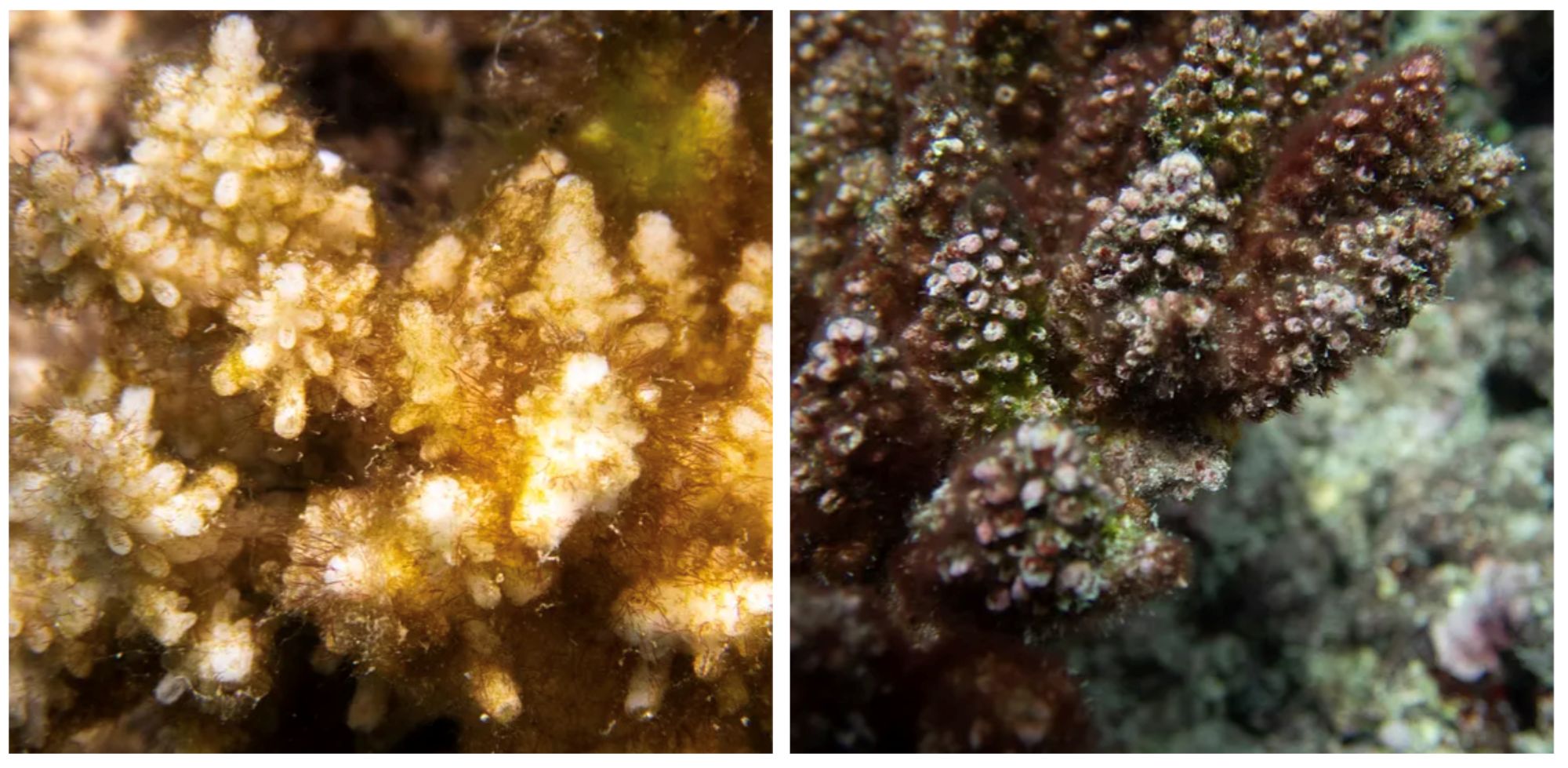
- Left: recently dead coral skeleton becoming covered in microalgae (fuzzy yellow-brown filaments). Right: older coral mortality with more algal growth (darker in colour and white skeleton no longer visible)
-
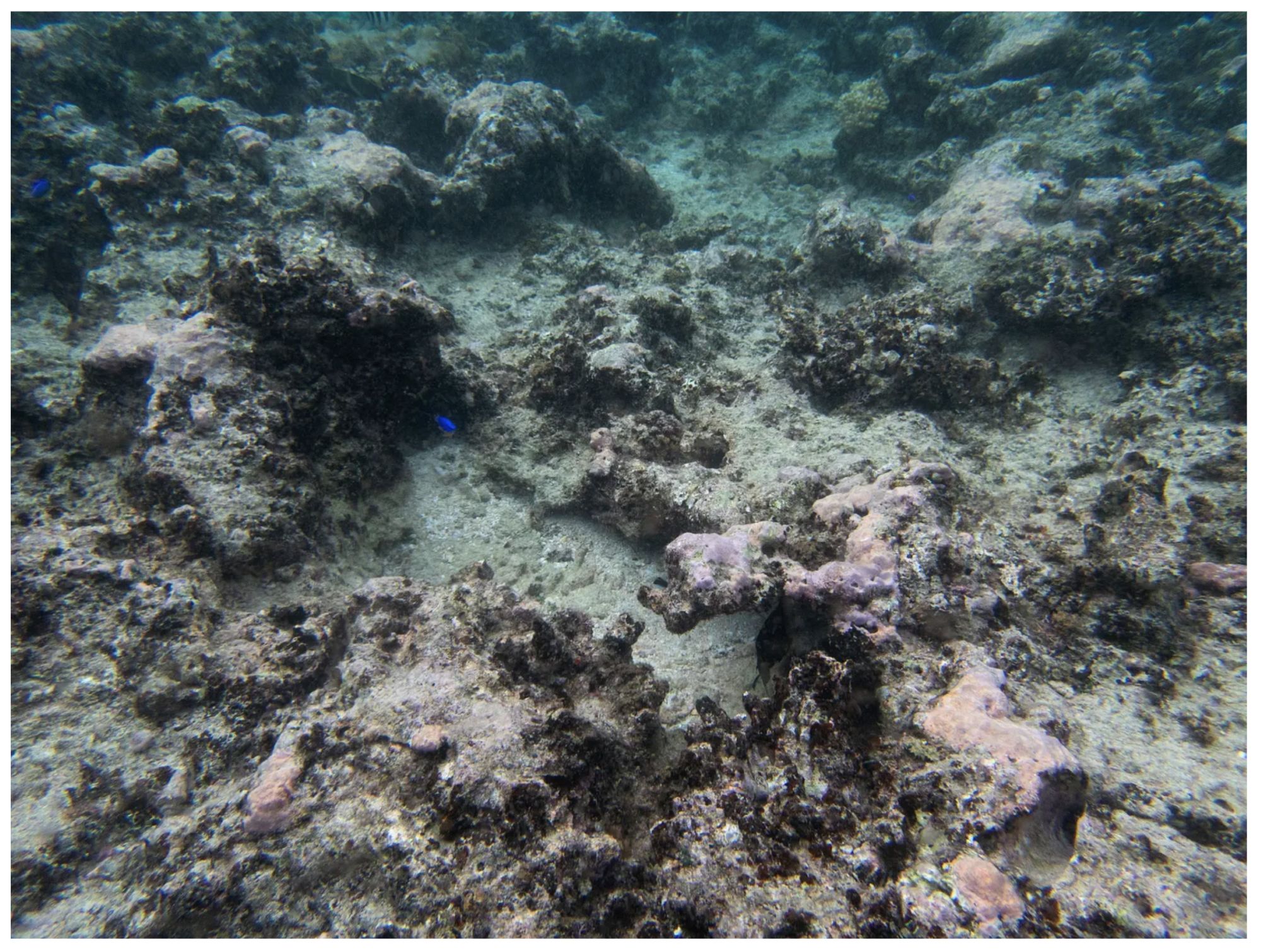
- Coral rock structure made of old, eroded coral skeletons
If you see many recently dead corals on a reef, you can assume a disturbance is currently underway. If you notice a large amount of older coral mortality, you are likely observing a reef that was impacted by a disturbance in the past and has not recovered. If you see a large proportion of coral rock, the reef you are observing has not recovered from a disturbance in a decade or more. If you observe a reef with a large amount of living coral, you can assume it has not recently experienced major disturbances causing significant coral mortality.
Determining coral cover
Coral cover is a common metric scientists use when monitoring coral reefs. It is simply the percentage of reef floor that is covered by living coral. If all you can see is coral, with no sand, algae or coral rock, then you are on an extremely high coral cover site. However, if most of the bottom is sandy, rocky or covered in algae, then you are looking at a low coral cover site.
Generally speaking, the higher the coral cover on a coral reef, the healthier it is. So if, during your dive, you notice that about half of the bottom is covered in living corals and the other half is coral rock or colonised by seaweed, then you are on a moderately healthy reef. To simplify things, in terms of coral cover as a factor of reef health: if you see less than 50% coral cover, you are looking at a reef of below-average health, while if you see more than 50% coral cover, the reef is above average in health.
-
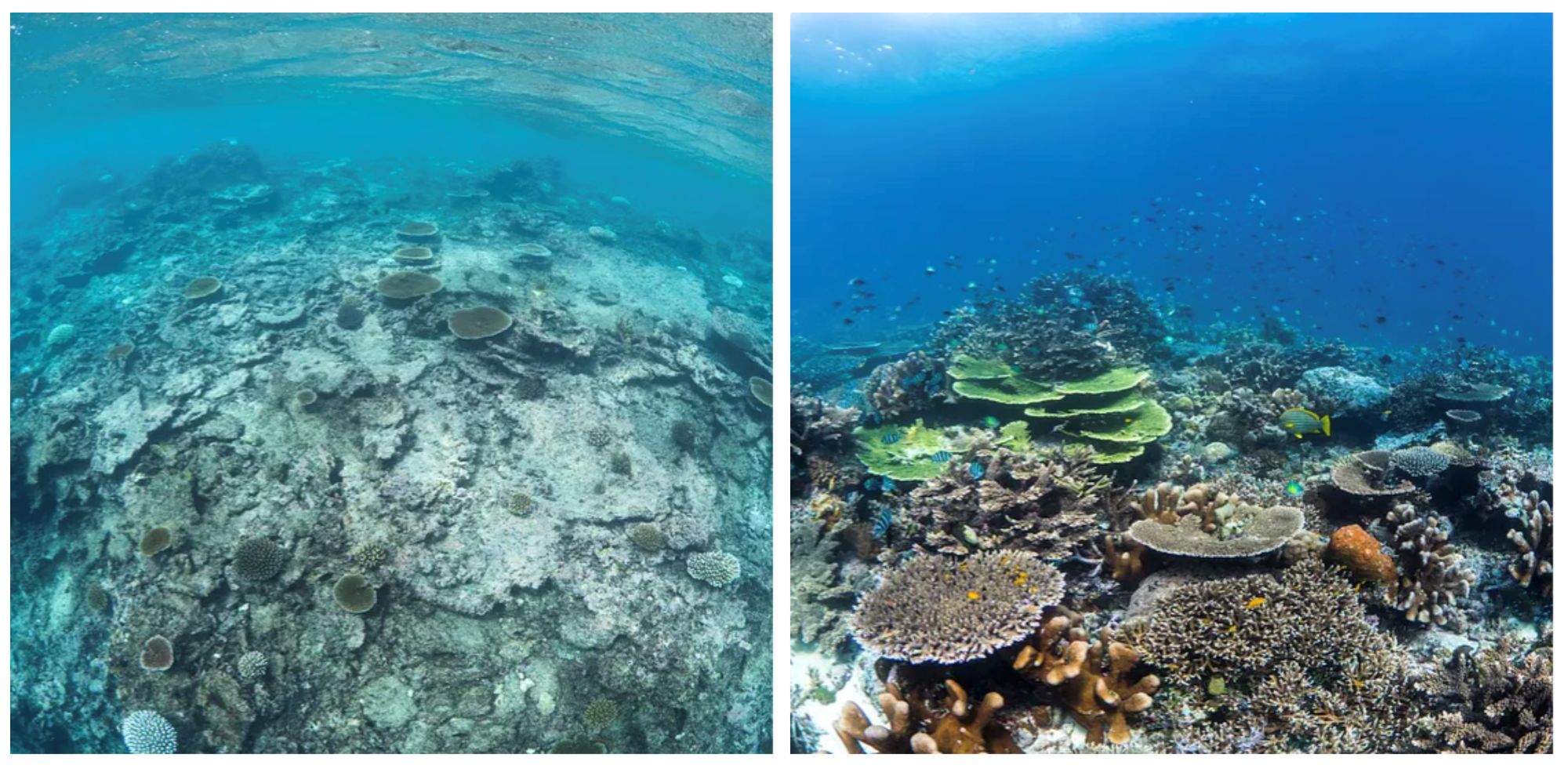
- Left: low coral cover. Right: high coral cover.
Coral cover at each reef changes over time through disturbances, which are a natural part of coral reef ecosystem dynamics (although climate change is increasing their frequency and intensity). Reefs have the potential to recover from disturbances, even when coral cover is driven very low, but in some cases it can take decades. However, sometimes reefs will not recover from disturbances, and in these cases you will observe low coral cover for long periods.
Observing diversity
Diversity refers to the number of different organisms that make up a coral reef. For corals, this is fairly easy to determine even if you have no coral identification skills. Do you see a large variety of differently shaped, coloured and patterned corals? If you can spot 20 or more different-looking corals, then you are looking at a fairly diverse reef compared with one where you can only spot five different coral types. At a basic level, it really is that easy!
-
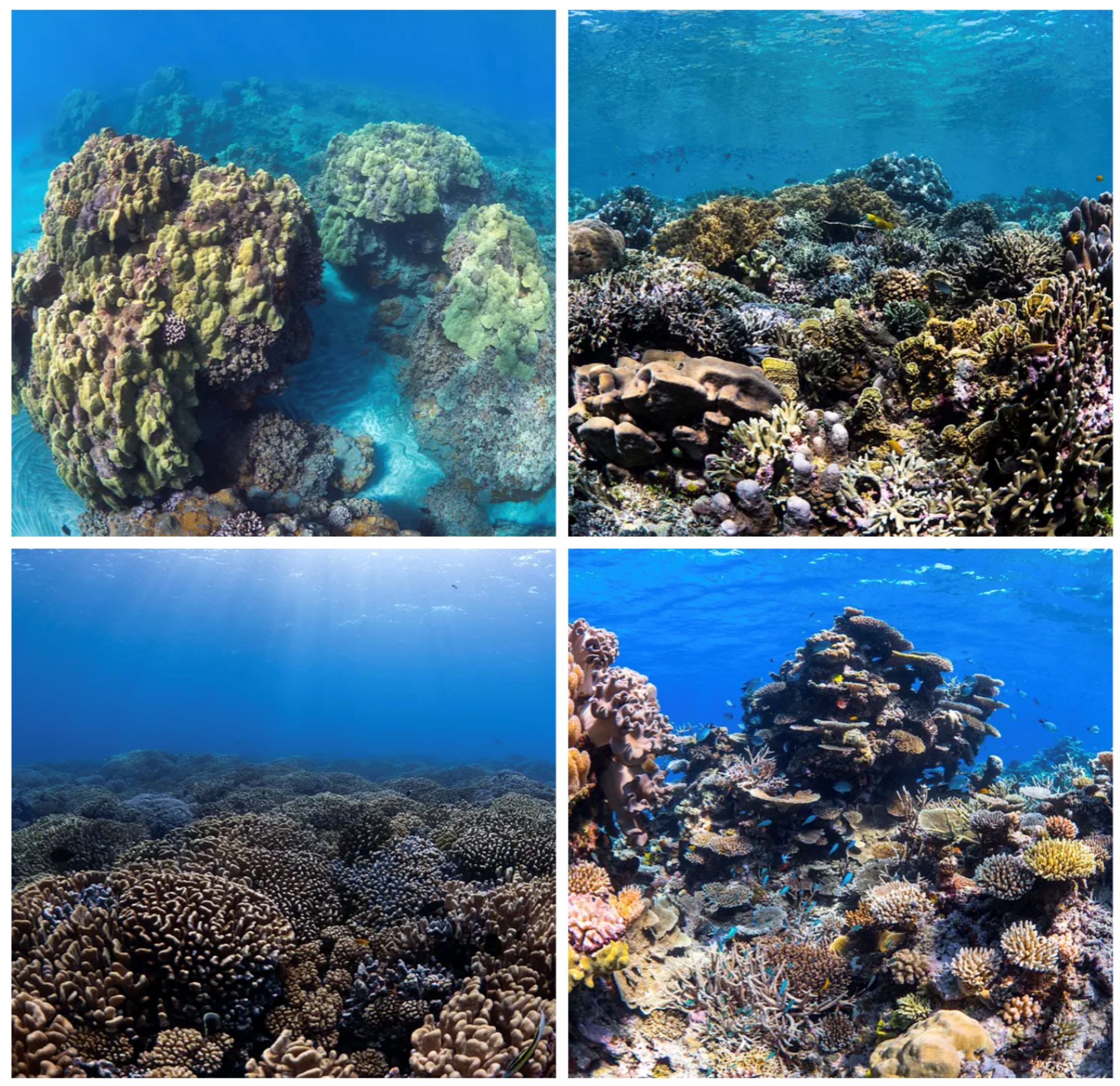
- Left: examples of low coral diversity. Right: examples of high coral diversity.
The closer you get to corals, the more details you will see.
How many different branching corals can you spot?
How many different brain-patterned corals?
How many encrusting corals (sheet-like, growing along the bottom)?
How many different round coral shapes? How many irregular, messy shapes can you spot?
The more snorkels and dives you go on where you pay attention to these details, the more insight you will have to compare different reefs, and you may begin to recognise common and rare coral types. Once you have the hang of this, you could start to explore a bit deeper by looking into coral identification, where you can put names to the shapes you recognise. Also pay attention to organisms on the reef other than corals, such as sponges, algae and anemones. These also add to the diversity of a reef, although a healthy coral reef is dominated by corals, not by sponges or algae.
The level of diversity can signify the health and resilience of a coral reef system. The more types of corals and other organisms present, the more resilient the ecosystem is against impacts like disease, thermal stress and physical damage.
Size matters
Corals are slow-growing organisms that continue to grow throughout their lives (and can live forever given the right conditions!), so coral colony size is a good indication of a coral’s age. Round, boulder-like corals are particularly slow growing and only grow about 1 cm per year. Therefore, if you see a round coral that is 1 metre wide, it is likely around 100 years old! Branching and plating corals, by contrast, grow about 10 cm per year.
Looking at the overall size of corals on a reef can indicate how old they are and, as a result, suggest how long it has been since the last major disturbance. Many small corals mean the reef is recovering from a disturbance through the addition of young corals, while many large corals mean these corals have been growing for a long time and have not been wiped out by a disturbance.
-
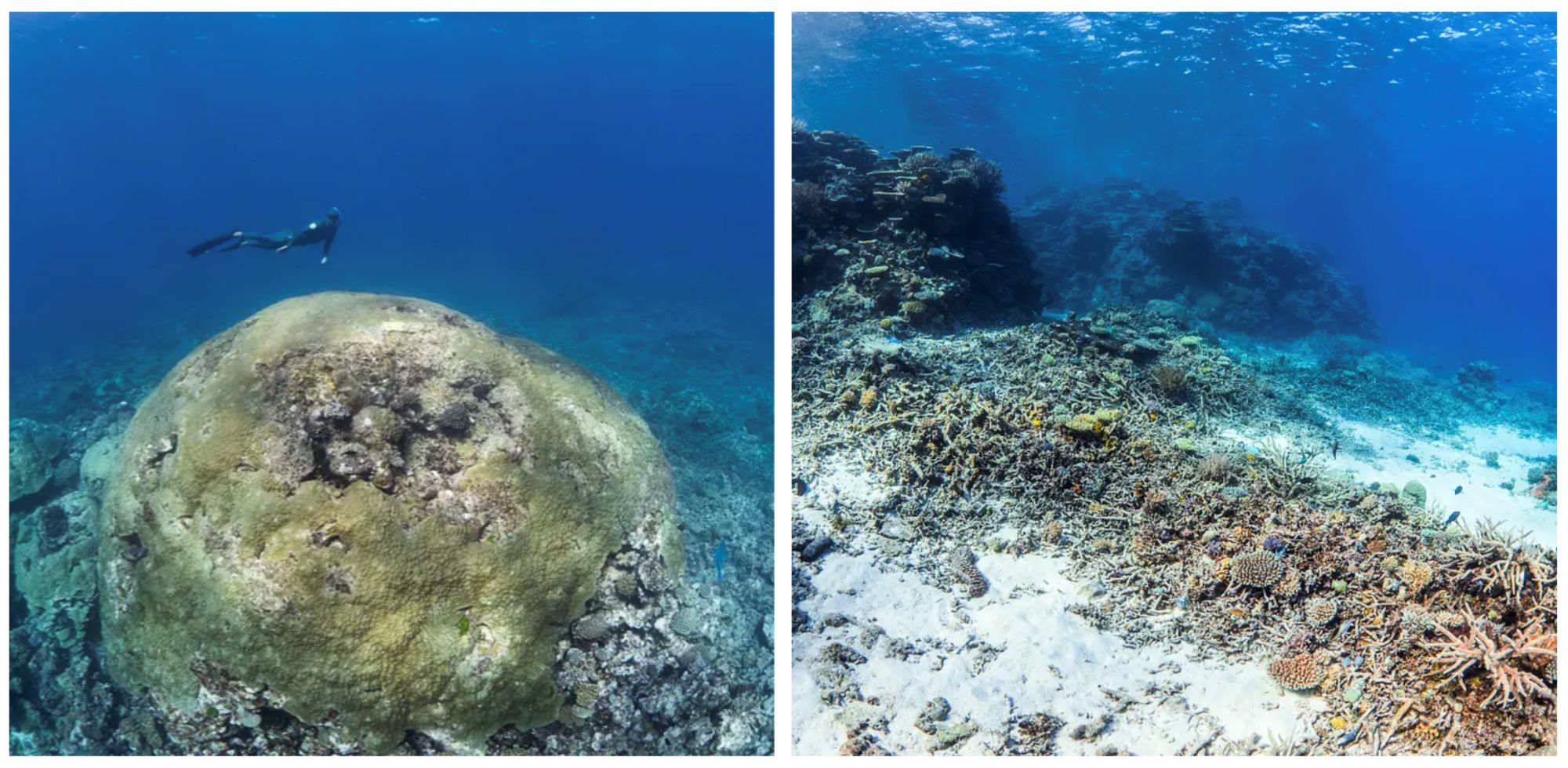
- Left: 600-year-old coral colony. Right: many small, young coral colonies growing on coral rubble.
Disturbance: identifying impacts on the reef
Disturbances are impacts that stress, damage and have the potential to kill corals. Coral reef disturbances come in a variety of types, the most common being coral bleaching events, coral disease, coral predation and physical storm damage. These disturbances can display similar traits, usually some form of paling corals. Below, I explain how to identify and distinguish between some of the most common types of coral disturbance.
Coral bleaching
Coral bleaching is a stress response that corals have to unfavourable environmental conditions. In recent decades, coral bleaching has typically been a product of heat stress from warming oceans and is therefore usually observed over the summer months, but in severe cases it can continue into winter. Bleaching looks how it sounds: corals become pale, bright white or fluorescent. Did you know that most corals get their colour from symbiotic algae called zooxanthellae that live within the coral’s tissue? The actual mechanism behind bleaching is the coral colony expelling its zooxanthellae and, as a result, losing its colour. Why do they do this? Well, that is a topic worthy of another article, and you can read more about this and other coral topics on my Substack, The Coral Logbook.
Bleaching rarely affects a single coral on its own, which is a good way to identify it. During a bleaching event, a proportion of the coral community will bleach. In a severe event this will be a large proportion, and in a minor event a smaller one. Some coral species are more resilient to heat stress than others, so most bleaching events will not affect all coral colonies in the ecosystem, unless you are witnessing an extremely severe bleaching event.
Another way to distinguish bleaching from other disturbances is that bleaching usually affects the entire coral colony, turning the whole coral uniformly pale, white or fluorescent, rather than creating white patches within a coral, as we commonly see with coral disease or predation scars. So if you are observing bleaching, you are observing stressed, vulnerable corals that could die if conditions don’t improve quickly.
-
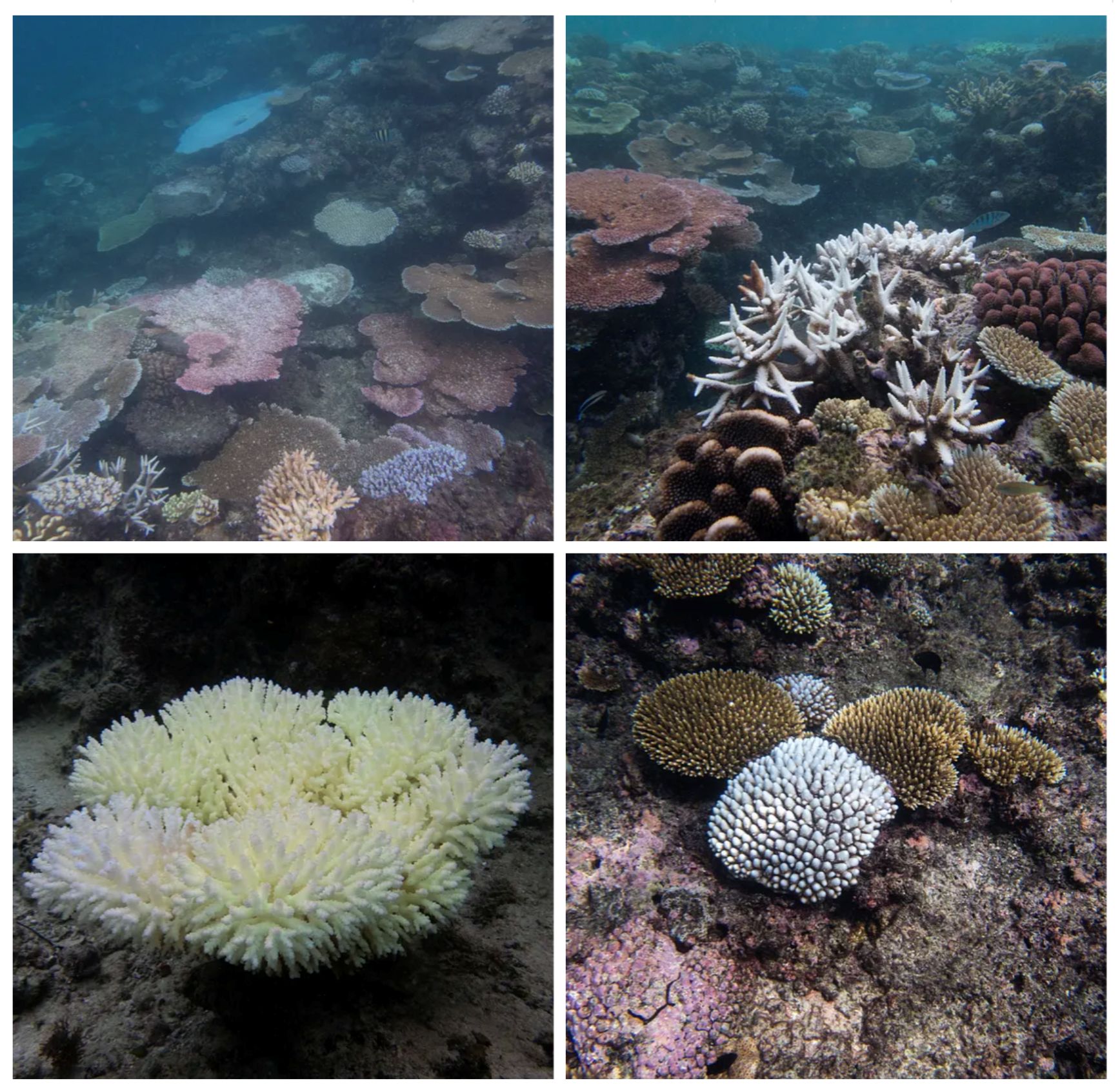
- Examples of coral bleaching. Notice that some corals bleach white while others fluoresce, and that not all corals in these communities are bleaching.
Coral disease
Like most organisms on Earth, corals are affected by disease. Coral diseases usually spread in a linear or circular progression, leaving behind a white dead skeleton that is gradually colonised by microalgae. Disease scars are dead and will not recover. Diseases often have a black or brown band where the disease is actively killing coral tissue. Disease should not be confused with the uniform paling of bleaching corals.
Another way to distinguish disease from bleaching is that, unless you are witnessing a major disease outbreak (to date, this is rare outside the Caribbean), coral disease is usually not as widespread or uniform across the coral community. It’s normal to see a patch of disease here or there, but unlike coral bleaching, it is unusual for a large proportion of corals in one spot to be affected. If you are seeing a lot of coral disease in one area, it goes without saying that the reef you are observing is less healthy than reefs with little to no disease.
-
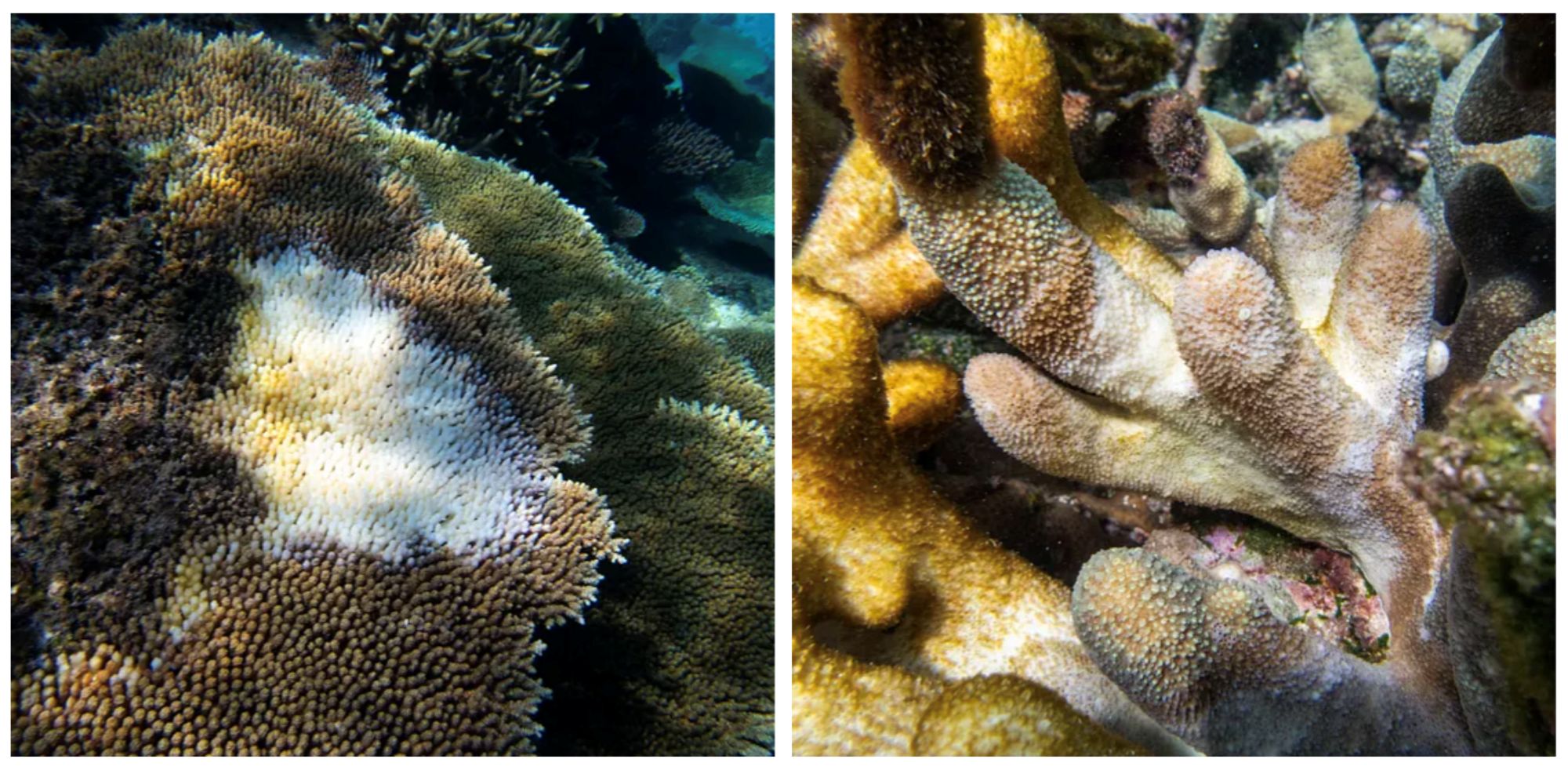
- Examples of common brown band coral disease. Left image: notice the brown border on the right side of the disease scar; that is the edge actively being killed off by the disease. Also notice the yellowing on the left side of the disease scar, where the coral has been dead longest and therefore has the most microalgal growth. Right image: the disease band is travelling up the branches, leaving dead coral skeleton behind.
Coral predation
Coral predators such as the crown-of-thorns starfish (COTS) prey on coral tissue and leave behind feeding scars of bare coral skeleton. These scars are dead and cannot recover. COTS are the major predator of corals, and their feeding scars are often round due to the shape of the starfish’s large mouth.
If the coral is small, the scar covers the entire colony, leaving it completely white. Fresh COTS scars are uniform white patches with clearly defined borders (unlike disease, which can have fading borders, and bleaching, which has no borders). After a week or so, COTS scars become colonised by microalgae and turn a uniform yellowish brown. COTS scars are also commonly found in groups in a small area, because COTS travel in groups. Australian marine science research has found that COTS outbreaks are one the largest causes of coral decline on the Great Barrier Reef.
-
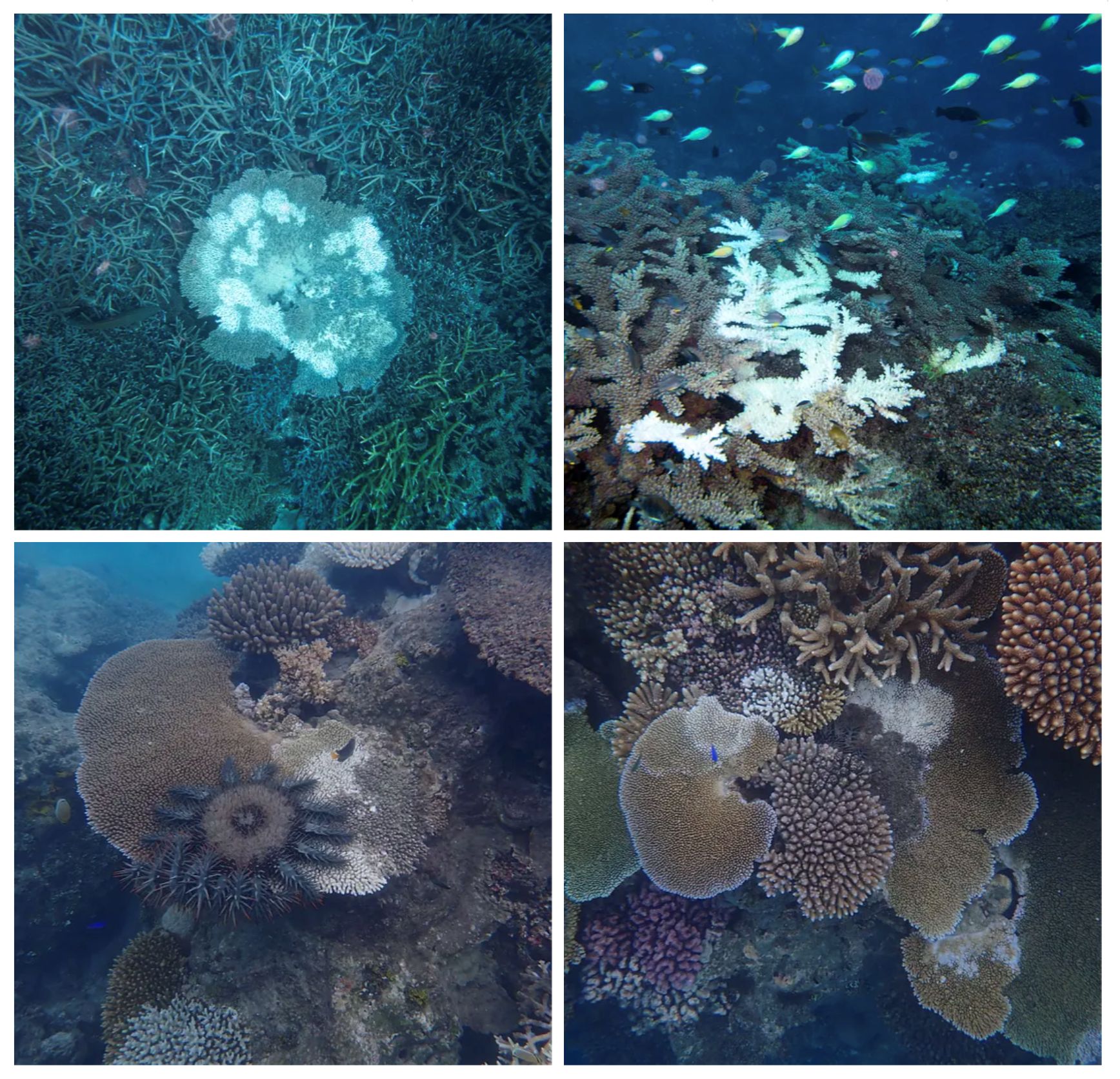
- Crown-of-thorns starfish predation scar examples on plating and branching corals. See a crown-of-thorns starfish actively feeding in the bottom-left image.
Storm damage
Storm damage is fairly easy to identify. Strong storms have the power to dislodge even large, robust coral colonies and, in severe cases, completely wipe the reef surface clear of corals. If you see a significant amount of broken or flipped coral colonies, you are observing the aftermath of a storm. This is particularly obvious if you have some experience snorkelling on coral reefs and know how upright, whole coral colonies usually look. After a major storm, you will see flipped or broken plate corals, broken branching corals and even broken-off or flipped large round corals. Storms also churn up sand and rubble, and sometimes large chunks of reef wall can break off and fall.
-
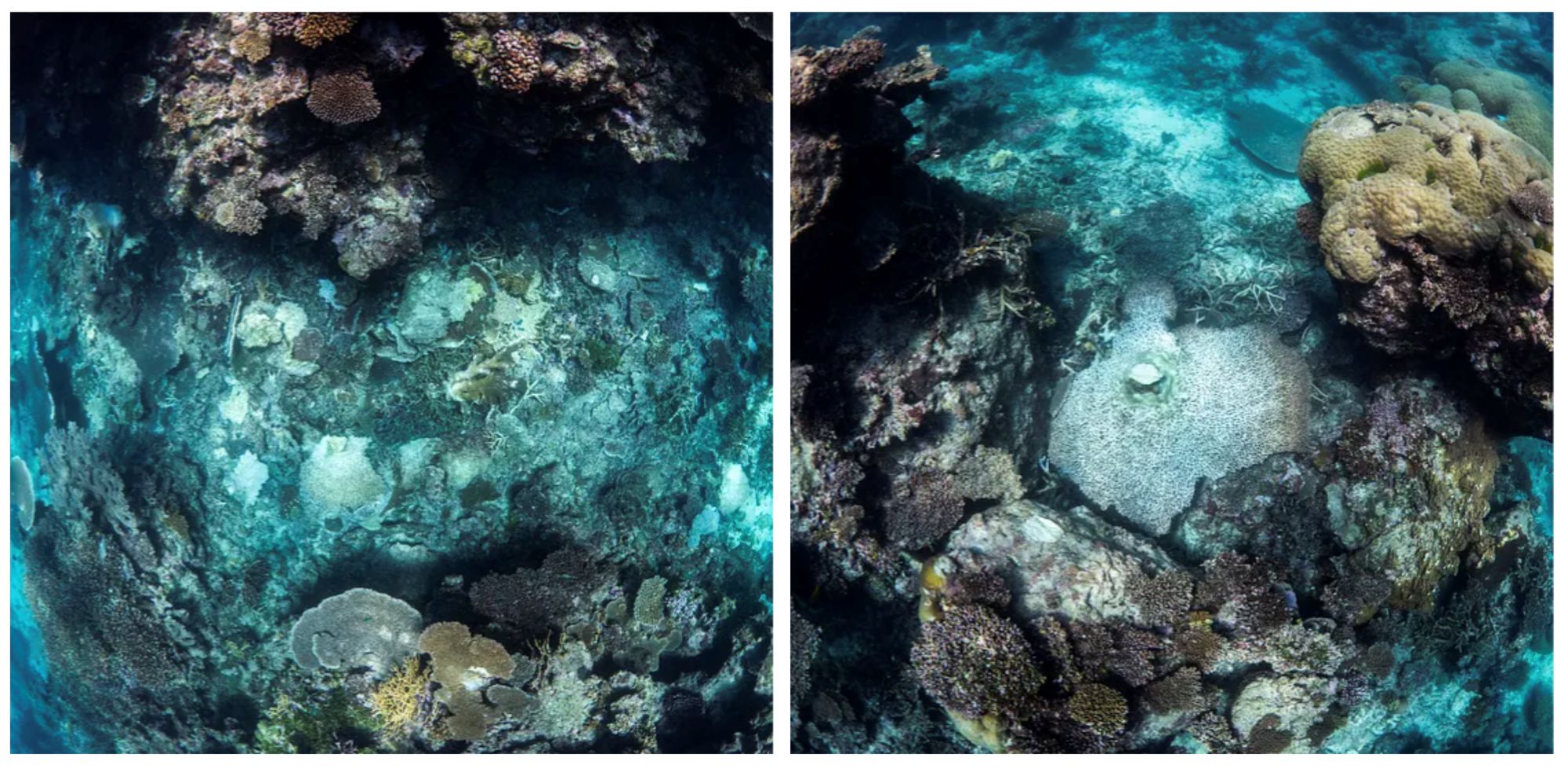
- Left: freshly dislodged coral lying on the seafloor. Right: large plating coral flipped upside down.
Until next time
I hope this guide helps you appreciate coral reefs in a new light. Coral reefs truly are one of the most magnificent, unique and important ecosystems on our planet. If you are inspired to learn more about corals and coral reefs, follow along on my Substack, The Coral Logbook, where I expand on coral ecology and document coral reefs along my sailing journey across the South Pacific and beyond. You can also connect with me on No Foreign Land (@tara.prenzlau) aboard S/V ISLA.

By Tara Prenzlau
Hi, I’m Tara, a coral ecologist from Australia. I fell in love with all things ocean from very young age. I grew up surfing, diving and sailing, inspiring me to pursue my passion of becoming a marine biologist, where I focused on tropical corals. I joined SV Isla in the Marquesas as crew to prepare for my own live aboard dreams, but after a bit of a love story transpired, I never left. Now we are sailing the South Pacific and beyond, surfing and diving along the way.