

For those who live aboard, salt is an unavoidable companion – invisible when dry, relentless when wet, and often the reason for late-night maintenance sessions at anchor.
Whether you’re anchored in the tropics or sailing across the Atlantic, corrosion is a constant force acting against every metal fitting, electrical connection, and mechanical system aboard your boat.
Understanding how and where corrosion begins is the key to preventing it. With the right systems in place, you can reduce long-term damage, cut down on emergency repairs, and keep your boat running safely through any season.
The science of salt corrosion at sea
Saltwater doesn’t just rest on your surfaces, it reacts with them. When sodium chloride dissolves, it creates an electrolyte solution that accelerates the flow of electrons between dissimilar metals. This galvanic reaction is what causes oxidation, pitting, and eventual material breakdown.
As detailed in Managing the Threat of Galvanic Corrosion, different metals behave very differently in saltwater:
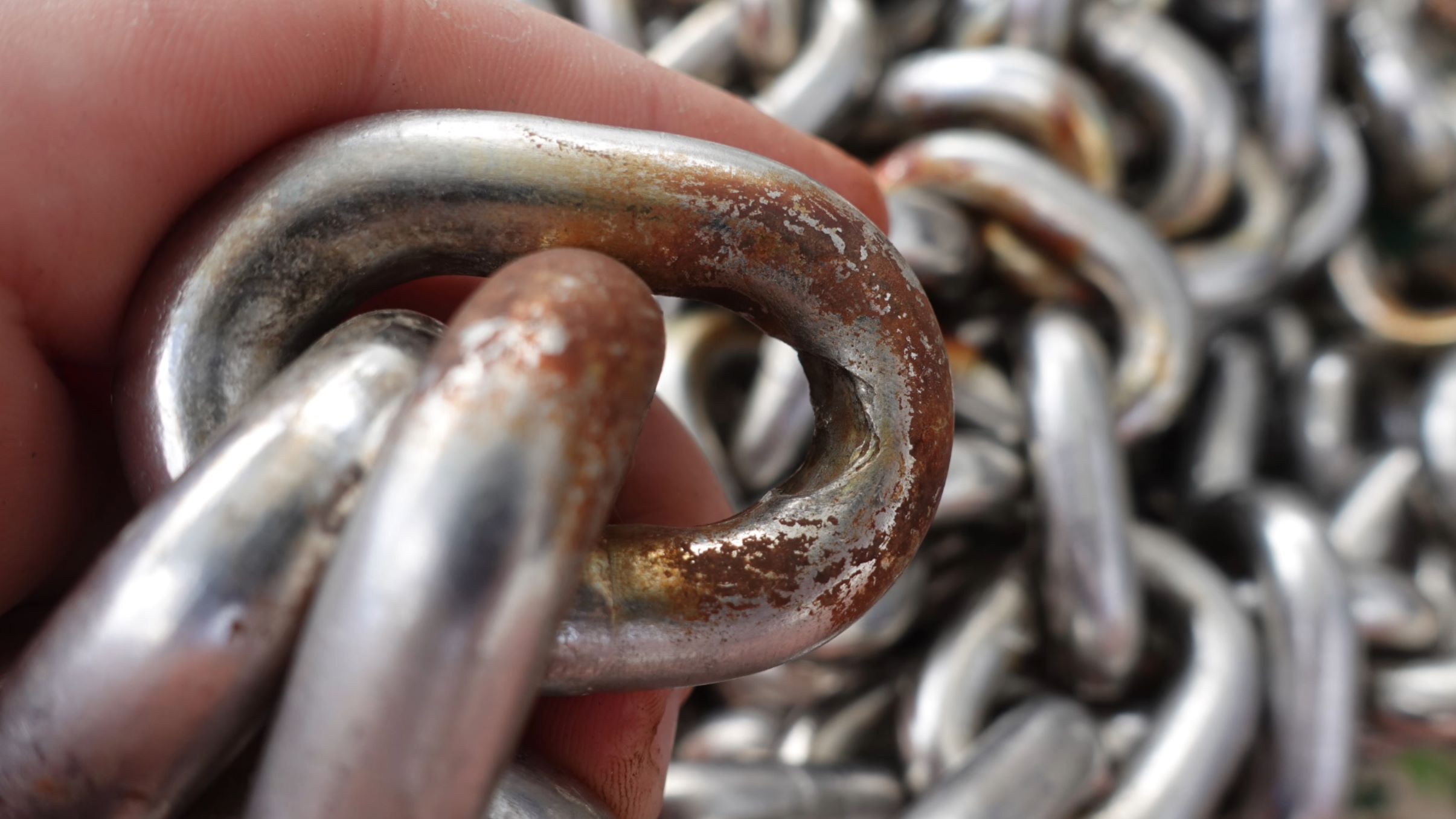
- Stainless Steel: Contrary to the name, stainless steel can and does rust. Its chromium oxide layer provides corrosion resistance, but trapped salt and lack of oxygen (such as under fittings or in crevices) destroy that protective layer. The result; tea-staining, pitting, or crevice corrosion.
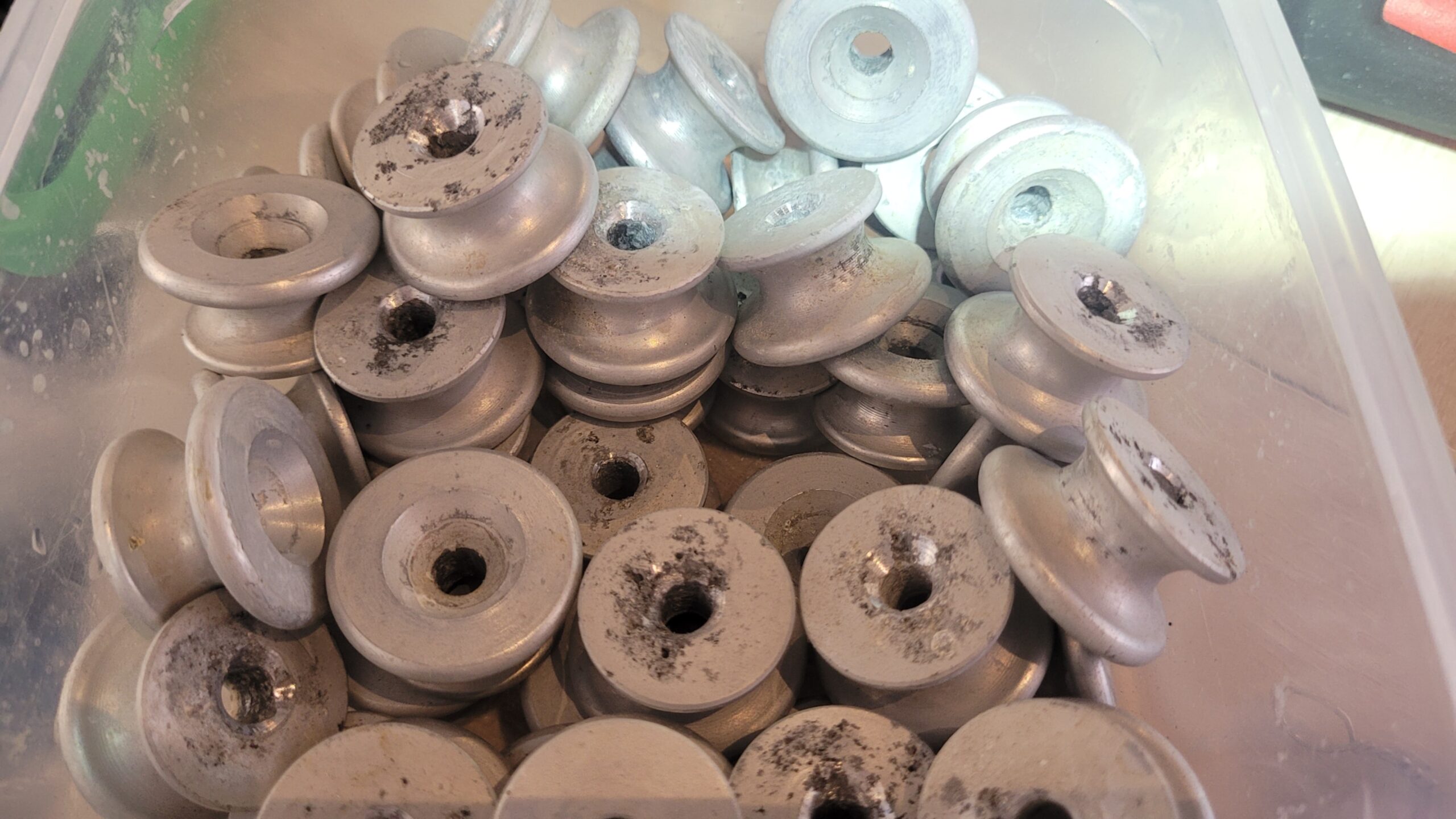
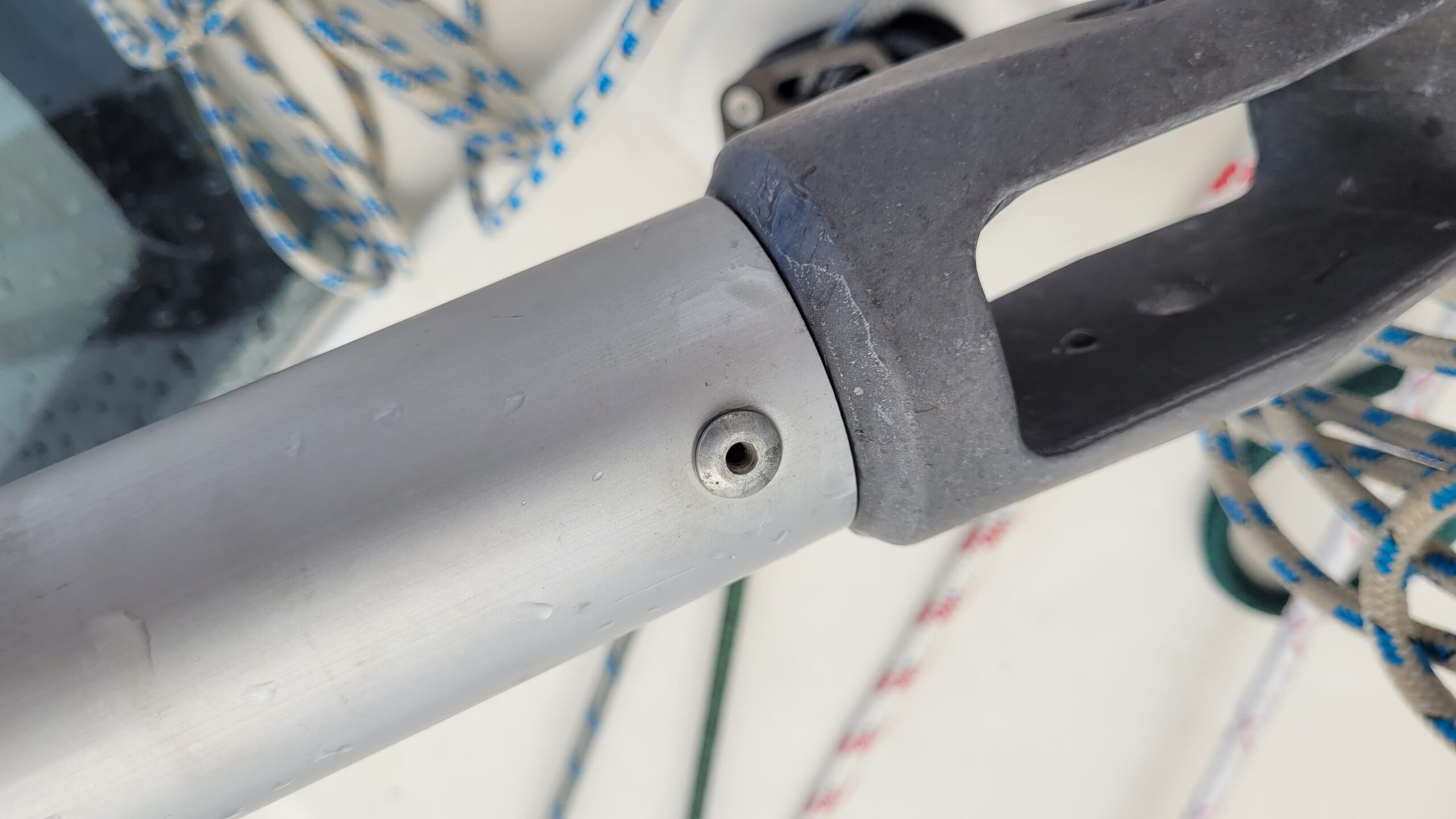
- Aluminum: Highly reactive to salt, aluminum forms a dull oxide film that offers some protection, but when paint or anodizing is damaged the corrosion accelerates quickly, often hidden under blistering or bubbling paint.
- Brass and Bronze: These alloys resist corrosion better but aren’t immune. In a damp, salty environment, brass can experience dezincification (the leaching of zinc from the alloy) leaving a weakened, copper-rich surface that’s prone to cracking.
Regular freshwater rinsing and inspections are your best defense against these different mechanisms of decay.
DIY freshwater rinse systems for liveaboards
When your boat spends months away from shore, a marina hose isn’t an option, but there are several practical ways to create freshwater rinse systems that make ongoing maintenance manageable at sea.
1. Gravity-fed rinse bottles
Keep several one- or two-liter bottles filled with freshwater to target areas like winches, hinges, or engine components. A small squeeze or pour helps remove salt deposits after a sail without wasting stored water.
2. Portable pump sprayer systems
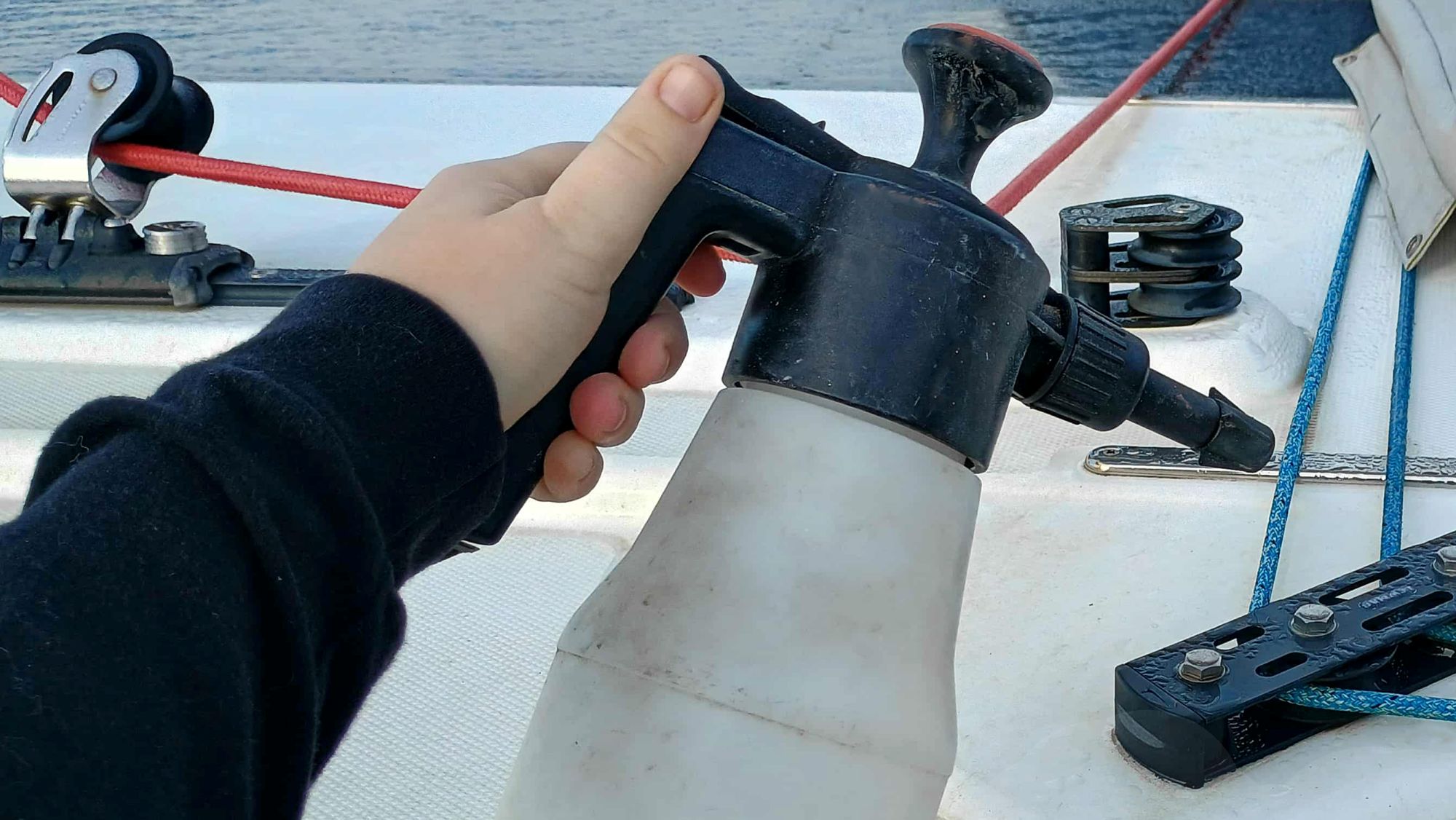
Manual or 12V sprayers (like garden sprayers or repurposed pesticide sprayers) can be filled with freshwater and lightly misted over deck hardware, pulleys, or solar panels. They use minimal water and deliver surprising reach and pressure.
3. Engine & cooling flush
If you rely on outboards or generators, build a closed-loop rinse system. A simple setup involves a five-gallon bucket of freshwater, a short intake hose, and gravity feed or primed pump connection to the engine intake. This allows you to circulate freshwater through the system for a few minutes before shutdown, reducing salt crystal buildup in cooling passages.
4. Rainwater capture
Set up a basic rain catchment system using awnings, gutters, or boom tents. With filtration and a holding tank, you can use collected water for rinsing rigging and decks between squalls, an efficient way to stretch your supply.
Preventative maintenance: Wiring, electronics, and rigging
Preventative maintenance is one of the key tools cruisers have to help prevent issues down the road. When it comes to corrosion, the electronics and rigging are two of the main areas of the boat that are particularly important to care for.
Protecting wiring and electronics
Electrical systems are often the first to suffer in a salt-laden environment. Corrosion doesn’t need standing water; even a thin salt film conducts electricity and can cause shorts, false readings, or component failure. As noted in Fire Aboard: Understanding the Risks and How to Protect Your Boat, corroded wiring and loose connections can also lead to heat buildup and potential fire hazards, especially in confined compartments.
Here are a few tips for protecting wiring and electronics; if you have more, be sure to share them in the comments.
- Use dielectric grease or corrosion inhibitor spray on terminals, connectors, and battery posts
- Heat-shrink all terminals with adhesive-lined tubing for moisture sealing
- Keep junction boxes and panel backs ventilated but protected from spray
- Inspect critical connections (bilge pumps, navigation lights, radios) monthly, cleaning off any greenish oxide buildup with isopropyl alcohol and a soft brush
Maintaining rigging and deck hardware
As highlighted in Don’t Forget the Rig!, mast failures happen more often than you might think – corrosion of the rigging and fittings is one of the reasons why. By maintaining, rinsing and monitoring your standing rigging, running rigging and deck hardware, you can help keep it in good working order.
- Wash stainless rigging with a mild detergent and soft brush when possible, removing salt crusts from fittings, turnbuckles, and chainplates
- Avoid trapping saltwater under covers or tape as it can create anaerobic pockets that eat away at metal beneath the surface
- For running rigging, soak halyards and sheets periodically in freshwater to remove salt crystals that cause stiffness and chafing
A seasonal checklist for corrosion prevention
Even for full-time cruisers, regular inspection and cleaning routines can make the difference between manageable wear, and major failure. You can use this basic checklist as a foundation for creating your own seasonal corrosion prevention checklist, tailored to the context of your sailboat:
Weekly Tasks
- Rinse critical moving parts: blocks, traveler cars, winches, and outboard exterior
- Wipe down exposed stainless fittings with freshwater or a damp cloth
Monthly Tasks
- Inspect electrical connectors, battery terminals, and bonding wires
- Apply corrosion inhibitor to terminals and exposed bolt heads
- Examine the anchor chain for rust or scale buildup and rinse links before stowage
Quarterly Tasks
- Clean under-deck fittings and stanchion bases where salt accumulates unseen
- Check for paint blisters or oxidation around aluminum masts or booms
- Flush outboard and generator cooling systems if possible
Annual Tasks
- Inspect through-hulls, propellers, and sacrificial anodes, and replace if 50% worn
- Remove and re-bed deck fittings that show signs of corrosion or weeping
- Strip and re-lubricate winches, applying a light anti-corrosion grease
You may also want to add a list of tasks for after a passage, where your boat is generally exposed to more salt water than it is on anchor.


Managing salt on your boat
Salt will always win small battles, but consistent maintenance ensures it never wins the war. Liveaboard life means constant exposure to the elements, yet with a few DIY rinse systems, protective coatings, and routine checks, corrosion becomes manageable instead of inevitable.
A clean, dry fitting today is the difference between a quick rinse and a mid-ocean repair tomorrow.

By Nick Heisler
Nick Heisler is the founder of Captain’s Preferred Products, a marine care brand dedicated to high-performance cleaning and protection solutions for boaters, anglers, and outdoor enthusiasts. With a background in boating and product innovation, Nick helps recreational and professional mariners protect their equipment from the harsh realities of the saltwater environment.








What are your thoughts on hydrogen embriddlement and chloride crevice corrosion accelerating under fatigue ?
What about active electrolysis controls used in industrial application, are they applicable for small craft?
What about reference cell potential measurements on fitting and how effective these are in verifying the level of risk to underwater metals ?
How about the use of isolation transformers to address potential risks of certain marina ground installations – which Ibelieve is the only effective way to be safe from marina wiring.
Is nitronic 50 better than 316? Loaded questions, unaddressed in the article in other words, I think a bit of digging and reporting would result in a better article. I can help in a few months when I have more time if you want.
If you’d like to volunteer to contribute to the NFL community as well that’d be wonderful, as your ideas sound like they’d be great for an in-depth technical article that focuses largely on the properties of metals and their reaction to stressors in a marine environment – Nick’s article was specifically focused on tackling corrosion through maintenance, exploring easy and accessible ways to effectively remove salt water.
For more info on how contributing to the magazine works, you can find the “Write for us” link down the bottom of the page 🙂