
Sailing Croatia with almost no moorings or marinas. Exploring and anchoring in quiet places, even in peak season.
If you have plenty of time for sailing and would like to spend an extended period cruising in Croatia, the question quickly arises as to whether it’s financially sustainable to frequently moor or dock.
During forecasted periods of bad weather or in case of breakdowns, mooring in one of the many buoy fields or taking shelter at one of the numerous marinas is an excellent option. But for our longer Croatian voyages, we try to keep our budget under control, as prices for buoys, marinas, and restaurants are unfortunately quite high.
In 2025, we spent six weeks sailing in Croatia in the spring (May to June) and another six weeks in late summer (August to September), avoiding moornings and marinas as much as possible. These were our routes, and the anchorages we discovered.
Sailing Croatia in spring
At the beginning of May we set off aboard our Wauquiez Centurion 40, Rûzje Wyn, leaving our Italian home port of Aprilia Maritima with a newly installed engine. We were bound for the Croatian region of Istria.
-
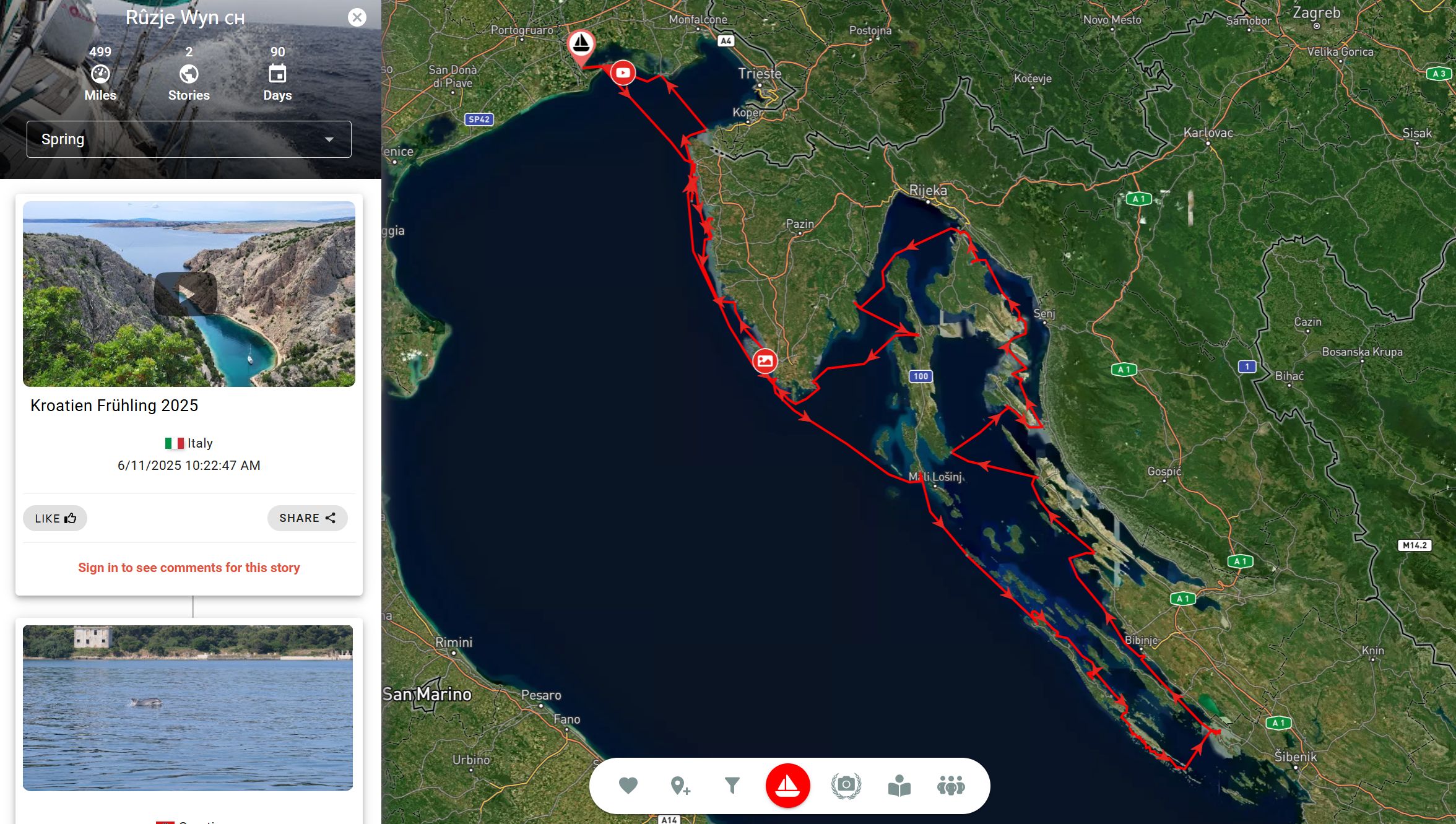
- noforeignland Journey Chapter showing the Spring voyage of Rûzje Wyn
Istria
In Istria, there are various opportunities to anchor, but the towns of Novigrad, Poreč, Rovinj, and Pula are always worth a visit. To do that, we tend to moor at the more affordable buoys there. In Poreč, however, our flange broke (the last part of the old engine that had not been replaced), so we ended up spending five days in Marina Červar Porat having a new flange installed.
Once repaired we sailed south and finally reached the island region of Croatia, where the anchor was needed. On Lošinj, in the northern Adriatic sea, we discovered the bay of Uvala Zabodarski. It is much quieter than the northeastern and heavily frequented Uvala Artaturi.
Dugi Otok and the Kornati Islands
Our next stops were off the Dalmatian coast at Dugi Otok, the largest island in the region.
We anchored at a side inlet called Uvala Lučica, located in Soline Bay at the north of the island. In this bay there is a wreck, and after the wind shifted slightly, we found ourselves quite close to it. After repositioning, we were finally able to relax and go for a peaceful walk.
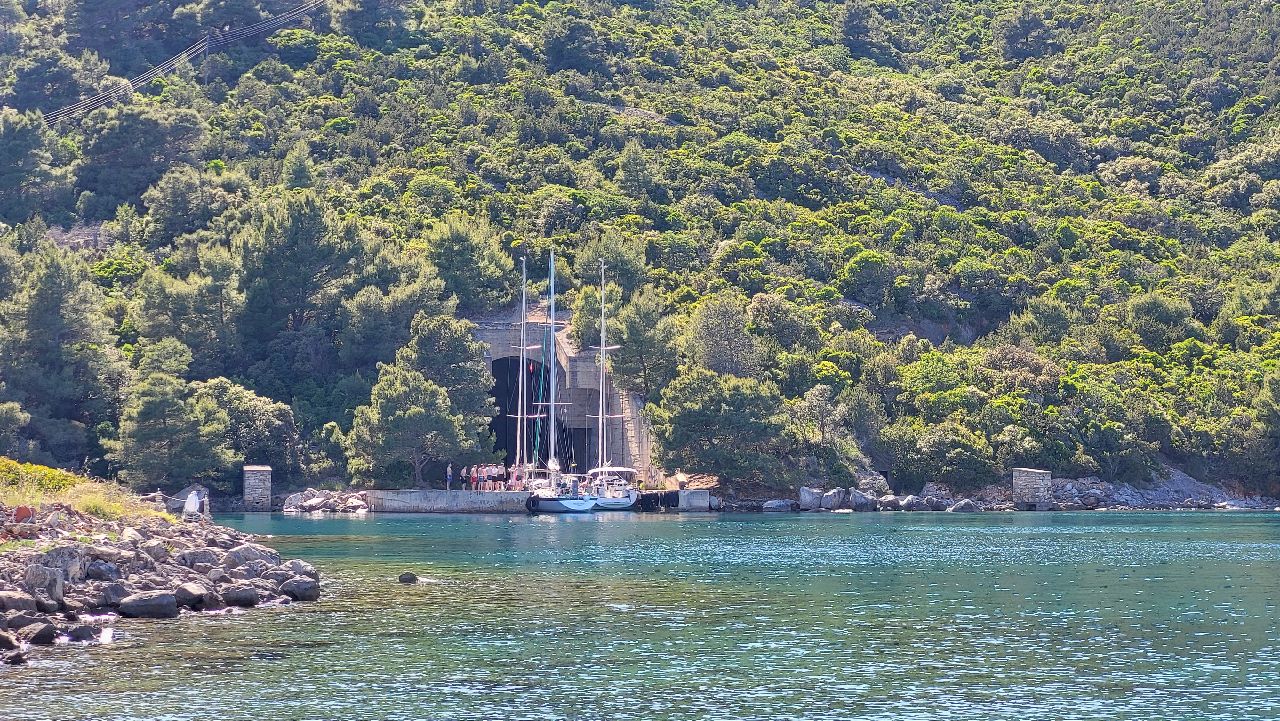
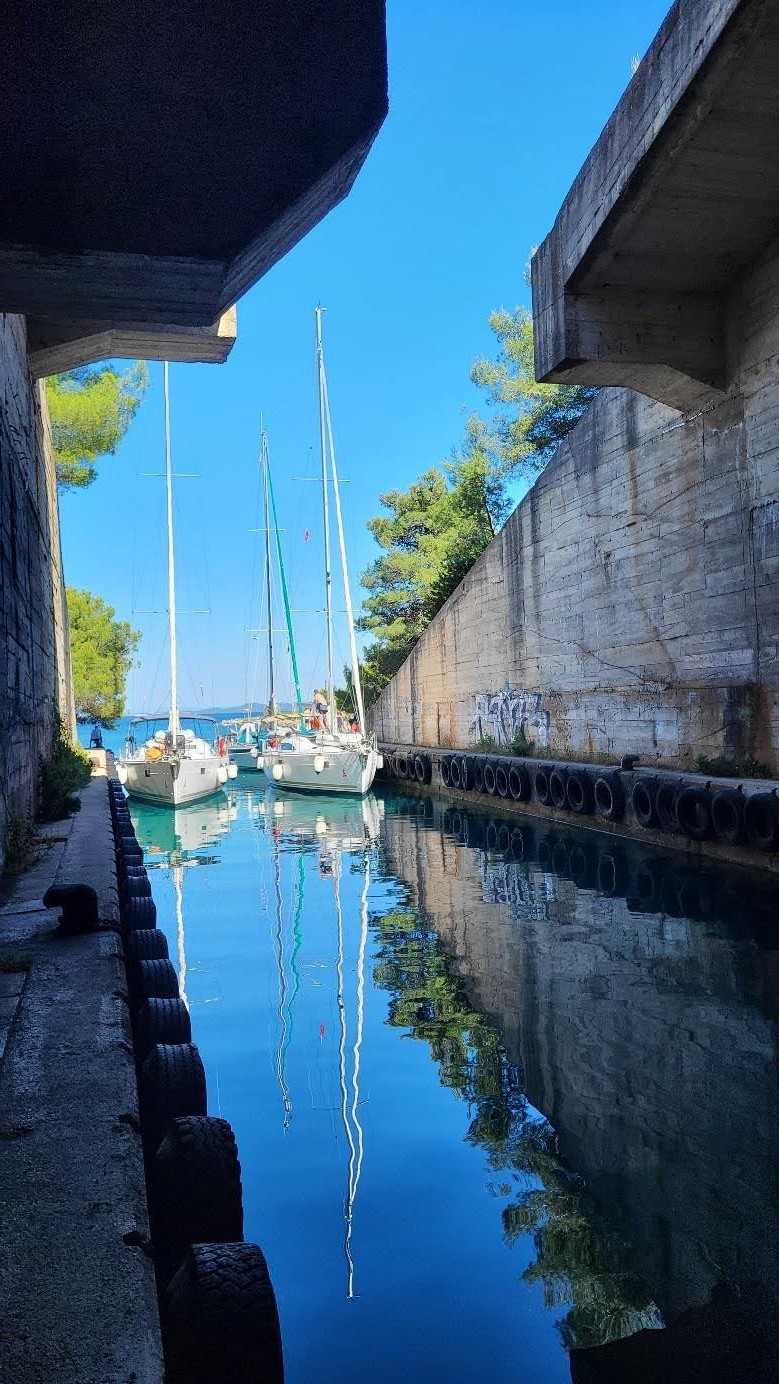
We then continued on to Uvala Karusa, also known as Dragove. We were lucky and managed to moor at the pier by the iconic submarine bunker together with two other boats. Later in the year, we also found a good anchorage in this bay.
The wind continued to come from the south so we beat upwind to Uvala Luka and anchored there. After that, we planned to spend three days exploring the Kornati Islands, much of which is protected by the Kornati Islands National Park.
In the Kornati Islands, at Uvala Šipnate and Uvala Levrnaka, boats are required to use buoys instead of anchoring. At Levrnaka, we are almost rammed by a tourist boat because the captain did not give us right of way. When we spoke to him about it later, the approximately 80-year-old even wanted to start a fight—fortunately, one of his crew members managed to prevent it.
Further south at Otok Kameni Žakan, buoys have not been installed yet, so we were able to anchor freely. Although we paid the park fees for our stay, we were never checked, and I am not even sure whether these fees are charged in May.
Sailing up the Dalmatian Coast
Strong southerly winds were picking up, so we sailed from the Kornati Islands to Murter, an island close to the mainland. Unfortunately buoy fields have now been installed in the large bay, and free anchoring is no longer permitted. The weather conditions remained poor, and were forecasted to worsen, so we decided to stay two nights at Marina Sukošan and visit Zadar.
At this time the weather remained very unstable, with southerly winds and thunderstorms, but we wanted to continue on. We found the large bay at Povljana, on the island of Pag, offered us good protection from the south wind. Because of the storms and rain, we stayed at anchor for two nights and could not leave the boat.
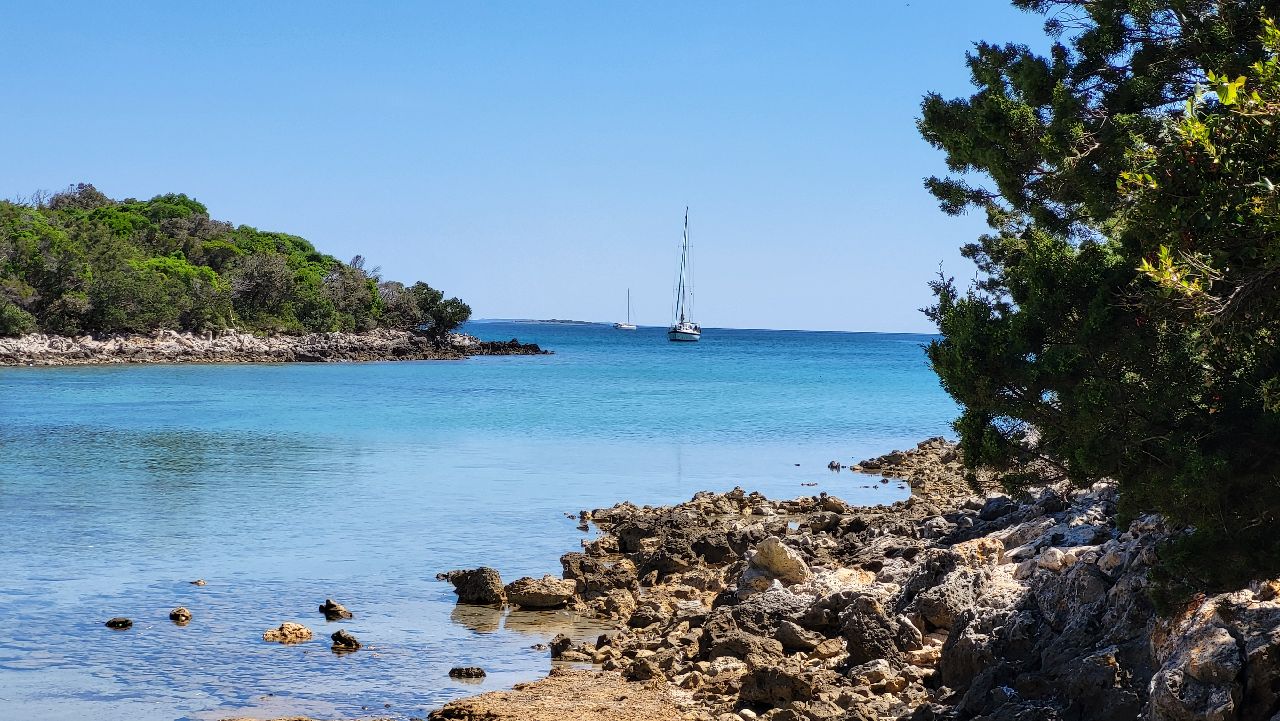
Finally the weather improved, with temperatures becoming warmer. We lifted anchor and sailed to Novalja, also on the island of Pag, then on to the wild bay of Uvala Meli, on the southeast of Cres, ultimately bound for the island and town of Rab. There, you’ll find a large bay called Palit. This bay, with a view towards the old town of Rab, is an excellent anchorage for visiting the town or one of the oldest nudist beaches in Croatia, Kandarola Beach.
-
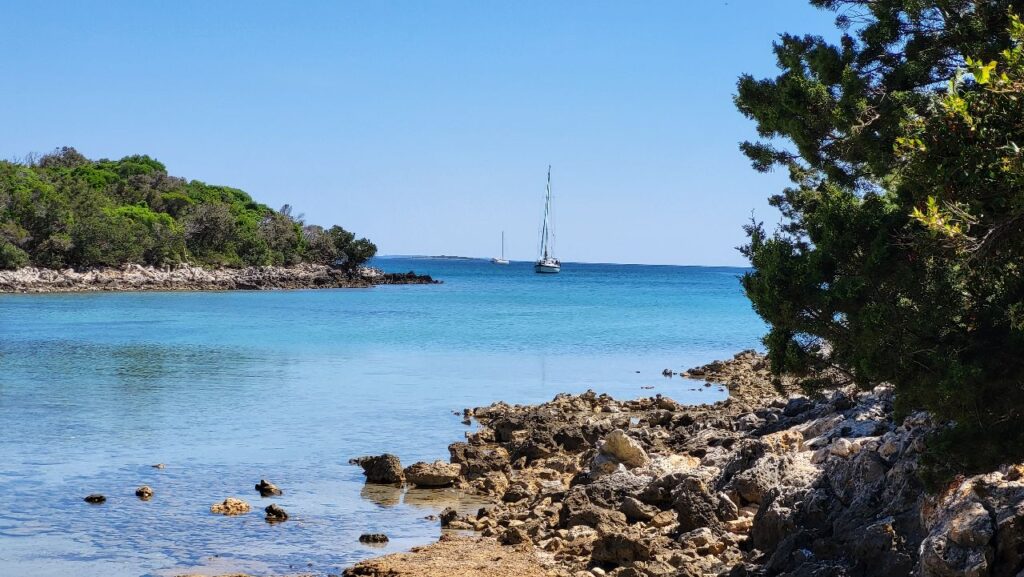
- Uvala Meli, Cres
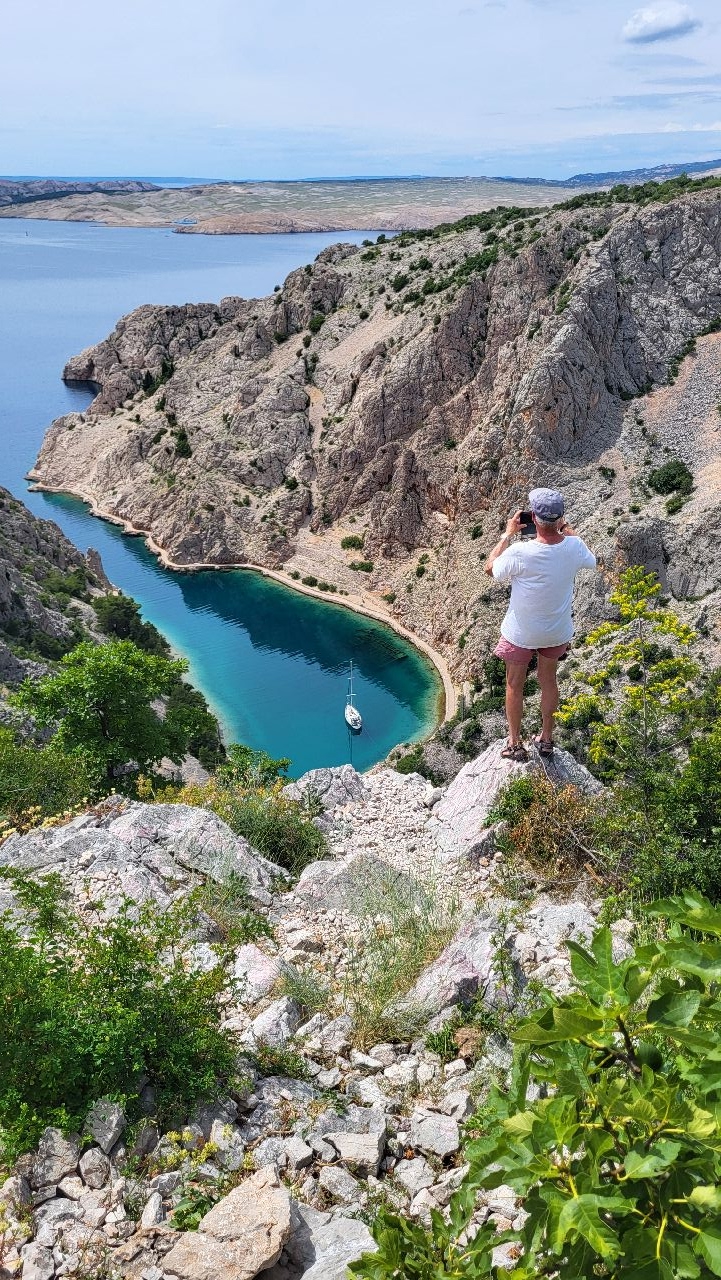
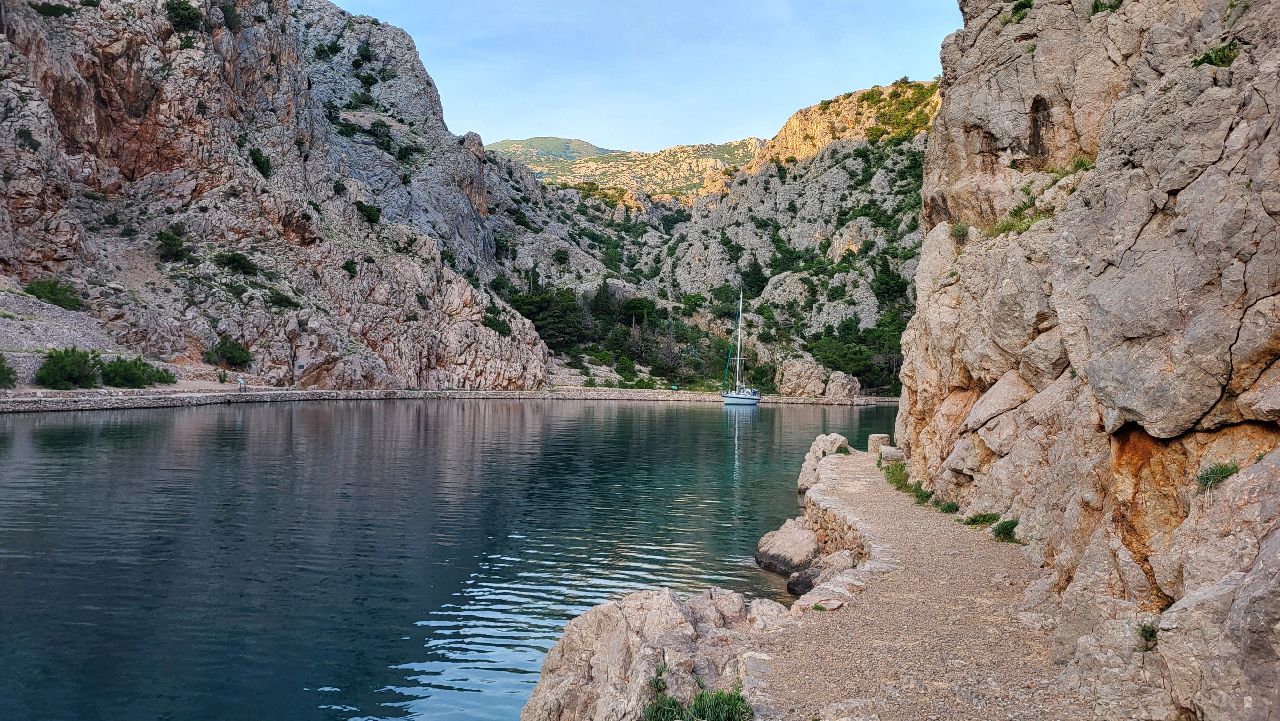
The highlight – Uvala Zavratnica
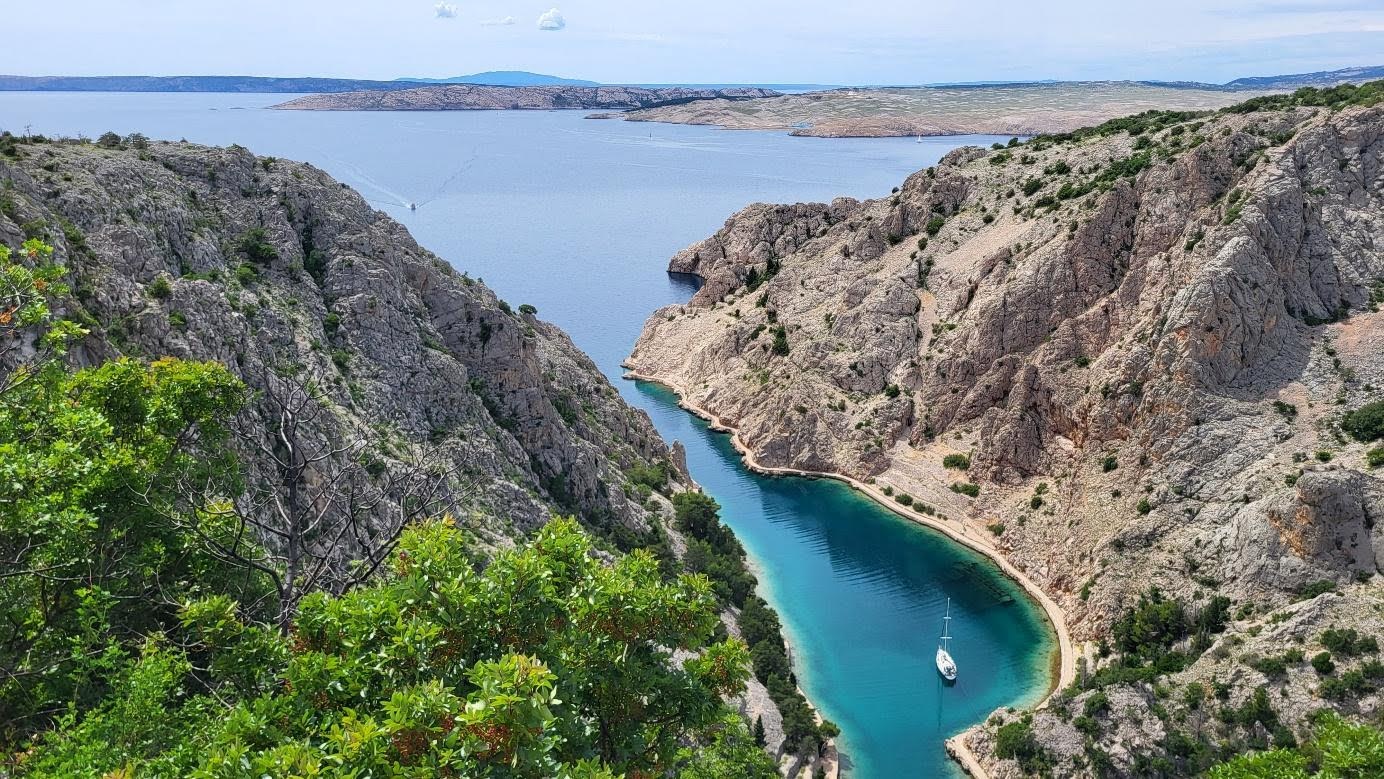
After Rab came the highlight of our voyage – sailing south between Rab and Otok Dolin toward the mainland, then into the bay of Uvala Zavratnica.
We were lucky enough to have the entire bay to ourselves.
This small nature park charges 15 euros per boat and five euros per person for an overnight stay. The bay resembles a small fjord, and boats are secured using an anchor and a stern line. On one side is the wreck of a German landing craft from the Second World War, which you can snorkel on.
On land, a steep path up the hills leads to a beautiful viewpoint, which can be reached in about 30 minutes. Once back down, it takes another 30 minutes along a coastal hiking trail to reach the village of Jablanac, where we enjoyed a cold beer.
Sailing northern Croatia through the Rijeka Gulf
The forecasts predicted southerly winds and no bora, so we decide to sail the northern part of the region on a route that would take us through the Velebit Channel, between mainland Croatia and the island of Krk.
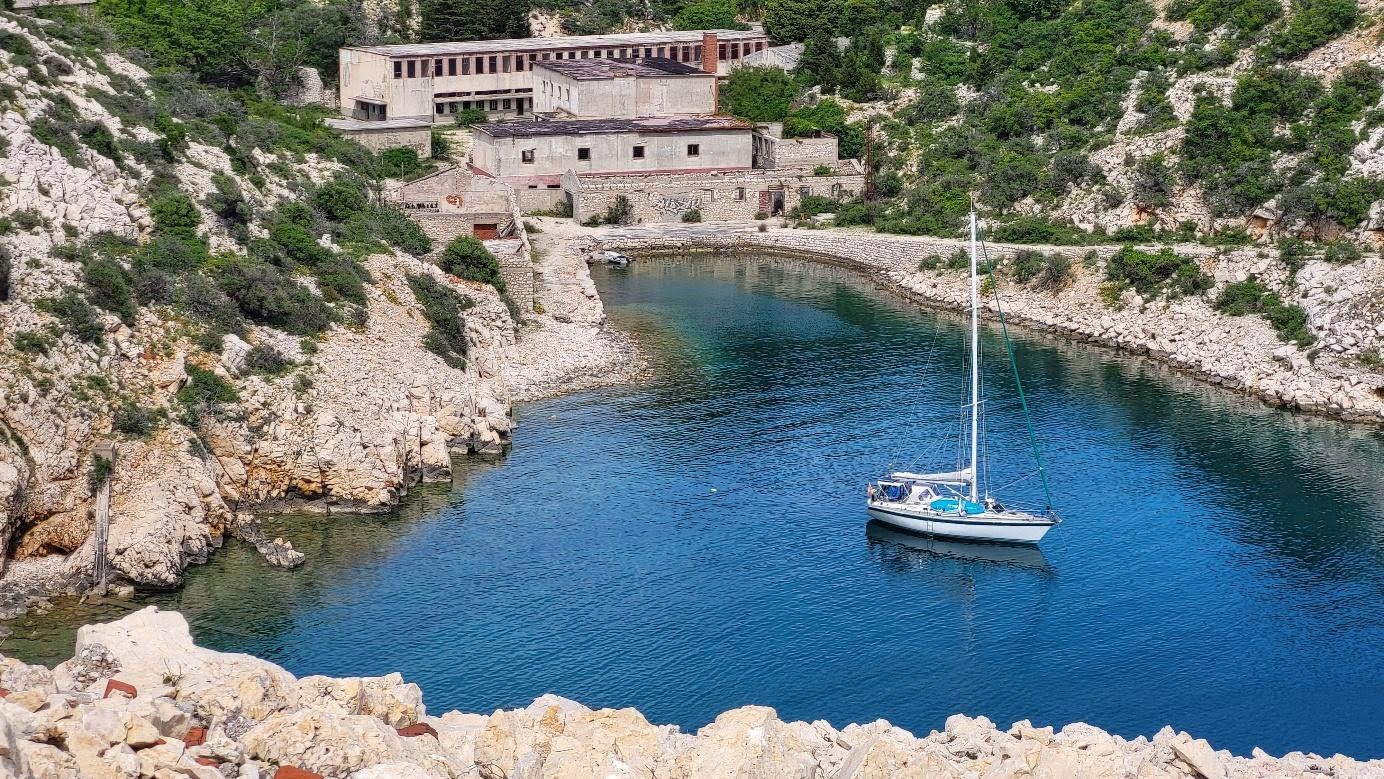
Our start point for this part of the journey was Main Gate bay on the island of Goli Otok. It’s a fascinating anchorage for anyone who enjoys exploring lost places; a former male prison island, all the buildings still exist, although they are in increasingly poor condition. When anchoring, a stern line is advisable, as the shallower part of the bay (still around ten meters) is relatively narrow.
As stronger easterly winds picked up the following day, we beat our way between Otok Sveti Grgur and Otok Prvić, past the Stazica lighthouse, and headed toward Uvala Mala Luka on the southeastern side of Krk. This bay resembles a small lake and has an open-air fish restaurant, which happened to open for the first time that day. Although the holding at Uvala Mala Luka is very good, during the night gusts come from different directions which makes things a bit unsettled.
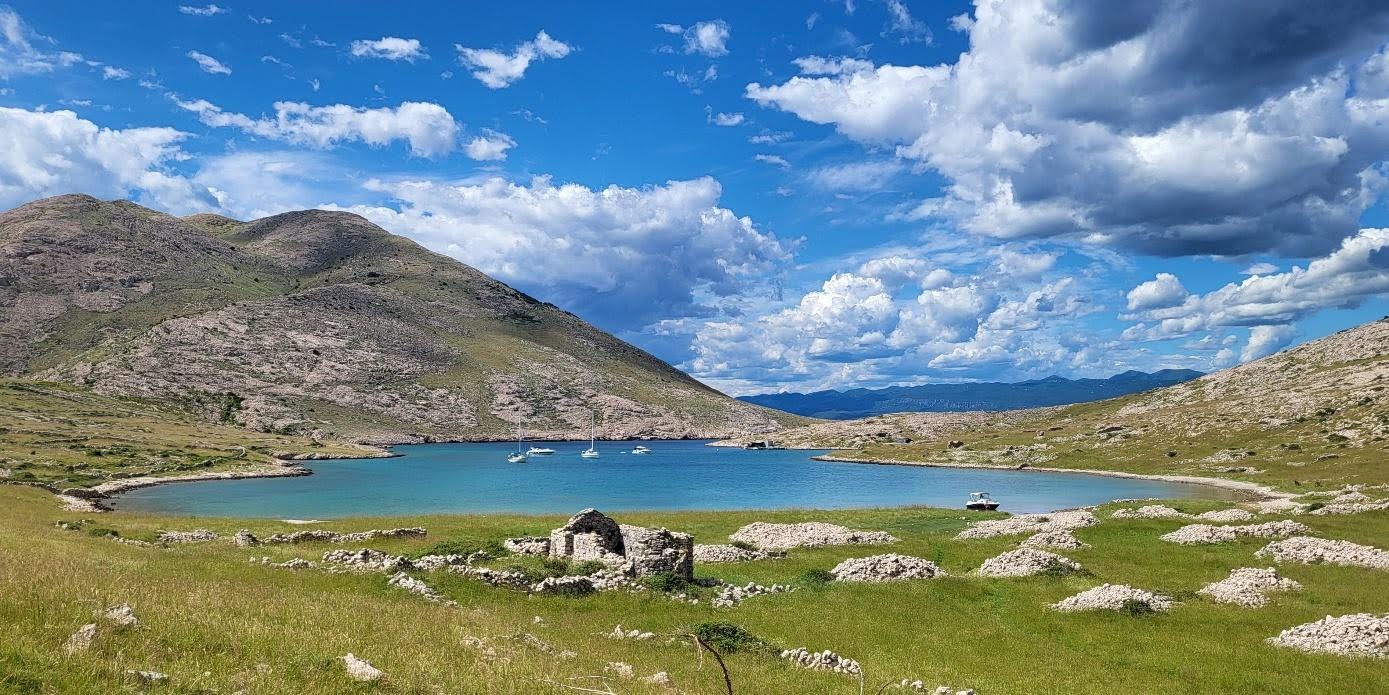
Other stops on Krk included the very large and shallow bay near Klimno, and Uvala Voz, which offers a beautiful view of the two bridges connecting Krk to the mainland.
Heading home
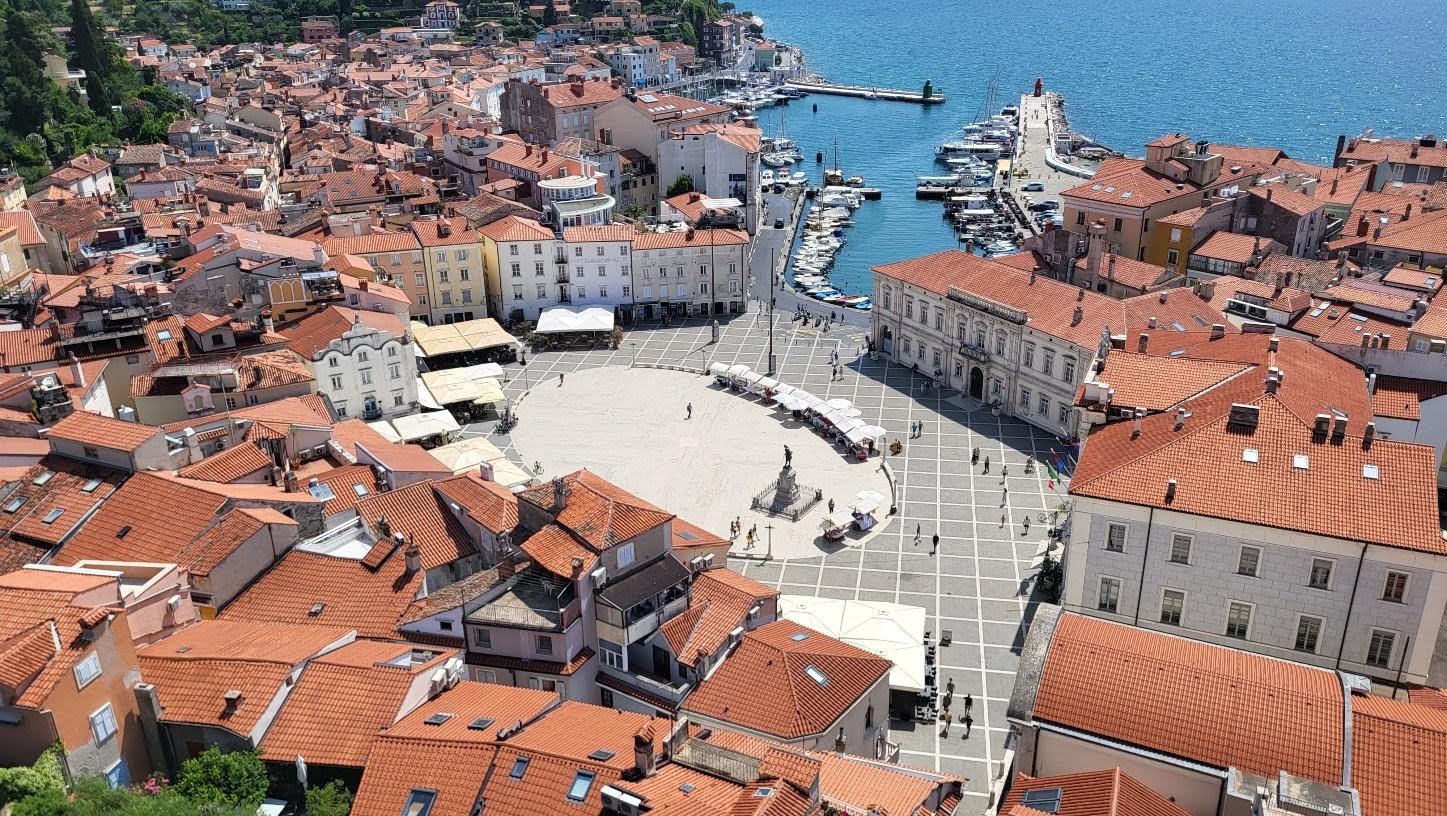
From Krk we sailed back toward Istria, anchoring at Uvala Prklog near the monastery on Cres, and in Uvala Kuje along southeastern Isteria. As we continued north, the blister sail suddenly dropped from the top of the mast into the water. Luckily, we retrieved it without any large damage, and the frayed end of the halyard was stuck at the top of the mast. On our way to Aprilia Marittima we made two last stops, Piran in Slovenia, where we repaired the blister halyard, and Grado in Italy, mooring in the town harbours. Piran in particular is a beautiful small town, and we thoroughly enjoyed a day of hikes while a stormy Bora blew.
Returning to Croatia for a late summer voyage
At the end of July we set off on our second Croatian voyage for the year.
First, we spent a week sailing along the Istrian coast to Pula with our daughter and two grandchildren (six and eight years old). From there, they returned home, and we once again focused on finding bays to anchor in.
-
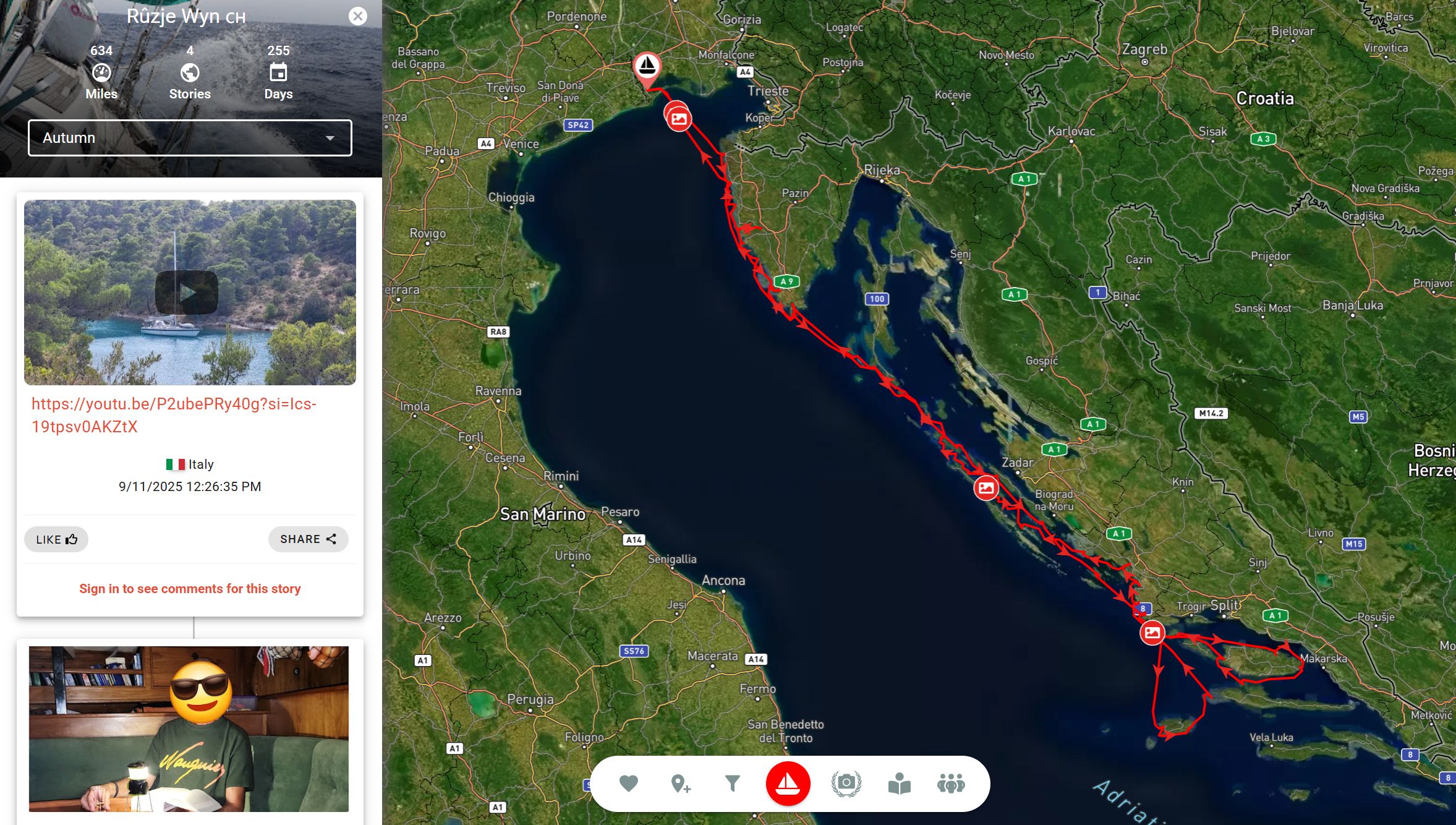
- noforeignland Journey Chapter showing the Autumn voyage of Rûzje Wyn
Transiting the islands south
Our plan was to sail south as quickly as possible to explore the islands of Vis, Lastovo, and Mljet, but the winds were light so we made slow progress.
After Uvala Zabodarski in Lošinj, we ended up at Uvala Pržine in Ilovik. The conditions, as far as boat density was concerned, were very different from spring when we were often completely alone at anchor. In this bay we were surrounded by at least 20 other boats and could only find an anchoring spot at the edge.
After that, we continued to Uvala Jaz near Molat, followed by Uvala Prtijug on Ugljan. Unfortunately, relying mostly on the engine and doing very little sailing, we ended up in Uvala Žinčena on Pašman. In the neighbouring bay, Uvala Landin, all buoys were occupied and it was crowded, but Žinčena was pleasantly quiet.
Passing Kakan, which had at least 50 buoys, all occupied, we continued to Kaprije, an island where unfortunately only buoy fields are available. We managed to get the last free buoy and were happy to be able to shop and eat at a restaurant again.
From there we sailed to Rogoznica, anchoring off Ražanj Beach. Although a storm was approaching, the anchorage was acceptable.
Cruising off the coast of Split
On Drvenik Veli we wanted to stop at the highly praised Blue Lagoon, but it turned out to be a disappointment: overcrowded, tourist boats packed with people like sardines, loud music. Only in the evening, when we anchored on the northeastern side of Otok Krknjaš Veli, did it become somewhat quieter.
After that, the wind died down completely, so we motored to Pučišća on Brač. Near St. Stephen’s Church we dropped anchor and stayed for three nights. In Pučišća, you can visit the last remaining active stone masonry school, and there are beautiful hikes to scenic viewpoints.
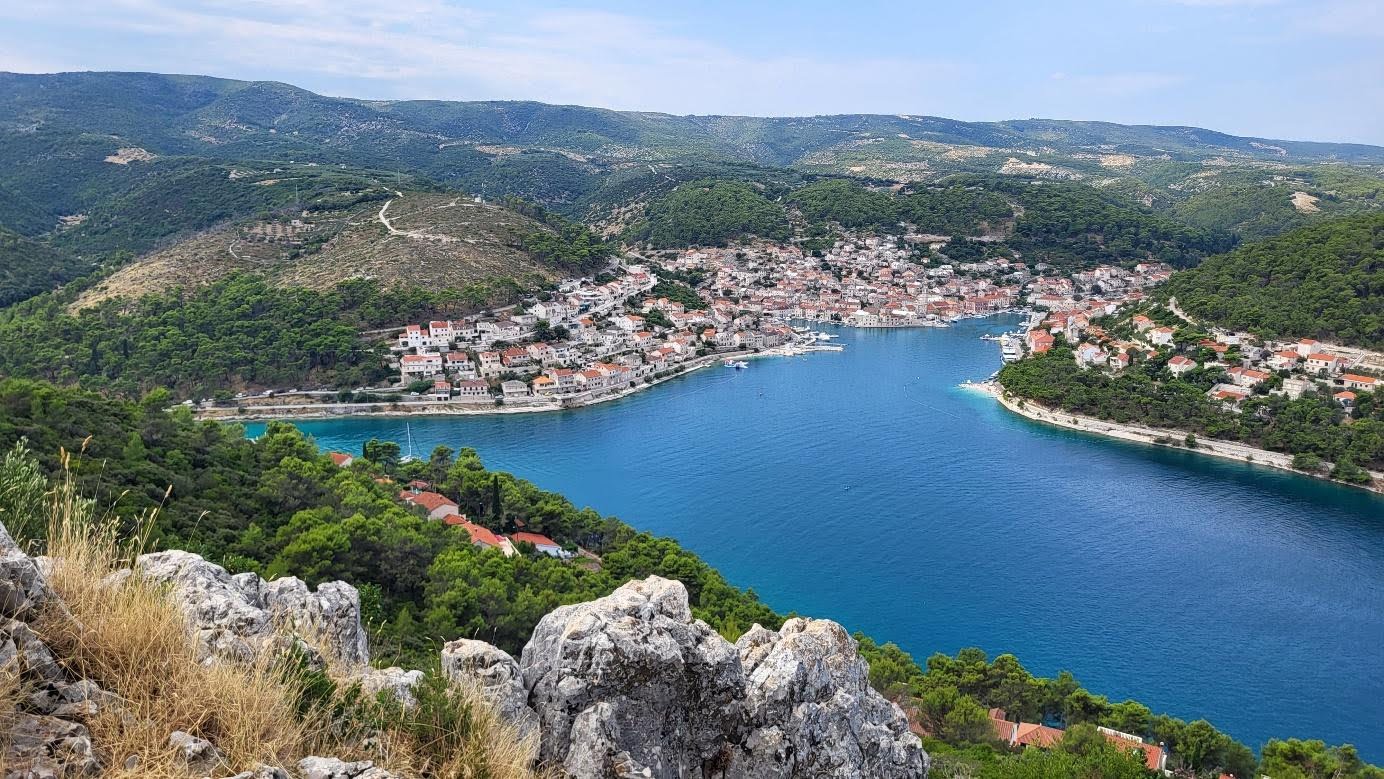
The weather forecast predicted an approaching jugo (southerly wind) and thunderstorms, so we started looking for a sheltered anchorage. First, we spent one night on the southern side of Brač in Uvala Žuković. Although it’s forbidden to tie stern lines to trees, a Croatian tourist boat ignored this rule. When we asked about it, they claimed to have government permission, as passenger safety supposedly takes priority.
By the time the weather started to deteriorate we were safely anchored with a stern line in Uvala Vlaška on Hvar. After two nights of heavy rain and thunderstorms, we needed to head into a marina to refill our water tanks. Since the weather remained very stormy, we were glad to find a spot in Marina Vlaška near Milna on Brač. From the marina it’s a 30-minute walk to Milna, a cosy little town.
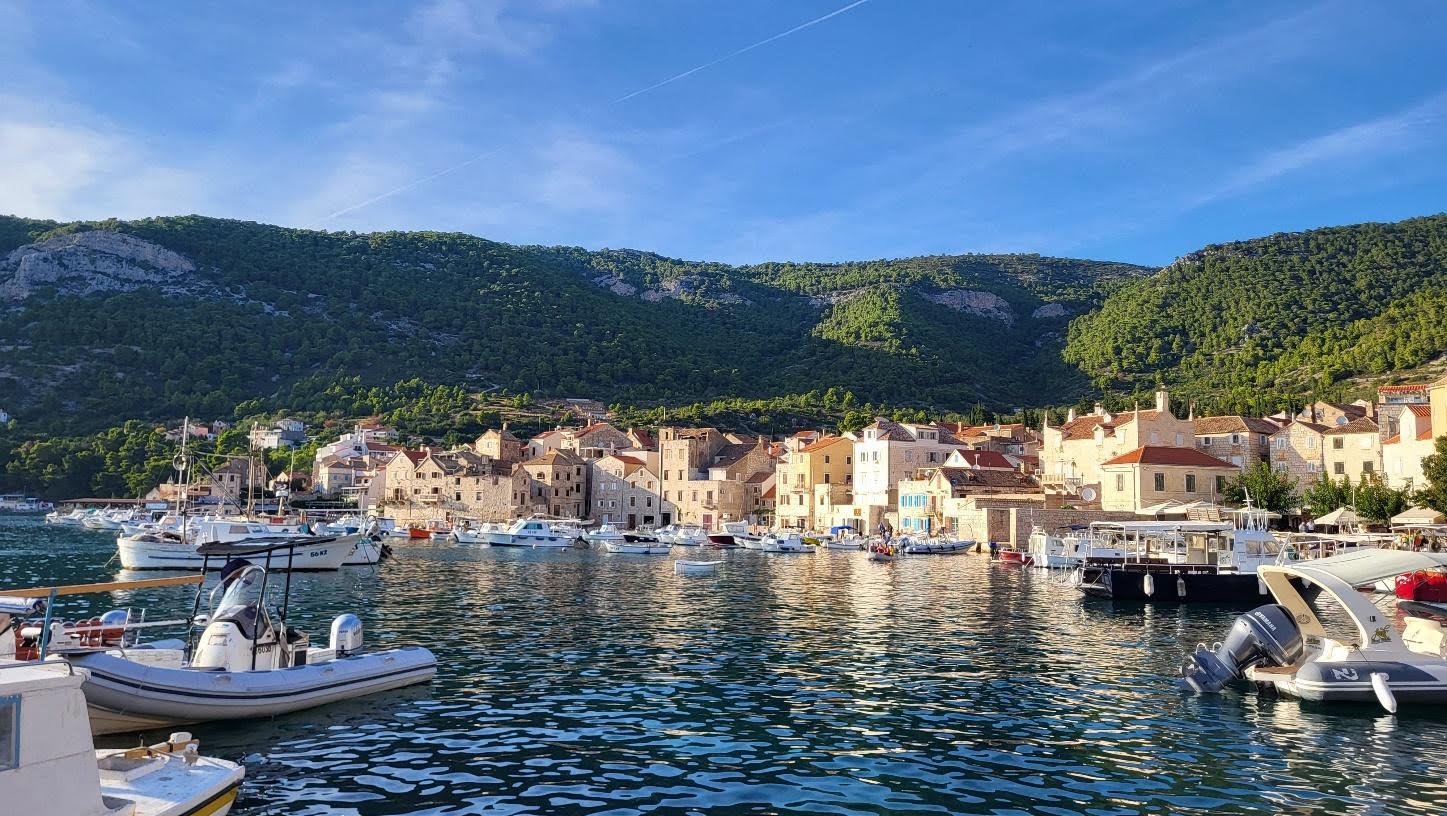
We had planned to slowly head north again from here, but when we woke up in Uvala Vela Rina near Drvenik Mali, the conditions were ideal for sailing under a blister toward Vis. So, we changed our plans and set off for the town of Komiža.
It was a great sail, and along the way we spotted a large, old, tree-masted cruise ship under sail. We knew in Komiža, it’s almost impossible to avoid using a buoy, so when we arrived later in the afternoon we were relieved to find one still available.
Turning north again
Sailing past the southern side of Vis, with an anchoring stop at Zaglav Beach, we continued via Sveti Klement to Marina Kremik, once again seeking shelter from thunderstorms and strong winds.
Unfortunately, the weather remained very stormy and unstable with thunderstorms, and after we left the marina and anchored in the bay near the Ostricia Wall, a strong thunderstorm immediately broke over us. The newly set anchor could not withstand the enormous gusts, and we drifted away. While raising the anchor, we unfortunately also pulled in the neighbor’s anchor chain. Cursing in Swedish and shouting over the storm’s fury, he tried to express his anger. We managed to free his anchor, and when the storm was over a short time later we reset the anchor, this time with enough time to dig deep into the muddy ground. The Wall of Ostricia is very impressive, and once we were warm and dry, we took a nice hike up to a viewpoint.
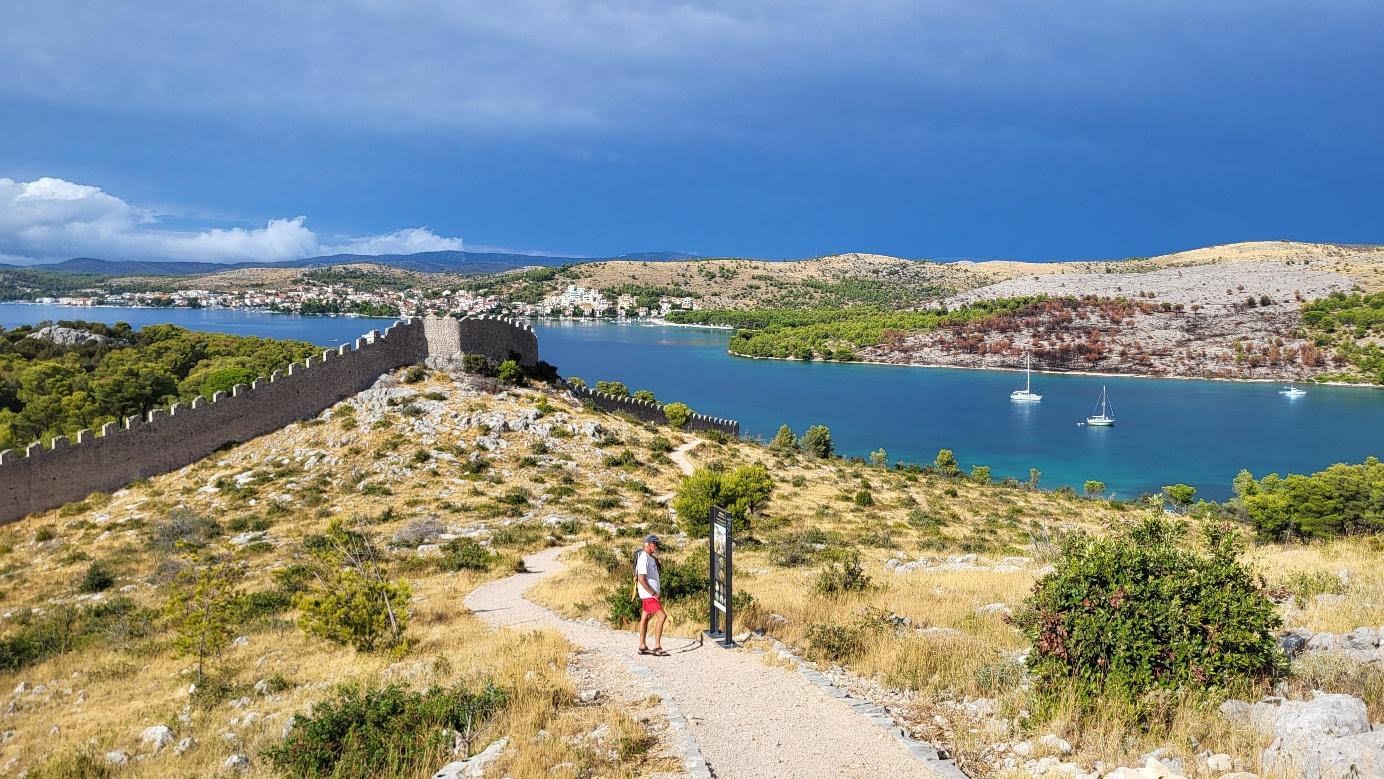
After a detour to Sibenik, where we moored at the city pier, we continued northwards. Further anchorages included Uvala Koromasnica in Murter, Uvala Pinizel Donji in Zut (where we were caught in another thunderstorm during the night), Uvala Karusa/Dsagove on Dugi Otok again, Plaza Zasibenski in Molat, and close-hauled to Ilovik, where this time we hooked a buoy for some last-minute shopping. After further nights at anchorages near Losinj and Medulin, we sailed up the Istrian coast one last time, to Novigrad. In Novigrad, more rain and thunder hit. Our batteries seemed to have given up their duties and since there was no sun to charge them, we were happy to sail one last day to our home base in Aprilia Marittima.
The peaceful side of sailing Croatia
After a total of 1,300 nautical miles and dozens of beautiful anchorages, we are still pleasantly surprised by how beautiful and peaceful Croatia can be, even in peak season. If you are willing to anchor, cook for yourself, and endure bad weather at anchor, this area can be sailed for extended periods without incurring high costs for mooring buoys, marinas, and restaurants. Only the more frequent occurrence of unsettled weather conditions makes Croatia an increasingly challenging sailing area.
While cruising Croatia can feel like an expensive, crowded exercise, Klazien and Andreas have shown it doesn’t have to be. If you’ve sailed Croatia, what tips do you have for other cruisers looking to explore the region?

By Klazien Matter-Walstra
Klazien grew up in the Netherlands, learning to sail on the lakes in Friesland. Meeting fellow sailor Andreas, they competed in several European championships together, and got married. When their daughters were 10 and 12 they chartered in Greece for the first time, “collecting” islands. This continued over the next 8 years, and that collection now has about 115 islands. They also chartered in Thailand, Seychelles, and Cuba. When Andreas retired in 2018 they bought Rûzje Wyn, a Wauquiez Centurion based in Aprilia Marittima. Klazien also decided to retire, and now they have much time for sailing in summer. They know Croatia quite well, as it is easy to reach from Italy, but have also sailed back to Greece twice. It is still their favourite sailing destination, although it's much more crowded now than it was in the 1990's!





A good read, thanks.