
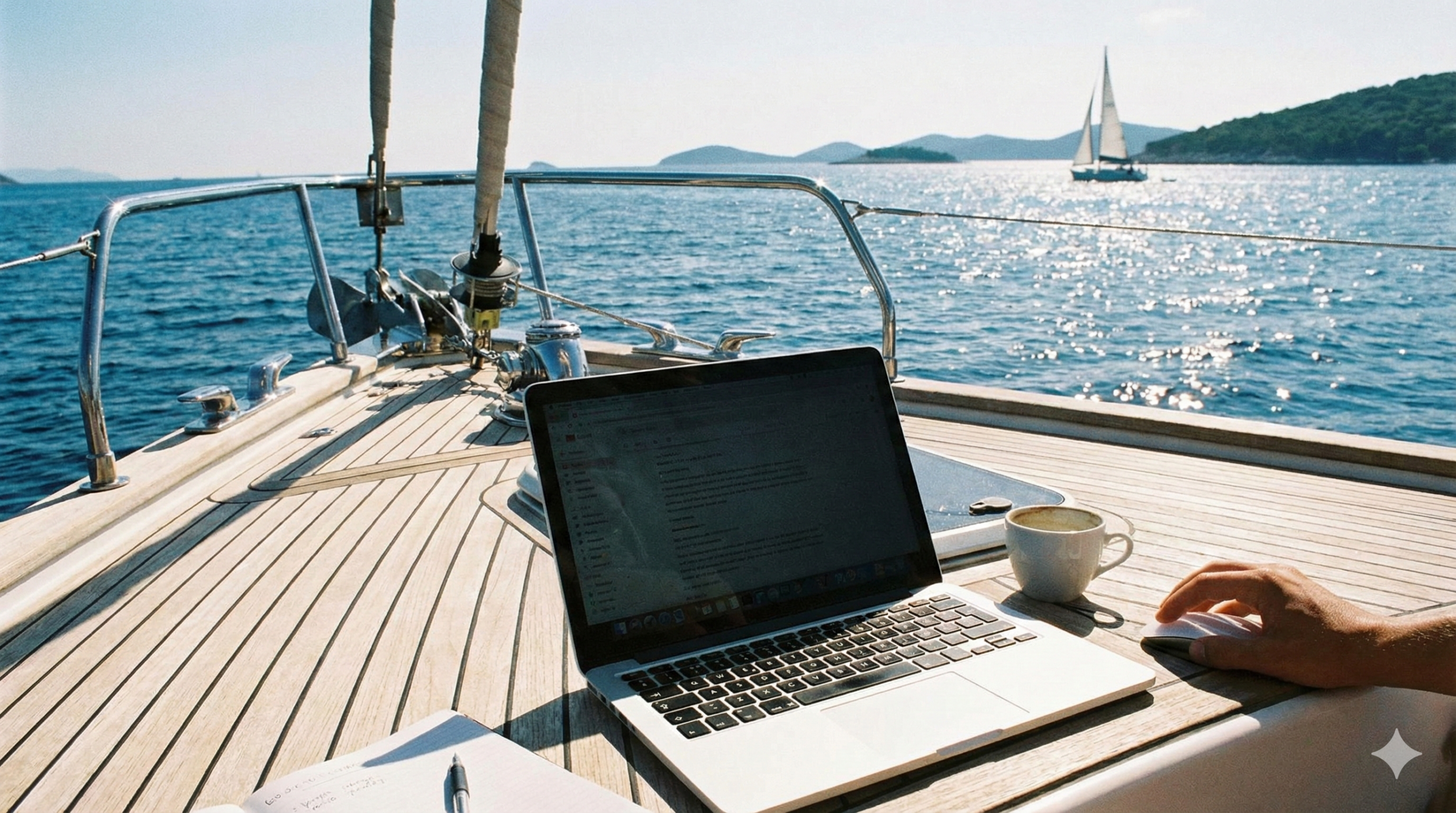
With the advancement of modern technology, especially Starlink, working remotely from a boat has become more accessible than ever. The question is, how do you blend work with the adventure and beauty of life at sea?
Time works differently when you live on a boat. On land, there’s this time based scaffolding that holds everything together; work hours, shopping hours, commuting hours, social hours. Out here, that structure dissolves. The weather becomes the only fixed appointment and the boat generally comes first. For cruisers like myself who work online, that shift is both liberating and challenging. You suddenly have so much more freedom, but your work still needs you to show up.
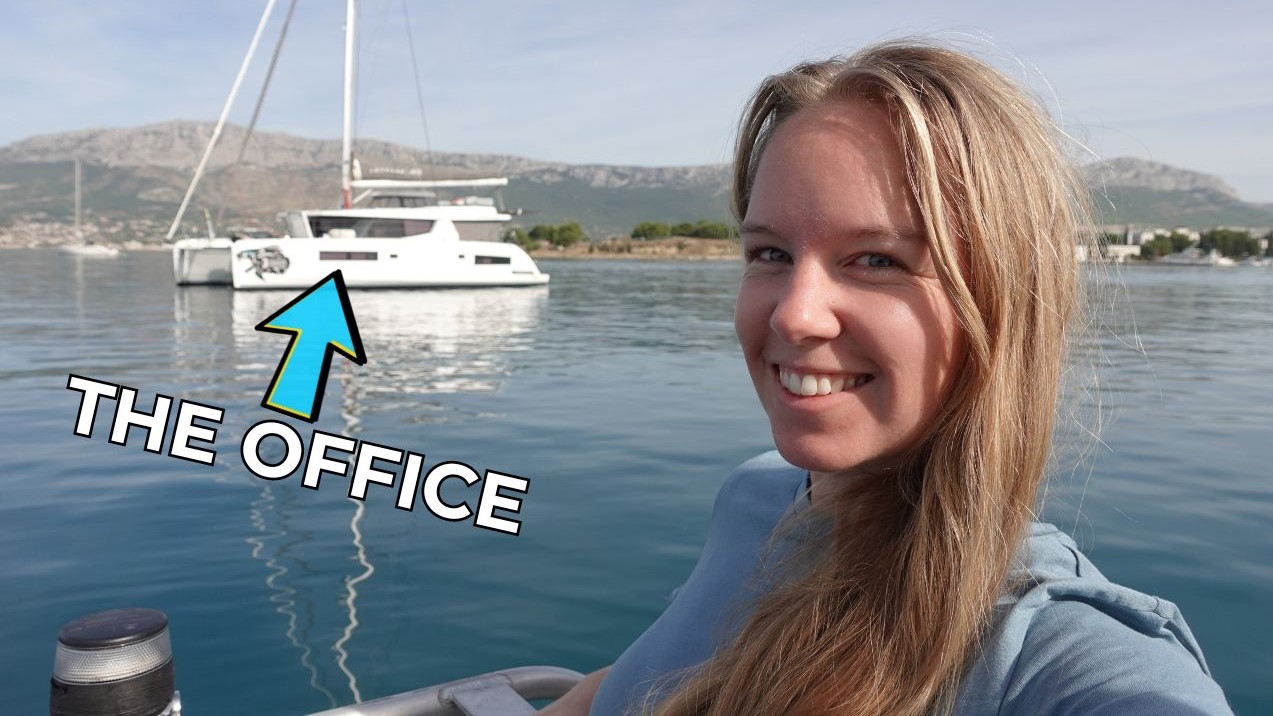
Learning the rhythm of boat life
Many cruisers say it takes months, if not a season or two, to really adjust to liveaboard life. When you’re trying to work on top of that, finding the rhythm can mean a bit of trial and error.
On land work is predictable, and the only times you have an issue getting there is when things like illness or car troubles strike. A boat is a whole other game. It’s not unusual to wake up with a plan, only to discover the boat has a different agenda; a dragging anchor, a gusty squall rolling through the anchorage, or a broken ‘something’ that needs attention right now. Then there’s those of us who are susceptible to sea-sickness, which makes working on a laptop while under sail very difficult!
When I first moved aboard I’d already transitioned from a classroom teacher to working online, living as a digital nomad in Austria and Spain while I waited to join the boat. After moving aboard I had time in a marina to adjust to boat life, but the first test was a 10 day passage to Croatia. I quickly learned that my work had to be scheduled around sailing, and that flexibility, communication and planning would be key.
Time management
From the time you move aboard, things like sailing, weather windows, squalls, haul-outs, broken gear, government office hours, power management, and provisioning all compete with working hours. I can plan a neat week of deliverables on a Sunday night, but by Monday morning a forecast change or urgent boat job has thrown the whole schedule sideways.
While I could be working as an online teacher, I chose not to chase a job with fixed hours that would clash with changing timezone and the unpredictable nature of full-time international cruising. Instead, I made the move into freelance content writing, and I’ve never looked back.
My daily routines are adjustable, rather than being a fixed timetable, so that there’s space for the unexpected. Each day has a few non-negotiable work tasks, chosen based on their deadlines, and the rest is flexible. I use planning tools like Trello and a work diary to help organize my time, and try to work in focused blocks during the early mornings, when the boat is quiet and nothing much else is happening.
To me, time management afloat is less about efficiency and more about adaptability. The days you expect to be easy rarely are, and the days you assume will be chaotic sometimes unfold perfectly.
Balancing work and exploration
The reason most people choose to work from a boat is simple; they want to see the world but can’t give up their income. To be able to do this successfully there is a need to find a balance between earning money and actually enjoying the places you sail.
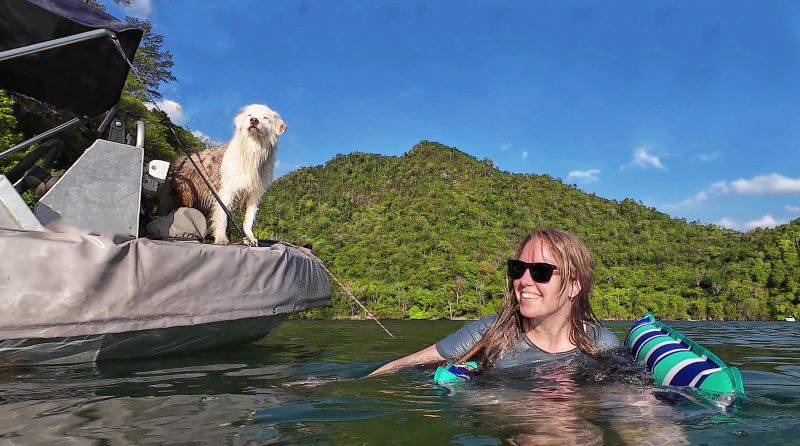
Every cruiser handles this balance differently. Some slow down and spend weeks in one anchorage so they can work, rest, and explore the area properly. Others set strict boundaries; work in the morning, play in the afternoon, or take advantage of bad weather days to get ahead on projects so the next patch of sun is guilt-free. Personally I work early mornings and evenings, prioritizing exploration during the day. I chased this life because I wanted to experience as much as I could in the time I have, so I always aim to be able to say yes when there’s the chance to go and do something.
Here’s some strategies that help me maintain a sense of a balance:
- Longer stays in destinations where I genuinely want time on shore
- Bundle work into fewer, denser sessions, where I’m being as efficient as possible
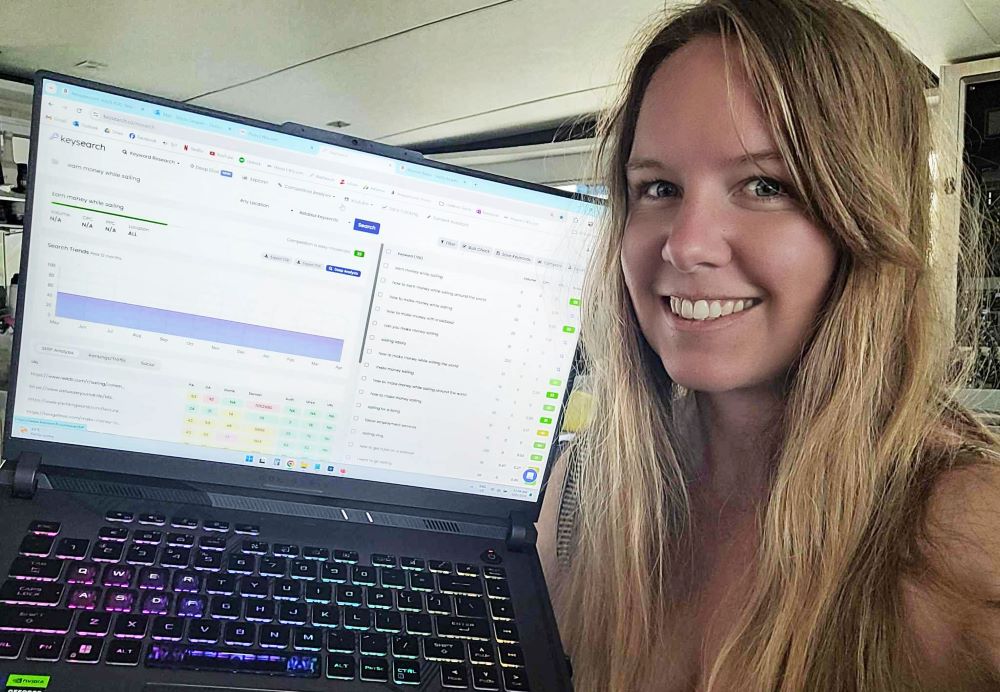
- Have a space set aside where I work
- Work during quieter times of the day, where less is going on
- Plan full days off in advance, and then schedule work around it
- Let weather guide my pace; work more when it’s raining so I’m free to explore when it’s perfect
There’s no magic formula; some weeks you’ll work more than you sail, other weeks you’ll chase a weather window and barely open your laptop. The balance happens over months, not days, and is unique to each cruisers circumstances.
-

- Morning
-

- Afternoon
The role of technology (why backup systems matter)
Working afloat means relying heavily on technology; internet, power generation, laptops, tablets, and a stack of charging cables. Here’s what my set-up encompasses:
- Laptop with an external mouse and a tablet with external keyboard as a back-up
- Starlink Mini, plus local data SIMs and a second Starlink Mini for backup
- Solar panels as our main power source, supplemented with a generator when needed
- Cloud and external hardware storage
- Noise-cancelling headphones for video calls
- Offline access for essential apps
While some things are an upfront expense, the money I can earn as a result of having them makes it more than worth it.
Avoiding burnout
Burnout looks different for working cruisers than it does working on land. It’s not just the fatigue of deadlines or stressful work situations; it’s the cumulative weight of responsibility. Living on a boat involves far more personal responsibility and active management than a house. That constant vigilance combined with the need to earn an income can wear down even the most enthusiastic liveaboard.
Over the past few years our boat has been an enormous source of stress. We were dealing with severe defects and the risk of burn out was very high, especially as I was trying to work as well. These are some of the things I did to try and look after my mental health.
- Take a real break – a whole day away from the boat to reset
- Reduce the workload temporarily or renegotiate deadlines if possible
- Offload those easy yet time consuming boat tasks onto other crew or paid help
- Seek out the company of other cruisers; community breaks isolation.
- Revisit why you started cruising in the first place and reconnect with those motivations.
Burnout at sea is less about working too hard and more about management. Giving yourself a margin in time, energy, and expectations, can help.
Working for a life at sea
The reason I keep doing this – the deadlines, the juggling, the constant troubleshooting – is that life feels bigger out here. When I close my laptop, I’m not in a suburb, I’m exploring the world.

By Telicia Campain
Telicia lives aboard a 2021 Leopard 45 with her crew mates and Aussie Shepherd, Rose. Together they're sailing the world, and sharing their experiences through their Travel Sketch channel on YouTube. Their cruising grounds have so far included the Mediterranean and Caribbean, with the Pacific Islands and South East Asia coming next. Telicia is also editor of the NFL Magazine.








Great article. I struggle often with work creep its very easy to start at 6 and just keep going because there is more work still yet to do. its good to set yourself a schedule a start time and a stop time or else theres no point being out here just working to work and then keep up with the boat.
Thank you so much for writing that, I’m glad I’m not the only one that feels like burnout is sometimes quicker while working from the boat. I’ve been doing it for a year now and am very close to getting rid of my job that requires strict hours. As soon as I finish my masters in a few months, I’ll just be an online teacher so I can finally set my own schedule!!
Thanks for your insight. Just about to sail away with my Feeling 39 DI while having to earn my living. I’m afraid, as a coach in AI, I have to manage with fixed appointments with my clients teams. And now, scared 🙂