
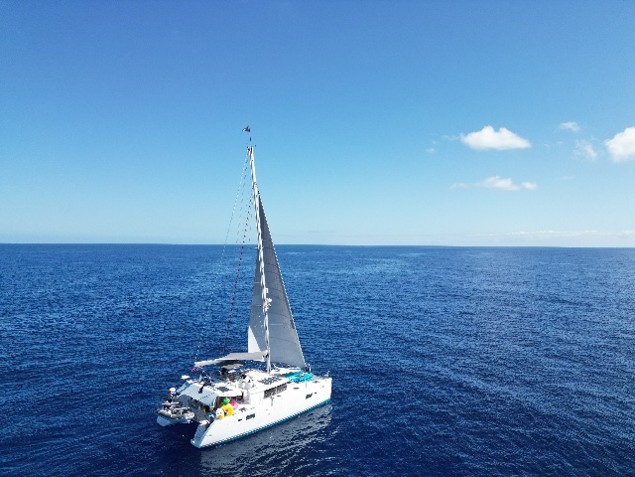
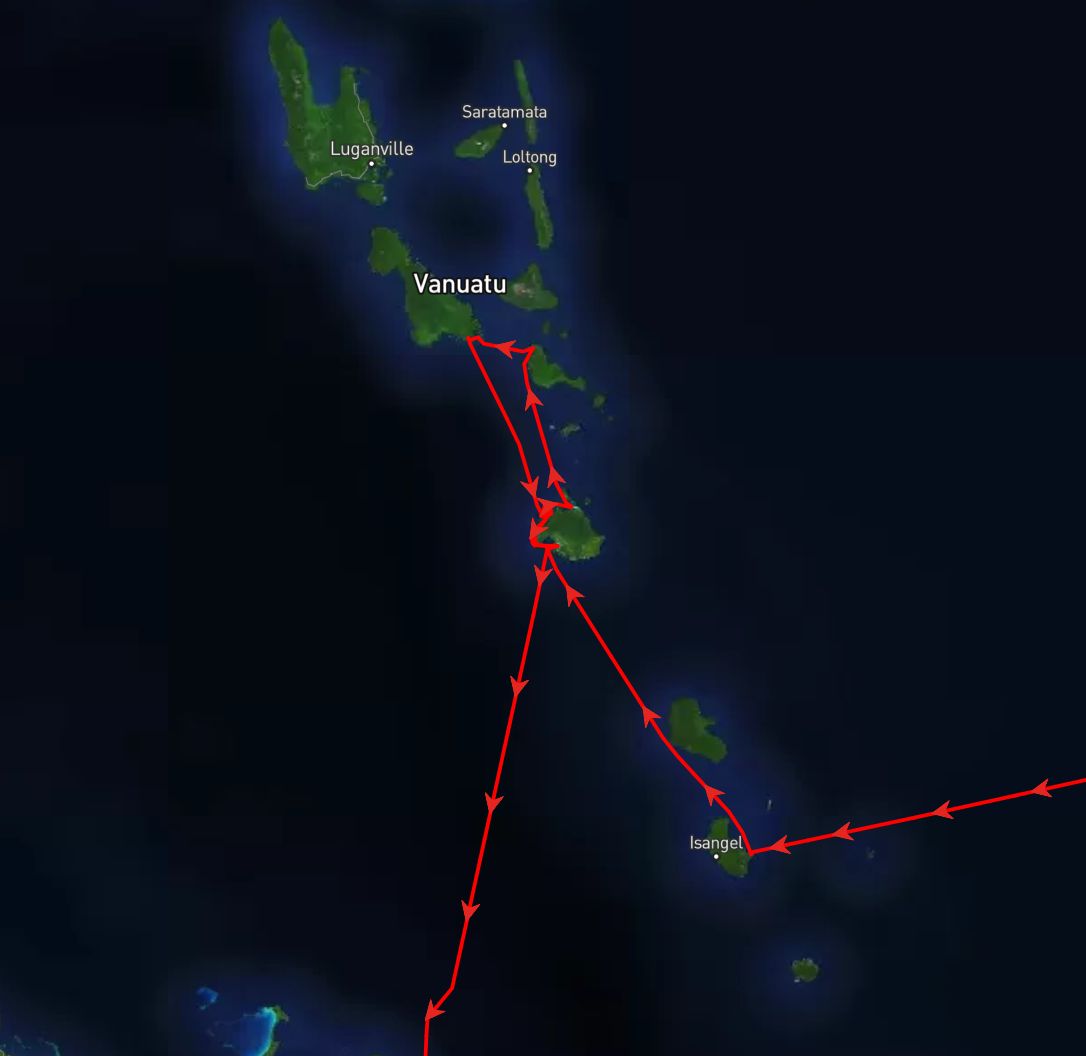
Having sailed from Turkey all the way through the Mediterranean, Atlantic, Caribbean, Central America and Pacific, it was time for SV Hawkeye to say goodbye to Fiji and make the 450-mile, three-day voyage west, to Vanuatu.
Vanuatu was originally named “New Hebrides” by Captain Cook, and is far from anywhere, in the depths of the Pacific Ocean. It’s somewhere that cruisers in the south Pacific may visit, as we did, after saying goodbye to beautiful Fiji.
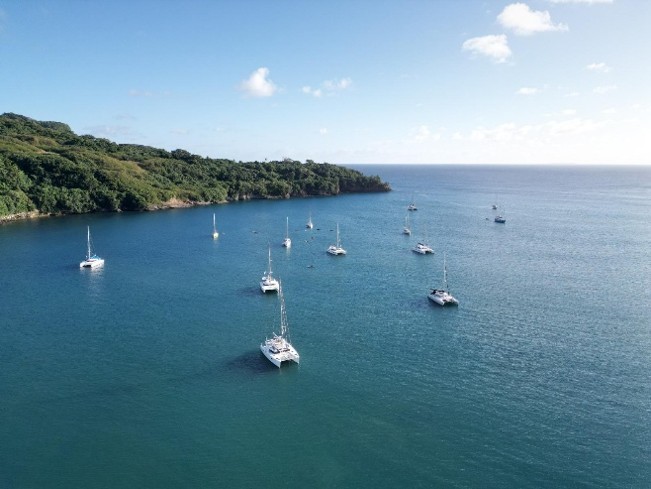
We arrived at Tanna Island in Vanuatu and anchored at Port Resolution, named by Captain Cook after his ship HMS Resolution when he anchored there on his second Pacific voyage. He was drawn there by the smoke and fire from the nearby active Mount Yasur volcano, which, like him, we wanted to explore.
-
- SV Hawkeye
-
- Our Route
-
- Port Resolution
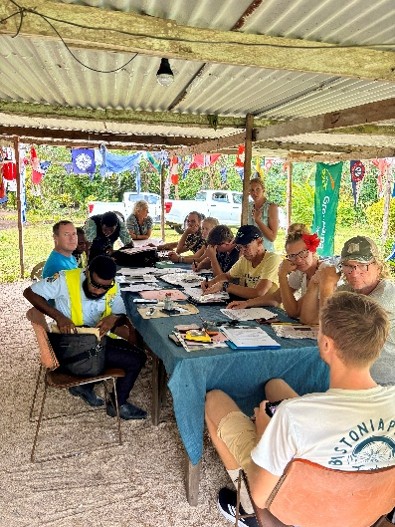
Clearing into Vanuatu at the local yacht club
Unlike Captain Cook, before we could land, there was the usual formal requirements of customs, immigration, health, port and environment to gain clearance to enter Vanuatu. We gathered a bunch of other newly arrived cruising yachts together and arranged for the officials to meet us at Port Resolution Yacht Club. This rather grand title belies that the original building was flattened in March 2015 by Category 5 (the highest) Cyclone Pam, so it is now just metal roof sheets, and not much else!
An appeal had gone out for yachts to help provide materials to rebuild the yacht club, so we duly helped by purchasing a large assortment of tools and equipment before leaving Fiji, loading them up on Hawkeye. We were dismayed to discover that whilst not quite an outright scam, once handed over, our gifts were hidden away, and likely sold in the local market; rebuilding the yacht club is not likely to happen because of local village disputes, politics and, quite frankly, poverty.
Learning about life in Port Resolution
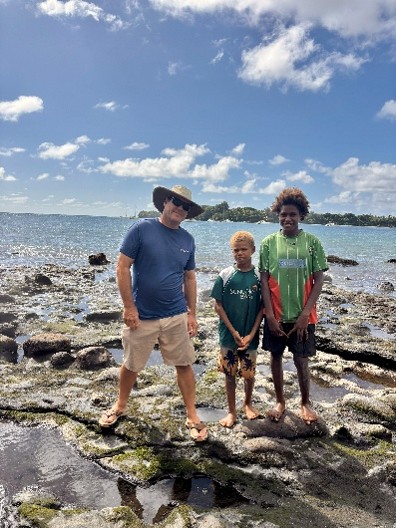
Exploring Port Resolution, two boys showed us the boiling spring, heated by the Mount Yasur volcano, which were too hot to touch; exactly the same spring, in the same place, as reported by Captain Cook nearly 250 years ago.
As we explored, a local fisherman wanted some help to fix the solar panels on his tiny house. We obliged, also giving them some solar panels and lights. They were incredibly grateful and wanted to show their thanks by giving us some fish but quickly realised they had none to spare. During our conversation, he confirmed to us the history of Vanuatu, which was, for a while, jointly administered by the UK and France. It was decided that due to the inter-village disputes and violence, it was not possible for either nation to provide good governance, so both colonial powers simply walked away in 1980.
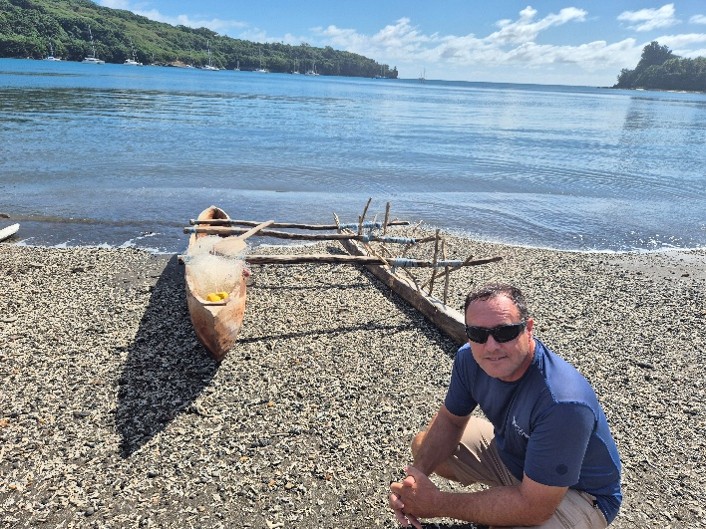
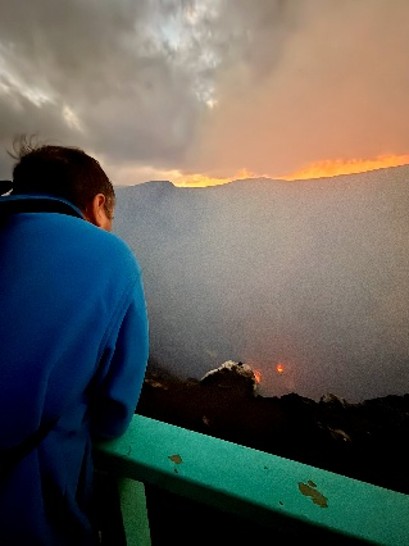
By many measures things have spiralled downhill since then, with Chinese companies building very expensive roads, indebting Vanuatu for centuries to come, whilst allowing gigantic Chinese fishing vessels into their waters who wasted no time in hoovering up their fish. I have never seen so many poor, local fishermen chasing such small fish, and I felt desperately sorry for them. They told us that they would rather have had the fish than the roads. Fees for visitors to the Mount Yasur volcano are essentially the sole source of income on the entire island, so we took a ride in a pick-up truck to watch the sun set as the sulphurous clouds of hot gas enveloped us.
Sailing through Vanuatu
Saying good-bye to Port Resolution, we sailed on to explore the main island of Efate. We picked up a mooring at Port Villa, the capital of Vanuatu, then headed out to explore in a hire car. One of the highlights was discovering an aerial walkway over a river, which was really fun.
We then sailed up to the island of Epi where we were impressed by the local school, and the way that the village was so tidy and orderly, with picture-postcard trees and beach. Less impressive was the new road, completed just the week before, provided by a Chinese construction company. Its quality was undeniable; it wouldn’t have looked out of place in a street in London or New York. But it is a road to nowhere. There were only a few 4×4 pickups in the village, and very few vehicles on the entire island, so this new road simply wasn’t necessary. Seeing a pattern developing we questioned what could possibly have supported the decision for the local people to become indebted for many generations to come…
After a short sail we anchored at the Maskelyne Islands, named by Captain Cook after Nevil Maskelyne, who was the English Astronomer Royal. He was an interesting man because although Maskelyne heroically compiled the first ever Nautical Almanac, which showed the locations of the sun, moon and planets and is still in use today, he also used his influence with the Royal Navy to deny John Harrison his due reward of £20,000 for inventing the world’s first chronometer, which accurately kept time at sea. Eventually, King George III personally intervened to ensure that Parliament, over the heads of the Royal Navy, awarded the cash to Harrison. The chronometer that Harrison invented was the first modern mechanical watch, based on his novel “grasshopper” escapement mechanism. It’s fascinating to think that until satnav, navigators traversed the oceans using only a sextant, chromometer and nautical almanac. This includes my late father, who navigated merchant navy ships across the Atlantic Ocean in World War II using these tools.
The Maskelyne Islands are one of the few places in the world where it is possible to swim with dugongs, which are related to both manatees and elephants. We donned our snorkelling gear and set out with a tour led by local villagers, supporting their economy directly through ecotourism.
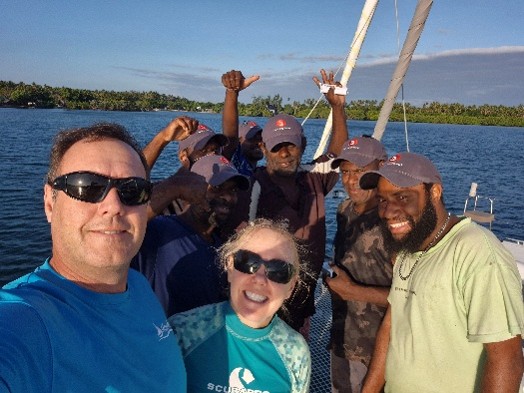
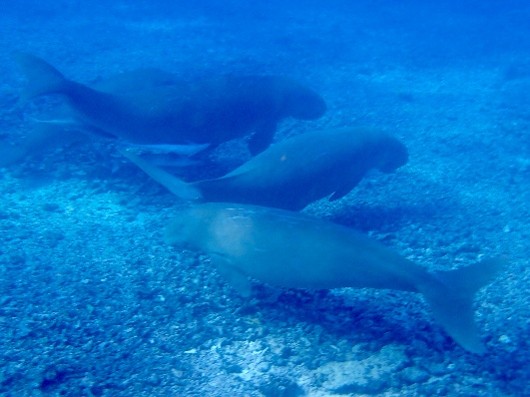
Swimming with these majestic creatures was quite magical, especially in such warm, crystal-clear water. We invited our hosts back on to Hawkeye afterwards, where we gave them gifts, including noforeignland hats. They told us that they had never been invited on a catamaran before, and were very surprised by how much room there is on Hawkeye.
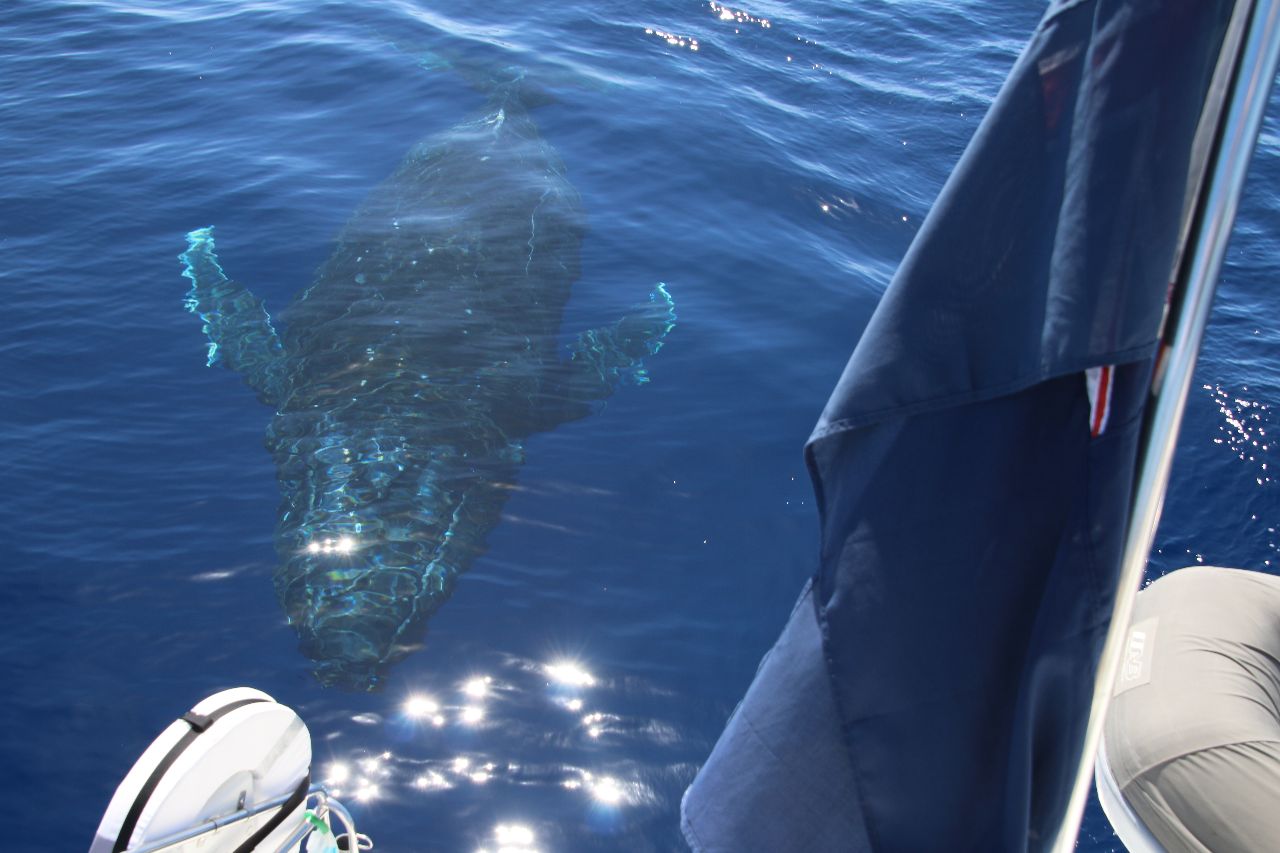
Leaving the Maskelyne’s we had an amazing experience; a humpback whale decided to take a great deal of interest in Hawkeye! We turned off all electronics (whales don’t like the pulses from the sonar systems that runs our depth sounders) and she swam around and under Hawkeye, which was breath-taking. She was with us so long that I even managed to get the drone up to get some footage, before she dived and wasn’t seen again.
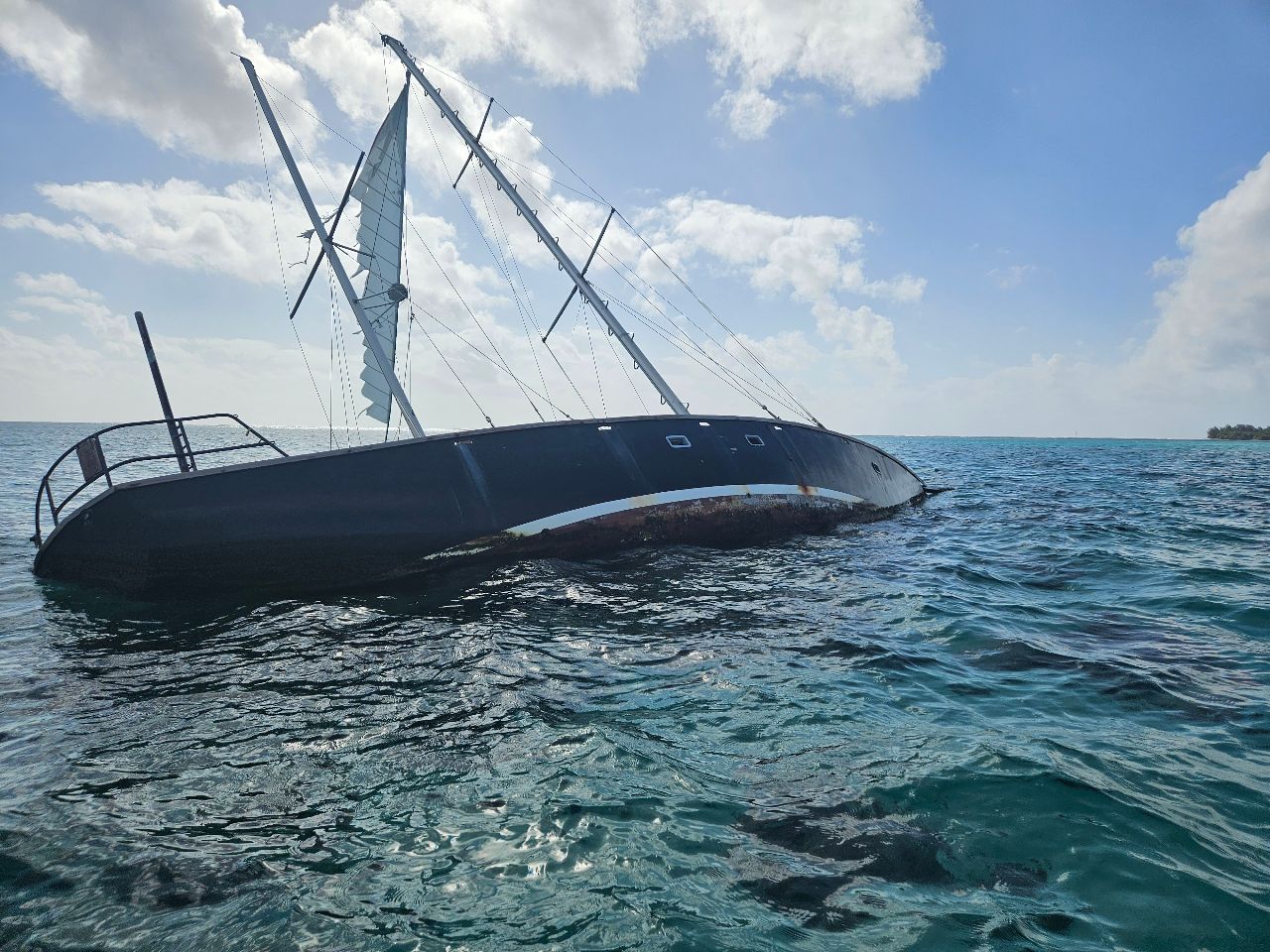
From there we continued sailing towards Moso Island, where the remnants of superyacht Blue Gold lie.
Diving Blue Gold
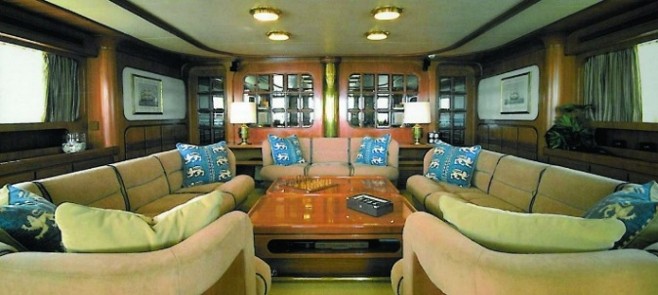
From a respectful distance, because the locals here are not always friendly, I explored the 49m wreck of the massive superyacht, Blue Gold. Built in 1982 as the flagship of the famous Italian shipyard Benetti, she provided accommodation for 12 guests and was one of the first yachts to have an office with video conferencing. As her name suggests, the ship featured blue and gold trim throughout, including the sofas and cushions.
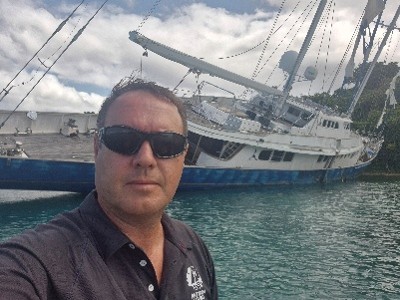
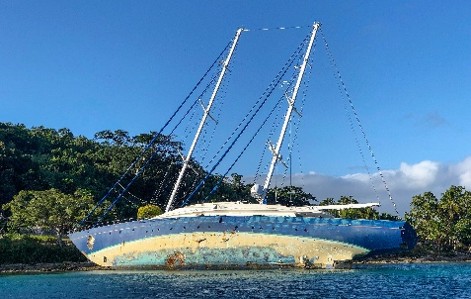
Cyclone Pam ripped through the islands of Vanuatu on Friday the 13th of March 2015 as a Category 5 storm, the highest strength storm. There were wind speeds of 116 knots gusting to 185 knots causing catastrophic devastation; this was the same storm that destroyed the Yacht Club.
While the anchors on Blue Gold dragged, she would probably have been safe, but at 10.30pm she was struck by the Vanuatuan Navy patrol boat Tukoro, breaking Blue Gold’s starboard anchor chain. An hour later a series of three giant swells carried the massive yacht onto the shore near the village of Sunae, where she remains today.
Breaking a cardinal rule
On the way back to Port Villa to clear out we stopped off at Port Havannah for dinner with a fellow cruiser, who anchored before we did in a small bay. We then made a big mistake in breaking one of our cardinal rules, which is not to anchor Hawkeye in more than 10m of water, if it can be avoided. Our charts showed 11m where we dropped anchor, but the bottom shelved away rapidly, all of which was confirmed by Hawkeye’s depth sounders, which include a side scan sonar.
All went well until we tried to pull the anchor up the next morning; it was stuck hard and fast, and to make things worse, the wind had swung right around and increased. Donning dive gear, we discovered that the anchor was actually in 23m of water, which was bad news.
In less than 10m of water there is no formal need for decompression, although you should still come up slowly. That is why we try never to anchor in more than 10m of water. At 23m, decompression stops are needed when coming to the surface; without them you will suffer from the potentially life threatening “bends”. This makes retrieving a stuck anchor more complicated.
-
- Fouled anchors
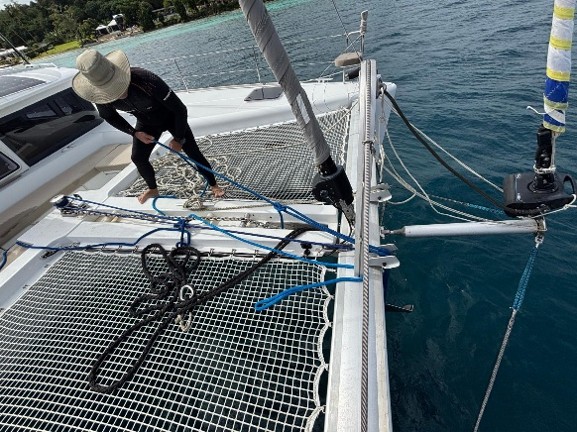
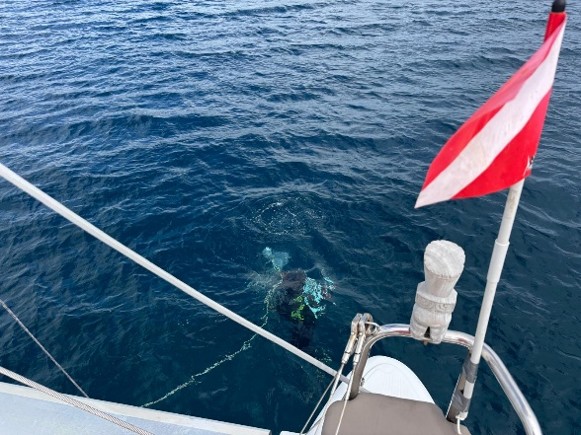
Hawkeye’s stainless steel Ultra anchor weighs 45 kg, so I can lift it, but it was stuck fast under rocks made of dead coral. After several attempts, including taking a very long rope down to tie around a different rock to take the pressure off the anchor chain, we managed to haul the anchor out using a rope attached to the crown of the anchor. Phew!
With that taken care of we were able to move forward and clear out of Port Villa, before departing for the next destination in our circumnavigation; the French island of New Caledonia.

By Richard Freeborn
Richard is a marine engineer, who, in his youth, cruised the Mediterranean and Indian Oceans as a Superyacht captain. Richard lives aboard his Lagoon 450F catamaran with his wife Alexandra. Together they are circumnavigating, with their cruising grounds so far being almost everywhere in the Mediterranean and Caribbean, Pacific Islands from Galapagos to Fiji and New Zealand with Australia and South East Asia coming next.




Great recap of your Vanuatu experiences! The Dugongs and volcano were must sees while here. We are here in Pentecost now, about to see the Landiving tradition. Catch up with you soon I hope!
Yes, catch up maybe in Indonesia…….see you soon…. have fun! Cheers Richard
Thanks Richard and Alexandra. We are heading from Fiji to Vanuatu in late July 2026. This was very helpful.
Hey, Bill, great to hear from you! Hope things are good on board WRH. Fiji is hard to beat……but you already know that! Sending you all the best from The Happy Boat! Cheers Richard
What a fascinating account of sailing through Vanuatu! Your descriptions of the islands, local culture, and life on the water really captured the spirit of adventure. I especially enjoyed how you shared both the highlights and the practical realities of the journey, making it feel authentic and inspiring. Posts like this are a great reminder that some of the most memorable travel experiences happen off the beaten path. Thanks for sharing your voyage!
Thanks Alex, glad you enjoyed the blog! Cheers Richard
Super cool experience . Loved reading it as we motor from Washington State through the South Pacific towards Vanuatu.