
Sailors understand the itch. The one that starts quietly late at night, scrolling through weather charts or boat listings, and grows louder every time routine tightens its grip.
For us, that itch became a decision: sell the house, step back from a business we’d built, and move our small family aboard our catamaran. The plan was simple enough. Twelve months away from land life. A sabbatical. A reset.
That was over two years ago.
Leaving land life behind
Walking away from a business is not something most people do lightly. It represented years of effort, identity, security, and future plans neatly laid out. It was, and still is, one of our hardest decisions ever made. We didn’t want to let people, our team down. But boats have a way of challenging neat plans. Living aboard forced us to confront how much of our lives had been dictated by schedules, expectations, over responsibility and the constant pressure to produce.
Casting off wasn’t just about sailing away from a dock, it was about choosing uncertainty over comfort. And that choice came with real weight. There were spreadsheets, hard conversations, and moments of doubt where we wondered if we were being reckless rather than brave.
But sailors know this truth: you never leave shore without a knot in your stomach. You go anyway.
Life afloat slows everything down
One of the first surprises was how dramatically life slowed down. Not in a lazy, drifting way, but in a deliberate one. Everything aboard takes time. Water must be made or conserved. Power managed. Weather respected. Destinations become suggestions rather than guarantees.
Days are shaped by light, wind, and tide, rather than calendars. Meals stretch longer. Conversations deepen. The children don’t disappear into separate rooms or screens, they are simply there, part of everything we do.
Some days are repetitive and demanding. Others feel like small miracles. But none of them rush past unnoticed.
-
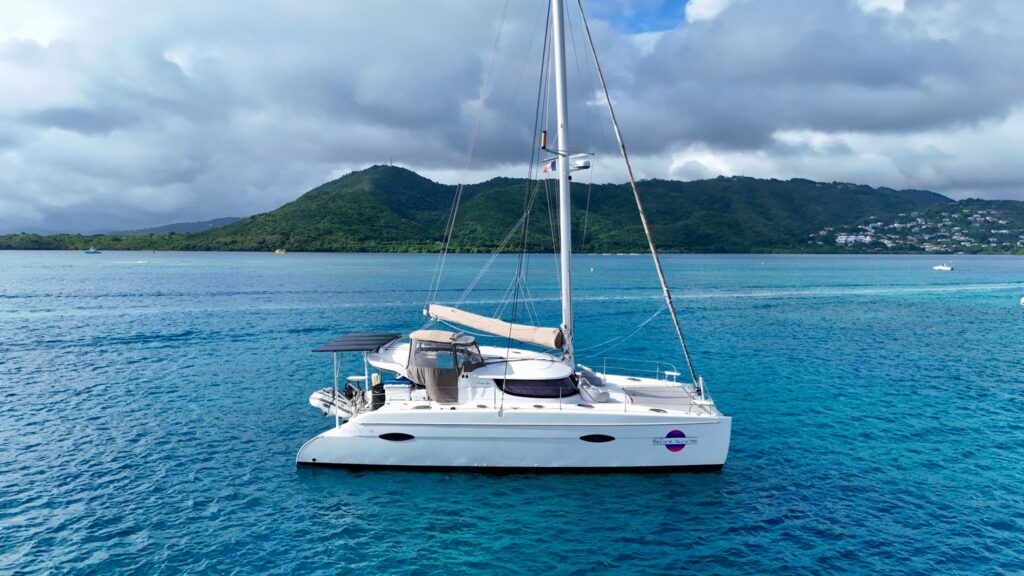
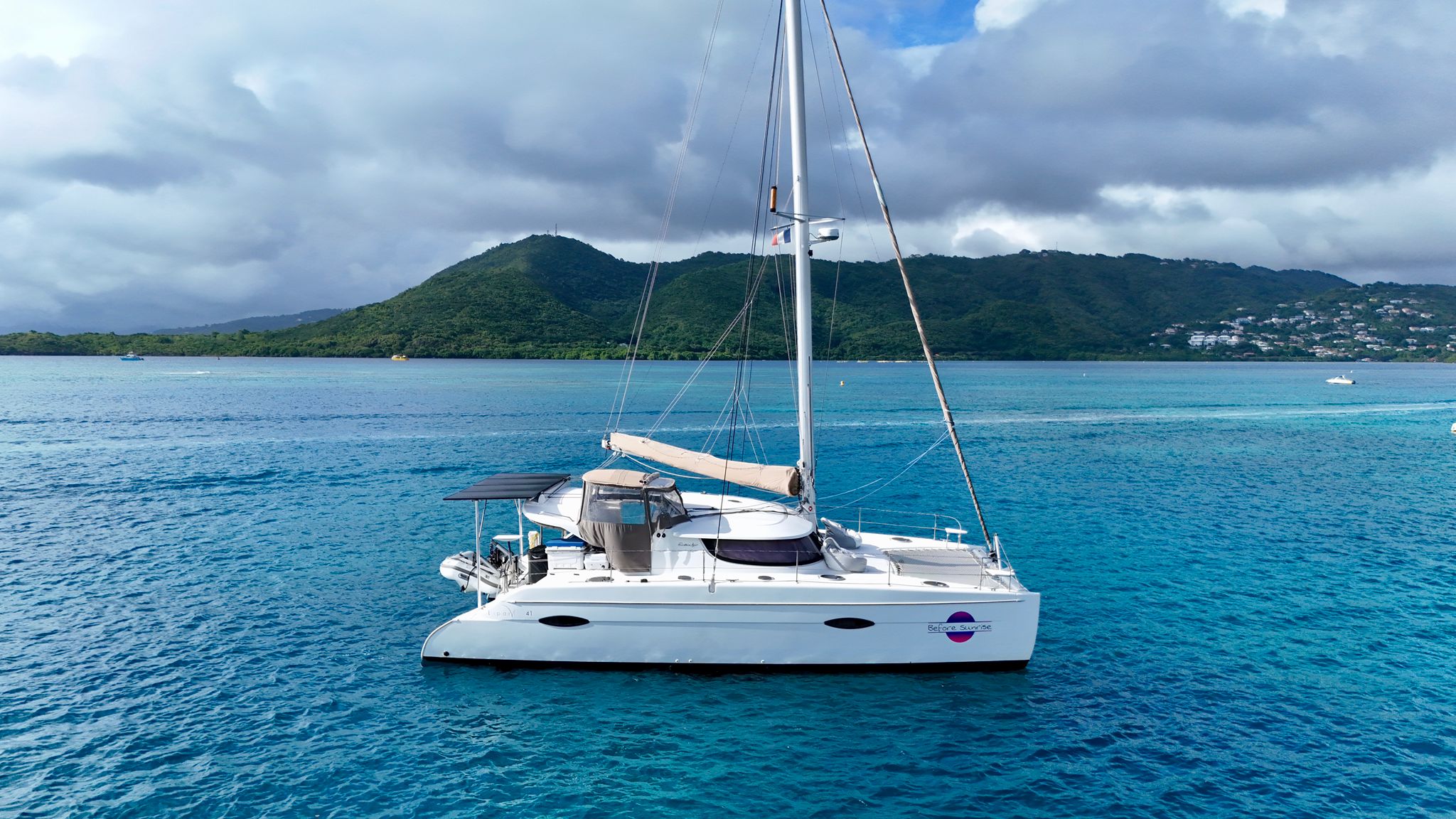
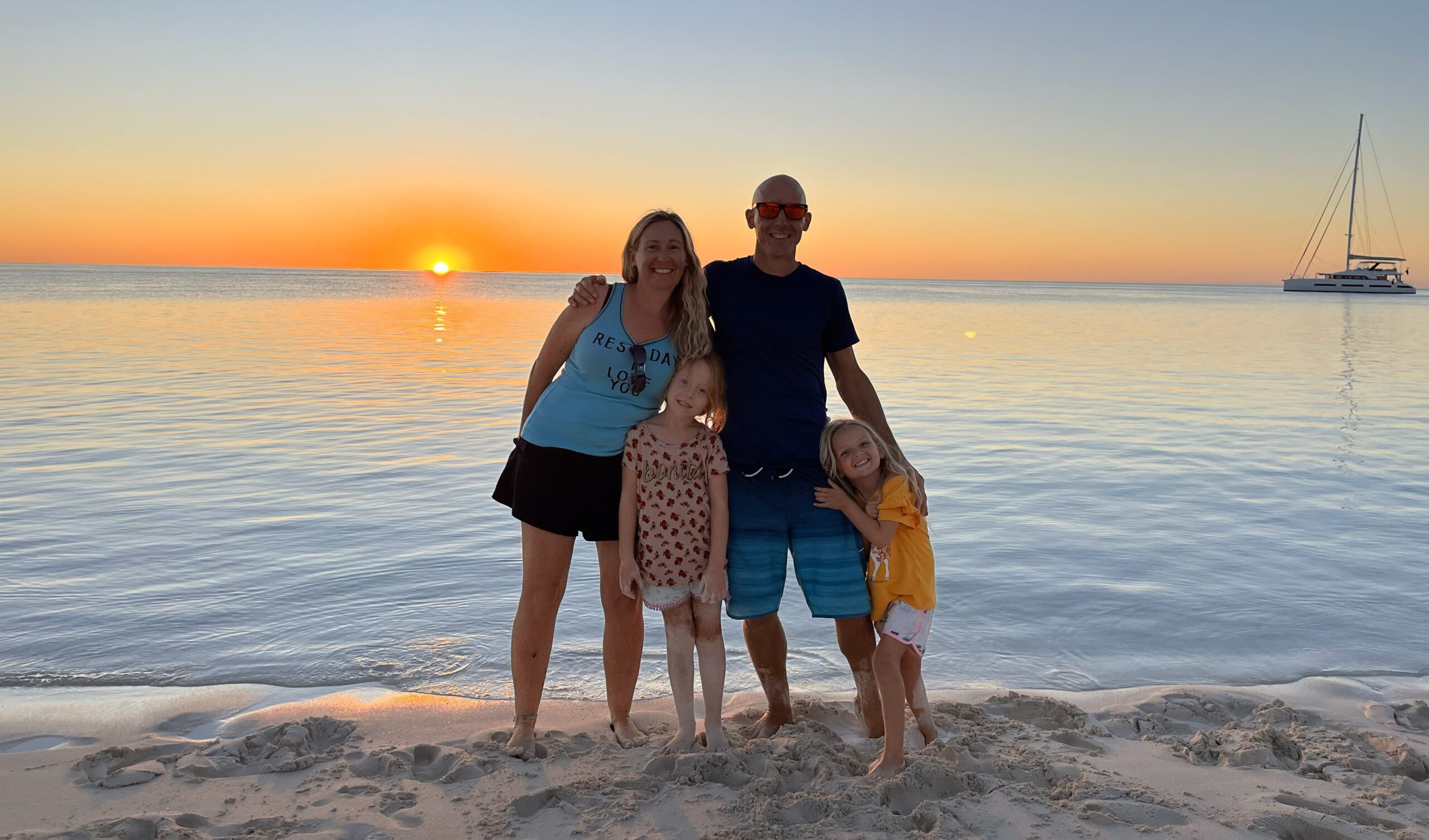
- SV Before Sunrise in Martinique
Raising children at sea
Living aboard with children strips parenting back to its essentials. There’s nowhere to escape to, no quick hand-off to extracurricular’s or distractions. The boat becomes a classroom, playground, and refuge all at once.
Our kids have learned resilience in a way that no textbook could teach. They’ve watched squalls build on the horizon, learned patience at anchor, and discovered how capable they are when they’re trusted with real responsibility. They’ve also learned that boredom is not an emergency; it’s an invitation to invent, explore, and adapt.
We haven’t given them a “normal” childhood. We’ve given them a rich one.
How we chose a different kind of rich
When people ask us how we made it rich, they often expect a story about money, milestones, or material success. But our version of richness looks very different. For us, wealth is measured in presence, connection, and the way our children feel in our arms and in themselves.
Rainbow time
One of the most powerful shifts we made as a family was prioritizing intentional, undivided time with our children. Research shows that quality time strengthens emotional regulation, improves behavior, and deepens secure attachment, but we didn’t need the research to feel the difference.
In our home, we call it “Rainbow Time.” Each day, one parent spends 20 uninterrupted minutes with one child. No phones. No distractions. No directing. We simply follow the child’s lead. They choose the activity, the pace, the story. The only rule is presence.
The impact has been profound. After this time, our children feel filled, less likely to seek constant attention, and more content to play independently or alongside a sibling. It’s a small daily ritual with an outsized return: more calm, more connection, more ease for everyone.
Living aboard a sailboat has further amplified this way of being. Choosing this lifestyle means choosing our children, fully and consciously, 24/7. It’s an intensity that comes with challenges, but the benefits for their emotional development, resilience, and sense of belonging are immeasurable. They grow up watching us live intentionally, solve problems together, and truly be with one another.
Social development
Life on the water is also beautifully social. The cruising community is transient by nature, and because of that, our children have learned to make fast, meaningful friendships. There is almost always another child nearby — another “kid boat,” another adventure waiting.
At times, it’s even socially overwhelming, in the best possible way. Their confidence, adaptability, and social intelligence continue to surprise us.
Shared responsibility
Responsibility is another cornerstone of our family life. Our children contribute: not as a chore, but as a way of belonging. Laundry, dishes, scrubbing the deck, tidying their rooms, and these shared responsibilities teach accountability, capability, and pride. They learn that they matter, that their effort counts, and that family life is something we build together.
Learning through life and school
We homeschool in the mornings, when attention and concentration come most naturally. Learning is woven with movement breaks, sensory regulation, and play. We keep it flexible and fun, knowing that engagement thrives when children feel safe, regulated, and curious.
Living as a family
And finally, the question people ask quietly ‘how do you stay sane living in such close quarters?’
For me, it’s daily meditation and a short yoga or Pilates practice after homeschooling. Fifteen to twenty minutes of grounding creates space to breathe, reset, and show up with patience, calm and clarity.
This is how we chose to be rich.
Rich in time.
Rich in connection.
Rich in presence.
And every day, we feel the return on that investment.
-
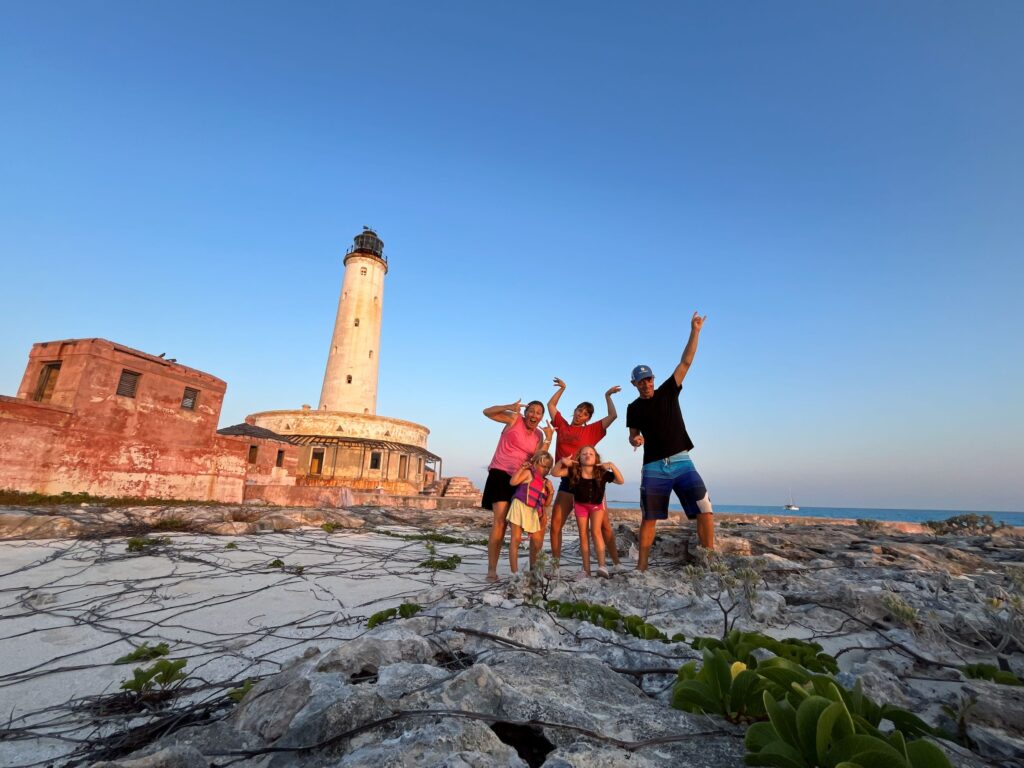
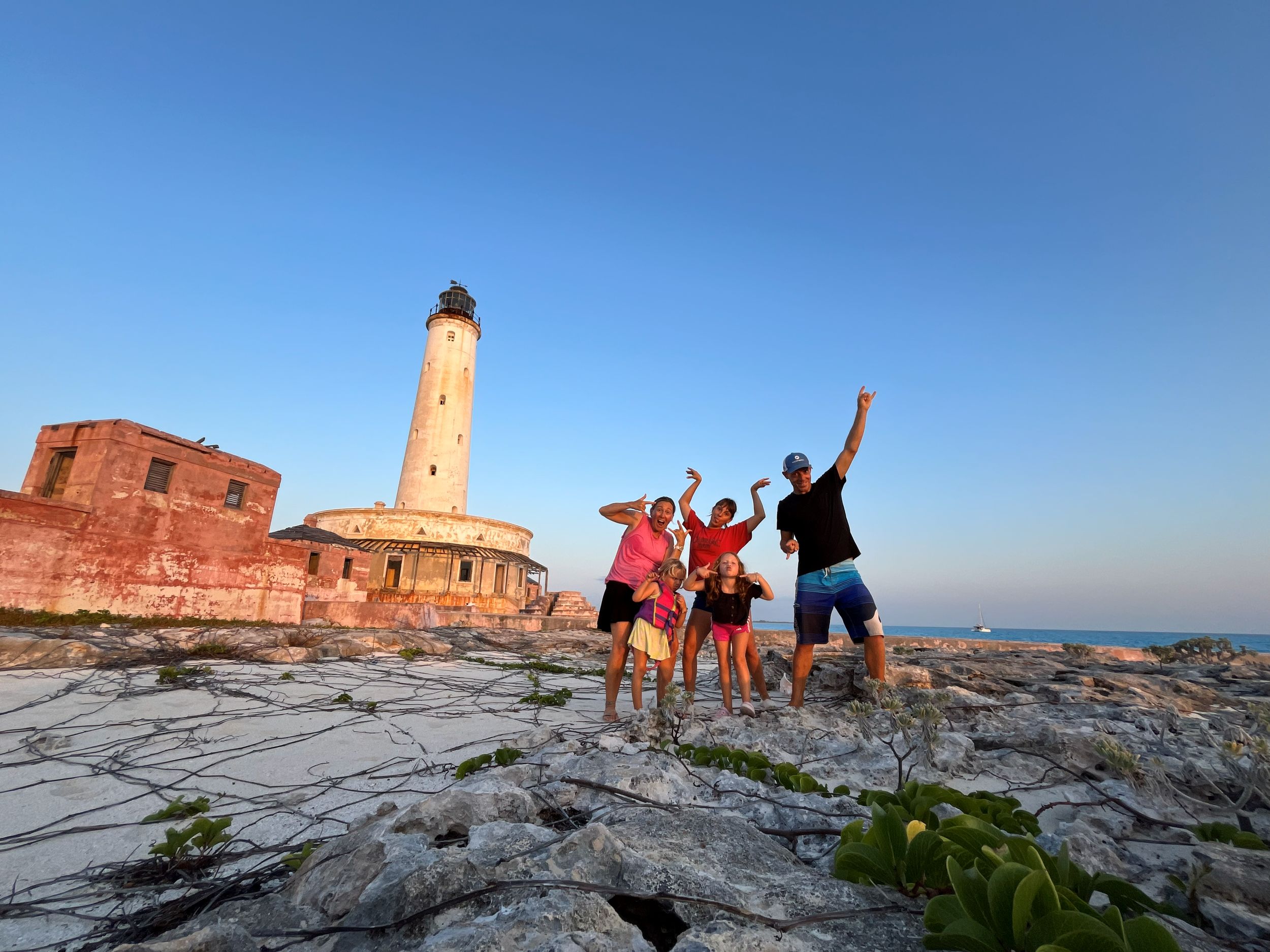
- Crooked Island, Bahamas – Bird Rock Lighthouse: we had an island to ourselves!
The quiet cost: Missing people
For all its beauty, this life carries a deep ache. We miss our family. We miss friends. We miss birthdays we can’t attend, casual coffees, and the comfort of being known without explanation.
Distance has a way of sharpening love but also amplifying loneliness. There are moments, especially during holidays or tough passages when the isolation cuts hard. Starlink and video calls help, but they don’t replace a hug from a parent, a sibling or the easy laughter of old friends.
This is the part people don’t always talk about. The sunsets are real but so is the grief of absence. The guilt of being away is also hard to carry at times.
Growth through challenge
Cruising life has a way of exposing cracks quickly. Fatigue, fear, weather windows, mechanical failures and it all arrives without warning. You either grow together or fracture apart.
We’ve grown. Not because it’s been easy, but because it hasn’t. We’ve learned to communicate under pressure, to let go of control, and to trust ourselves in unfamiliar situations. The sea has been a demanding teacher, but a fair one.
We left land thinking we were taking time off. What we actually did was step into a different version of life; one that values presence over productivity, experience over accumulation, and connection over convenience.
-
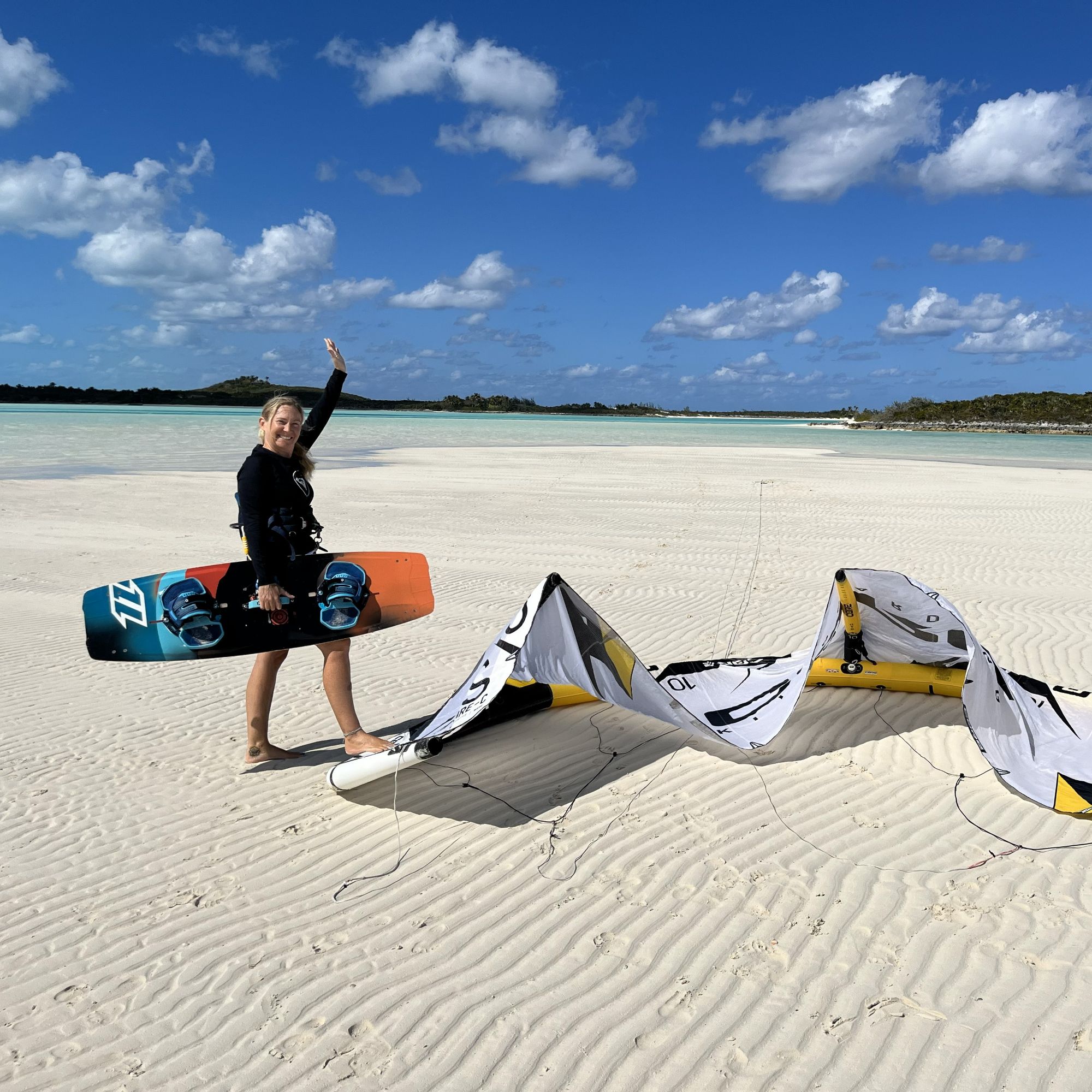
- Kite Surfing in the Bahamas
-
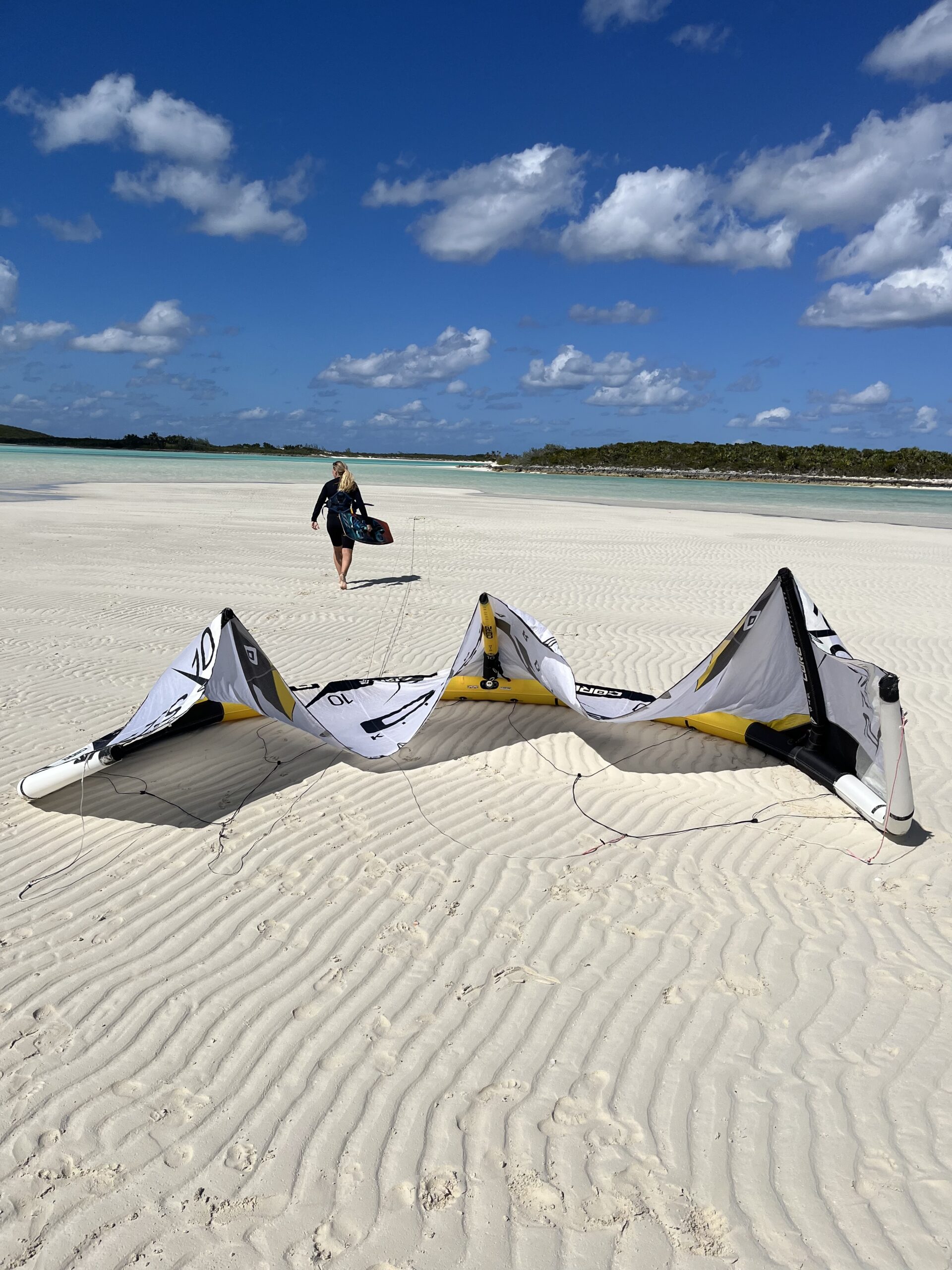
- Kite Surfing in the Bahamas
From 12 months to 2 years and counting
We still remember saying, “Just one year.” It felt responsible. Sensible. Almost cautious.
But life aboard has a way of quietly asking, Why go back yet? The rhythms of cruising crept into our bones. The children settled. We settled. The idea of returning to land life………of rushing again……..felt harder than staying.
We don’t know what comes next. Sailors rarely do. But we know this: choosing this life gives us time. Time together. Time to grow. Time to live deliberately.
And sometimes, that’s worth more than anything you leave behind.
Did Sarah’s words resonate with you? No matter what stage of life or your sailing journey you’re in, spark a meaningful conversation by sharing what you’ve gained from live aboard life down in the comments.

By Sarah Poissant
Sarah Poissant is a Paediatric Occupational Therapist with over 20 years experience, an entrepreneur, and host of the Unmasking Your Power podcast. With over a decade leading a multidisciplinary health-care business, she brings both heart and expertise to everything she does. When she’s not empowering others, she’s sailing with her family aboard SV Before Sunrise, collecting stories, sunsets, and the life lessons that continue to shape her work!





Thank you so much for this article, great read!
Thank you for sharing your experience, I have learned a lot!
I love your article! I completely agree that it’s a whole other life, not just a vacation or a break. We traveled for two years as a family and were forced to return to land due to health problems. Every day, we miss our life at sea. It’s so incredibly enriching, indeed.
You describe eloquently the gains, risks and losses of a cruising life. Time indeed takes another dimension and slows down. I am amazed at how Karine and I needed to make plans before leaving. And have them packed tignt with som much to do and such long distances to sail in no time. What a pleasure when we let that go, sometimes witha feeling of guilt.
We travel as a couple, with children ashore on the other side of the planet. Being European, we chose the Pacific and Asia as sailing ground (grass is always greener…). So one additional richness we are gaining is that of beautiful encounters and friendships with islanders and locals who have so much to teach us.
Being nature lovers and keen observers, blessed with scuba gear onboard, we also built receive the richness of Nature’s deep, profound, moving beauty.