

Nathalie & Chris are living on a S&S Swan 47 and started their circumnavigation with an unusual crossing of the North Atlantic Ocean.
During our 21/22 Atlantic circuit, we sailed back to Europe via Nova Scotia & Newfoundland and realized that this is a world class cruising destination with rugged coastlines, deep fjords, and an abundance of marine life that we need to explore more.
Going back to Newfoundland from North Europe is quite a challenge if one wants to arrive in early June, which is the start of the cruising season there. We looked at taking The Viking route, but found it too risky due to the offshore pack ice found off East Greenland until late July. Hence, we decided to backtrack our 2022 Atlantic Crossing and sail from Ireland via the Azores.
Setting off on our 2025 Atlantic adventure
We started our 2025 season in late March and spent April doing some shakedown cruising, exploring the SW coast of Ireland. The wild Atlantic coast from Dingle to Kinsale is an awesome cruising area with lots of secluded anchorages, deep bays with small fishing communities, and lively pubs full of wonderful Irish people.
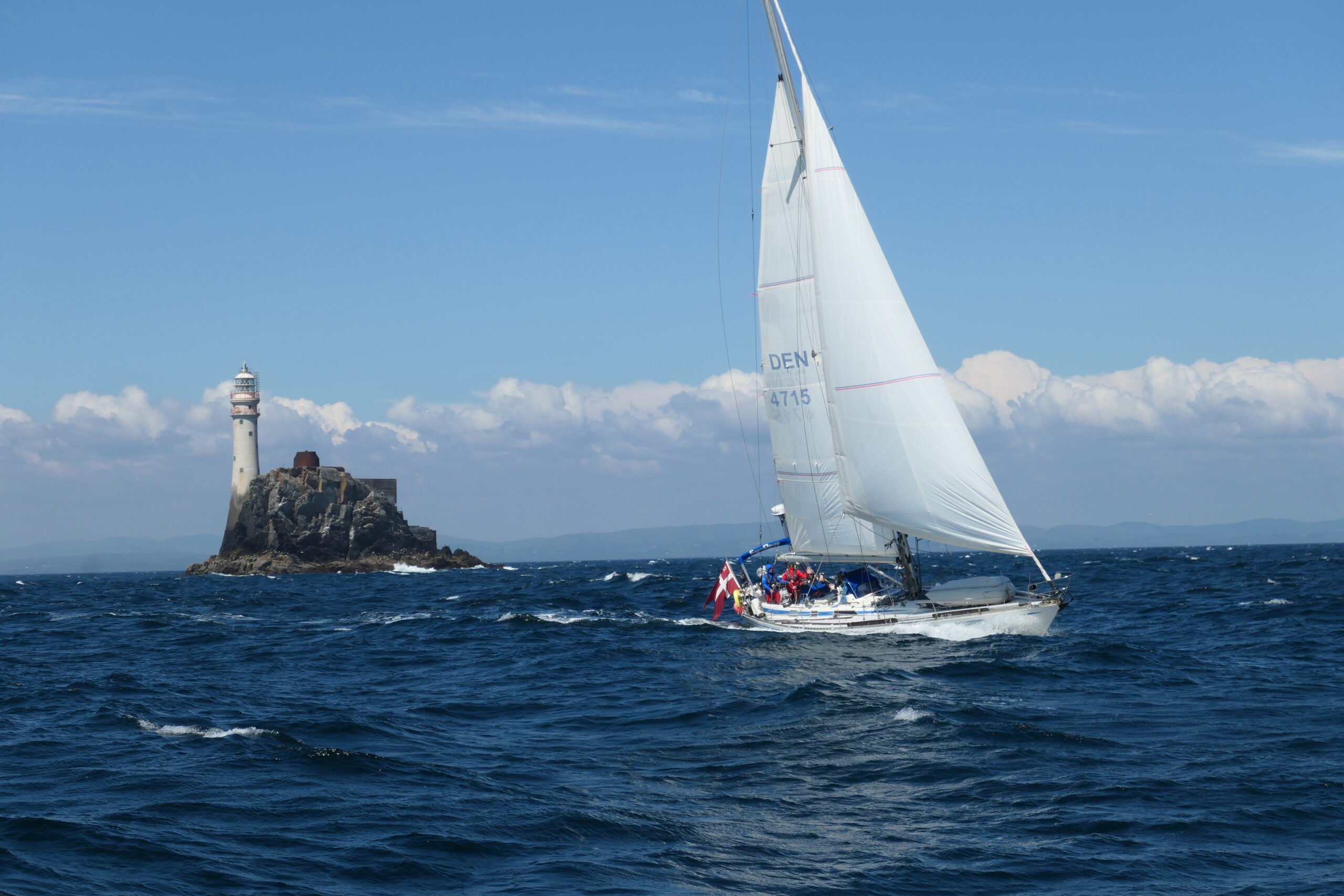
Come May, we set sail from the historic city of Kinsale and sailed past the iconic Fastnet Rock Lighthouse in the Atlantic Ocean for a 1000 NM passage to the Azores. We had a very gentle passage due to several strong high-pressure systems until we made landfall on the Azorean Island of Graciosa 10 days later.
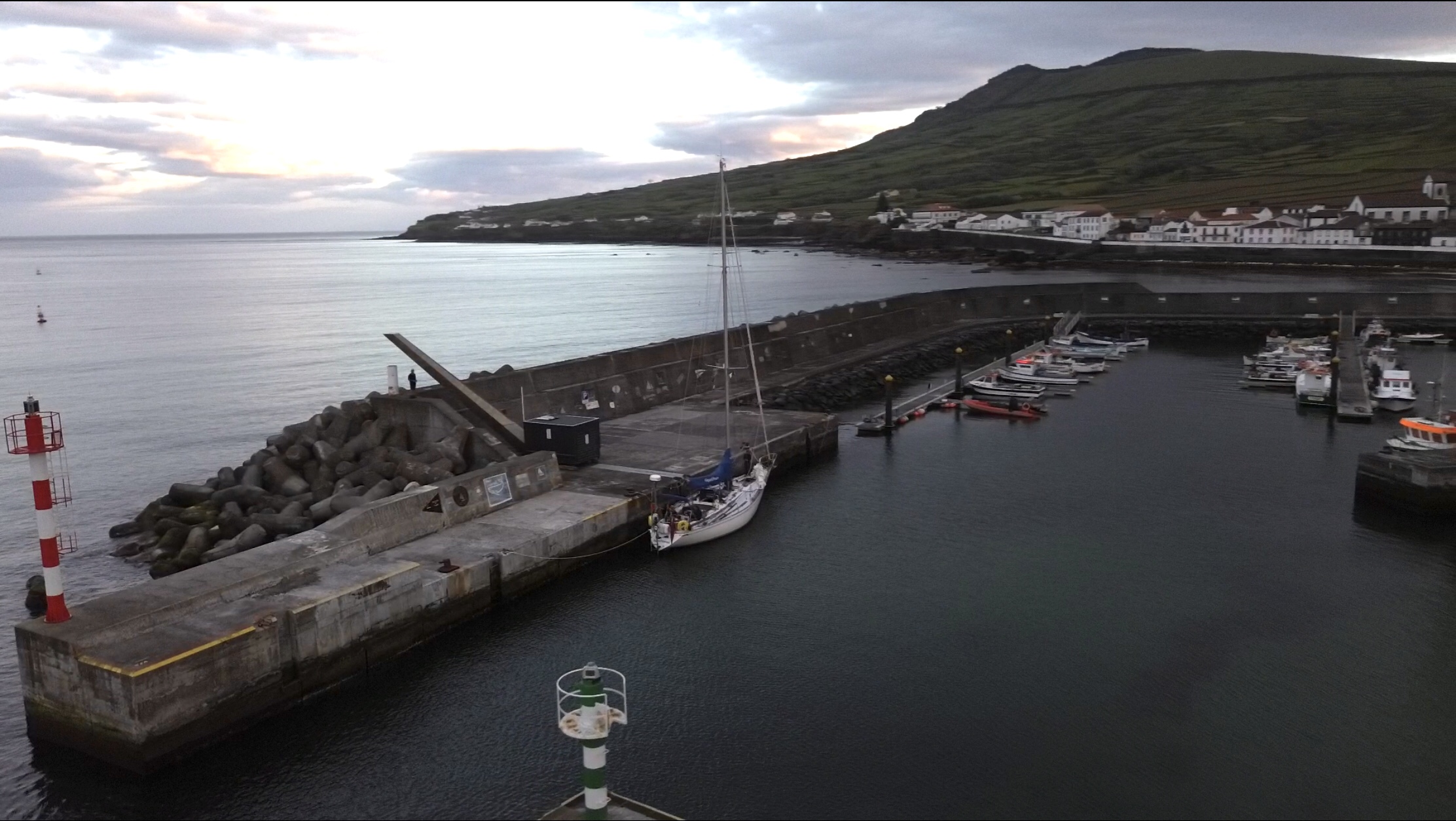
Landfall in Graciosa
The island of Graciosa is one of the smaller of the nine Azorean islands, and the port is just a small fishing harbor with space for 1-2 sailing yachts. We were the only yacht there and our stop was like a trip back in time. The town had only a few cafés, each with 2-3 friendly locals and wonderful local food. We spent a few days relaxing here and did a hike into the Caldaria volcano crater – Highly recommended!
There was no immigration at the port, but the local, and very friendly police (GNR), came from the next town to see us and tell us to do immigration clearance in Horta.
Visiting Horta
After two days off the beaten track, we slipped the lines and sailed past the Sao Jorge Island and on to Horta. Horta was bustling with activity as it was high season for the West to East Atlantic crossing from Bermuda; boats were rafted three boats deep and the anchorage was chock-a-block full of yachts with their fenders out. We managed to find a tight space in front of the marina office, where we had good holding despite a short scope and frequently changing gusting winds.
Check-in and immigration was super easy, and we put our yacht down on the 3-page waiting list for an alongside berth. Our timing was good as the 30+ yachts from the ARC Europe had not arrived yet, so after a few days we got a berth on the main jetty.
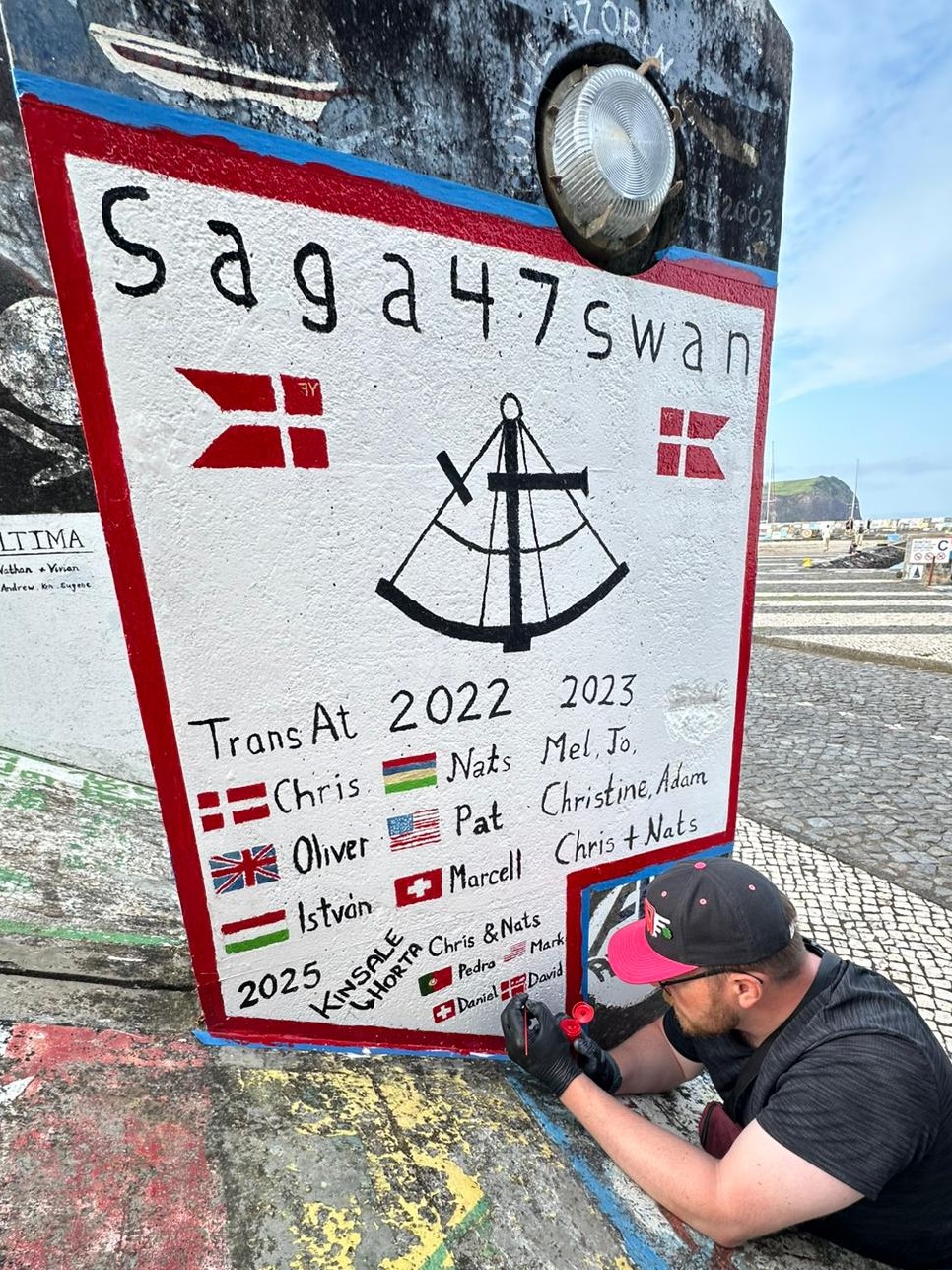
We spent about a week in Horta doing crew change, provisioning and the usual “yachtie” stuff; adding crew names to our Wall painting, drinking gin at Peter’s Café and enjoying the local cuisine. The Azores is a cruising destination in its own right and one could easily spend several seasons exploring this wonderful group of volcanic islands.
Sailing from the Azores to Newfoundland
The passage from Azores to Newfoundland is a master class in passage planning and weather routing. The passage is affected by the Atlantic High / Azores High, the Gulf stream, the Labrador Current, risk of icebergs, Grand Banks fishing fleet, hurricanes from the Caribbean and a string of lows coming from North America.
The best time for this passage is June, and the pilot charts show prevailing winds to be SW – a vessel that can sail well to windward is a good idea for this passage.
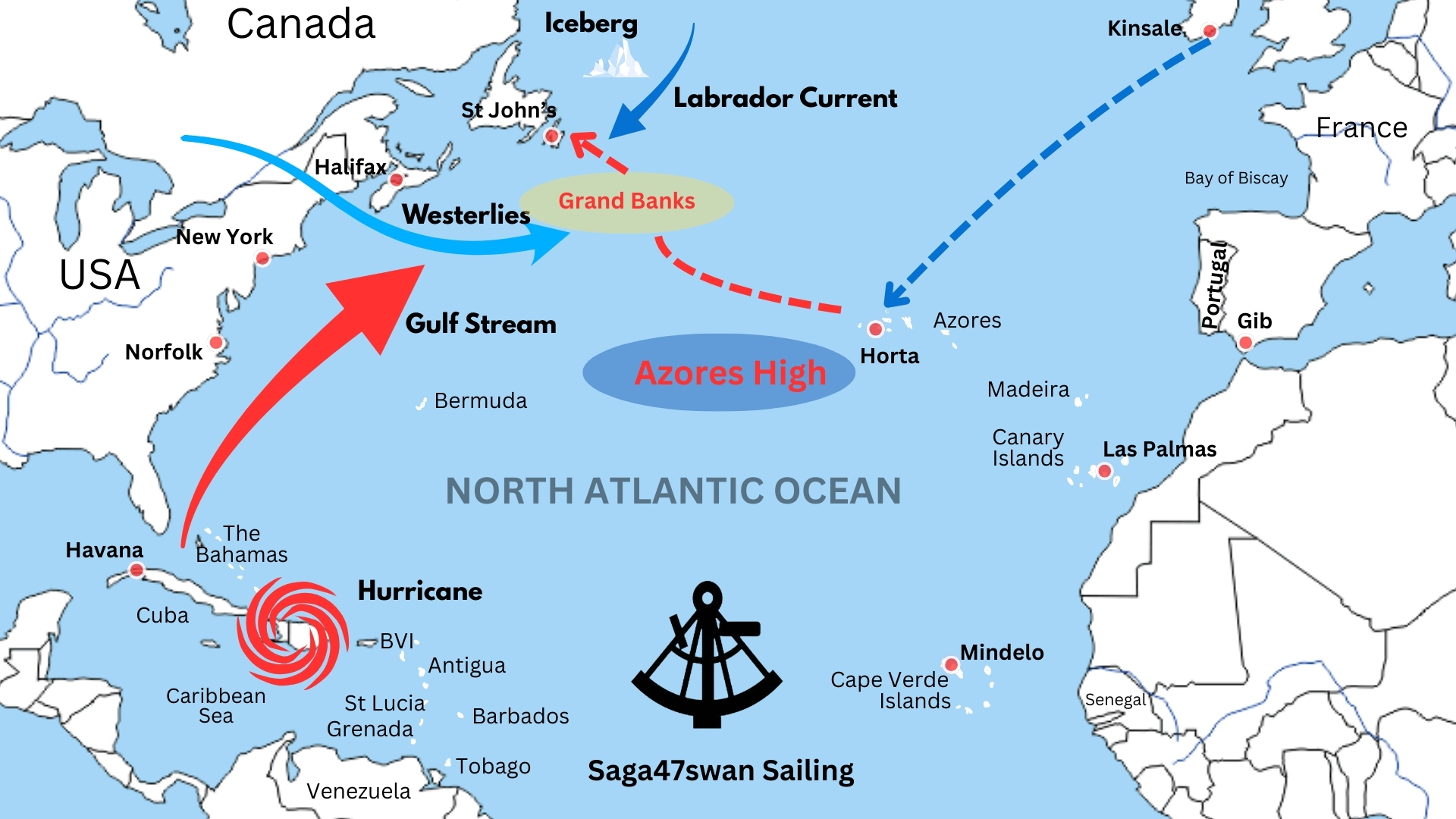
We decided to set off on a late afternoon as the Azores High had moved and the forecast was a few days of northerly winds. So, we slipped the lines and sailed west into the sunset followed by a pod of dolphins.
The Azores High was kind to us and the fair northerly wind lasted a few days, getting us some of the much-needed west into our passage. On the second night we sailed past the island of Flores. In 2022 coming from Newfoundland, we made landfall here. The Harbour had been badly damaged in the Lorenzo Storm and was officially closed in 2022, but we had managed to stop there for a few days. Flores, as the name implies, has an amazing flora and is a highly recommended stopover.
On day three of our passage, the high pressure caught up with us and the wind died as we drifted waiting for the wind to return, it was time for swimming in the warm Atlantic waters, fishing and watching the dolphins swim by in the crystal-clear waters.
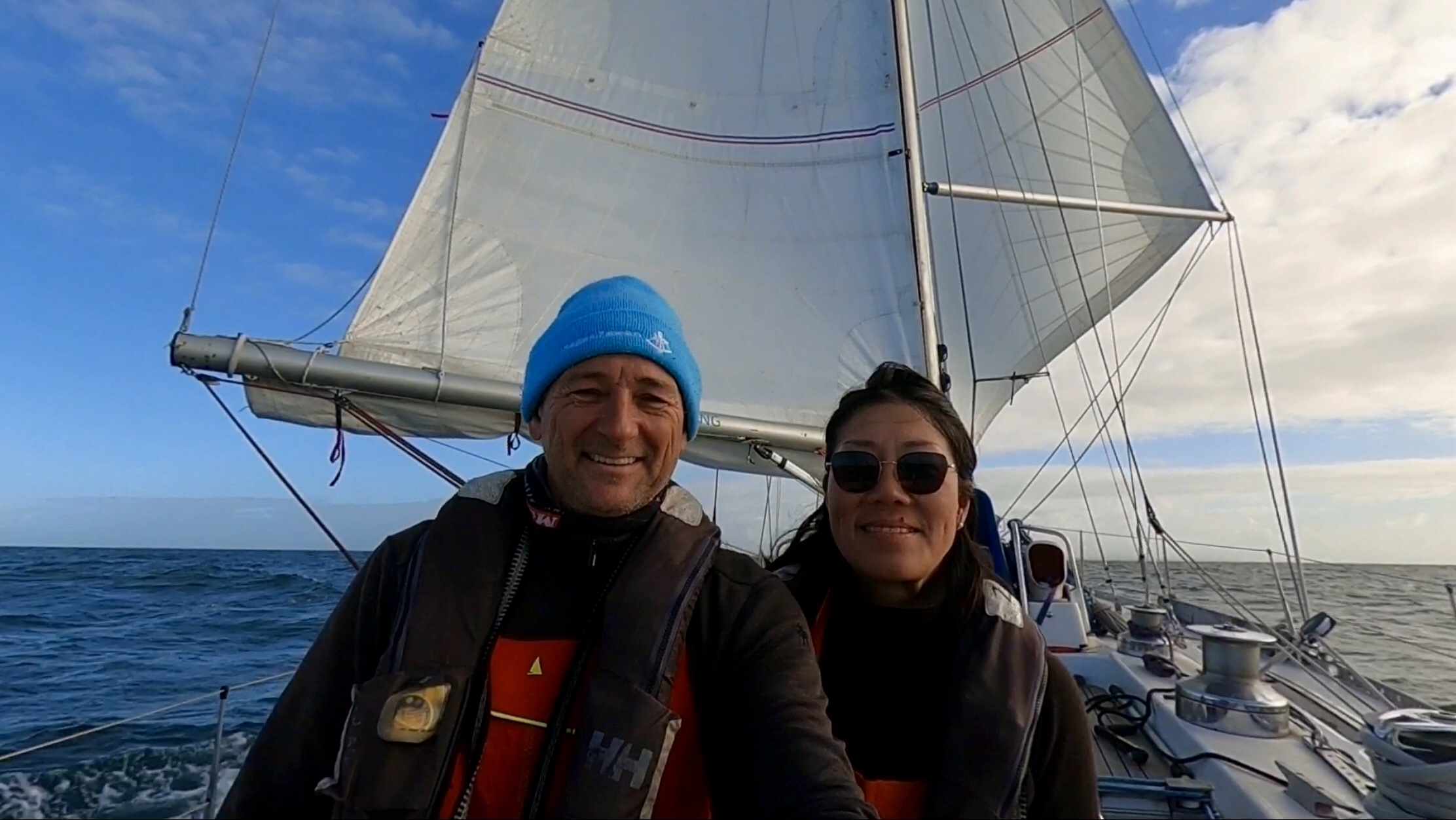
The wind returned from the west, and we headed north on a close reach. The crew quickly got into the watch routine of hand steering, relaxing and sleeping. A pod of dolphins seemed to have adopted us and would return every sunset to swim in front of the bow until the stars came out – truly a magical experience to see them swim illuminated by the phosphorescent plankton, shooting past us like torpedoes.
The Azores High was still around, and the forecast was showing strong winds from SE, so we put in an extra reef and looked forward to a bit of downwind sailing. 12 hours of Force 7 from the SE sent us flying towards Newfoundland in massive Atlantic waves.
By the next day, we were back in a low system on a close reach with deep reefed sails. The water temperature was dropping rapidly, bringing our first rain and gusty winds. As we approached the Newfoundland banks the change in weather was drastic – the water temperature dropped to 6 deg C and the wind chill was brutal. The cold wind and thick fog required two crew on watch, each doing ½ hour on the helm, followed by ½ hour downstairs monitoring the radar for vessels and icebergs.
After another 2 days of sailing, the skies cleared and in the late afternoon, we had a truly memorable landfall into St John’s greeted by pod after pod of humpback whales – the dot over the “i” on a fantastic 1200 nm / 9 days passage uphill across the north Atlantic Ocean.

Lessons learnt sailing the Azores to Newfoundland
During this journey we learnt a few things and found some helpful resources, which may be of use to your crew if you decide to take this route.
Preparation & formalities
We used the cruiser website noonsite.com for up-to-date information on procedures, with another great source of information being the Noforeignland app. We also used Facebook and WhatsApp groups.
Route research and cruising guides
We based our route strategy on a combination of Jimmy Cornell’s World Cruising Routes and pilot charts. Many of the standard cruising routes are popular for a reason, usually the following winds, but there are many other routes and areas which can be sailed. Getting off the beaten track away from the crowds has its own rewards. On our 2021/22 Atlantic circuit we found that going back to Europe via Newfoundland gave us two more months of cruising in North America, and a much shorter Atlantic crossing.
We also had the following cruising guides on board for the ocean passage; Atlantic Islands (Imray), Reeds Almanac, and CCA Cruising Guide to Newfoundland.
Navigation & weather
We have a chart plotter with Navionics charts and back up charts on a Sailproof tablet which is linked to the onboard GPS, and this combination served us well. For weather, we used Windy and Luckgrib, which both also provide information on currents, and offshore we used PredictWind on our SSB radio.
Suitable clothing and safety equipment
It gets cold and wet, so lots of layers and very good offshore wet gear is a must. We have two Ocean signal EPIRBs aboard, one for the grab bag and one mounted outside on the radar pole. All our life jackets (PFDs) are fitted with Ocean Signal MOB AIS beacons as well.
Sailing the route less taken
Have you taken a unique approach to a common crossing like Nathalie & Chris? Be sure to share down in the comments – you never know who you might inspire!

By Chris Lobel
Nathalie & Chris are sailing around the world on their Classic S&S Swan 47, which they purchased in 2019. They take crew on “off the beaten track” adventure sailing and provide offshore training passages, as Chris is an RYA Yachtmaster Instructor.








What angle to the wind did you find yourself mostly sailing in on this passage? We have been doing a lot of light upwind passages as it opens up many more options for weather windows. We have a great sailing cat that is much more comfy than our mono was when sailing upwind for multiple days. Sounds like a great trip. Thanks for the story.
Hi Denton,
Just in front of the beam most of the time, some close reach and 24 hrs + downwind (F7). Was a good passage and we were lucky to get a lot of west onto passage on first days. Prevailing winds north of the Azores high is sw.
Hi Denton,
Just in front of the beam most of the time, some close reach and 24 hrs + downwind (F7). Was a good passage and we were lucky to get a lot of west onto passage on first days. Prevailing winds north of the Azores high is sw.