The depth sounder was still reading 300 feet when the mountains filled the windshield as we approached Roseau. Then, in the time it takes to second-guess yourself, it read 40 feet.
That’s Dominica’s welcome; no gradual hello, no gentle shallowing, no easing you in. Just wall-of-green-straight-out-of-the-sea. Eight-foot seas behind us, a mooring ball somewhere ahead, and a ridge line so dreamy it looked painted on.
Welcome to the nature island
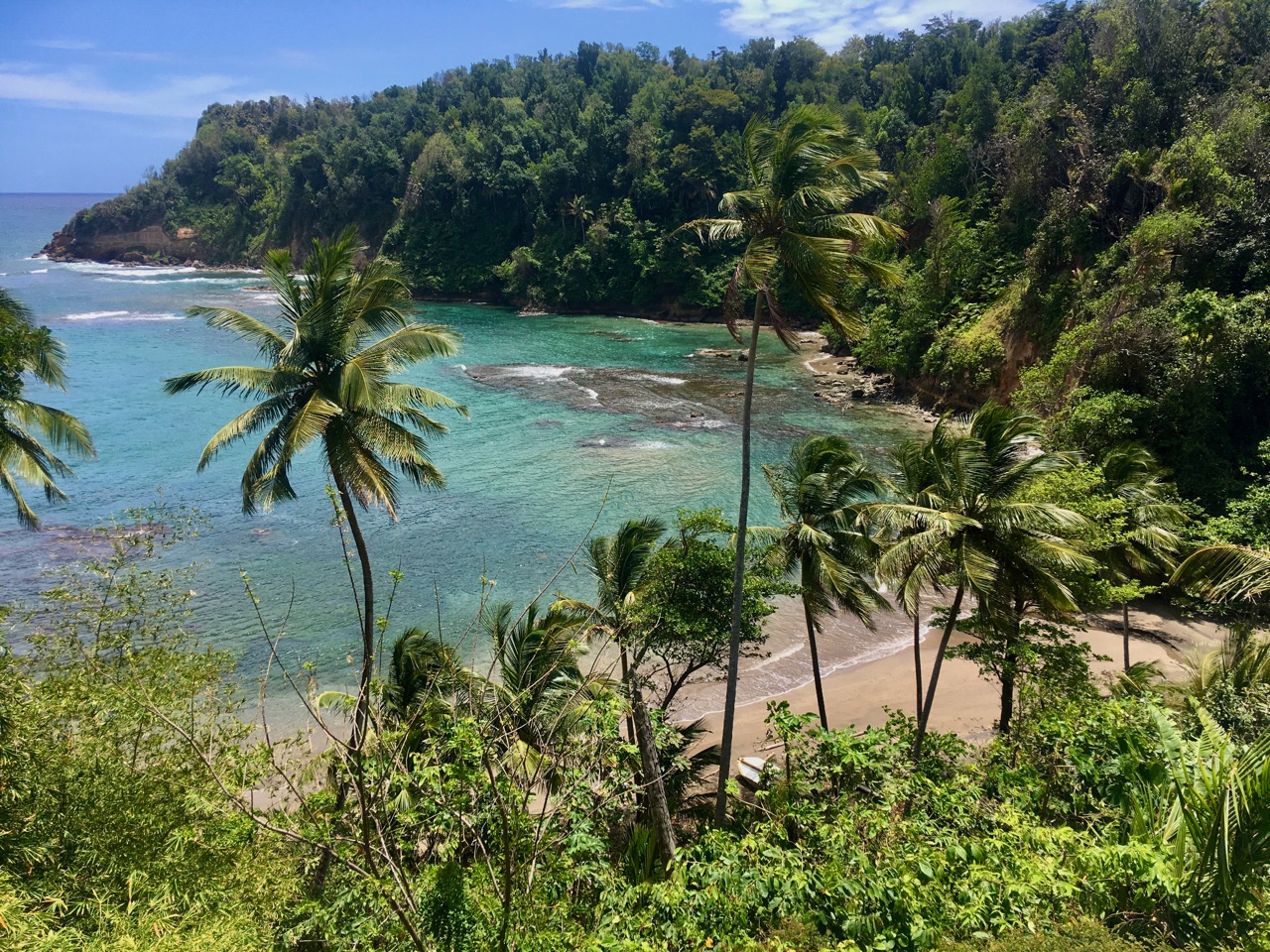
The Kalinago, the island’s first Indigenous people, called her Waitukubuli — “Tall is her body.” Standing in the cockpit watching those ridges disappear into cloud, you don’t need the translation. This is not a flat, sun-bleached, development-friendly Caribbean island. This is something older, something that hasn’t been asked to perform for anyone.
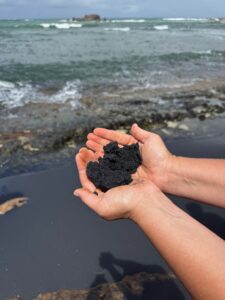
Nine active volcanic centers, the second-largest boiling lake in the world, over 200 waterfalls from 365 rivers, and half the Caribbean’s volcanoes on a single island. Dominica is not subtle. No mega-resorts, no curated white sand — mostly black volcanic sand, rocky shelves, and jungle pressing all the way to the waterline. If you came looking for the Caribbean before it was packaged and sold back to you, you’re exactly where you should be.
For sailors, she rewards the detour completely.
Quick facts for cruisers
- Location: Eastern Caribbean, between Guadeloupe (N) and Martinique (S)
- Currently: Eastern Caribbean Dollar (EC$). USD and EUR are also widely accepted
- Language: English (Official), with a French-influenced creole widely spoken
- Ports of Entry: Portsmouth in the north, Rosseau in the south
- No marina, no haul-out facilities
The sailing reality
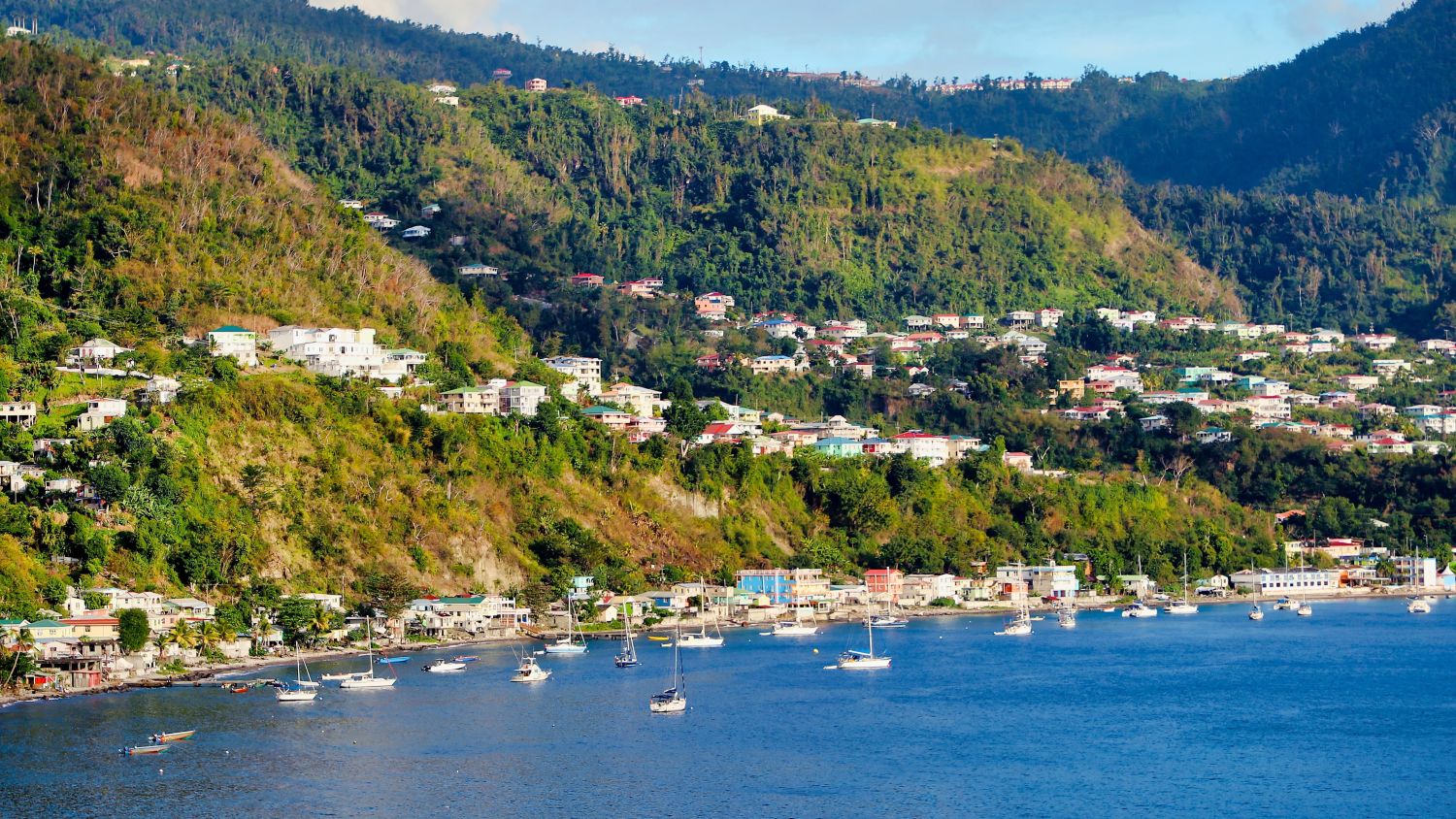
Dominica is steep-to. The seafloor rises from great depths to 10-20 meters close to shore, which means there are really just two main cruiser anchorages: Portsmouth in the north and Roseau in the south. Both use mooring systems, so come ready to use a “boat boy” to pick up a ball.
The northeast trades run 12-20 knots, and katabatic gusts off the steep ridges can appear without warning. Swell can roll into both anchorages during strong trade conditions. The windward coast is fully exposed, and not used for approaches.
There are no marinas or haul-out facilities anywhere on the island. Mechanical support is limited to small workshops and chandleries are nearly non-existent. Fuel and water come by jerry can. Come prepared!
Checking in
The first step to checking in to Dominica is completing SailClear before you arrive. You’ll need your vessel registration, passports, crew list, and last port clearance.
Roseau: Customs is in the ferry building. Officers break for lunch and often don’t return until around 2:30 pm, so time your arrival accordingly. You can check in and out at the same visit for stays up to two weeks. The staff were friendly and this was the quickest check in/out we’ve done in the Caribbean. The ferry dock is awkward to reach by dinghy.
Portsmouth: The Customs building is located at the southern end of the town. PAYS can help coordinate customs and immigration (More on who PAYS are soon), otherwise it’s same process here. Expect to pay around $15 EC for using dinghy docks at either location.
Boat boys
If you’ve sailed south of Antigua, you know the boat boy system. Dominica works the same way. When you arrive at either anchorage, a local guide will come out to help you pick up your mooring. This is your connection to the island; tours, transport, fuel can refills, laundry or trash pick up, the works. Find them on noforeignland, show up with a name in mind or contact them on WhatsApp ahead of time, or take the first guy who approaches you on your way in. Brushing off a boat boy is considered rude here; they work for tips and it’s an easy way to support the local economy.
Cruiser’s need to know
Before sailing to Dominica, here’s a few things that are helpful to know.
- The 20-mile drive between Portsmouth and Roseau takes over an hour on narrow, steep, winding roads. You can arrange transport through your boat boy and don’t underestimate the geography.
- It’s best to hire guides for interior hikes. This is real rainforest; trails can be poorly marked and conditions change fast. Local guides are excellent and the income goes directly into communities.
- The Creole dialect takes a moment to tune into, even when English is being spoken. Lean in; locals are warm and patient.
- Produce is grown organically and proudly, so eat everything! There are also spring water pipes all over the island with clean drinking water. The island has an unusually high number of centenarians, and locals credit the food and water.
- Douglas-Charles Airport is on the northeast side of the island. Flying crew are not landing near either anchorage so factor in transfer time.
Portsmouth & Prince Rupert Bay
Prince Rupert Bay is the most popular anchorage on the island. It is a large, well-protected bay with room for mooring balls and anchoring, backed by a small friendly town; the community has put real effort into making it work for visiting boats. One honest warning; Portsmouth is one of the rainiest spots on an already rainy island. Heavy overnight rain is common enough that hatches-open sleeping is sometimes often off the table. That said, it’s a small price to pay for all that green.
- Depth: 10-20 meters over sand and mud
- PAYS moorings at approx. EC$30/night
- Good shelter in standard trades; swell and gusts can push in during strong conditions
- Portsmouth is in the northwest corner of the island
PAYS — the Portsmouth Association of Yacht Security — runs the mooring field and much more; night security, tours, transport, customs help, laundry, Sunday and Wednesday beach BBQs, all from their pavilion on Purple Turtle Beach. Use their moorings, book tours through them, and lock your dinghy every time you go ashore, even for short trips.
What to do from Portsmouth
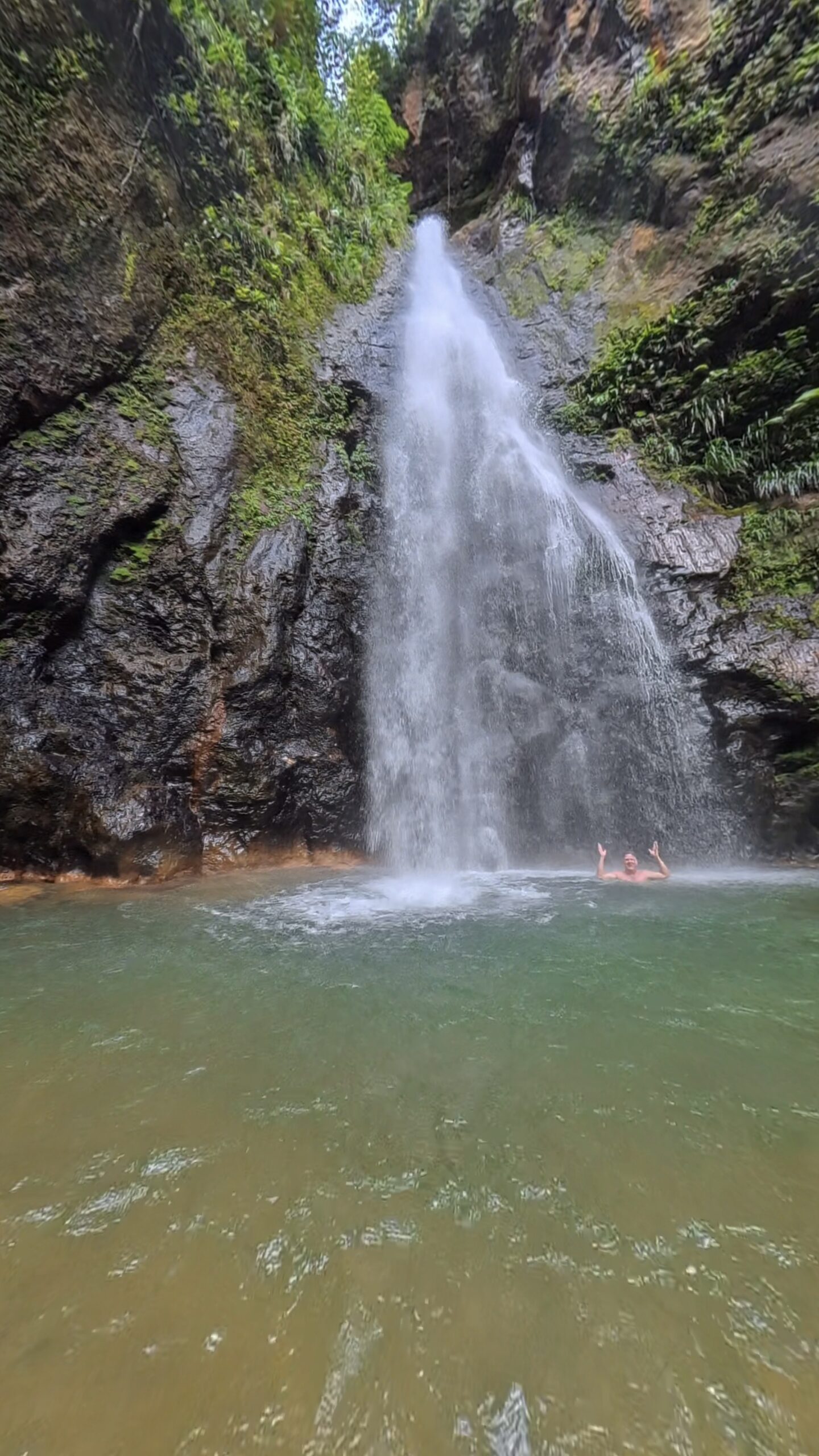
We stayed on Martin’s mooring balls and he put together the best two days of tours we’ve had in the Caribbean: Syndicate Falls, lunch in the coastal village of Calibishie, Red Rock and the black sand beach, a marine park snorkeling tour, and an Indian River tour. If you can connect with Martin, do it!
Reflecting on our experiences, here are some of the best places I recommend visiting around Portsmouth, Dominica.
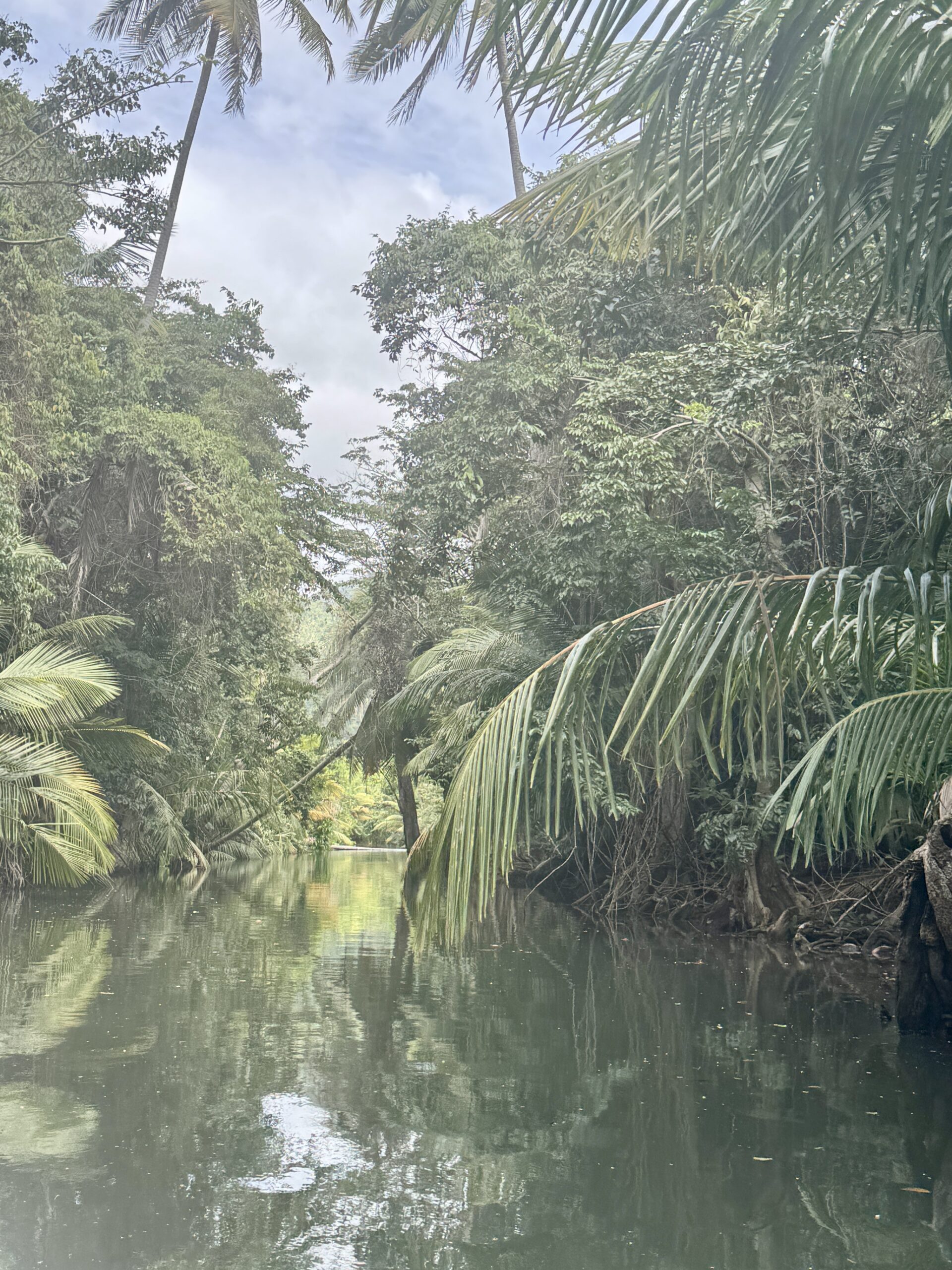
- Indian River: A mangrove waterway best done by rowboat with a local guide at dusk. The swamp bloodwood trees form a full canopy overhead, birding is outstanding and the light through the trees at dusk is something else.
- Fort Shirley & Cabrits National Park: The renovated 18th-century British garrison overlooks the bay with panoramic views and trails into the forest. You can walk from the dinghy dock here.
- Chaudiere Pool: A cold, deep freshwater pool about 5 miles east of Portsmouth; make sure you have good shoes for the last stretch.
- Red Rocks at Pointe Baptiste: Otherworldly volcanic rock formations against deep blue sea.
- Syndicate Nature Trail & Morne Diablotin: Dominica’s highest peak at 4,747 ft and the best place to spot the Sisserou Parrot, the island’s national bird.
- Champs Bar: Hillside bar above town with sunset views over the bay.
Dominica is also one of the only places in the world where resident matriarchal pods of sperm whales live year-round. A few miles offshore, the seafloor drops into thousands of feet, exactly what these animals prefer. Licensed operators run in-water encounters under strict regulation. Year-round residency means there’s no bad season; flat calm days make for the best water. This alone is worth the stop. Whale tours are affordable, swimming with whales will come with a hefty price tag.
-
- Syndicate Falls
-
- Indian River
Roseau
Roseau is the capital and the cultural heart of the island. A local operator will come out to help you pick up your ball; we picked up with Mr. Beanz, who arranged a full day up the Roseau Valley covering Trafalgar Falls, Titou Gorge, lunch, and the Botanical Gardens, all at a very reasonable all-in rate.
- Depth: 15-25 meters over sand and coral patches
- More exposed than Portsmouth; long-period swell can make for an uncomfortable night
- Dominica Marine Center has the best marine services on the island: sail repairs, engine work, and more
- Checking in at customs with your dinghy can be a haul, your boat boy will likely offer to give you a ride
What to do from Roseau
Most of Dominica’s major interior attractions are accessible from the south, which makes Roseau the adventure hub.
- Boiling Lake: The flagship hike, it is strenuous, unforgettable, and requires a full day and a guide. The payoff is a boiling volcanic lake inside a caldera.
- Trafalgar Falls: Twin waterfalls with hot spring pools at the base. Accessible and beautiful.
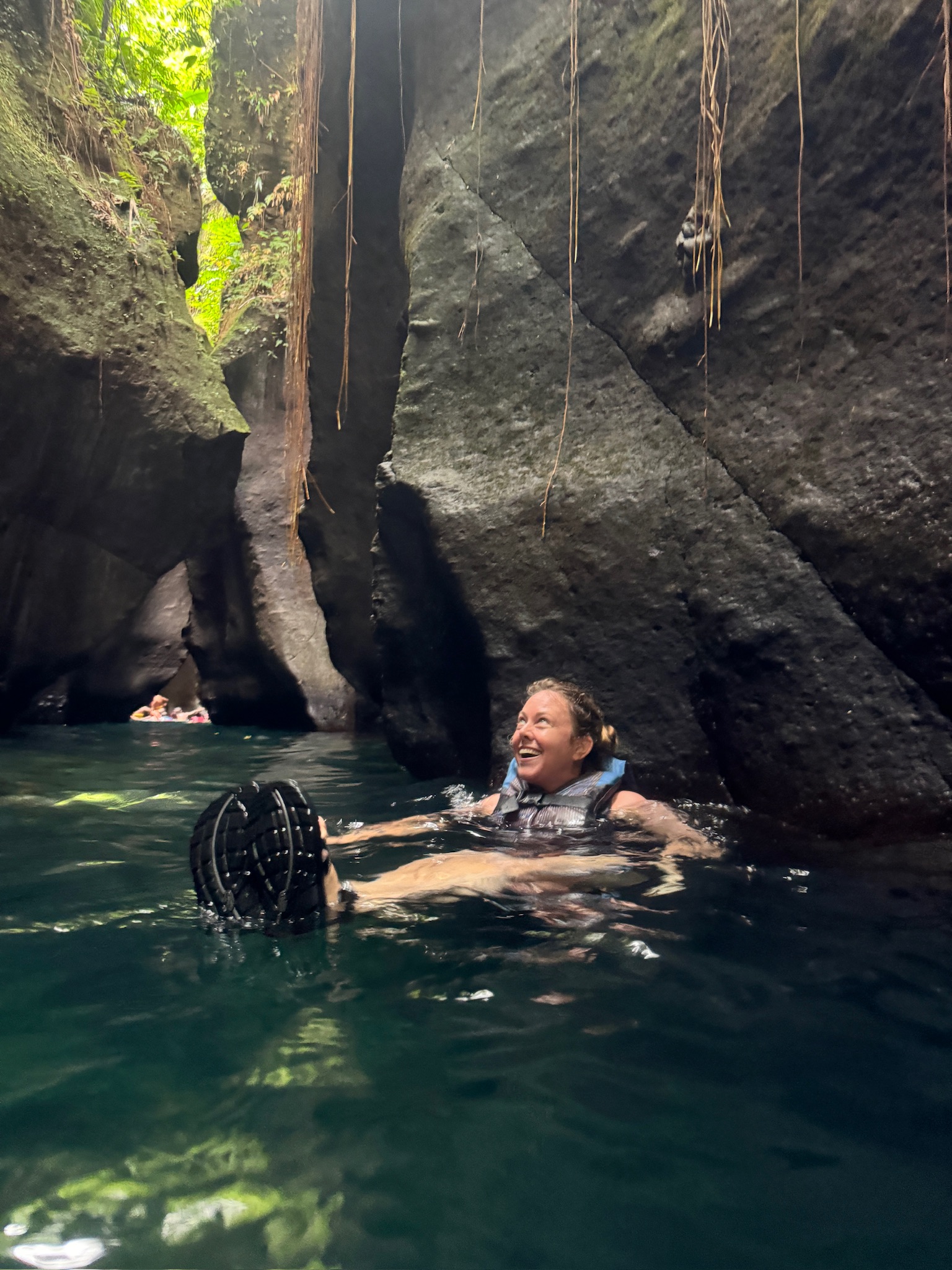
- Titou Gorge: A narrow swim-through volcanic gorge ending at a waterfall. Yes, it was in Pirates of the Caribbean – it earns it!
- Valley of Desolation: Bubbling mud pools, steam vents, sulfur formations, that are genuinely surreal.
- Emerald Pool: A rainforest pool fed by a waterfall, it is one of the more accessible hikes and worth every step.
- Scotts Head Marine Park: The southern tip, 250 feet up, with views back along the coast and excellent diving where the Caribbean meets the Atlantic.
- Sulphur Hot Springs near Soufriere Bay: Free, volcanic, worth the trip.
- Kalinago Territory: The only remaining Indigenous Caribbean territory in the Eastern Caribbean. Cultural tours available; approach with genuine curiosity and respect.
-
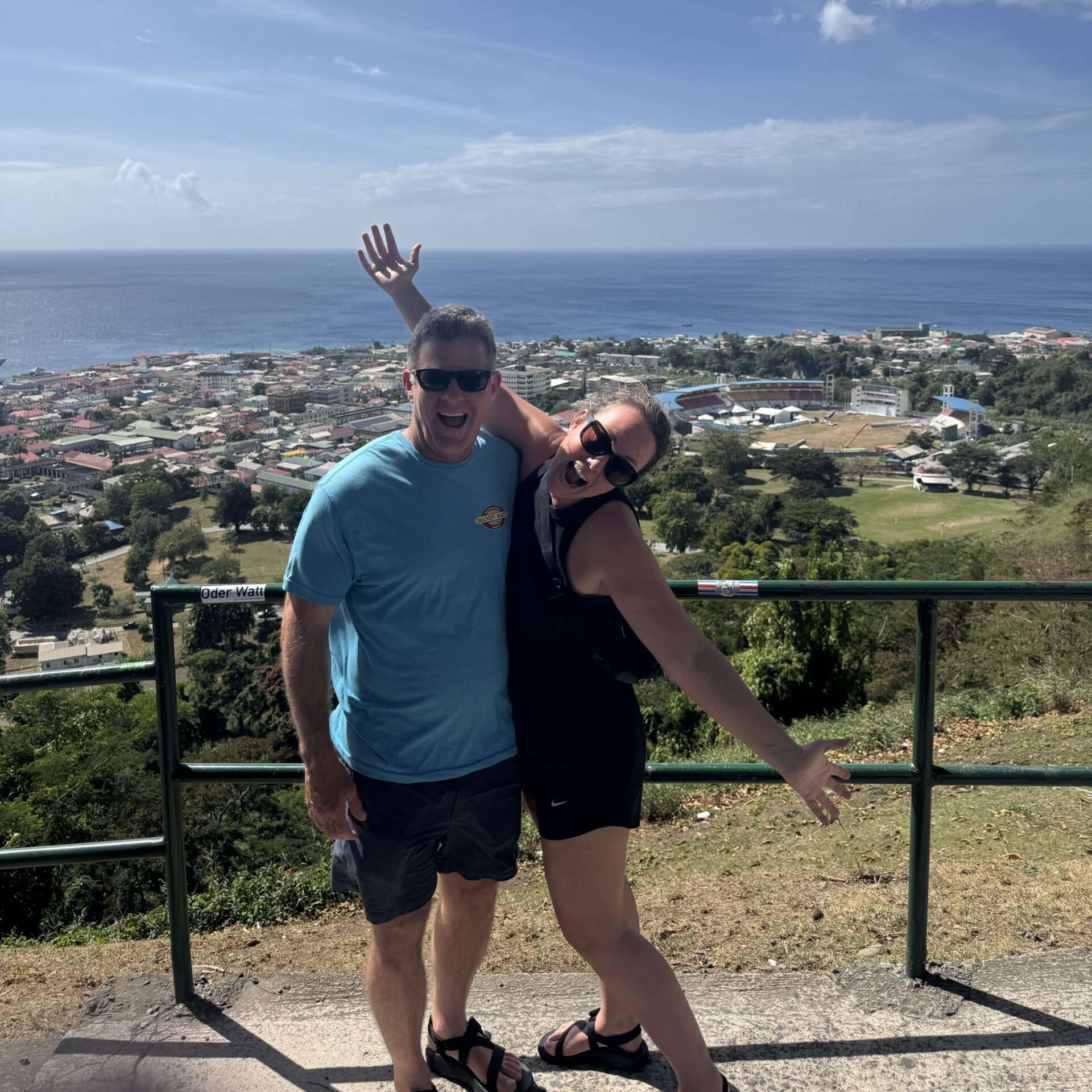
- Roseau Lookout
-
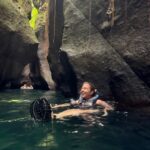
- Titou Gorge, Rosseau Valley
Where to stay
If crew is flying in (or you want a night off the boat) the options here are genuinely interesting. No mega-resorts; just a few well-chosen properties that actually fit the island.
- Secret Bay (North, near Portsmouth): An award-winning eco-luxury boutique with 22 sustainable villas, no menu (the kitchen works with whatever came in fresh that morning), private plunge pools and cliffside views. It was voted the#1 resort in the Caribbean by Travel & Leisure.
- InterContinental Cabrits Resort & Spa (North): Full-service luxury within Cabrits National Park. Four pools, infinity views, world-class spa, excellent snorkeling off the pier. They are building a mega marina here which will be great for cruisers, but might make noise for guests until it’s done.
- Jungle Bay (South, Soufriere): Locally owned eco-resort with 35 hillside cottages, daily yoga and an organic-forward kitchen, they are genuinely committed to sustainability. It is about 15 minutes from Champagne Reef.
- Fort Young Hotel (Roseau): An 18th-century fort turned four-star hotel on the Roseau waterfront. There’s a dive operation on-site, good restaurant, and it has an urban energy. Right for some, wrong for others.
-
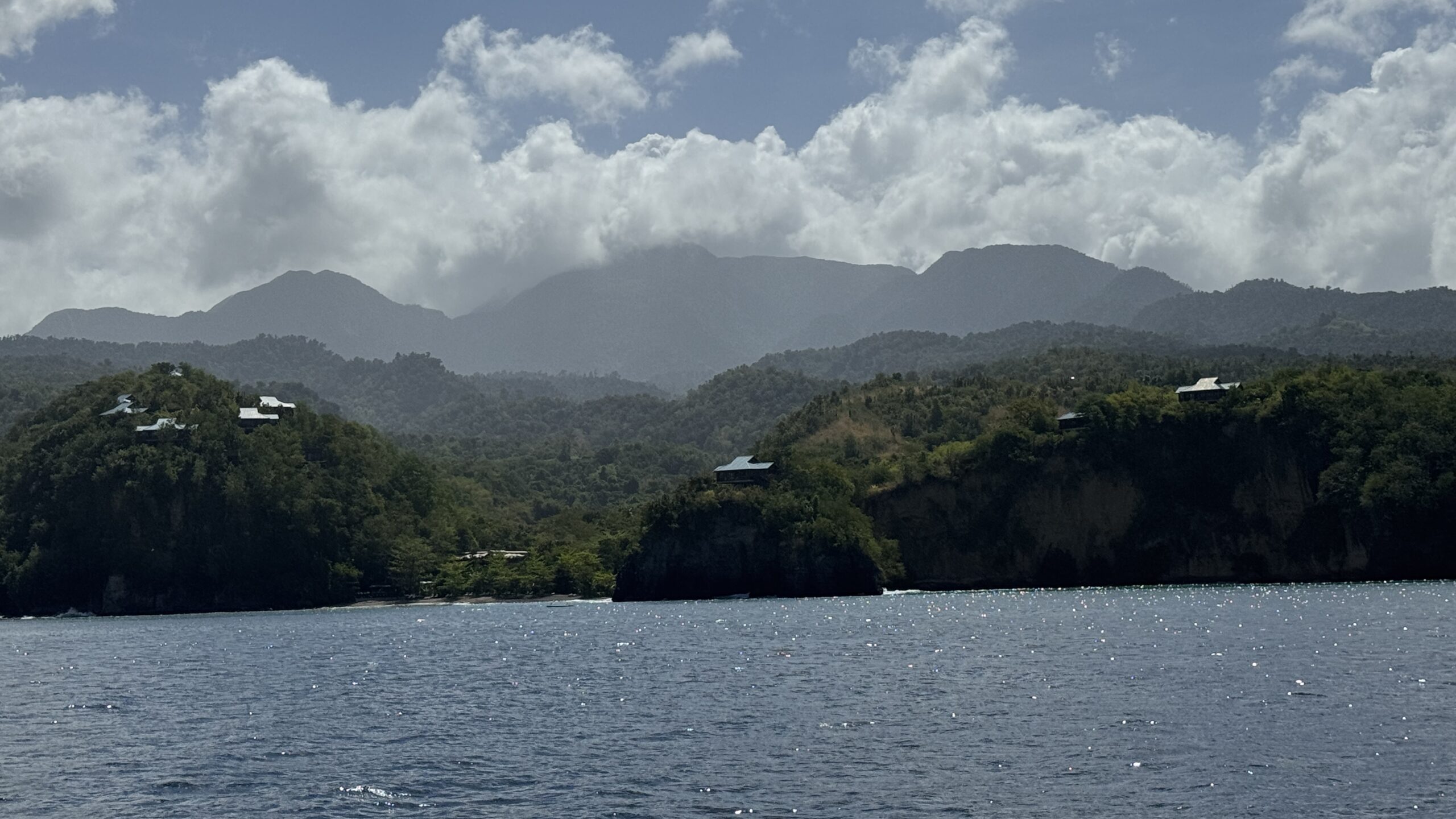
- Secrets Resort, Dominica
Sailing to Dominica
Dominica is a unique Caribbean sailing destination and one that truly rewards those who venture there. We thoroughly enjoyed our time exploring the island, so for more suggestions, visit my Dominica guide and take a look at the noforeignland Sailing Guide.

By Kama Lamm
Kama is a therapist, sailor, and devoted sun-chaser who explores the world by sail with her husband. She believes the best therapy is a warm ocean, good wind, and a beach with no footprints. Her guides are written from the water — not the guidebook.