
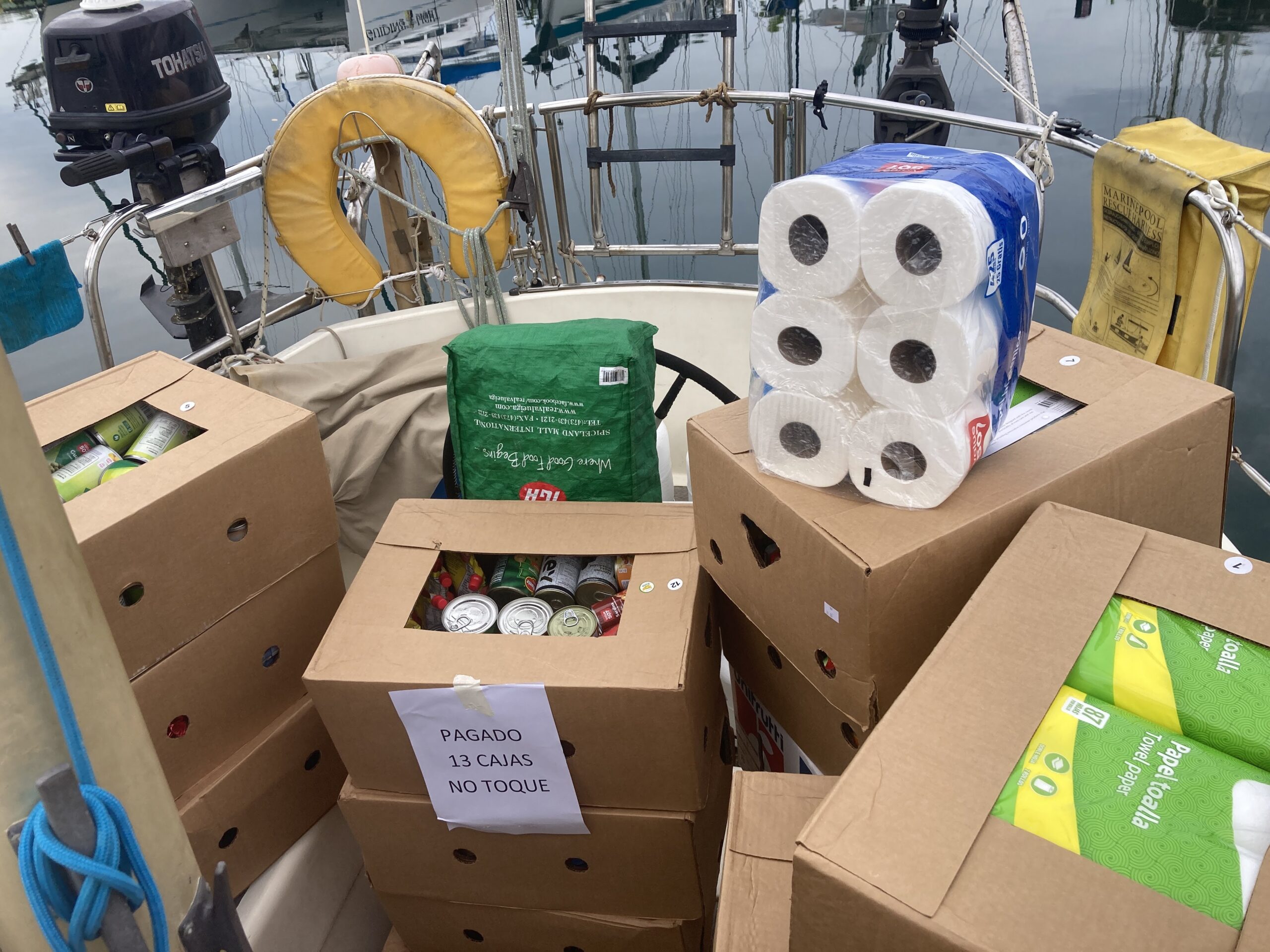
Whether it’s an ocean crossing, a multi-day passage, or a remote anchorage, anyone who wants to live self-sufficiently on a boat can’t avoid provisioning.
Before I lived aboard full-time, I thought shopping is shopping. Life at sea quickly proved me wrong. The simple fact that you can’t just pop out to buy milk, combined with completely different storage conditions, turns a normal grocery run into something entirely different; provisioning.
The reality onboard
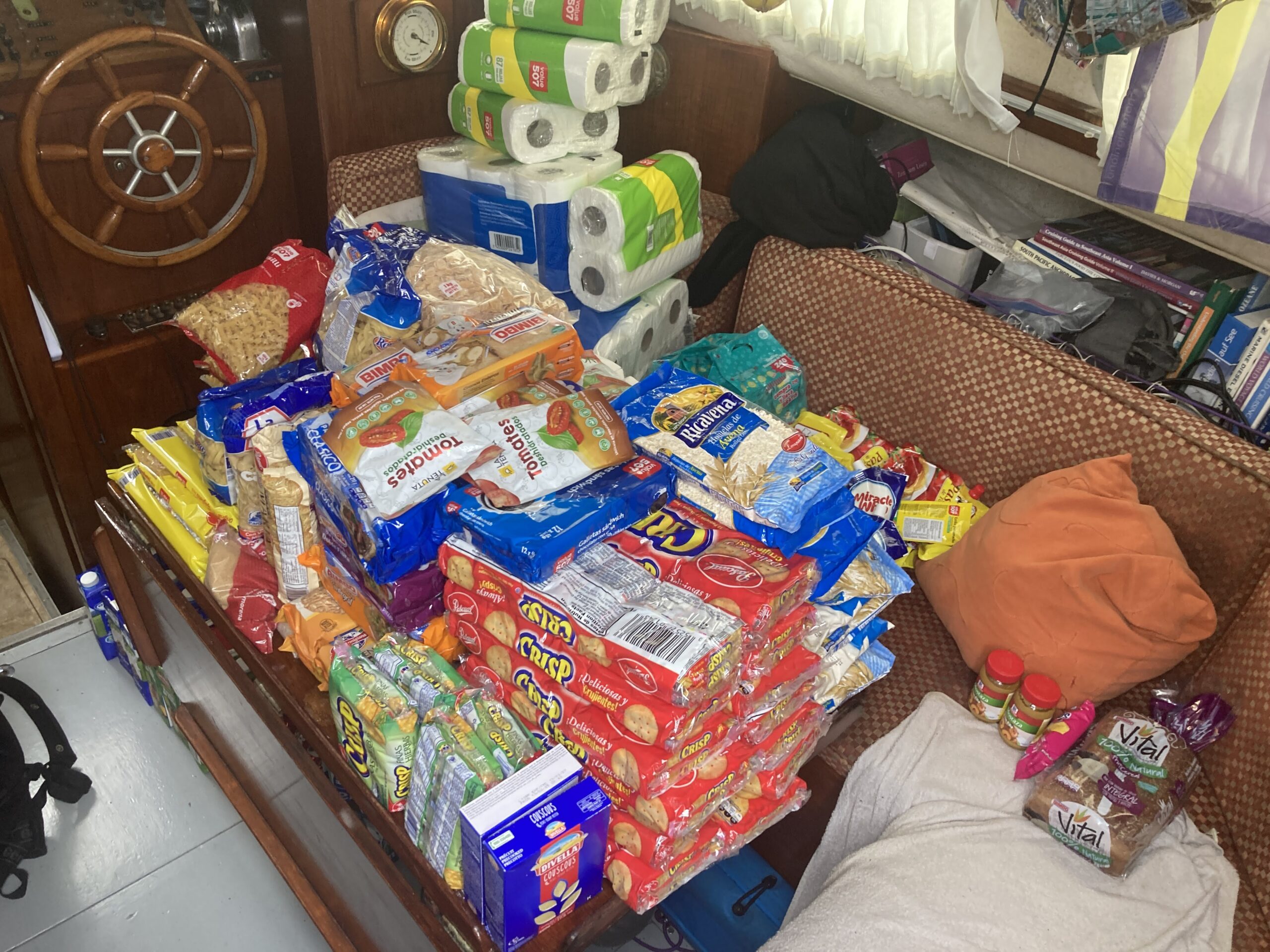
For live-aboard cruisers, provisioning means feeding people for an uncertain amount of time with limited storage space and limited refrigeration.
Outside the fridge, the lowest temperature is often just the water temperature. In the tropics, that can easily be around 30°C (86°F), which is not ideal conditions for fresh food. The result; non-perishables become your foundation – canned goods, dry foods, vacuum-packed products. There’s plenty of it, it’s just not everywhere.
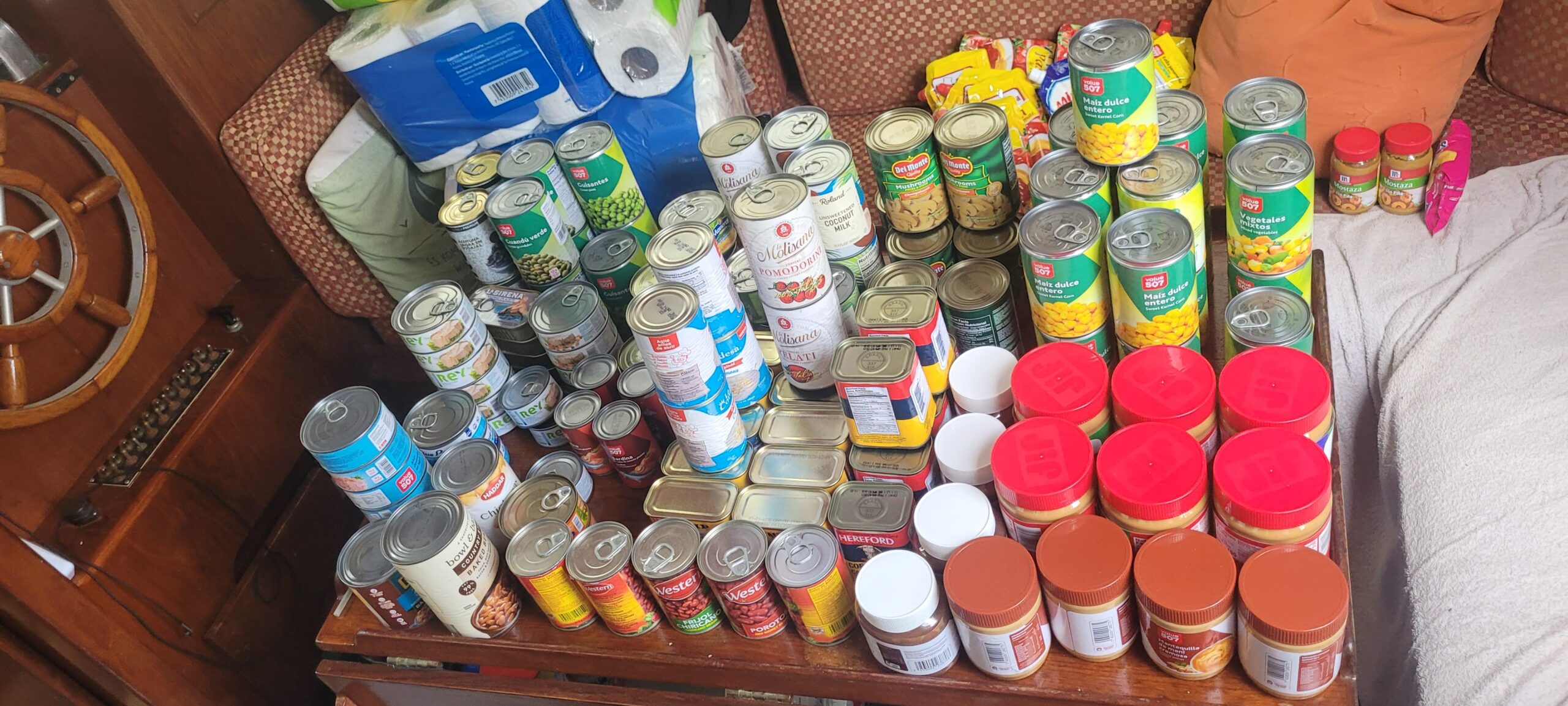
Provisioning along the route
Provisioning is something done along the way, and different parts of the world have different foods available. This impacts your planning, so it’s always good to get insights from others who’ve been there before you.
Mediterranean – Fresh instead of long-lasting
In Greece, you’ll find amazing fresh food counters, but very little canned food. What worked well for us was olives in sealed bags, and we could buy excellent olive oil in 2-liter canisters at unbeatable prices.
First lesson: Well-packaged products often last far beyond their expiration date. Smell, taste, trust your instincts.
Canary Islands – The last big shop
Tenerife was our most important provisioning stop before crossing the Atlantic Ocean. Large supermarkets, good prices, and the last real chance to stock up. Looking back, I would load the boat just as full again. Probably even more!
What I missed later was whole grain flour and any kind of nuts and seeds. Stock up on things that are either hard to find later, or so expensive that you stop buying them.
This article from fellow cruiser Sarah gives more ideas for what to buy in Spain before an Atlantic Crossing.
Cape Verde – Unreliable restocking
Mindelo is better for topping up than for a full provisioning run, and availability changes constantly. A surprise though; the shelf-stable yogurt was better than expected.
Caribbean – Expensive and very different
Barbados: Limited choice, very expensive.
The Lesser Antilles: Highly variable; on smaller islands, you’ll often find only the basics, while in sailing hotspots, like Bequia, suddenly everything is available – but at a price.
The Highlight – Martinique: A piece of Europe in the Caribbean, and a provisioning paradise for sailors. Large supermarkets with dinghy docks, shopping carts straight to the boat, or delivery to the marina. Especially in Le Marin, you can find almost everything – from cheese to canned goods – at European price levels.
Central & South America – Great for budget and variety
Panama: Huge supermarkets, sometimes even with delivery directly to the boat.
Colombia: Affordable and diverse. In Cartagena, you can find everything, but prices and selection vary a lot between supermarkets. At Ara Supermarkets we found unexpected items that stayed with us all the way across the Pacific – balsamic vinegar and hummus in jars.
Pacific – Expensive but surprisingly good
On Nuku Hiva, the selection is better than expected, but not always consistent. Surprises included shelf-stable cheese from New Zealand, canned butter, and the first affordable whole grain flour since Europe
-
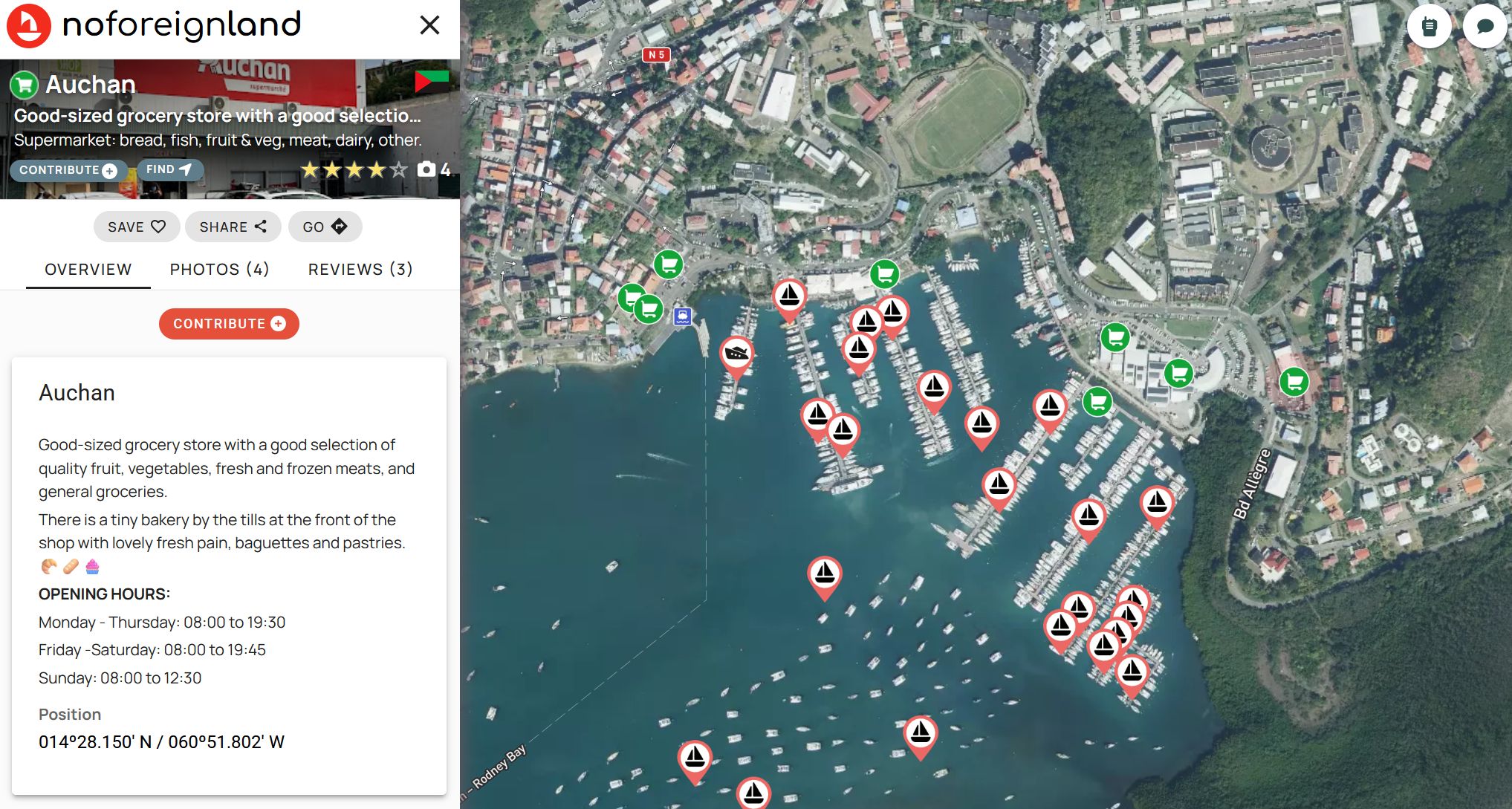
- noforeignland can be used to find supermarkets, like these in Le Marin
Accept and adapt
Often the biggest challenge isn’t storage space – it’s accepting what’s not available. Then, you need to adapt.
No healthy seeds for your bread? Instead top it with avocado.
No butter? Peanut butter works too.
Eggs gone bad? Time to improvise.
Over time you learn there’s no point in missing things. It’s better to find alternatives, or simply enjoy what you have. And that’s also one of the greatest joys: discovering new ingredients, trying unfamiliar products, and getting to know local cuisine.
A simple rule: In every country, buy at least one product in the supermarket you’ve never seen before.
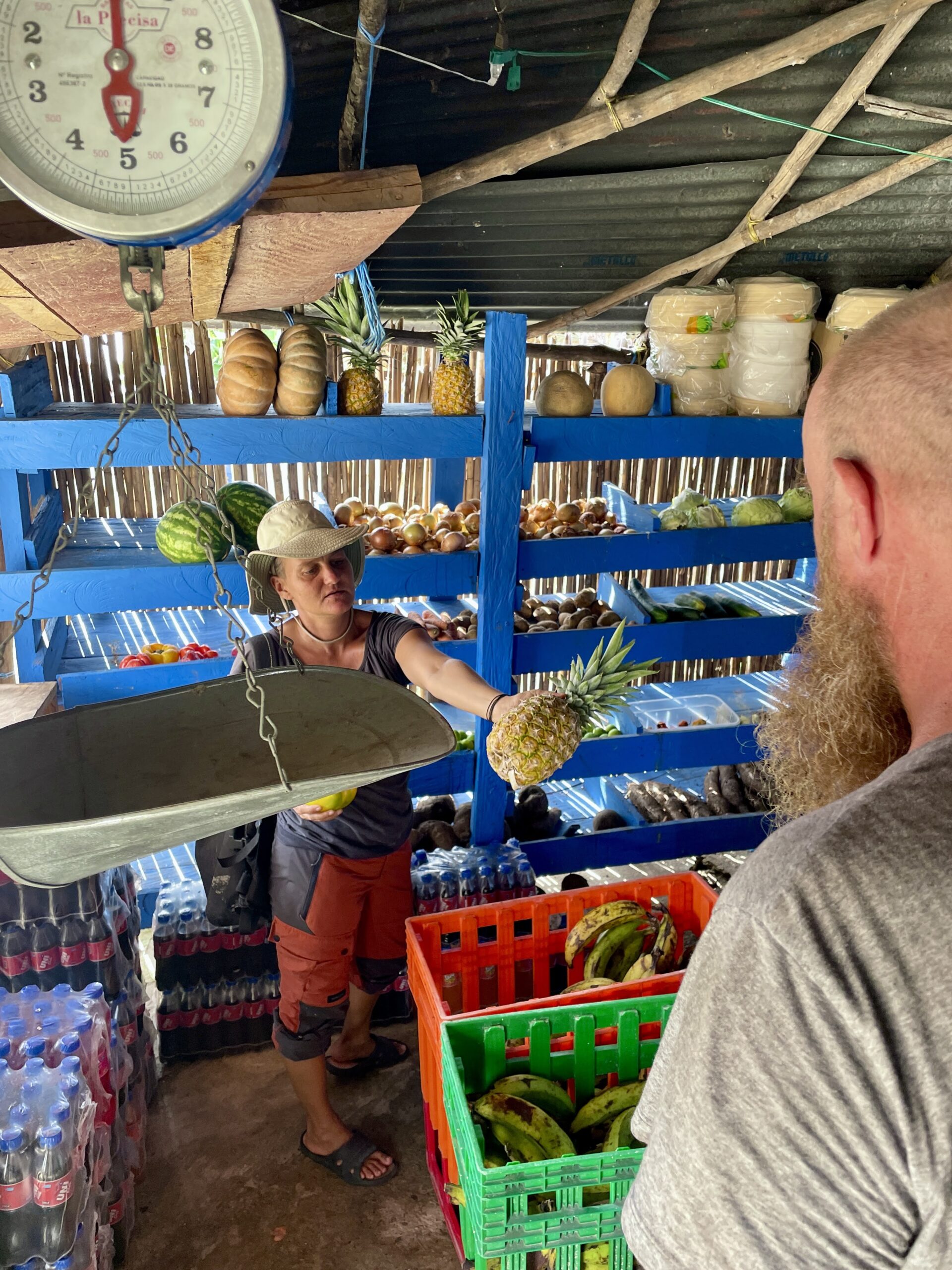
What really works
Having cruised thousands of miles, these are things I would always stock again:
- Powdered milk – practical, lightweight, long-lasting
- Gnocchi – quick, filling, easy
- Wraps – bread, pizza base, everything in one
- Peanut butter – underrated and versatile
- Oats – available almost everywhere, quick and filling (even when feeling sick)
- Dried tomatoes – a great substitute for fresh vegetables
- Parmesan – long-lasting, big impact on flavor
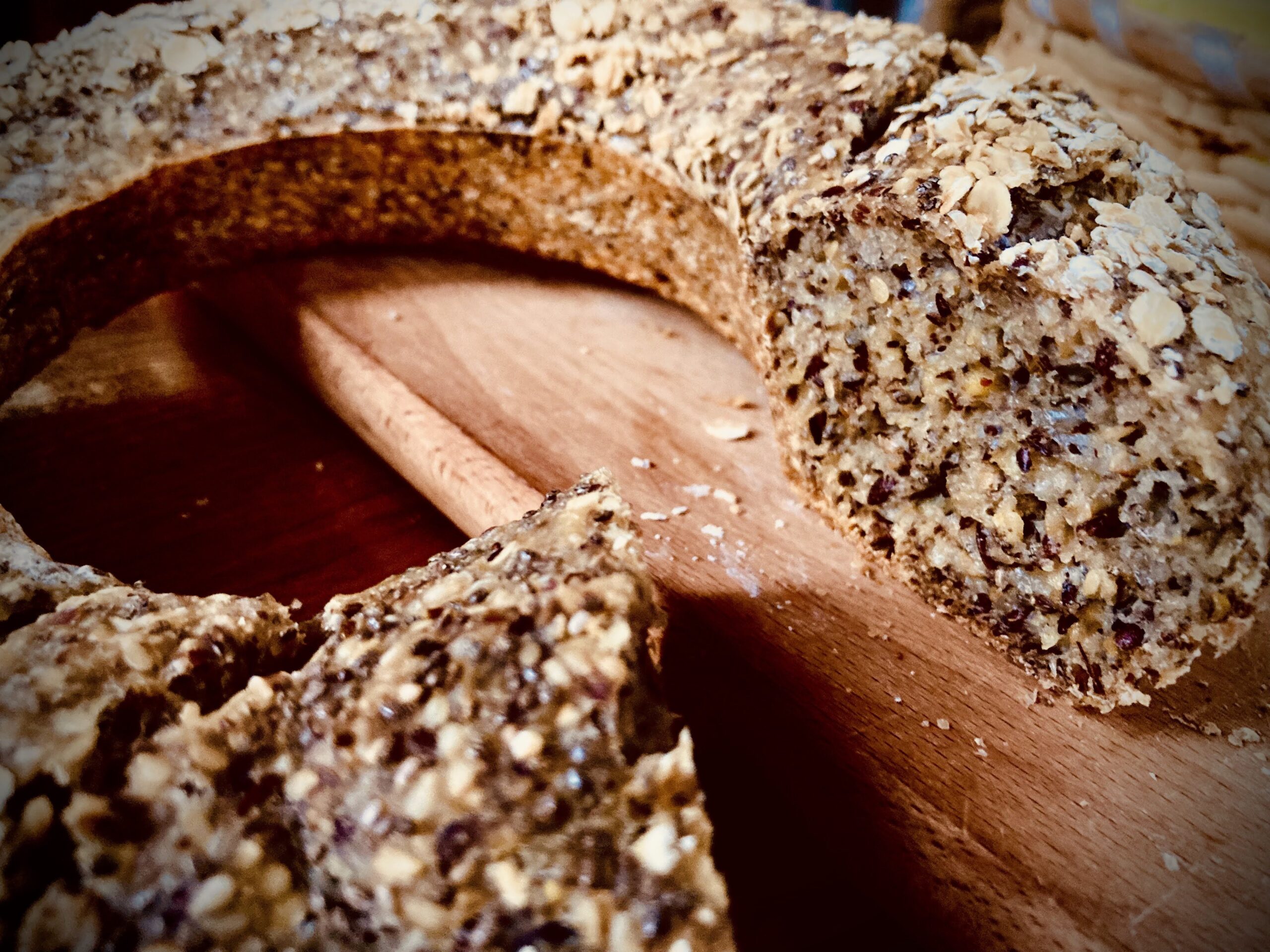
Plus, making things yourself is worth it. Baking bread and making yogurt works on board – once you know how.
Storage – The underrated factor
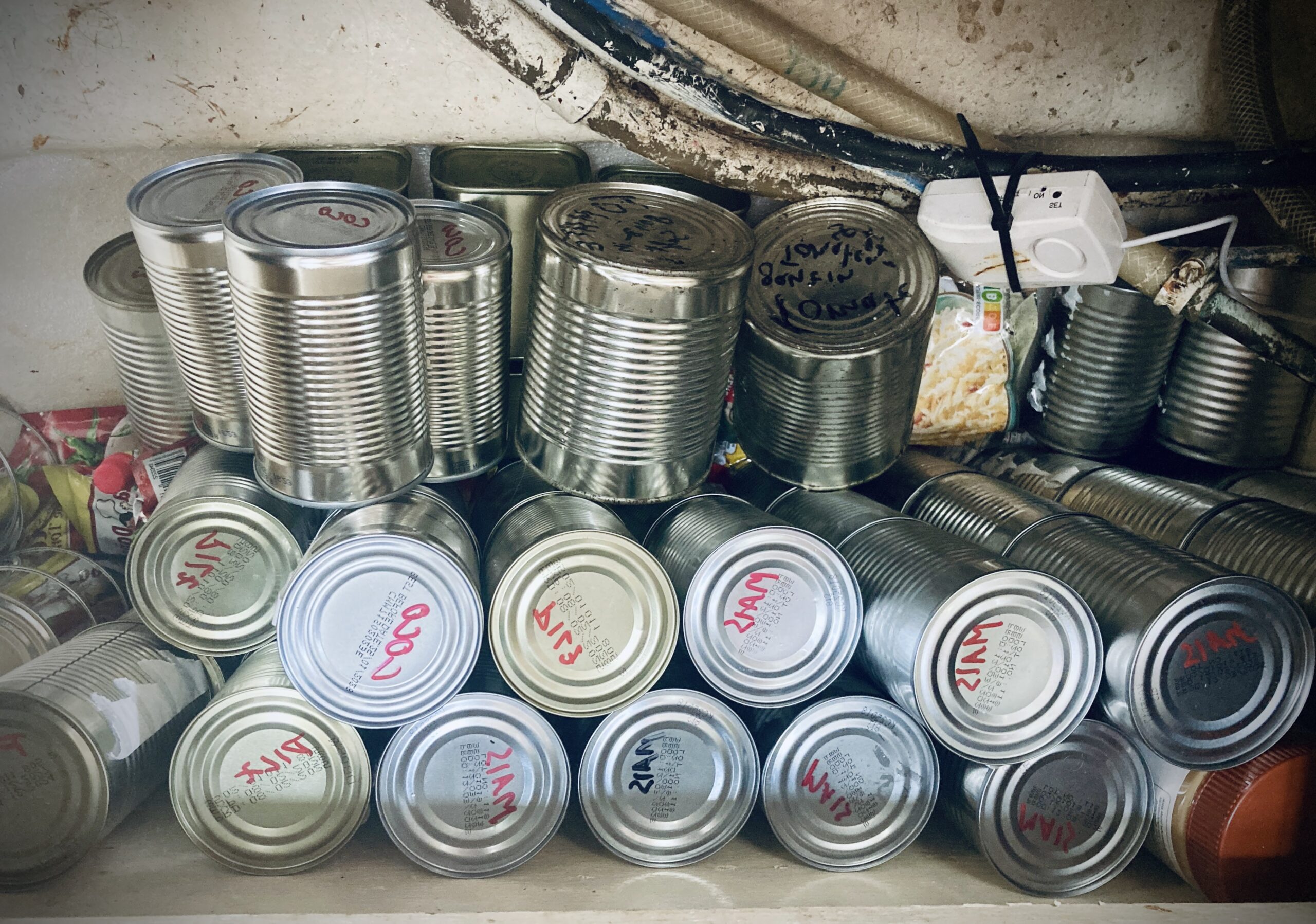
Heat is one thing, humidity and bugs are another. Our biggest lesson – everything needs to be airtight and pest-proof.
Bugs will find their way into anything. Zipper bags or airtight containers are not a luxury – they’re essential. In very humid places like Panama, we even sucked the air out of bags manually using a straw to prevent moisture. Sounds crazy, but it works.
Fresh food – A daily challenge
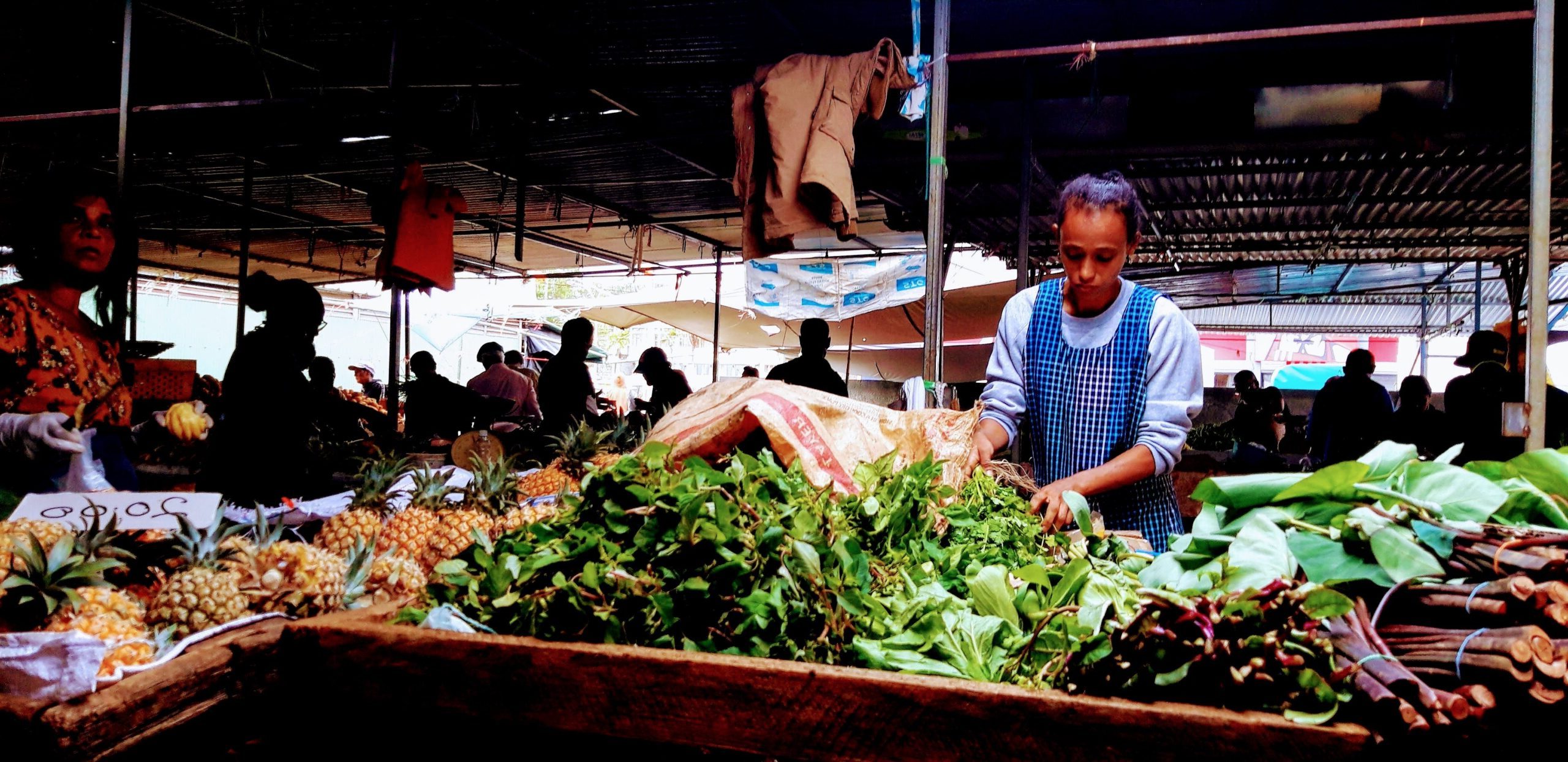
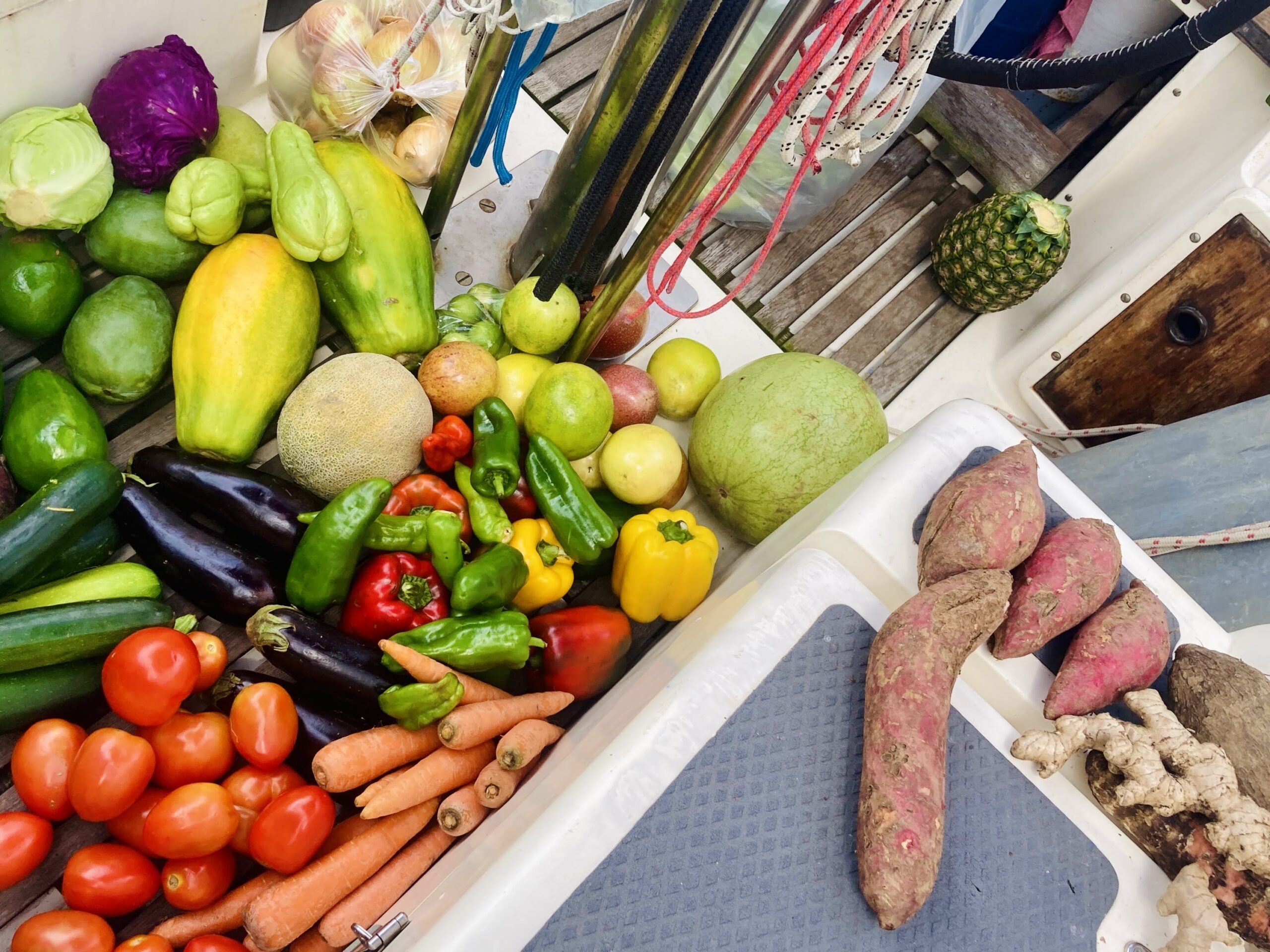
Keeping fresh fruit and vegetables usable for as long as possible is a science in itself, so here’s a few quick insights to consider.
Two shopping strategies:
- Buy a lot from one vendor → better prices
- Buy from different vendors → different ripeness and quality
Storage:
- Airy and dry
- Check daily
- Remove anything spoiled immediately
Long-lasting produce:
- Onions
- Potatoes
- Sweet potatoes
- Pumpkin
- Root vegetables (like cassava)
- Some apples (depending on the variety)
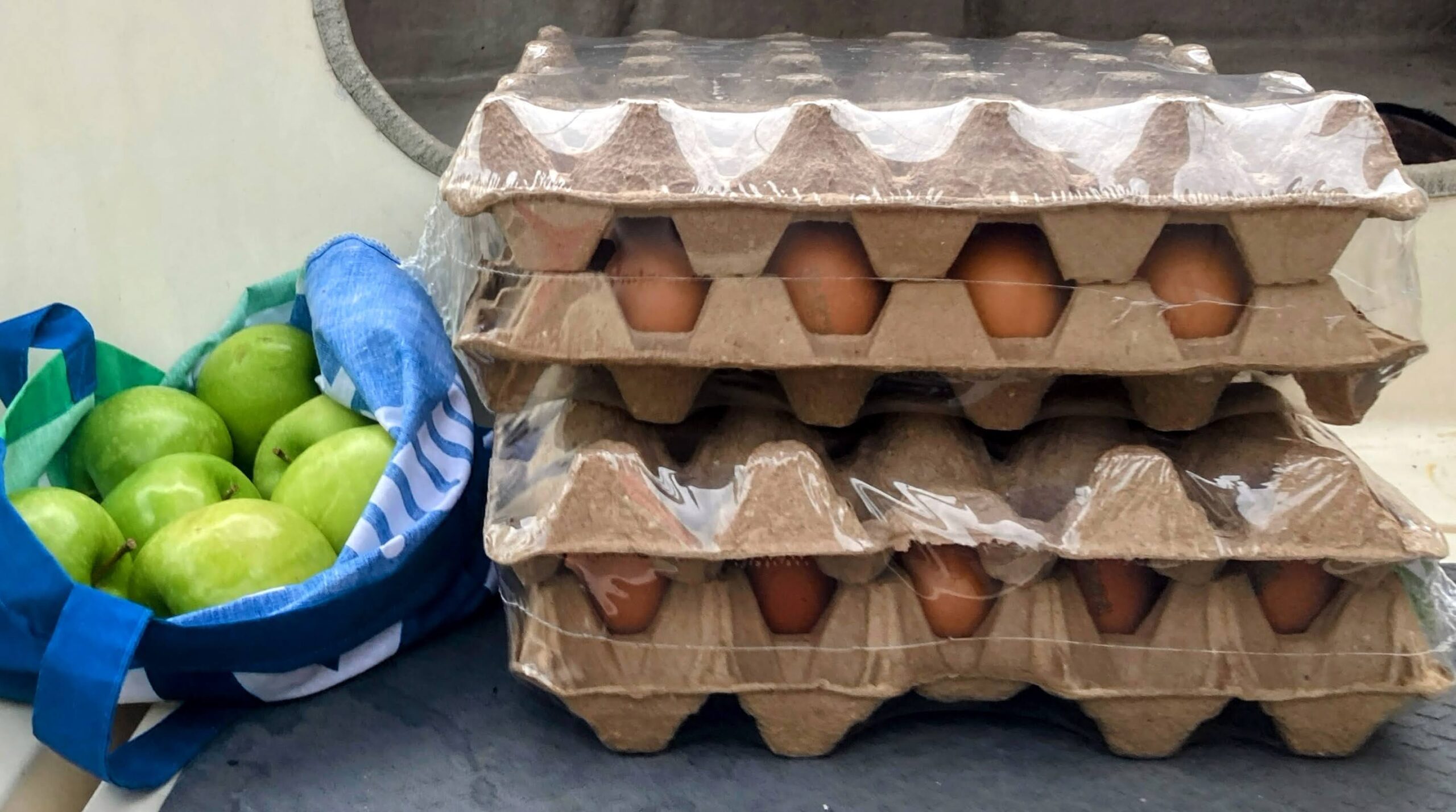
Eggs – A story of their own
Eggs can be amazing… or a disaster.
- Re-pack (no cardboard on board)
- Wash them
- Cushion them well
- Keep cool if possible
- Turn them regularly
- Always crack them individually before use
In the tropics, losses are high. That’s just part of the reality.
Cooking onboard
Cooking at sea is often more challenging, but also more creative. Limited space, movement, heat – everything requires rethinking. That’s why one-pot meals are often the best solution. And sometimes, that’s where the best memories are made: through improvisation, scarcity, and creativity.
Finding joy in provisioning
Provisioning is much more than shopping. It’s planning, adapting, and sometimes letting go. But most of all, it’s an invitation: to discover new foods, to get creative, and to enjoy what you have. Because in the end, that’s what stays with you – not the perfect stock, but the memories you made along the way.





Good article, well done! Also maybe worth mentioning is pressure cookers, mine gets used every day. Chickpeas & beans last forever & can really help to bulk out other dishes, cook in a few minutes after soaking. Also a good Ai like perplexity can do a good job of searching through all the supermarket websites, blogs etc etc to see what’s available & how prices compare. Give it a provisioning list, some destinations & off it goes. Helps to see what might be worth stocking up on in different places. Yoghurt was just a step too far for me to get made regularly but keffir – so simple & delicious.
Thanks a lot for these additions — really useful.
Good point about the pressure cooker. We don’t use one on board, but I can see how much it would help.
I haven’t used an AI for provisioning yet, but that actually sounds like a smart idea for comparing availability and prices across places.
And kefir… I keep hearing it’s much easier than yoghurt. Why is that actually the case? I’ll definitely give it a try.
Thanks again for sharing.
Something to add: when baking, you can use a “flax egg” to save your eggs for eating. 1 tbsp of ground flax seed mixed with 3 tbsp water. allow to sit until it gets gelatinous (10 to 15 minutes) and throw in your batter.
Yes, thanks for adding. I tried it already, it works and it’s good for saving the eggs for meals where you really taste them.
Great article. Thanks for laying it out the way you did. Simple but with a lot of info. Thanks from a newbie.
Thanks Lisa, I really appreciate your words.
That’s exactly the motivation behind sharing these experiences — to offer something useful to anyone just starting out. And honestly, I still often feel like a beginner myself. In many ways, we’re all figuring things out as we go, no matter how far along the journey we are.
If you buy eggs on an island that have not been processed in the USA and you leave them unwashed, they can be stored on the counter for a month. Saves fridge space.
I’m planning to live onboard starting next year so I am in the planning phase. I started growing my own sprouts. Thinking this takes up little space and bulks up when sprouts. Does require a lot of water so not sure yet.